
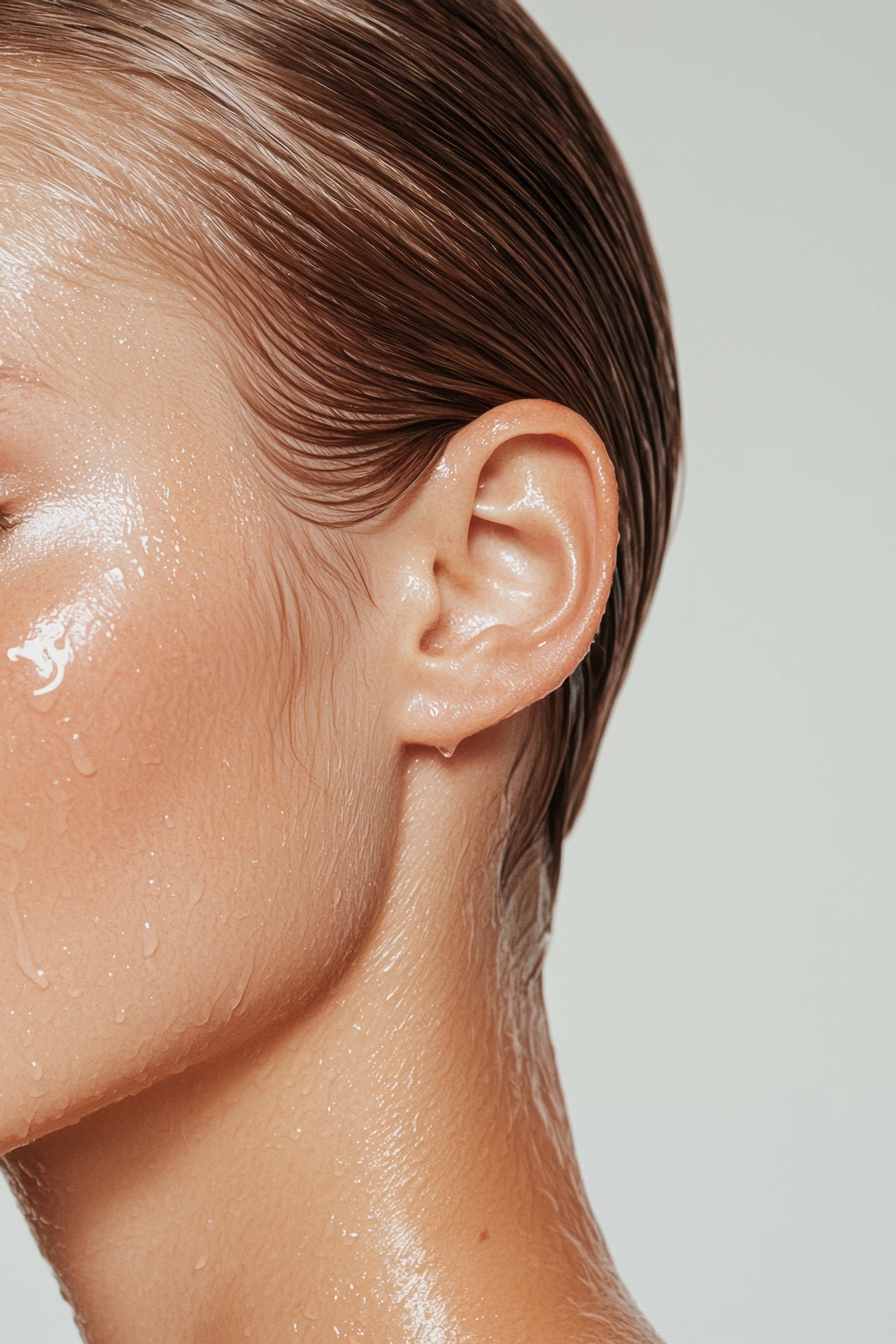

We all want shiny, luscious locks that people can almost see their reflection in. In fact, most of us have probably been round the houses looking for a solution - be it a shampoo, conditioner, or hair serum - that keeps hair hydrated inside and out.
Well, one such solution you could use is sodium PCA and glycerin. But how do they work? And how can you use it in your routine? Read on to find out more…
Why Does Hair Hydration Matter?
Hydrated hair isn’t just smoother and shinier - it’s softer, more flexible, and healthier in the long term. Dry, brittle strands are more prone to breakage, frizz, and loss of shine. Two ingredients often overlooked but scientifically validated for their role in hydration are Sodium PCA and Glycerin. Both are ‘humectants’ (substances that attract and retain water), but each works in its own unique way to keep your strands supple, soft, and beautifully hydrated.
Structure of Hair Strands
To understand hair hydration, it’s important to understand the structure of hair. Human hair is made up of keratin proteins (65% to 95% of the total hair weight), lipids (natural oils), water, and pigments.
-
The cuticle (outer layer) consists of overlapping cells that protect the layer known as the cortex below and are responsible for the texture and smooth appearance of hair.
-
The cortex makes up most of the hair shaft and is the part that contains keratin, giving hair its strength and elasticity.
When your hair’s cuticles - the outer protective layer - become damaged by everyday stressors like heat styling, colouring, or mechanical wear, tiny gaps begin to form between the cuticle cells. These openings expose the delicate inner cortex, leaving your hair feeling rough, fragile, and more resistant to moisture. In short, a compromised cuticle means your strands lose their smoothness, strength, and ability to stay properly hydrated.
How Hair Absorbs Water
When hair absorbs moisture, it becomes softer and more elastic. Too little moisture makes hair rigid and prone to snapping, whilst too much can cause swelling, frizz, and weakness.
A 2024 study analysed the moisture uptake of hair and found:
-
Cuticle vs Cortex: The outer cuticle layer swells more than the inner cortex when hair absorbs moisture. Up to about 70% humidity, the cuticle takes in water faster. But beyond 80% humidity, the cuticle loosens and starts behaving more like a soft gel, similar to the cortex.
-
To simplify: this explains why hair can feel frizzier or softer in very humid weather e.g a tropical summer in Mexico vs a British summer.
-
Bleached vs Heat-treated Hair: At low humidity, all hair absorbs water at the same rate. But at higher humidity, bleached hair takes in moisture the fastest because bleaching creates more “water-grabbing” sites in the hair structure. Heat-treated hair, on the other hand, absorbs the least since heat doesn’t create those sites.
-
This is why bleached hair tends to swell, frizz, and lose shape more quickly in damp conditions, whilst heat-damaged hair often feels dry and less responsive.
-
Hair density: Regions of the scalp with lower hair density absorb moisture faster from the environment compared to areas with denser hair.
-
The same effect is seen in loose hairstyles versus braids: looser hair absorbs more moisture because it is more compact and less exposed.
This suggests that not only the structure of the hair fibre, but also how hair is styled and grouped, can alter the hydration process.
Hair Weathering
Hair naturally deteriorates as it grows away from the scalp.
A 2023 paper looking at hair degradation showed that older hair shafts display more cuticle loss, roughness, and exposed cortex.
-
UV radiation, pollution, heat styling, and chemical treatments accelerate this process.
-
Once proteins in the cortex are degraded, hair cannot repair itself - only cosmetic intervention (e.g., conditioners with humectants) can improve its surface and hydration.
‘Hair Ethnicity’: Differences in Hydration
Hair types differ structurally across populations, although their chemical composition (proteins, lipids) is essentially the same.
-
A paper examining the properties of Caucasian, Asian and African hair found that Caucasian hair tends to retain the most hydration, while African and Asian hair show lower water content and higher permeability.
-
Asian hair has more fibrous proteins, making it thicker, while Caucasian hair is thinner with less fibrous protein.
-
Differences in water diffusion affect how well hair retains humidity: African hair, for example, shows higher permeability (water moves out of the hair more easily), contributing to dryness.

Hydrating Your Tresses: The Role of Sodium PCA
Sodium pyrrolidone carboxylic acid (Sodium PCA) is a naturally occurring product of an amino acid, a building block of proteins. (aka the building blocks of proteins) It is present in the human epidermis (outermost layer of skin) and is a key component of the skin’s natural moisturising factor (NMF).
Studies suggest Sodium PCA has beneficial effects on hair, including:
-
Preparations containing at least 2% of Sodium PCA have been found to improve the condition of dry skin. (This applies to scalp health, too!)
-
In hair, it can improve colour retention in dyed hair and enhance flexibility. Its ability to bind water makes it an effective hair conditioning and hydrating agent.
What is Glycerin?
Glycerin is a clear, syrup-like humectant naturally found in plants and animals, widely used in both skin and hair care. It works by drawing water from the environment and deeper layers into the hair shaft.
-
Experimental studies found that glycerin solutions significantly improved moisture retention at various concentrations.
-
On hair, glycerin is a strong humectant, meaning it reduces water loss, softens strands, and increases pliability.
-
A 2014 clinical study tested a glycerin-rich leave-on lotion (10% glycerol) on the scalp. They found:
-
8 weeks of use significantly reduced dandruff.
-
Improvements in hydration and skin barrier function were maintained for up to one week after stopping use.
How Do They Compare?
Sodium PCA: highly effective at binding water, especially valuable in leave-in products and for colour-treated hair.
Glycerin: versatile and cost-effective, excellent for reducing dryness and brittleness, but in high humidity, it may increase frizz by pulling in excess water.
Both can be combined for a balanced hydration effect: Sodium PCA for deeper water-binding and glycerin for immediate softness and pliability.
Benefits for Hair Health
-
Reduced Breakage: Hydrated fibres bend rather than snap
-
Barrier Support: Humectants counteract moisture loss from heat or chemical damage.
-
Enhanced Shine & Manageability: Well-hydrated hair reflects light better and detangles more easily.
How to Use Them in Your Routine
Leave-in sprays/serums with Sodium PCA are ideal for long-lasting hydration. Sodium PCA is commonly used at up to 0.2% in pump hair sprays. Meanwhile, conditioners with glycerin provide instant softness after washing.
In dry climates: Pair humectants with serums or oils to lock in extra hydration.
In humid climates: Choose lighter serums or lower glycerin concentrations to help avoid excess frizz.
Be mindful not to ‘over-hydrate’ the hair, a phenomenon known as ‘Hygral fatigue’. This happens when hair repeatedly swells and contracts as it absorbs and releases water, gradually weakening the cuticle over time, resulting in frizz, breakage, and a rough texture.
Avoid this by not leaving hair wet for extended periods of time and using light-weight products like our hair serum.
The Final Verdict
Both Sodium PCA and Glycerin are scientifically backed hydration heroes. They keep hair flexible, reduce breakage, and enhance softness and shine. With the right formulation, they are true hydration heroes for healthier, more manageable hair.
At rhute, we’re here to help you feel your best - and that starts with healthy, confident hair. Whether you’re learning more about what’s causing changes or exploring products that encourage stronger, healthier growth, we’re with you every step of the way.
Have a topic you’d like us to explore next? Let us know in the comments - we love hearing your ideas. And for more expert advice, tips, and hair care inspiration, head over to our blog page for everything you need to keep your hair thriving.