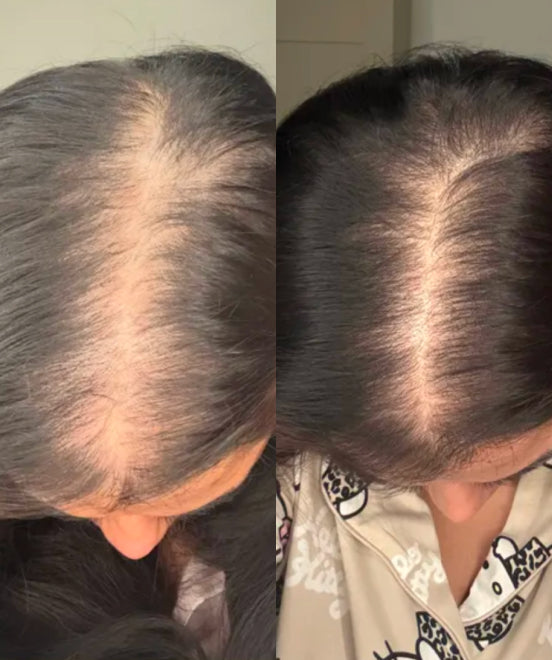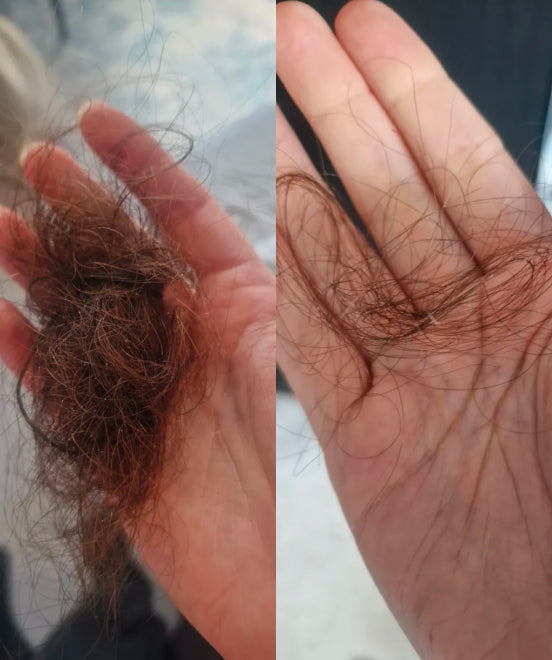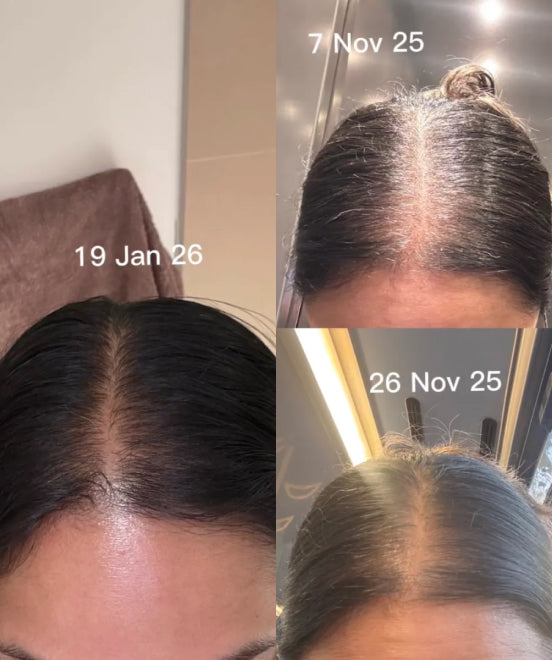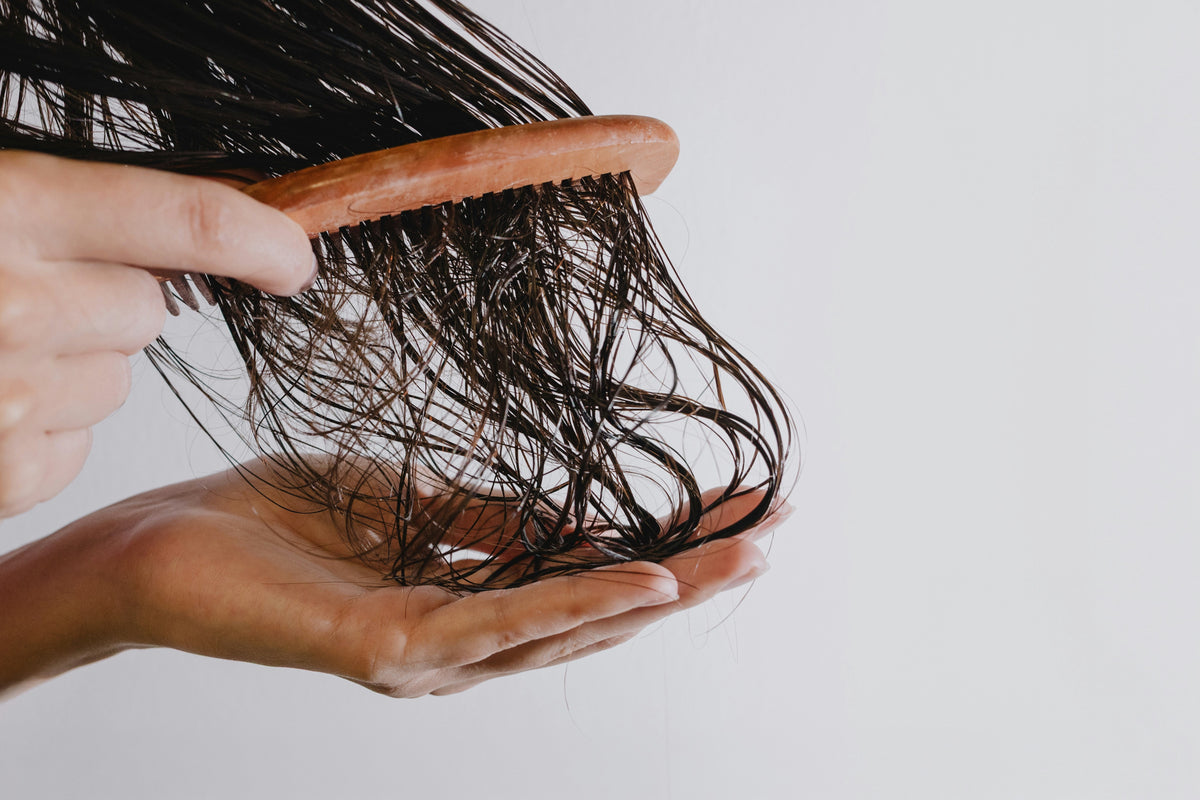

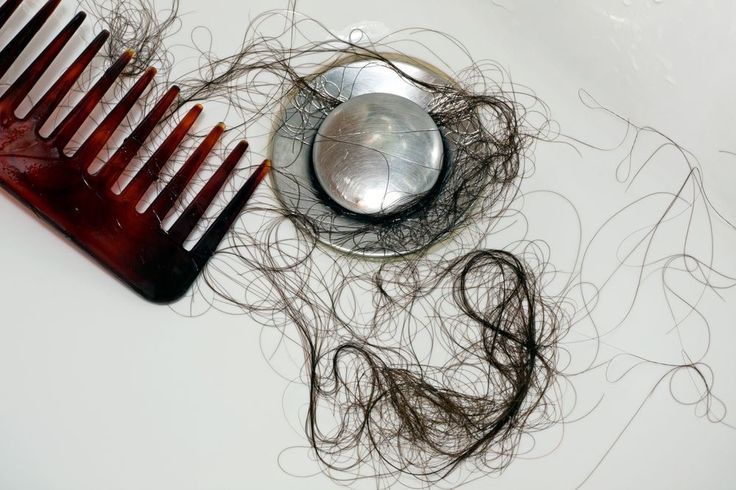

You grew a whole human. Your body did something extraordinary. And now, a few months in, you’re standing in the shower watching more hair circle the drain than you’ve ever seen in your life.
If you’ve recently had a baby and your hair is shedding in a way that feels alarming, you’re not imagining it and you’re definitely not alone. Postpartum hair loss affects the vast majority of new mothers, and while knowing it’s normal doesn’t make the clumps in your brush any less unsettling. Understanding what’s actually happening, when it peaks, and what you can do about it puts you in a much stronger position.
This guide covers the full postpartum hair loss timeline, the science behind why it happens, what recent research tells us about recovery, and the practical steps that can genuinely support your hair during this phase.
What is postpartum hair loss?
Postpartum hair loss is the excessive shedding that happens in the months after giving birth. The medical name is postpartum telogen effluvium, and it’s one of the most common forms of temporary hair loss.
What causes postpartum hair loss?
The main cause of postpartum hair loss is the sharp drop in oestrogen after giving birth, which throws your hair growth cycle out of sync. A few other factors, like progesterone changes, low iron, thyroid shifts, and nutritional depletion, can make it more pronounced.
Your hair grows in a cycle: each strand spends a few years actively growing, then rests for around three months before shedding. Normally you lose 50 to 100 hairs a day without noticing. During pregnancy, oestrogen, the main female reproductive hormone (largely produced by the placenta to support the baby), stays much higher than usual. It keeps more strands locked in the active growth phase, supports the follicle, encourages blood flow to your scalp, and protects its moisture barrier. This is why so many women notice thicker, fuller hair while pregnant.
After delivery, the placenta is gone and oestrogen drops sharply. All the hairs that were held in the growth phase shift into the resting phase together, and a few months later they shed at the same time. What can feel dramatic is really nine months of normal shedding catching up at once. The NHS and British Association of Dermatologists both classify this as telogen effluvium, the medical name for shedding that happens in sync.
Progesterone, another reproductive hormone that helps support pregnancy, drops alongside oestrogen. This lets more testosterone convert into DHT (a stronger, more active form of testosterone), the hormone most closely linked to hair thinning. The effect is small compared to the oestrogen drop, but it can prolong the shedding in some women.
Beyond hormones, low iron (anaemia) plays a role, particularly given common blood loss during delivery and the extra iron demands of breastfeeding. A 2024 study identified it as an independent predictor. Thyroid shifts in the months after birth and the nutritional depletion of recovery, feeding, and broken sleep can also leave your follicles short of the materials they need to restart growth.
How common is postpartum hair loss?
Very. A 2024 cross-sectional study found that 68 per cent of women experienced postpartum hair loss, with statistically significant links to anaemia, breastfeeding duration, and gestational diabetes. Other research places the figure even higher, with some estimates suggesting up to 90 per cent of new mothers experience some degree of increased shedding.
Whichever end of the range your experience falls, the takeaway is the same: this is one of the most common postpartum changes your body goes through, and it doesn’t mean something is wrong.
The postpartum hair loss timeline
One of the most frustrating things about postpartum shedding is that it doesn’t come with a clear schedule, but the general pattern is well documented.
Zero to three months postpartum
This is when most women still have the benefit of their pregnancy hair. Hormones are adjusting, but the shift hasn’t yet triggered visible shedding. Some women notice subtle changes toward the end of this window, but for most, things still feel relatively normal.
Three to four months postpartum
Shedding typically becomes noticeable. You might find more hair in your brush, on your pillow, or wrapped around your fingers in the shower. This is the point where the hair that was held in the growth phase during pregnancy enters the telogen resting phase and starts to fall. Research suggests the average start point is around 2.9 months postpartum, and for many women, this is when it feels most alarming because it seems to happen all at once.
Four to six months postpartum
Shedding often peaks during this time. Your ponytail may feel noticeably thinner, and you might see what looks like a lot of hair coming out when you wash or style. The average peak is around five months postpartum.
Six to nine months postpartum
The pace of shedding usually starts to slow. You may begin to notice small, wispy hairs growing in along your hairline, which is a sign that your follicles are cycling back into the growth phase. These new hairs can have a slightly different texture at first, which is completely normal.
Nine to 12 months postpartum
Most women see their hair density approaching pre-pregnancy levels. The shedding has slowed significantly and regrowth is visible. For the majority, things have settled by the time their baby turns one.
Does breastfeeding affect postpartum hair loss?
This is one of the most common questions new mothers ask, and recent research offers some useful context.
A 2024 study found that the longer mothers breastfeed, the longer postpartum shedding tends to last. Women who breastfed for six to 12 months or longer experienced extended hair loss compared to those who stopped within six months. There are a few reasons for this. Prolactin (the hormone that stimulates milk production) stays high during breastfeeding, which can affect your hair cycle. Your body also needs more nutrients than usual, which makes it easier to run low on iron, vitamin B, and vitamin D. And your hormones take longer to settle overall.
None of this is a reason to stop breastfeeding. Breastfeeding is a deeply personal decision, and this data simply helps explain why some mothers notice their shedding lasting a little longer. What it does mean is that breastfeeding mothers may benefit from being more intentional about nutrition and scalp support during this period, and from choosing hair care products formulated without ingredients that are not recommended during breastfeeding.
This is part of why rhute's formulations are minoxidil-free and fragrance-free. Minoxidil is generally not recommended while breastfeeding due to limited safety data and the potential for absorption. Having effective, breastfeeding-compatible options matters when you want to be proactive without worrying about what you are putting on your scalp.
When it might not be “just postpartum”
Most postpartum shedding resolves on its own within 12 months, but sometimes the hair loss reveals something else that was there all along.
A 2024 study published in the Journal of Clinical and Aesthetic Dermatology examined 200 women with postpartum hair loss and found that only 9.5 per cent had pure telogen effluvium alone. Over half, 56 per cent, also had underlying androgenetic alopecia (female pattern hair loss) that the postpartum shedding had unmasked. A further 28 per cent had a combination of telogen effluvium, androgenetic alopecia, and traction alopecia.
What does this mean in practical terms? If your hair has not started recovering by 12 months postpartum, or if thinning concentrates along your parting or at your temples rather than being evenly distributed, it may be worth investigating further. The postpartum shedding may have revealed a pre-existing condition that needs its own approach.
This is not something to panic about. It is knowledge that puts you in a stronger position. If your hair is not bouncing back the way you expected, there may be a clear reason, and the sooner you understand it, the more options you have.
How to support your hair’s recovery
Postpartum hair loss is temporary for the vast majority of women, and while you can’t prevent the shedding entirely, you can support your follicles to promote healthy growth.
Nutrient levels
The foundation starts inside. Iron is one of the most important nutrients for hair recovery, and ferritin (your stored iron) is the marker to watch, not haemoglobin. For healthy hair, ferritin levels above 60 ng/mL are ideal, and it's common for ferritin to drop dramatically after birth, especially if delivery involves significant blood loss. Many women are depleted after delivery and breastfeeding without realising it. Vitamin D, zinc, omega-3 fatty acids, and B12 all play supporting roles too. If you are noticing significant shedding, it's worth speaking to your GP about checking your iron and ferritin levels.
Good sleep and self-care
Sleep and stress matter just as much. Good quality sleep gives your body the conditions to recover and lowers mental stress. Stress can both trigger the kind of synchronised shedding and worsen pattern hair loss in women who are prone to it. Being kind to yourself during this phase is part of the recovery, not separate from it.
Scalp health
The next layer is your scalp, and this is the part almost everyone skips. Your scalp is skin, and after the hormonal upheaval of pregnancy and delivery, that skin is under stress. The barrier can be compromised, oxidative stress increases, and the environment around your follicles may not be optimal for the new growth trying to come through.
This is where the concept of scalpcare as skincare becomes relevant. Just as you would support your skin's barrier after a period of stress, your scalp benefits from the same attention. DHT-modulating botanicals like pumpkin seed oil and saw palmetto can help address the hormonal shifts that drive shedding. Ceramides support your scalp's lipid barrier. Rosemary extract and caffeine promote circulation to the follicles. Peptides and niacinamide support the signalling that tells follicles to move back into the growth phase.
Hair protection
The third layer is protecting what you have. This sounds simple, but small changes compound. Tight hairstyles place traction load on already fragile follicles. Excessive heat damages strands that are trying to thicken. Swapping to silk scrunchies, lowering your heat settings, and detangling gently from the ends up are small adjustments, but they stop you working against your own recovery.
Building a postpartum recovery rhutine
If all of that feels like a lot, here is how it comes together in practice. This is not a 10-step routine. It is a handful of steps designed to fit around life with a new baby.
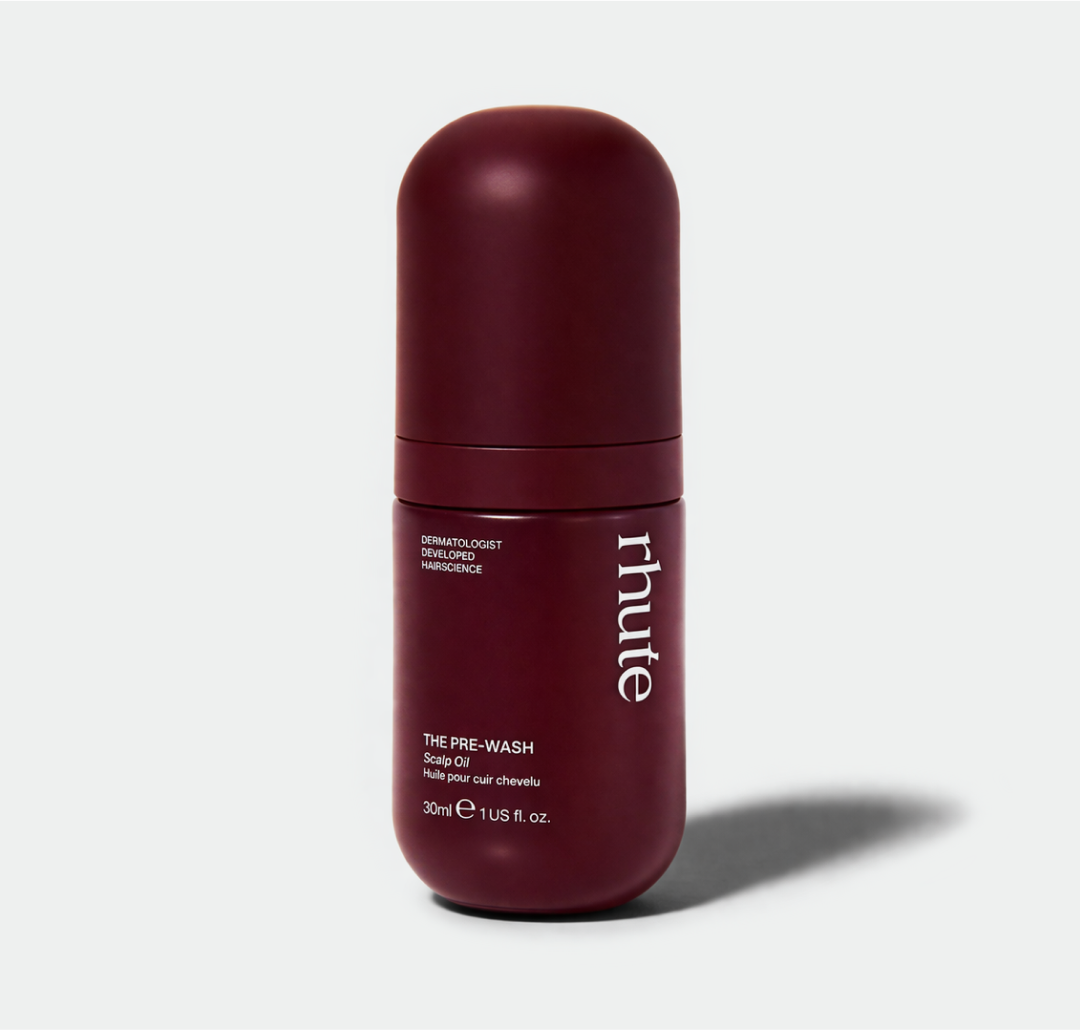
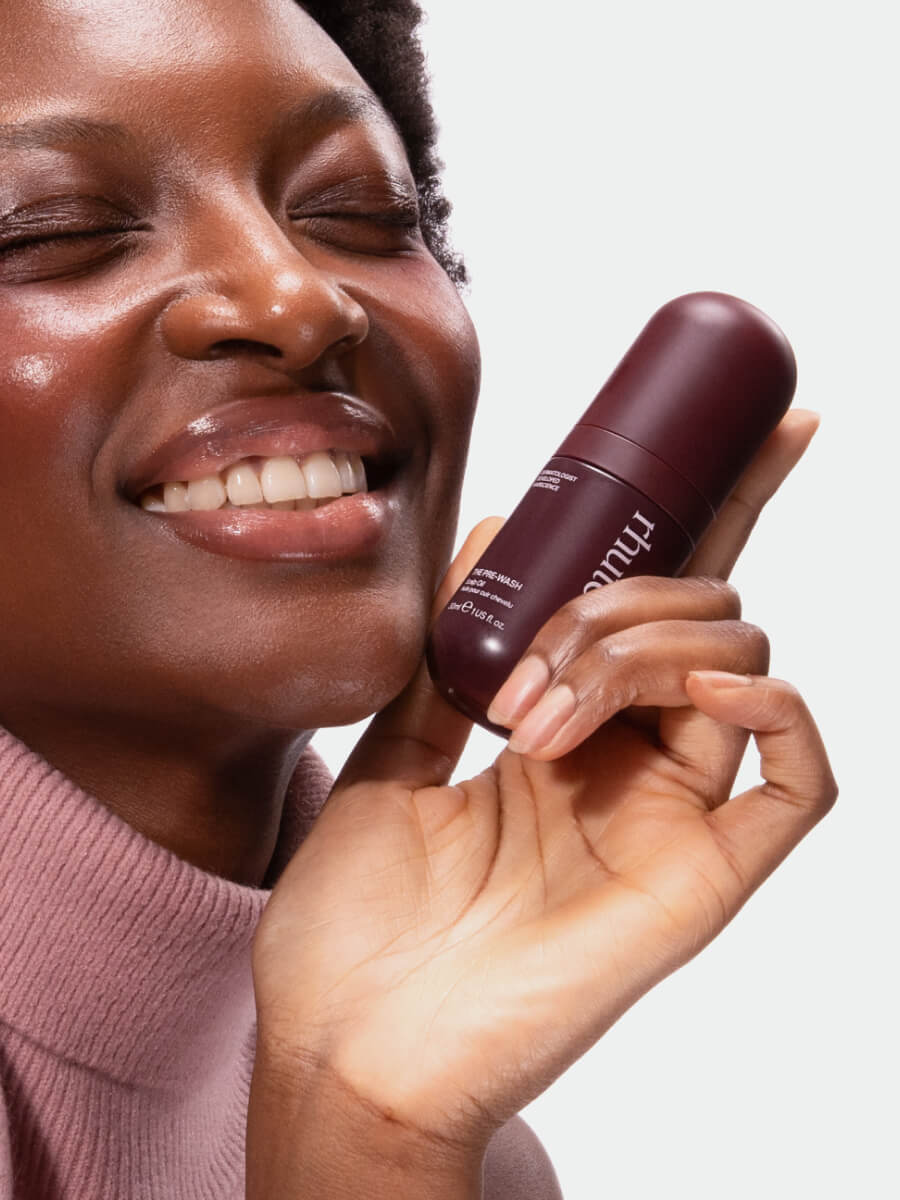
Two to three times per week, before you wash your hair, apply the Triple Density Complex Pre-Wash Scalp and Hair Oil. This is a DHT-modulating treatment oil with pumpkin seed oil, saw palmetto, beta-sitosterol, and ceramides. Leave it on for at least one hour, while the baby naps or during self-care time, or up to six hours if you can. It works on the scalp barrier and the hormonal environment around your follicles.
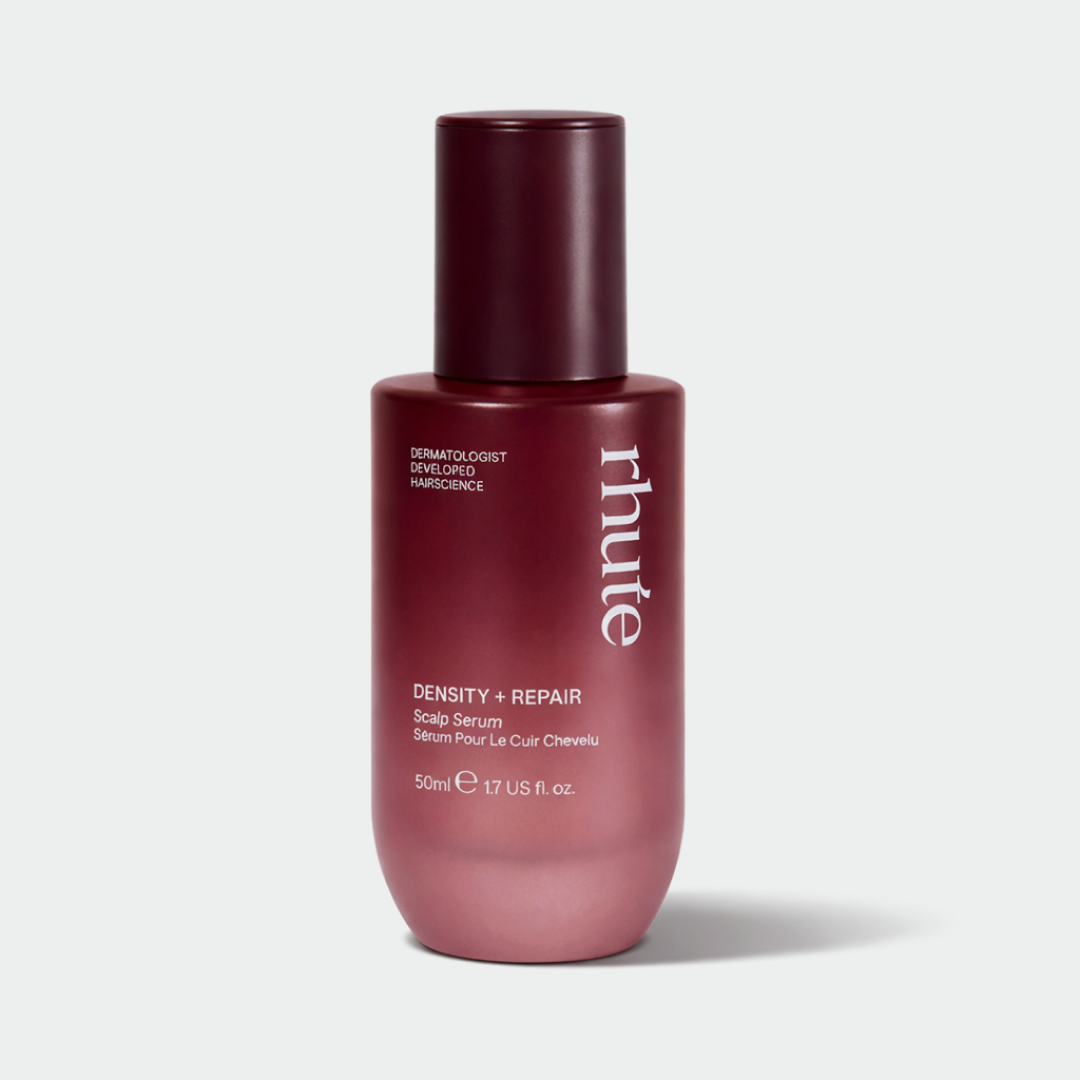
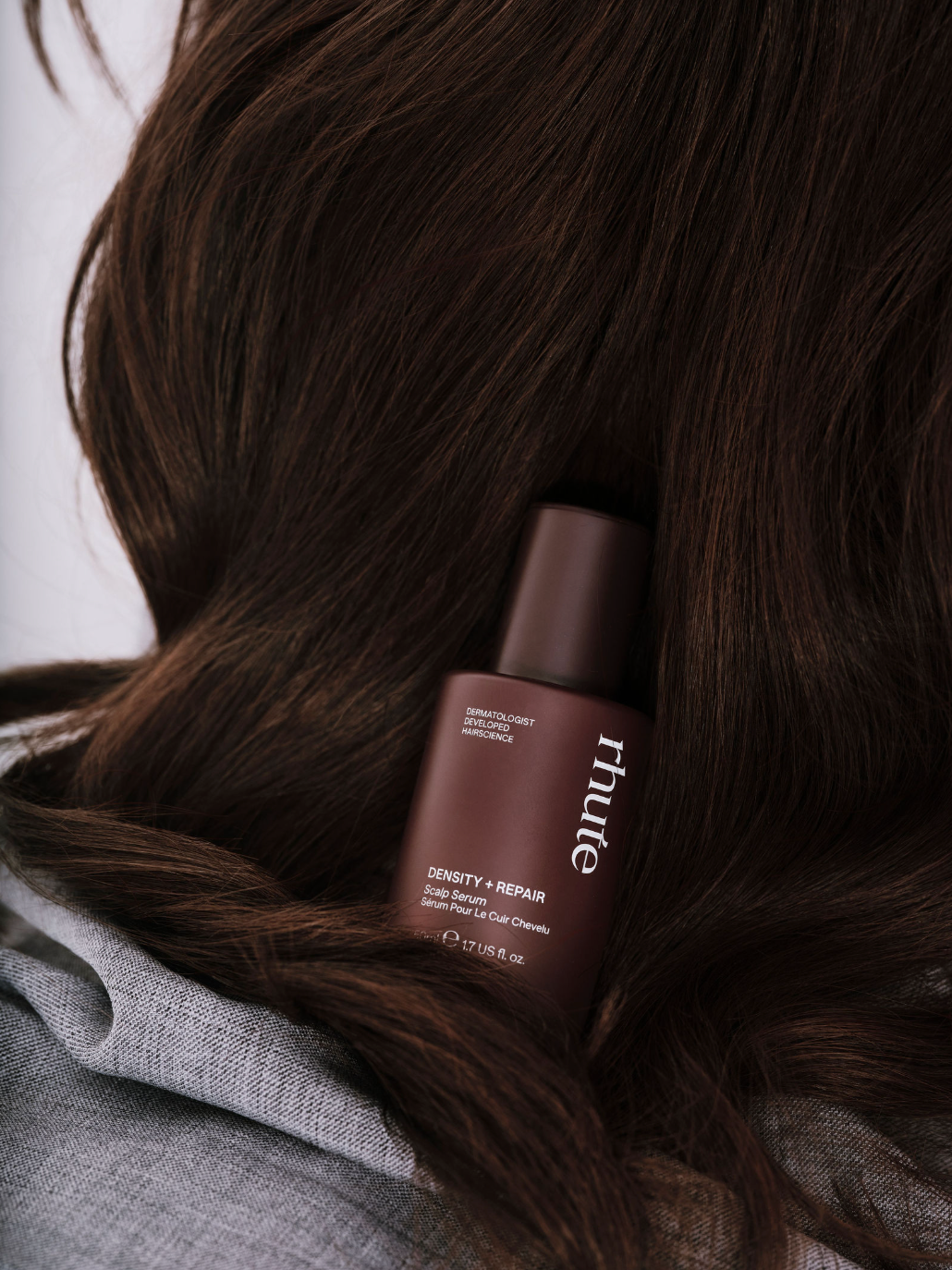
After washing, apply the Density + Repair Barrier-Boosting Scalp Serum. This takes about 30 seconds. It is lightweight, oil-free, and packed with stem cell extracts, bioactive peptides, caffeine, and niacinamide. It supports the follicle signalling and scalp environment that encourage regrowth.
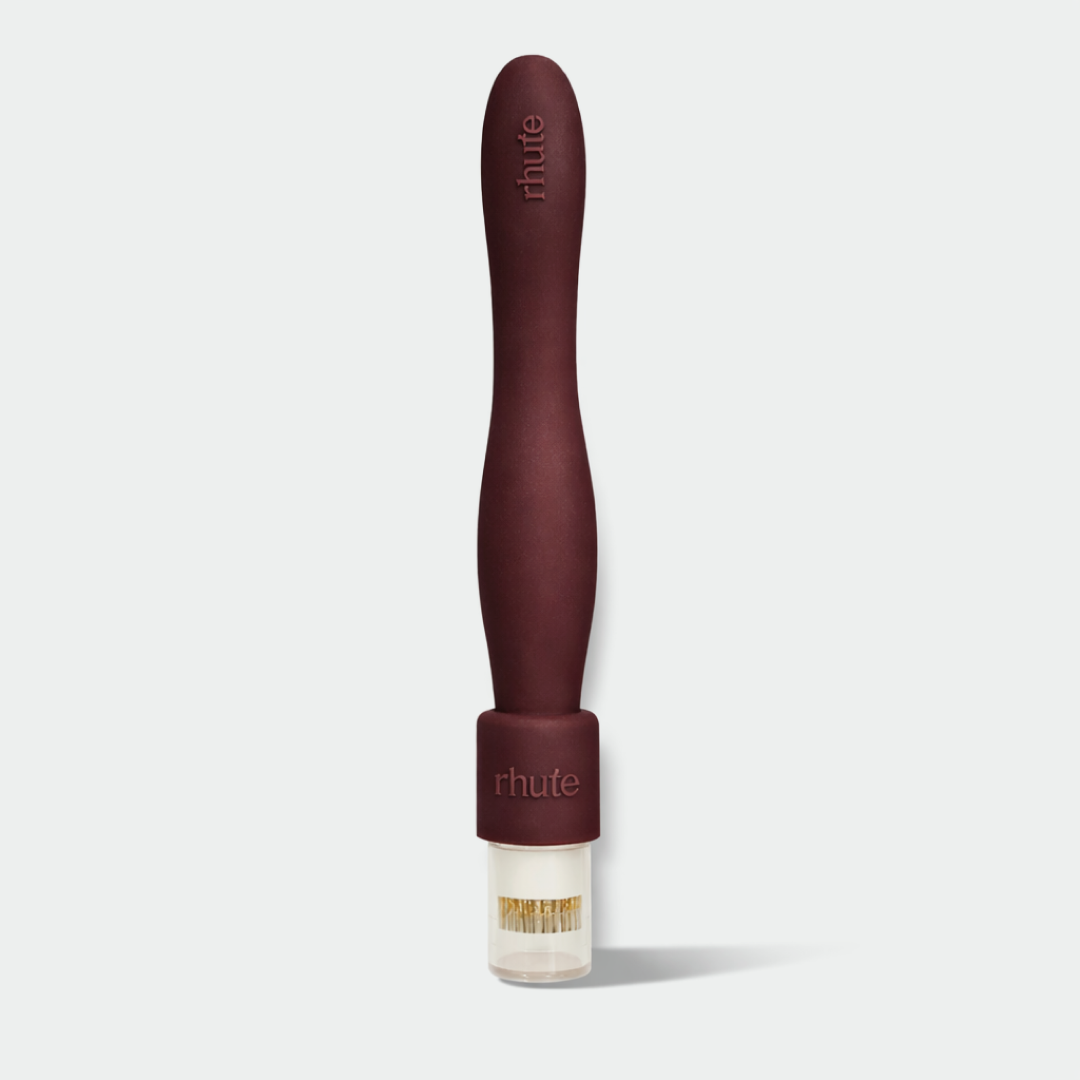
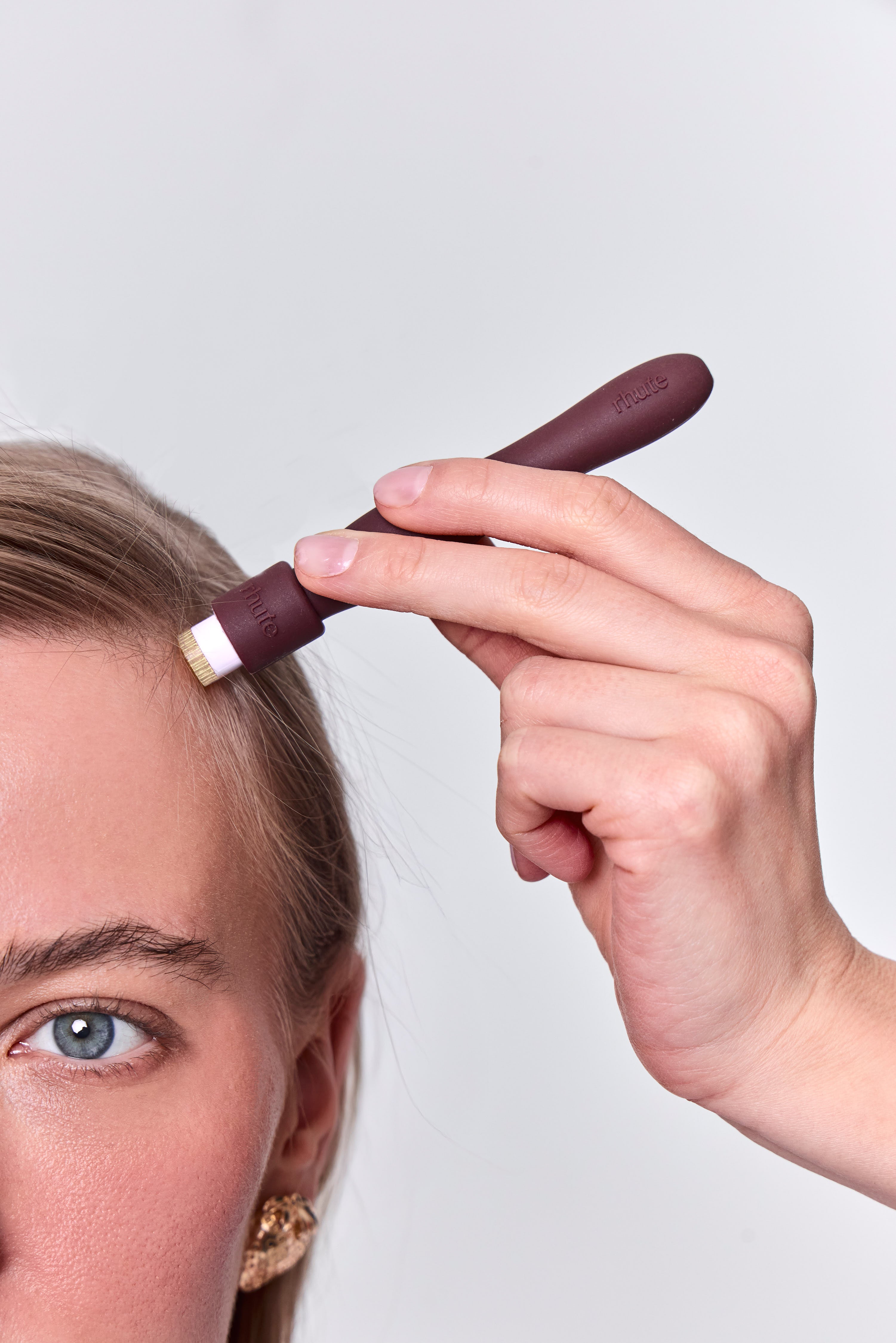
Once your shedding has started to stabilise, usually around three to six months, you can introduce the dermastamp one to two times per week before applying the serum. The 0.3mm depth is designed for at-home use and helps enhance absorption while stimulating the scalp’s natural repair response.
Even one of these steps is progress. You do not need to do everything perfectly every time. Consistency over time matters more than intensity in any single session.
Learn more about the best scalp serums for hair growth.
When to see your GP or dermatologist
Postpartum hair loss is common and temporary, but there are times when it’s worth getting professional input.
If your shedding continues beyond 12 months with no signs of improvement, that is a clear signal to investigate further. Other red flags include patchy hair loss rather than diffuse shedding, visible scalp redness or scarring, loss concentrated at your temples or eyebrows, rapid worsening rather than gradual improvement, or accompanying symptoms like extreme fatigue, weight changes, or heart palpitations.
When you see your GP, there are specific blood tests worth requesting: ferritin (your iron stores, which should ideally be above 60 ng/mL for hair health), thyroid function (TSH, T3, T4), vitamin D, B12, and folate. Many GPs will reassure you that postpartum shedding is normal, which is true, but knowing what to ask for puts you in a stronger position if something else is going on.
If you are concerned about underlying androgenetic alopecia or any type of scarring hair loss, a referral to a dermatologist is the appropriate next step. Early intervention makes a significant difference with these conditions.
FAQs
When does postpartum hair loss start?
Postpartum hair loss typically starts around three to four months after giving birth. A 2024 cross-sectional study places the average onset at approximately 2.9 months postpartum, though some women notice it earlier or later depending on individual hormonal patterns, breastfeeding status, and overall health. The shedding usually peaks around five months and resolves within 12 months for the majority of women.
How much hair loss is normal after having a baby?
During peak postpartum shedding, losing 300 or more hairs per day can be within the normal range, compared to the usual 50 to 100. It can look dramatic, but as long as the shedding is diffuse (all over, rather than in patches) and you begin to see regrowth within a few months, it is typically following the expected pattern.
When does postpartum hair loss stop?
For most women, shedding slows significantly by six to nine months postpartum and resolves by the time their baby turns one. If you are breastfeeding, the timeline may extend slightly. If significant shedding continues beyond 12 months, it is worth speaking to your GP.
Does breastfeeding make postpartum hair loss worse?
Research published in the International Journal of Women’s Dermatology (2024) found that longer breastfeeding duration is associated with extended postpartum shedding. This is likely due to sustained hormonal changes, higher nutrient demand, and ongoing sleep disruption. It is not a reason to stop breastfeeding, but it may explain why your timeline looks different from someone who is not feeding.
Will my hair go back to normal after postpartum hair loss?
For the majority of women, yes. Hair density typically returns to pre-pregnancy levels within 12 months. In some cases, research from the Journal of Clinical and Aesthetic Dermatology (2024) suggests that the postpartum shedding may reveal underlying genetic thinning (androgenetic alopecia) that was masked during pregnancy. If your hair does not return to its previous fullness, a dermatologist can help identify whether something else is contributing.
Is it safe to use hair treatments while breastfeeding?
Topical botanicals, scalp oils, peptide serums, and gentle microneedling at 0.3mm are generally considered safe during breastfeeding. Minoxidil is not recommended while breastfeeding due to limited safety data and the potential for absorption. This is one of the reasons rhute’s products are formulated without minoxidil. Always discuss new treatments with your GP if you are unsure.
What vitamins help with postpartum hair loss?
Iron (specifically ferritin levels), vitamin D, zinc, omega-3 fatty acids, and B12 all support healthy hair recovery. The key is testing rather than guessing: ask your GP for a blood panel so you can supplement where you are actually deficient rather than taking everything and hoping for the best.
Can postpartum hair loss be a sign of something else?
In most cases, postpartum shedding is straightforward telogen effluvium that resolves on its own within six to 12 months. However, a 2024 study found that over half of women presenting with postpartum hair loss also had underlying androgenetic alopecia (female pattern hair loss). If your hair loss is concentrated at the parting or temples, continues beyond 12 months, or is accompanied by fatigue, weight changes, or scalp redness, it is worth investigating with your GP or a dermatologist.