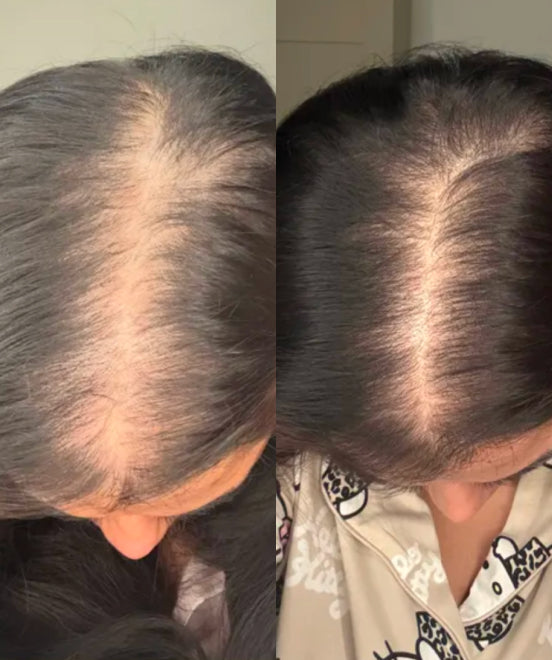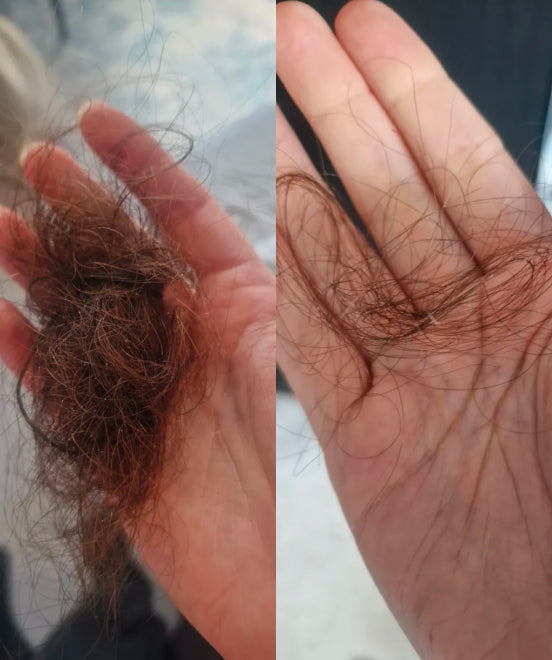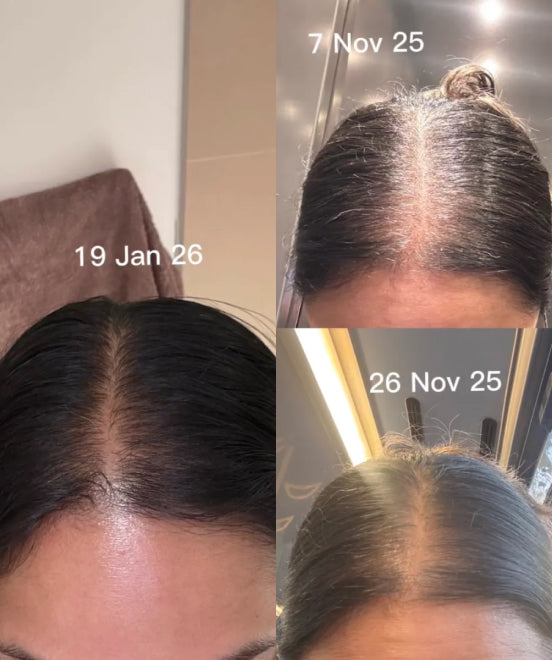



You started the pill at 17 because of acne, or to help your periods, or because you needed contraception and that was what your GP offered. A decade or so later, your parting feels wider, your ponytail feels thinner, or you've come off it altogether and the hair on your pillow is now noticeable enough to bother you. Somebody asks if you've thought about your birth control as the cause, and suddenly the dots seem to connect.
The honest answer is that birth control can affect your hair in several different ways. It depends on the type, the specific formulation, your genetics, and whether you're starting, switching or stopping. Some women have no hair impact at all. Some experience thinning. Some get a delayed shed two to three months after a change. And some women actually use specific types of the pill as a treatment for existing hair loss, because the right formulation can protect the follicle rather than damage it.
We explain the difference between the types of birth control available in the UK and how each one affects hair, what to expect after stopping the pill specifically, and the practical steps that genuinely help.
How birth control affects hair in the first place
Hormonal contraception works by changing the level of two female hormones in your body: oestrogen and progestogen (a category of hormones that includes natural progesterone and its synthetic versions, which are used in contraceptives). Both have effects on hair, and one of the more useful frames to understand is that the impact depends on the specific progestogen in the formulation, not on birth control as a single thing.
Some progestogens behave a little like androgens (a family of hormones that includes testosterone). On the face and body, androgens can drive unwanted hair growth. On the scalp, in women with the genetic sensitivity to it, androgens shrink hair follicles over time. Each new hair the follicle produces is a little finer and a little shorter than the last, until the follicle eventually stops producing visible hair. The medical name for this gradual shrinking is miniaturisation, and it's the same mechanism behind female pattern hair loss.
So the question of whether a particular birth control will affect your hair largely comes down to two things. First, the androgenic profile of the progestogen it contains (some are more androgen-like than others, some are actively anti-androgenic). Second, whether you're personally genetically sensitive to androgens at the follicle level, which is something you can't easily know in advance but tends to run in families.
There's also a second, separate mechanism that has nothing to do with androgens. Sometimes the hair loss isn't from the contraception itself but from the abrupt hormonal shift when you start, stop or switch formulations. This can trigger a synchronised shed called telogen effluvium, which shows up two to three months after the change and resolves on its own as your body settles. We cover this pattern in detail in the cortisol and hair loss article, and it's the same kind of shed most women experience postpartum.
How different types of birth control affect hair
The UK menu of hormonal contraception is bigger than just the pill, and each type interacts with hair differently. Here's how each one tends to play out.
Combined contraceptive pill
The combined pill is the most common form of contraception in the UK. It contains both oestrogen (almost always ethinylestradiol) and a progestogen. The oestrogen tends to be helpful for hair because it supports the growth phase of the cycle. The progestogen is where the variability sits. Some are mildly androgenic and can drive thinning in genetically sensitive women, and some are anti-androgenic and can actively protect against thinning.
This is the genuinely useful detail that often doesn't get explained at the GP appointment. The combined pill is not one thing. Below is a quick reference of the common UK formulations grouped by their androgenic profile.
|
Androgenic profile |
Effect on hair |
Common UK brands (active ingredients) |
|---|---|---|
|
Higher-androgen progestogens |
May mimic androgen activity at the follicle and worsen thinning in genetically susceptible women |
Microgynon 30, Rigevidon, Ovranette (levonorgestrel + ethinylestradiol); Brevinor (norethisterone + ethinylestradiol) |
|
Lower-androgen progestogens |
Less likely to influence hair growth; relatively neutral effect |
Cilest (norgestimate + ethinylestradiol); Marvelon, Gedarel (desogestrel + ethinylestradiol) |
|
Anti-androgenic progestogens |
May actively protect against thinning and also help with acne or unwanted body hair |
Yasmin, Yacella, Lucette (drospirenone + ethinylestradiol); Dianette, Clairette (cyproterone acetate + ethinylestradiol) |
If you're hair-conscious and on a higher-androgen pill, that's worth raising with your GP. Switching to a lower-androgen or anti-androgenic formulation is a reasonable conversation to have, especially if you have a family history of female pattern hair loss or you've been diagnosed with PCOS.
Mini pill (progestogen-only pill)
The mini pill contains only a progestogen, no oestrogen. The most commonly prescribed in the UK is desogestrel (sold as Cerazette, Cerelle and others). Because there's no oestrogen counterbalancing the progestogen, women on the mini pill sometimes notice more hair-related effects than they would on a combined pill. The newer mini pills (with desogestrel) are less androgenic than the older ones (with norethisterone or levonorgestrel), but they still don't deliver the protective oestrogen layer.
For women who are hair-conscious and have a choice, a combined pill with a low-androgen or anti-androgenic progestogen tends to be a more hair-friendly option than the mini pill, assuming there isn't a medical reason oestrogen is off the table.
Hormonal coil (intrauterine system)
The hormonal coil, sometimes called an IUS, slowly releases a progestogen called levonorgestrel directly into the uterus. The UK brands are Mirena (highest dose), Kyleena and Jaydess. Because the hormone is released locally, the levels in your bloodstream are much lower than with the pill, which is part of why the coil is often presented as a low-side-effect option.
That said, levonorgestrel is mildly androgenic, and some women genuinely do experience hair shedding after fitting. The official prescribing information lists alopecia as an uncommon side effect (under 1 in 100 women), but real-world data from larger studies has put the rate higher. If hair shedding starts within three months of fitting and you have a family history of female pattern hair loss, the coil isn't necessarily the culprit but it's a reasonable conversation to have with your GP.
Contraceptive implant
The implant (Nexplanon in the UK) is a small rod placed under the skin of the upper arm. It releases a progestogen called etonogestrel. Etonogestrel is less androgenic than levonorgestrel, but again, there's no oestrogen counterbalance. Hair shedding can happen but isn't common. If it does, it usually appears within a few months of insertion.
Contraceptive injection
The contraceptive injection in the UK comes in two forms. The more familiar Depo-Provera is given as an intramuscular (IM) injection by a nurse or doctor, and Sayana Press is the subcutaneous (SC, just under the skin) version that can sometimes be self-administered at home. Both deliver the same active ingredient, a progestogen called medroxyprogesterone acetate, and both are given every 13 weeks.
The injection's associated with a longer list of hormonal side effects than other options for some women, and hair changes can be part of that picture. Importantly, because it delivers a sustained dose over months, the effects can take longer to resolve once you stop.
Patch and ring
The patch (Evra) and vaginal ring (NuvaRing) are combined options that deliver oestrogen and a progestogen continuously through the skin or the vaginal wall. The patch contains norelgestromin (moderately androgenic). The ring contains etonogestrel (less androgenic). For hair purposes, they behave similarly to a combined pill with the same progestogen profile.
Non-hormonal options
The copper coil has no hormonal effect at all. It works by releasing copper ions into the uterus, which is toxic to sperm. For women who suspect their hair loss is hormonally driven by their current contraception, switching to a copper coil is a useful way to remove that variable entirely and see how the hair settles over the following 12 months. Other non-hormonal options (condoms, diaphragms, fertility tracking) have no impact on hair.
What happens after stopping the pill
This is the search that brings the most women to articles like this one. You've come off the pill, and three or four months later there's hair everywhere. You're worried something is wrong.
What's almost certainly happening is post-pill telogen effluvium. While you were on a combined pill, the steady oestrogen was holding more of your follicles in the growth phase than would be natural. Once you stop, oestrogen drops back to your baseline cycling levels, and a cohort of follicles that had been overdue for the shedding phase suddenly all tip into it at once. Two to three months later, you see the result: a heavier shed than normal, sometimes lasting six to eight weeks.
For most women, this resolves on its own within nine to 12 months. The follicles aren't damaged. They've just been released to do something they were going to do anyway, in a more concentrated window than normal. The same mechanism shows up in postpartum hair loss, which is the same biological event on a bigger scale, triggered by the much larger hormonal swing after delivery.
A few practical points worth knowing. If you stopped the pill because you're trying to conceive, the shed is more likely to overlap with early pregnancy if it happens, which can make things harder to interpret. If you stopped because of mood changes or other side effects, those tend to settle around the same timeline as the hair, but not always. If the shedding hasn't started to slow after about six months, or your overall density doesn't seem to be coming back at all, that's the cue to think about whether there's something else going on (iron deficiency, thyroid changes, an underlying pattern hair loss tendency the pill was masking).
For some women, coming off the pill reveals an underlying hormonal hair loss pattern that was being held in check by the protective oestrogen. This isn't the pill causing the loss exactly; it's the pill having been hiding it. The good news is that once you know, you can work with your GP on what to do next, whether that's another anti-androgenic pill, a non-hormonal route, or treatments aimed at the underlying pattern.
How to tell if your birth control is the cause
The clue is usually timing. Birth control-related hair changes tend to show up two to three months after starting, stopping or switching. If the shedding started around that window, the contraception is high on the list of likely contributors.
The pattern matters too. A diffuse shed that's heavier than your normal baseline, lasting a few weeks to a few months and then settling, fits the telogen effluvium picture that comes from hormonal change. A slow widening of your parting over many months, with hair coming through finer than what's being shed, fits a more chronic androgen-related pattern more likely to be driven by the specific progestogen.
Other things worth ruling out first. Iron and thyroid changes can mimic the same patterns and are easy to test for. Stress (excess cortisol), illness, and significant weight loss can drive their own telogen effluvium. And if your hair was thinning before you started or stopped the contraception, it's possible something else (like seasonal hair shedding) is contributing too.
The most useful single thing you can do is book a GP appointment, bring the timeline of when you started, switched or stopped any hormonal method, and ask for a blood panel that covers ferritin (your stored iron), a full blood count, thyroid function, vitamin D and vitamin B12. If your GP is open to it, a free androgen index can help spot whether there's an androgen-related contribution that the contraception might be feeding into.
What you can actually do about it
The right move depends on what's driving the shedding and where you are in the timeline.
If you've recently started or switched
Give it three to six months before drawing conclusions. The body needs time to settle into a new hormonal pattern, and a lot of what looks like a problem at month two has resolved by month six. If the shedding is heavy enough to be distressing, a GP appointment can help you decide whether switching to a lower-androgen formulation makes sense. In the meantime, the scalp-side options below can help limit damage to the strands you have.
If you've recently stopped
Riding it out is usually the right answer because the underlying mechanism resolves itself. Most post-pill shedding has settled within nine to 12 months. Iron, vitamin D and protein status all matter for how quickly you recover, so this is a good time to look at a blood panel and address anything that's low. Trying not to add new stressors on top (over-exercising, crash dieting, sleep loss) helps your body work through the reset more cleanly.
If you're on a higher-androgen pill and notice thinning
A conversation with your GP about switching to a lower-androgen or anti-androgenic formulation is worth having. Yasmin (drospirenone) and Dianette (cyproterone acetate) are common UK switch options for women with hair concerns, although Dianette is usually time-limited because of separate blood clot risk considerations. Some women find their hair stabilises within six to nine months of the switch.
Scalp-side support that's safe alongside any contraception
Topical scalp care can run alongside any contraceptive choice without complication, and it's the part you can control regardless of what's happening hormonally. Botanical ingredients that work on the DHT (dihydrotestosterone, the more active form of testosterone that drives follicle miniaturisation) pathway at the scalp level are worth considering: pumpkin seed oil and saw palmetto both have growing evidence behind them, and the pumpkin seed oil article gets into the detail. Caffeine, peptides, niacinamide and panthenol all support follicle activity and scalp barrier function.
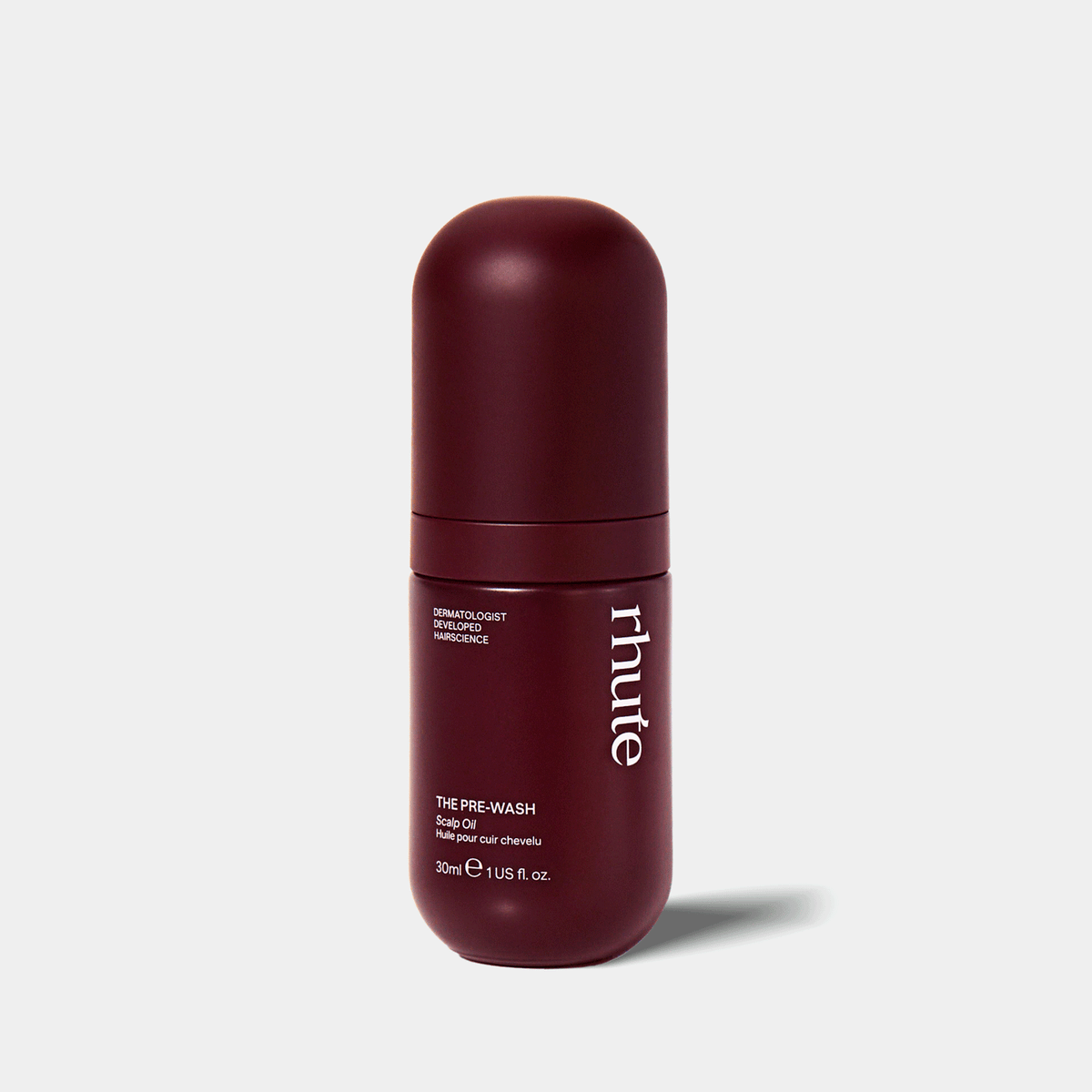
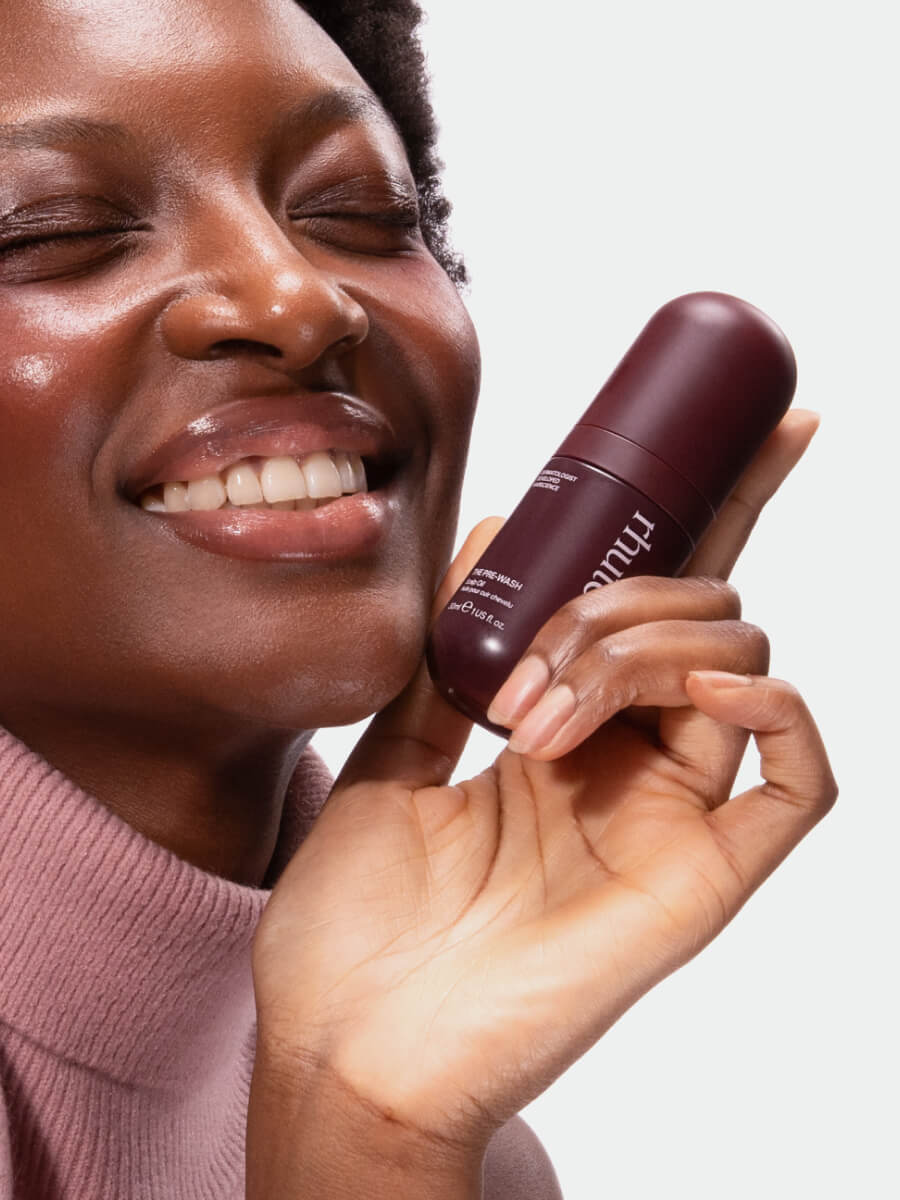
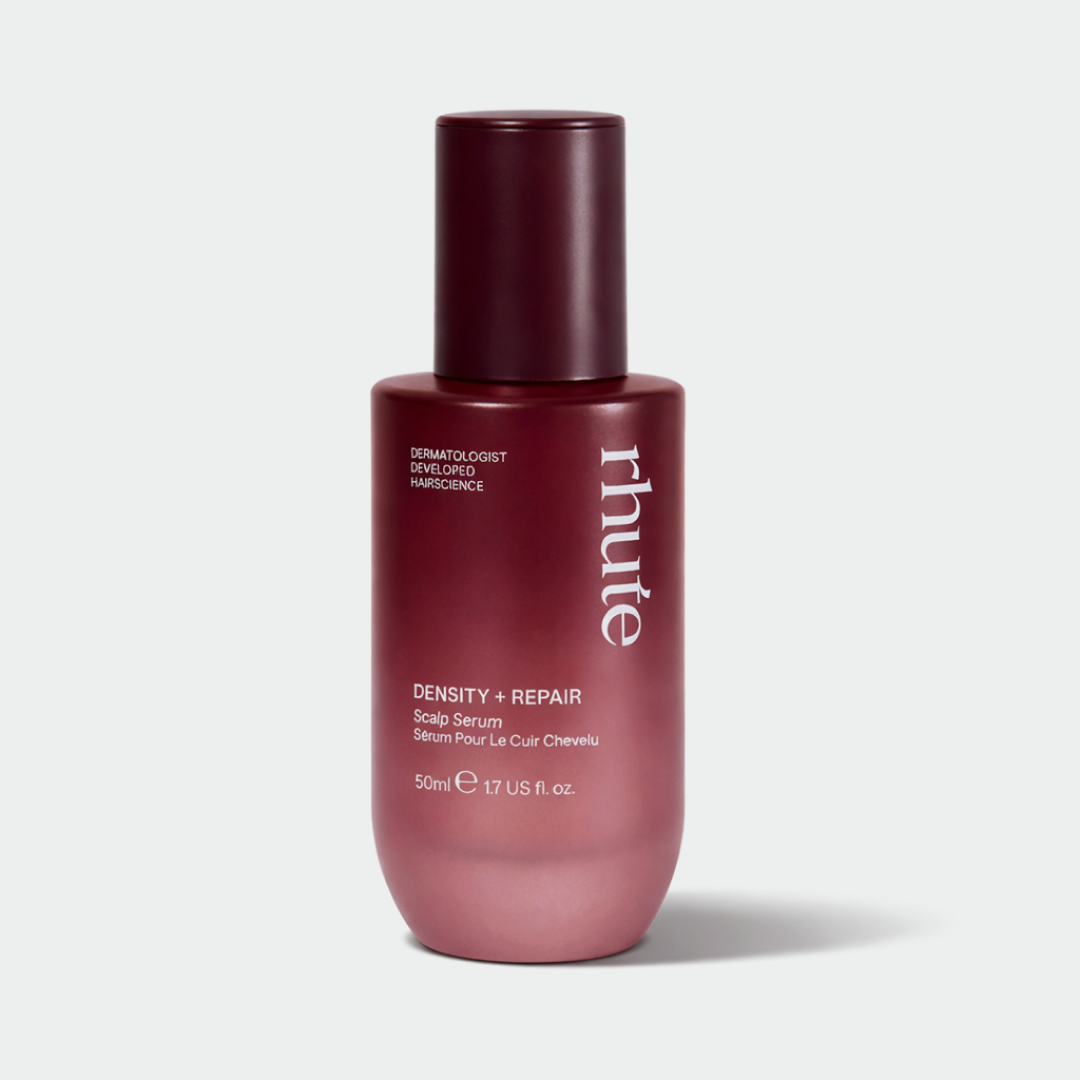
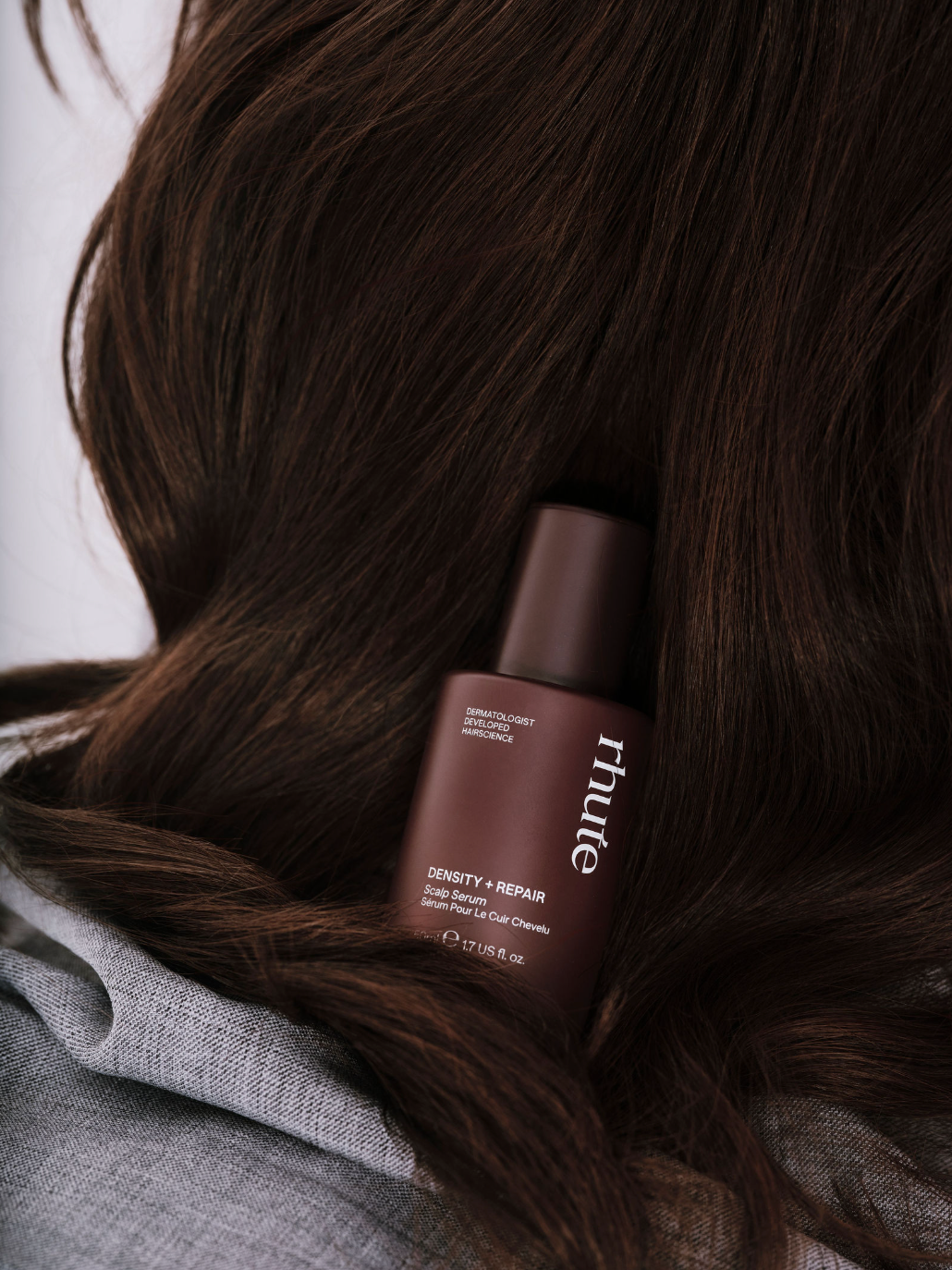
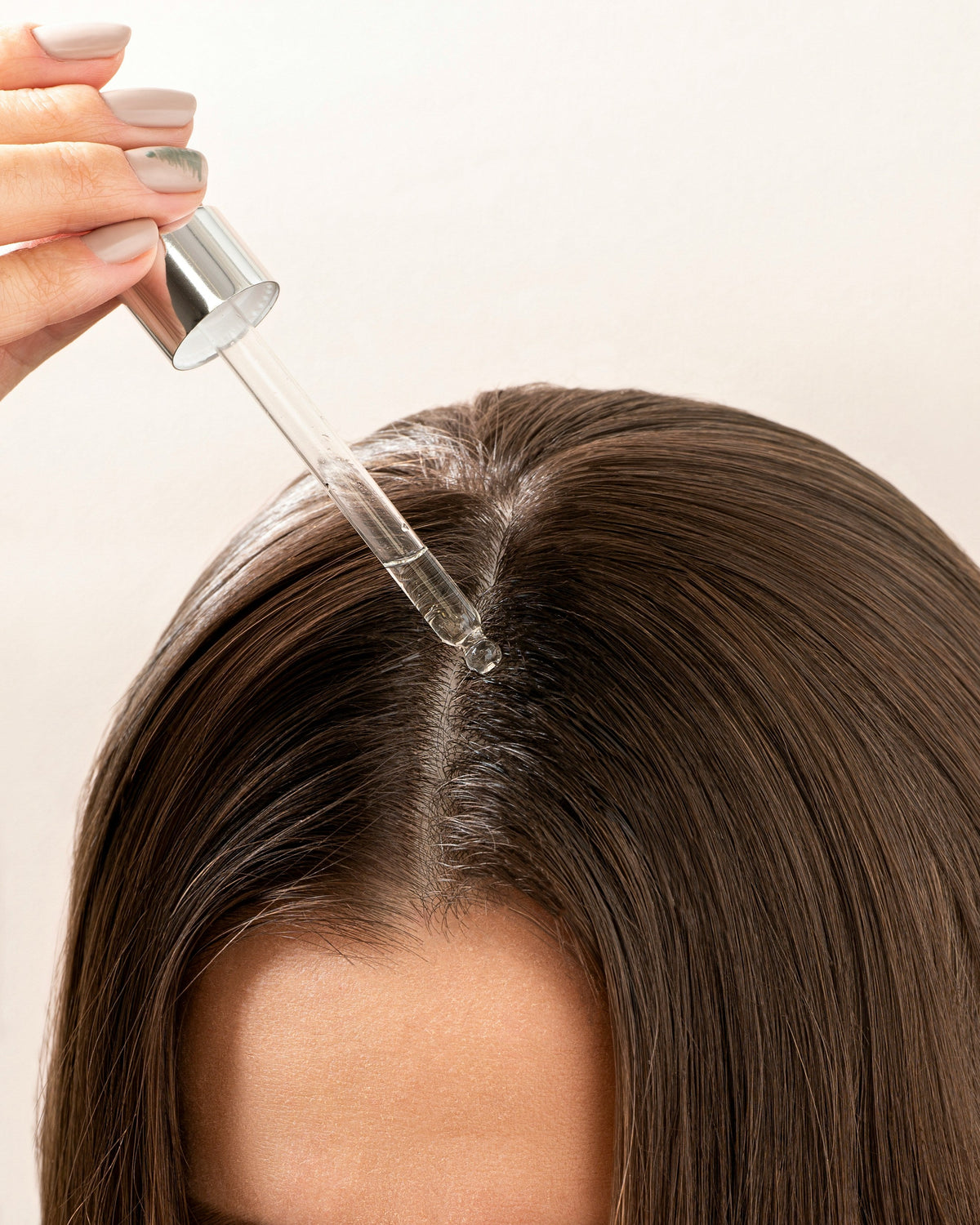
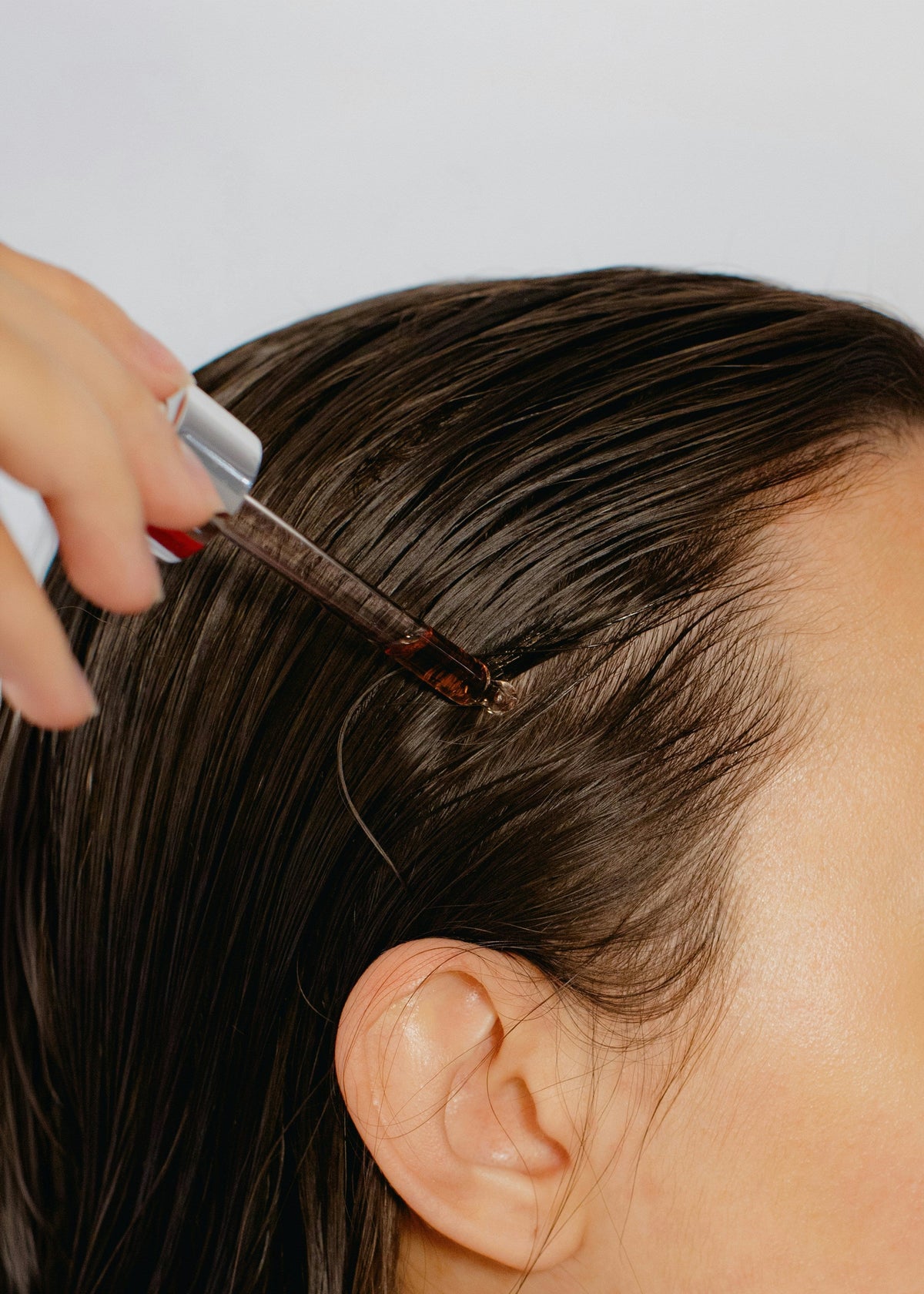
The Density + Repair Scalp Serum is the daily leave-on layer with caffeine, peptides, niacinamide and panthenol. The Density Complex Pre-Wash Hair & Scalp Oil brings the DHT-modulating botanicals together with ceramides and rosemary in a pre-shampoo treatment used two to three times a week. Both are minoxidil-free, which matters if you're planning to come off contraception with a pregnancy in mind, and both are safe to use during pregnancy and breastfeeding.
Our natural DHT blockers guide goes deeper into how the botanical options compare to the prescription anti-androgens.
Other options worth knowing about
Minoxidil (sold over the counter as Regaine in the UK) extends the growth phase of the hair cycle and can be useful if the shedding doesn't resolve on its own. It needs three to six months to show results, has to be used long-term, and isn't safe in pregnancy or breastfeeding, which makes it a tricky fit for some women on the family planning journey.
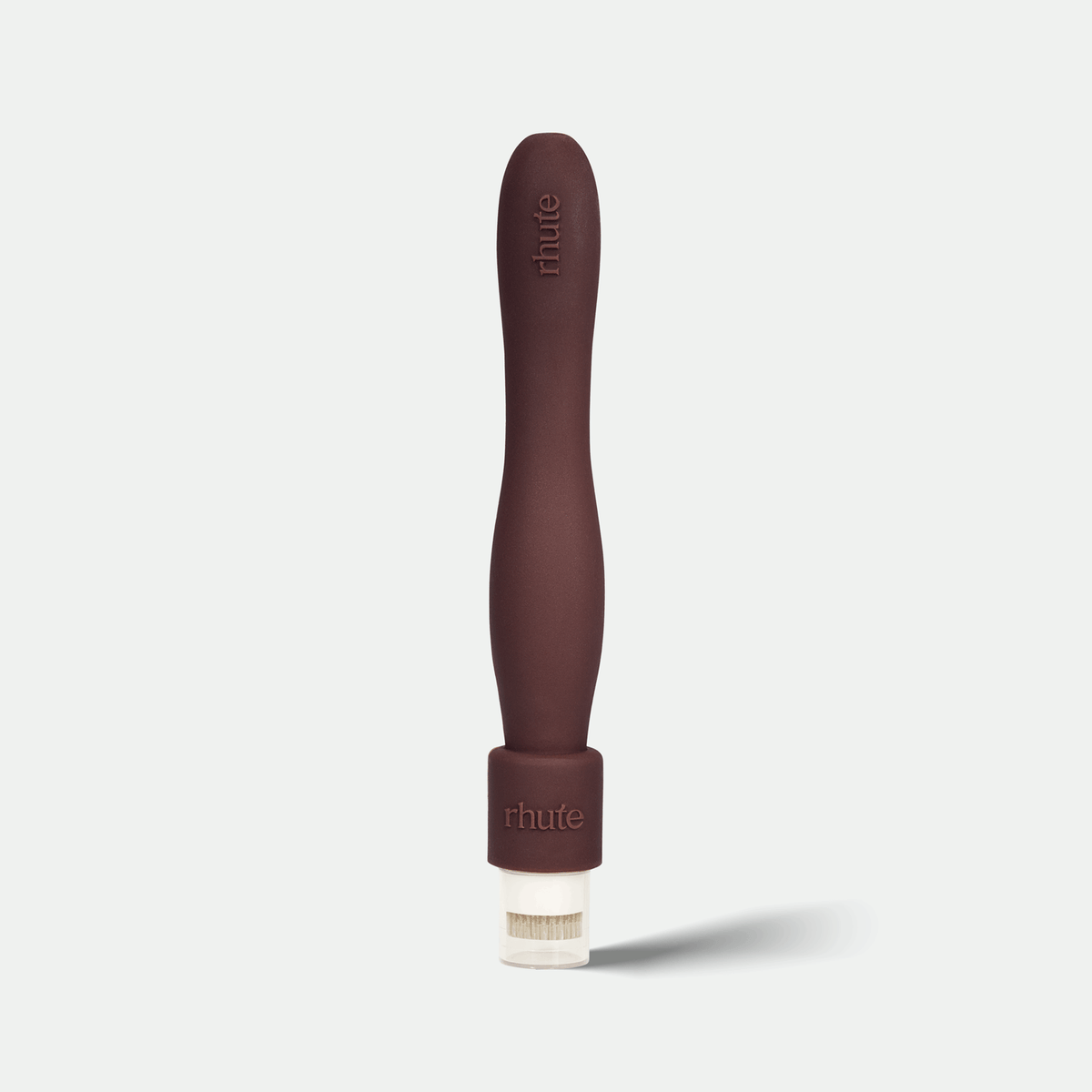
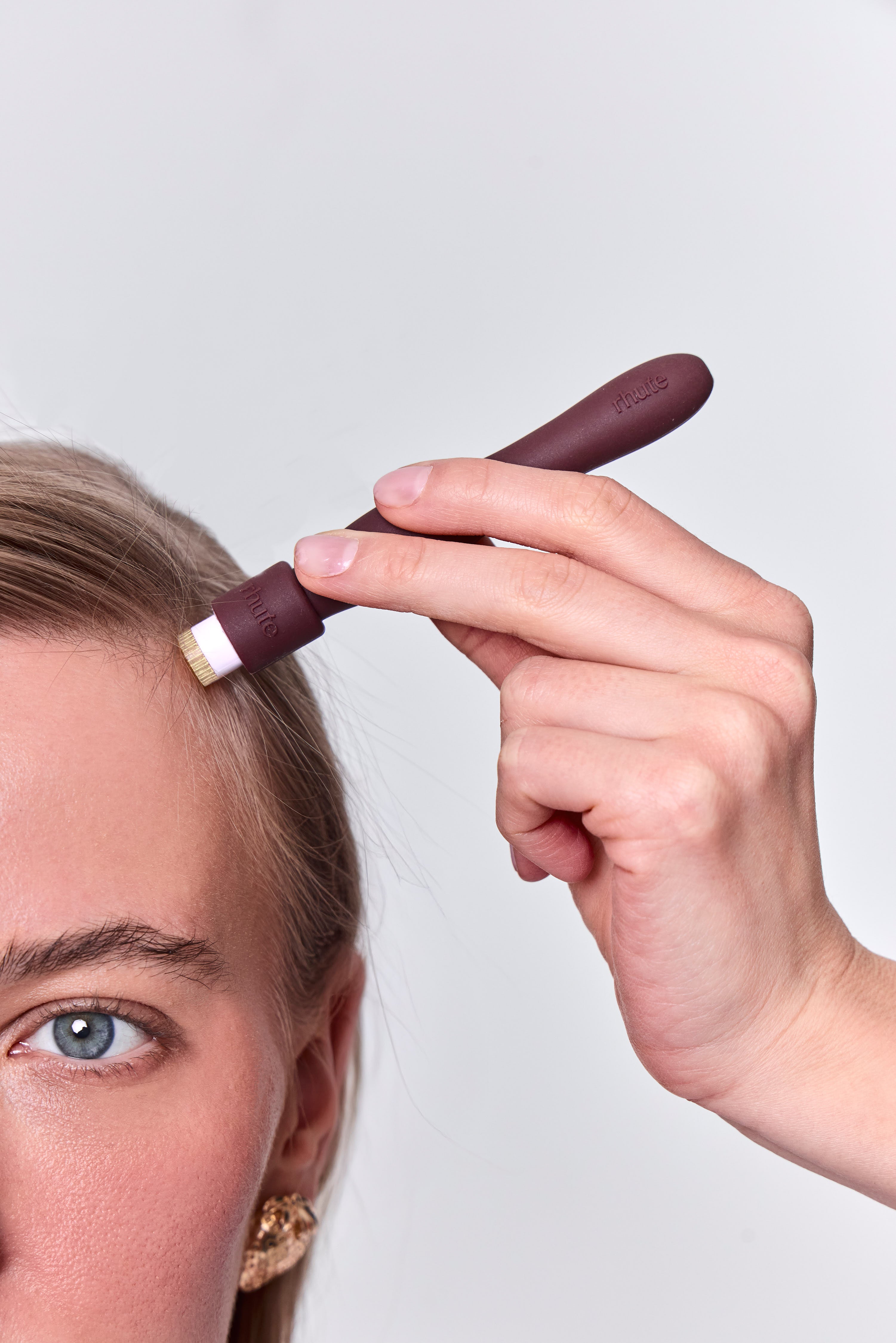
Microneedling the scalp, with a tool like our precision dermastamp, creates tiny channels that help topical actives absorb better and triggers a wound-healing response at the follicle level. It pairs well with scalp serums.
Birth control as a treatment for hair loss
Worth a separate mention because most articles miss it. For women with androgen-driven hair loss (PCOS, female pattern hair loss), the right contraceptive pill can actively help rather than hurt. Combined pills with anti-androgenic progestogens like drospirenone (Yasmin, Yacella, Lucette) or cyproterone acetate (Dianette, Clairette) raise sex hormone binding globulin (a protein in your blood that mops up free testosterone) and block androgen receptors at the follicle, both of which reduce the androgenic drive that causes thinning.
A 2006 study found 62% of women with female pattern hair loss improved when treated with a combination of low-dose finasteride and a drospirenone-containing pill, and the spironolactone and contraceptive route is a well-recognised combination for premenopausal women with androgen-driven hair loss. None of this is something you can prescribe yourself, but it's a useful conversation to have with your GP or dermatologist if you're already on a pill that isn't working for you.
A note on scarring hair loss and the pill
This needs to be handled carefully because the link is real but the absolute risk is low. A 2024 King's College London study published in JAMA Dermatology found that women carrying a specific variant of a gene called CYP1B1 (which helps the body process the hormones in oral contraceptives) had a meaningfully higher risk of developing frontal fibrosing alopecia, a rare scarring form of hair loss along the front hairline. Frontal fibrosing alopecia is uncommon, and the gene variant doesn't tell you anything definitively useful on its own. The point of mentioning it is that if you have a family history of FFA or you're noticing scalp redness, itching or hair loss specifically along your hairline rather than the rest of your scalp, a dermatology referral is worth pushing for.
For everyone else without those specific signs, this is a piece of evolving research rather than a reason to come off the pill.
When to talk to your GP or dermatologist
A GP appointment is worth booking if your shedding has been heavy for more than three months, you've been on the same contraception for years and only recently started seeing changes, you're seeing the kind of progressive thinning pattern that doesn't fit a simple telogen effluvium picture, or your hair is affecting your confidence. Bring your contraception timeline and any family history of hair loss.
A dermatology referral is the next step if your GP isn't able to help, if you're seeing red flags like scalp redness, itching or hair loss along the hairline specifically, or if the shedding is progressing despite a contraception change. Dermatologists can confirm the pattern with magnification tools and prescribe off-label treatments like spironolactone or topical anti-androgens that GPs often won't.
FAQs
Can birth control cause hair loss?
Yes, but not all birth control does. Combined pills with high-androgen progestogens (levonorgestrel, norethisterone) can contribute to thinning in genetically sensitive women. Progestogen-only methods (mini pill, hormonal coil, implant, injection) can also cause shedding in some women, particularly within the first three months of starting. The shedding usually settles once your body adjusts or you switch to a different formulation.
How long does birth control hair loss last?
If it's a temporary shed triggered by starting, switching or stopping (telogen effluvium), most women see the shedding settle within six to nine months and overall density return within nine to 12 months. If the hair loss is androgen-related thinning caused by a higher-androgen pill in a sensitive woman, it tends to be slower and more progressive without intervention.
Will my hair grow back after stopping the pill?
For the majority of women, yes. The post-pill shed that shows up two to three months after stopping is temporary and resolves over the following nine to 12 months. The follicles aren't damaged. They've just been released into the resting phase in a synchronised wave. If your hair doesn't appear to be recovering after 12 months, that's the point to investigate other contributors with your GP.
Which birth control is best for hair loss?
The most hair-friendly options are combined pills with anti-androgenic progestogens like drospirenone (Yasmin, Yacella, Lucette) or cyproterone acetate (Dianette, Clairette). For women who can't take oestrogen, a low-androgen progestogen-only option is the next best alternative, though the protection isn't as strong. Non-hormonal options like the copper coil don't affect hair at all and are worth considering if hair is a particular concern.
What's the difference between hair shedding and hair thinning on the pill?
Shedding is a synchronised loss of a larger-than-normal number of hairs at once, usually triggered by a hormonal change like starting, switching or stopping the pill. It shows up two to three months after the trigger and is temporary. Thinning is a gradual, progressive reduction in hair density caused by follicles being shrunk by androgen activity over time. It tends to be a slower change, often noticed first as a wider parting or thinner ponytail.
Should I stop taking the pill if I think it's causing hair loss?
Not without talking to your GP first. Coming off any contraceptive abruptly can itself trigger a withdrawal shed, which might make things worse before they get better. Your GP can help you decide whether switching to a different formulation, trying a non-hormonal method, or staying on what you're on (especially if you're already six months in and things may be about to settle) makes the most sense. If you do need to stop, planning for the post-pill shed window helps a lot.
Can stress make birth control hair loss worse?
Yes. Stress raises cortisol, which can both add its own telogen effluvium on top of the contraceptive picture and exacerbate any androgen-related pattern. Stress management is worth taking seriously alongside any contraceptive change, and our cortisol and hair loss guide covers this in detail.