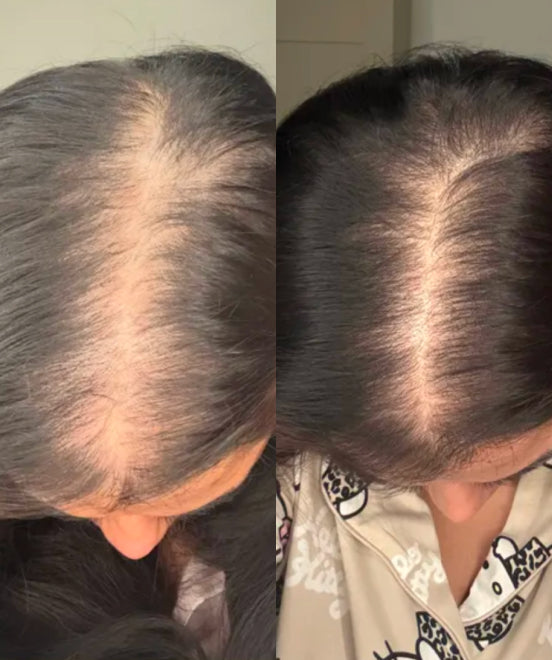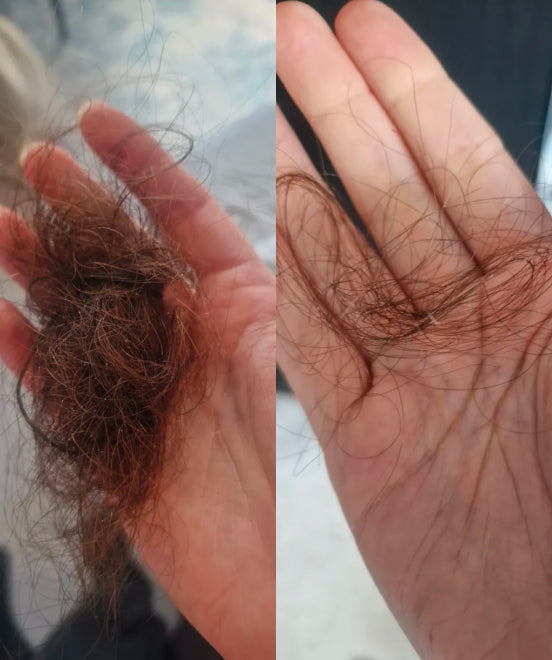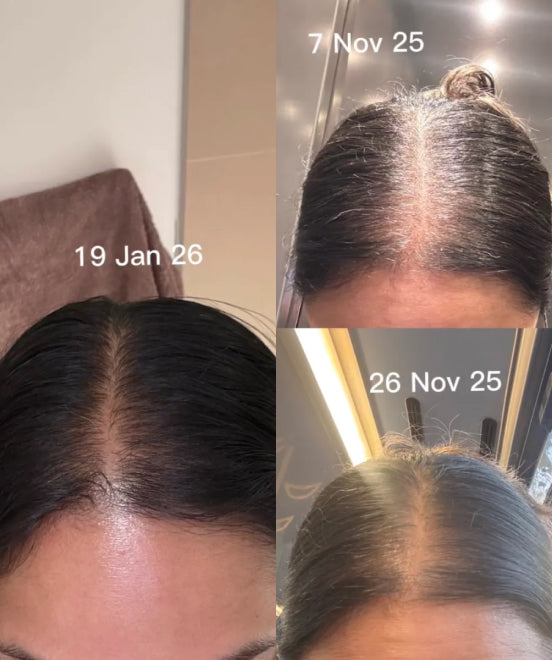

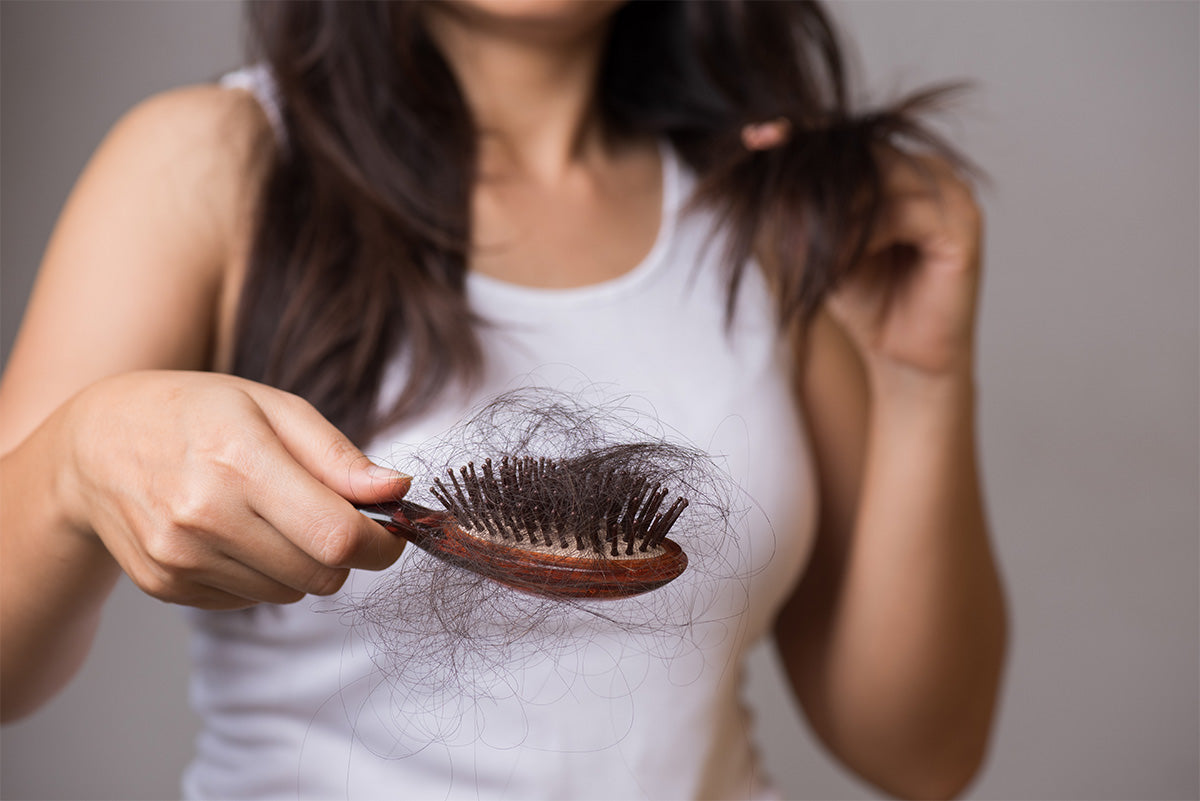

Everyone told you pregnancy would give you the best hair of your life. Thicker, shinier, fuller. The one good side effect nobody could complain about. So when you're pregnant and your hair is thinning instead of thriving, it can feel like a small betrayal that nobody warned you about.
Pregnancy hair loss is real, it's more common than the glossy version suggests, and it has identifiable causes that often have nothing to do with you doing anything wrong.
This article is for you if you're losing hair while pregnant and want to understand what's going on. We're covering why it happens (even when the hormonal environment should be protective), the real culprits behind it, what's actually safe to do about it during pregnancy, and how to set your scalp up for what comes after delivery.
Why pregnancy should make hair thicker (and why it doesn't always)
Here's what's supposed to happen. Oestrogen, the dominant hormone of pregnancy, holds your hair follicles in the growth phase for longer. Each hair has a natural lifecycle of growing, resting, and shedding, and in normal life, roughly 10 to 15% of your hairs are in the resting phase (called telogen) at any one time. During pregnancy, that number drops. More follicles stay in active growth (called anagen), the shedding phase shrinks, and your hair gets the chance to get longer and feel denser. Hair shaft diameter increases slightly too (Gizlenti & Ekmekci, 2014). This is why so many women experience that famous pregnancy hair.
That's the textbook version. The reality is messier, and for a meaningful percentage of women, it goes the other way.
A few things can flip the script. The first trimester is hormonally chaotic. Oestrogen is climbing fast. Progesterone (the hormone that keeps your uterus lining stable and supports the pregnancy) is climbing alongside it. Prolactin (the hormone that prepares your breasts for milk production) starts to rise. Cortisol (your stress hormone, which naturally goes up during pregnancy as your body adapts) shifts too. And your thyroid hormones (the chemical messengers that control how fast your body uses energy) start to recalibrate. Your body is essentially being rewired to support a pregnancy. For some women, that upheaval is enough to trigger a sudden, diffuse shedding pattern called telogen effluvium (the medical name for hair shedding that happens when a high proportion of follicles are pushed into the resting phase at the same time; Malkud, 2015). The shedding doesn't usually start until two to four months after the trigger, which is why you might be in your second trimester before you notice anything.
For other women, pre-existing nutrient deficiencies get amplified by pregnancy's enormous demands. And for some, underlying conditions like thyroid dysfunction make their first proper appearance during pregnancy because the symptoms blend in with everything else you're feeling.
So no, you're not unlucky or doing it wrong. Pregnancy hair loss has real, traceable causes. Most of them are temporary, and most of them are something you and your GP can do something about.
The real reasons you might be losing hair while pregnant
Of the women we hear from, three triggers come up over and over: iron deficiency, thyroid disruption, and broader nutritional gaps. None of these are about you. They're about what your body is being asked to do.
Iron deficiency and anaemia
Iron is the one that catches the most women off guard. Pregnancy increases your blood volume by roughly 30 to 50%, and your daily iron needs nearly double. Your baby is also drawing on your iron stores to build their own. The result is that a lot of women dip into iron deficiency well before their haemoglobin shows any obvious problem.
UK data on this is sobering. A recent narrative review put the prevalence of antenatal anaemia in the UK at around 24%, with iron deficiency the main driver, and roughly one in three women showing signs of early iron depletion during pregnancy. The most useful early-warning blood test for this is ferritin (your stored iron), because it drops well before your full blood count flags a problem. A ferritin reading below 30 mcg/l is the level UK guidance treats as a clear sign of depletion. If you're losing hair and feeling unusually tired, breathless on light effort, or noticing your heart racing for no obvious reason, ask your GP or midwife to check it.
Iron sits right at the centre of the hair growth pathway. Without enough of it, your follicles slow down, more hairs drop into the resting phase, and the hair you do grow is finer and weaker. The encouraging part is that this is one of the most fixable causes of pregnancy hair loss. Once your iron levels are back up, your hair tends to follow within a few months.
Thyroid disruption
Hypothyroidism (an underactive thyroid, where your body isn't making enough thyroid hormone) affects roughly two to three in every 100 pregnant women, and hyperthyroidism (an overactive thyroid) affects a smaller proportion. Both can cause hair loss, and both are easy to miss during pregnancy because the early symptoms (fatigue, weight changes, mood shifts, feeling cold or hot) overlap so heavily with how you'd expect to feel anyway.
If you're shedding more than feels normal, especially alongside symptoms like dry skin, constipation, brain fog, or a racing heart, it's worth asking for a thyroid panel. Thyroid function tests are a quick blood test, and any imbalance can usually be managed with medication that's safe during pregnancy. Treating it earlier rather than later is better for both your hair and your baby's development.
Other nutritional gaps
Iron isn't the only nutrient under pressure. Vitamin D, B12, folate, and zinc all play roles in the hair growth cycle, and all have increased demands during pregnancy. A 2024 study looking at women with telogen effluvium found that zinc, in particular, was a significant differentiator between people who were shedding and people who weren't. UK pregnant women also tend to fall short on vitamin D, especially in winter and especially if they have darker skin.
This doesn't mean you should start stacking supplements. Some of them, including high-dose vitamin A, aren't safe during pregnancy. The right move is to ask your GP or midwife to run a panel if you're concerned, and let any deficiencies guide what you actually need. Your standard pregnancy multivitamin covers a lot of bases, but it doesn't cover everything if you're starting from a depleted place.
What's happening at your scalp (and why it matters)
There's a saying that's been doing the rounds in skincare circles for a while now: your scalp is skin too. We say it a lot at rhute because it underpins how we think about everything we do. Pregnancy doesn't just change what's happening inside your body. It changes what's happening on the surface of your scalp.
Your hormones shift sebum production, so you might find your scalp going noticeably oilier or, less commonly, drier than usual. Your skin barrier becomes more sensitive to fragrance, friction, and product change. Your scalp's pH can swing, which affects the bacteria and yeast that live there normally and keep things in balance.
This matters because your follicles don't function in isolation. They're embedded in your scalp, and the environment around them affects how well they cycle, how easily they shed, and how strong the new hair coming through is. A scalp that's irritated, inflamed, or out of balance is a scalp where follicles work less well.
Supporting your scalp during pregnancy isn't just about the hair you have right now. It's about laying the groundwork for what comes next. After delivery, your hormones drop sharply and a different shedding event tends to kick in (more on that in a minute). The healthier your scalp environment going into that transition, the better your follicles cope on the way out.
What's safe to use during pregnancy (and what isn't)
This is the question every pregnant woman with hair loss is asking, and it's the section most articles dodge. Let's actually answer it.
What's off the table
Minoxidil is the most common hair loss treatment globally, and it's not recommended during pregnancy or breastfeeding. The regulatory category sits at the level where risk to the baby can't be ruled out, and there are reported cases linking it to fetal abnormalities, though the data is limited. The medical consensus across UK, US, and EU guidance is clear: pause it if you're pregnant or trying to conceive, and don't restart it while you're breastfeeding.
Finasteride and other prescription DHT blockers (DHT is dihydrotestosterone, a hormone implicated in pattern hair loss) are absolutely off the table. Finasteride sits in the highest-risk pregnancy category because it can cause genital malformations in male fetuses. Pregnant women shouldn't even handle crushed or broken tablets.
High-dose oral hair supplements are a grey area. Some contain ingredients that aren't pregnancy-safe at the doses they're sold in (high-dose vitamin A is the classic example). Always check with your GP or midwife before adding anything to your prenatal vitamin.
What is safe
The good news is that the topical pregnancy-safe space has come a long way. The general principle is that hair products applied to the scalp have minimal systemic absorption, meaning very little of what you put on actually ends up in your bloodstream. Research on this has been reassuring for most cosmetic and gentle botanical ingredients.
Gentle, fragrance-free scalp care that focuses on supporting your skin barrier and nourishing the environment around the follicles is a smart choice during pregnancy. Botanical actives that don't act systemically (think soothing extracts, ceramides, fatty acids) are generally well tolerated. The ingredients you want to be more cautious about are retinoids (vitamin A derivatives), salicylic acid at high concentrations, and any product where the safety information explicitly flags pregnancy.
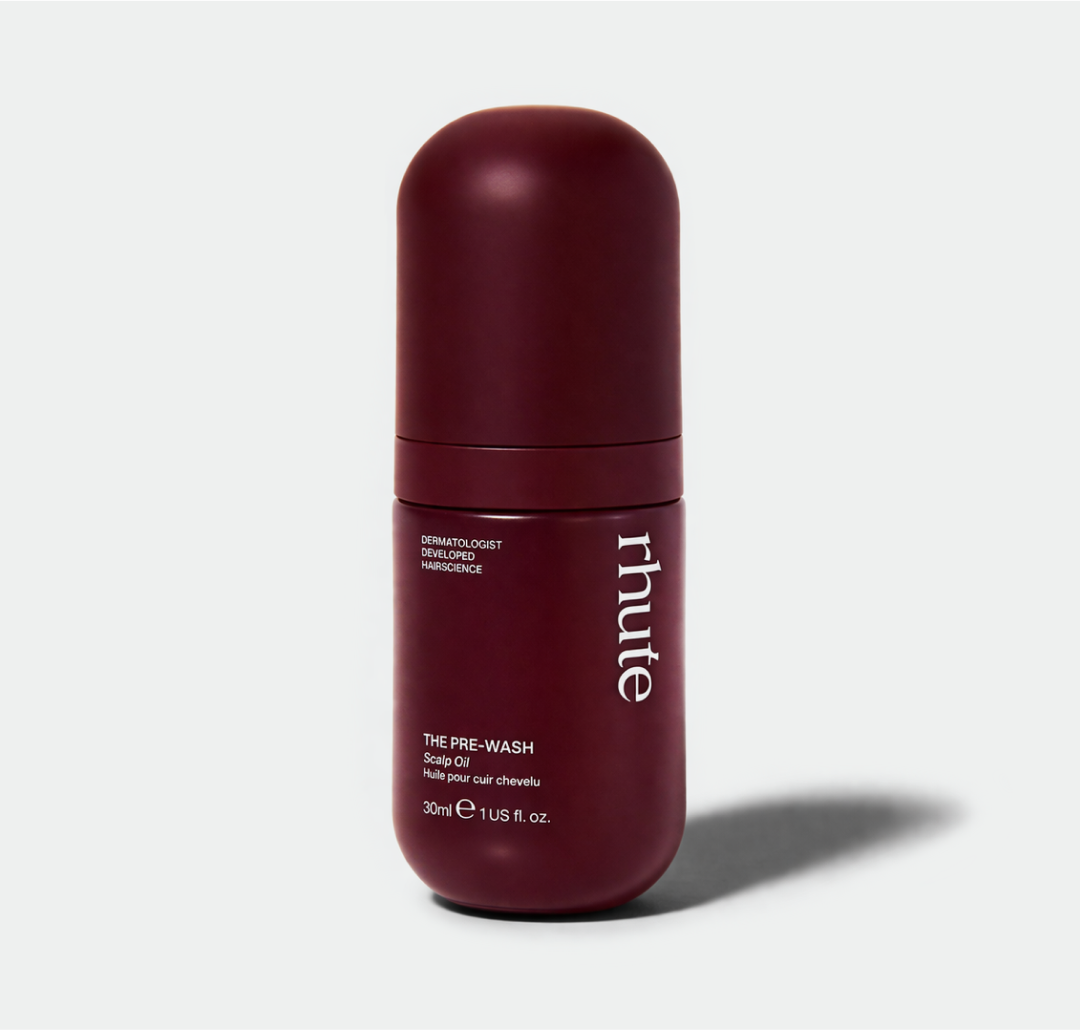
All of rhute's products are confirmed safe for use during pregnancy and breastfeeding. We're minoxidil-free by design, and our formulations are developed under dermatological expertise with pregnancy and postpartum specifically in mind. We say this not as a sales pitch, but because it's a genuinely useful piece of information for someone trying to work out what they can actually put on their scalp without a spiral of worry.
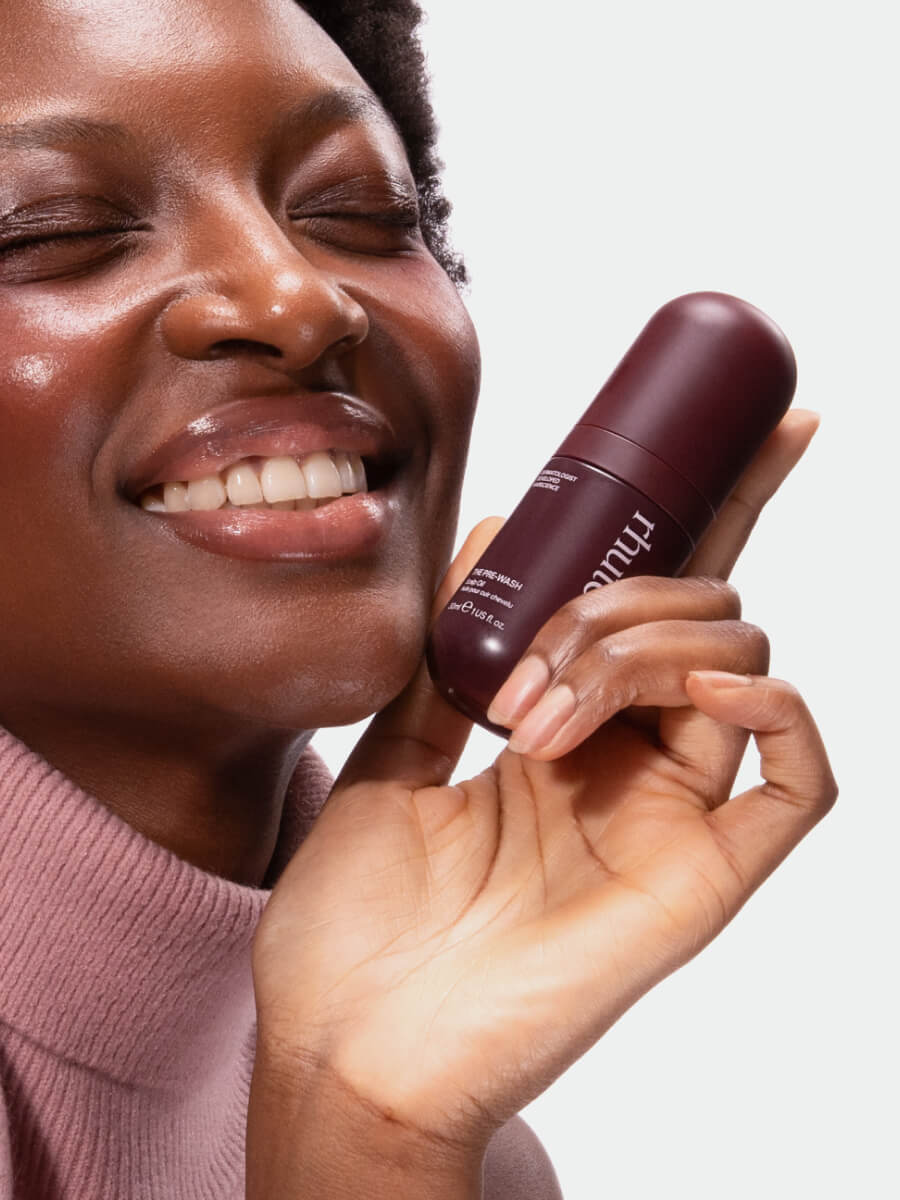
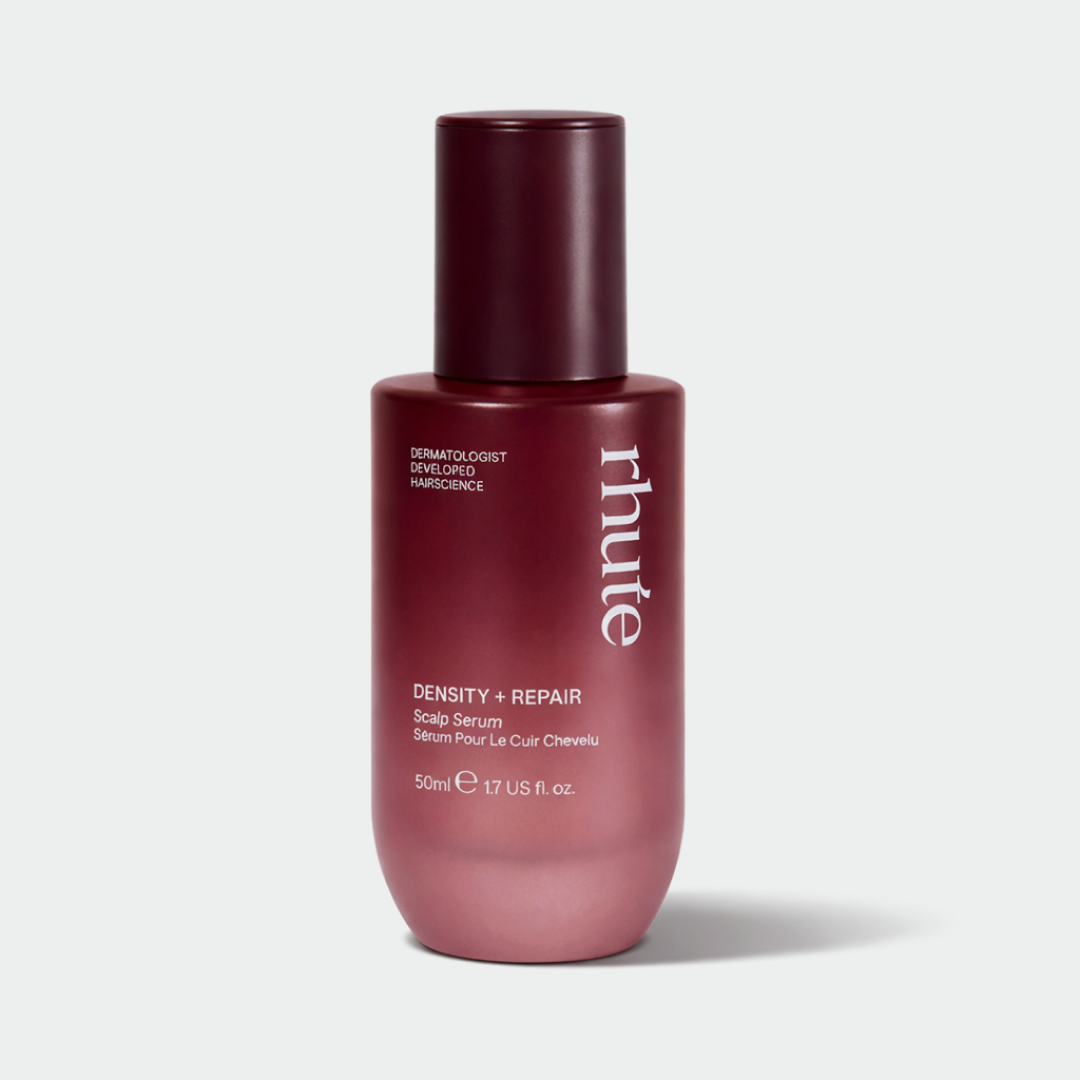
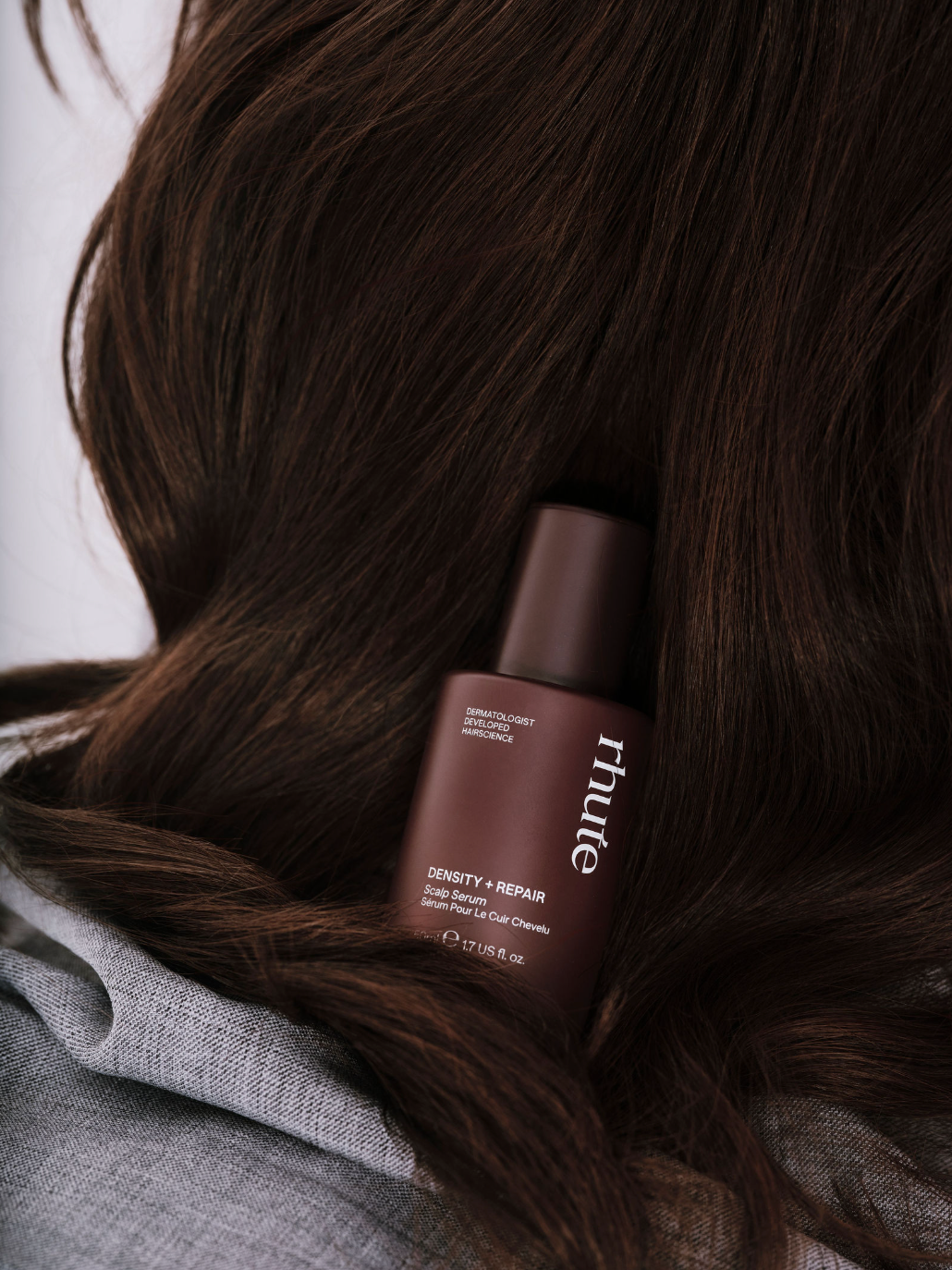
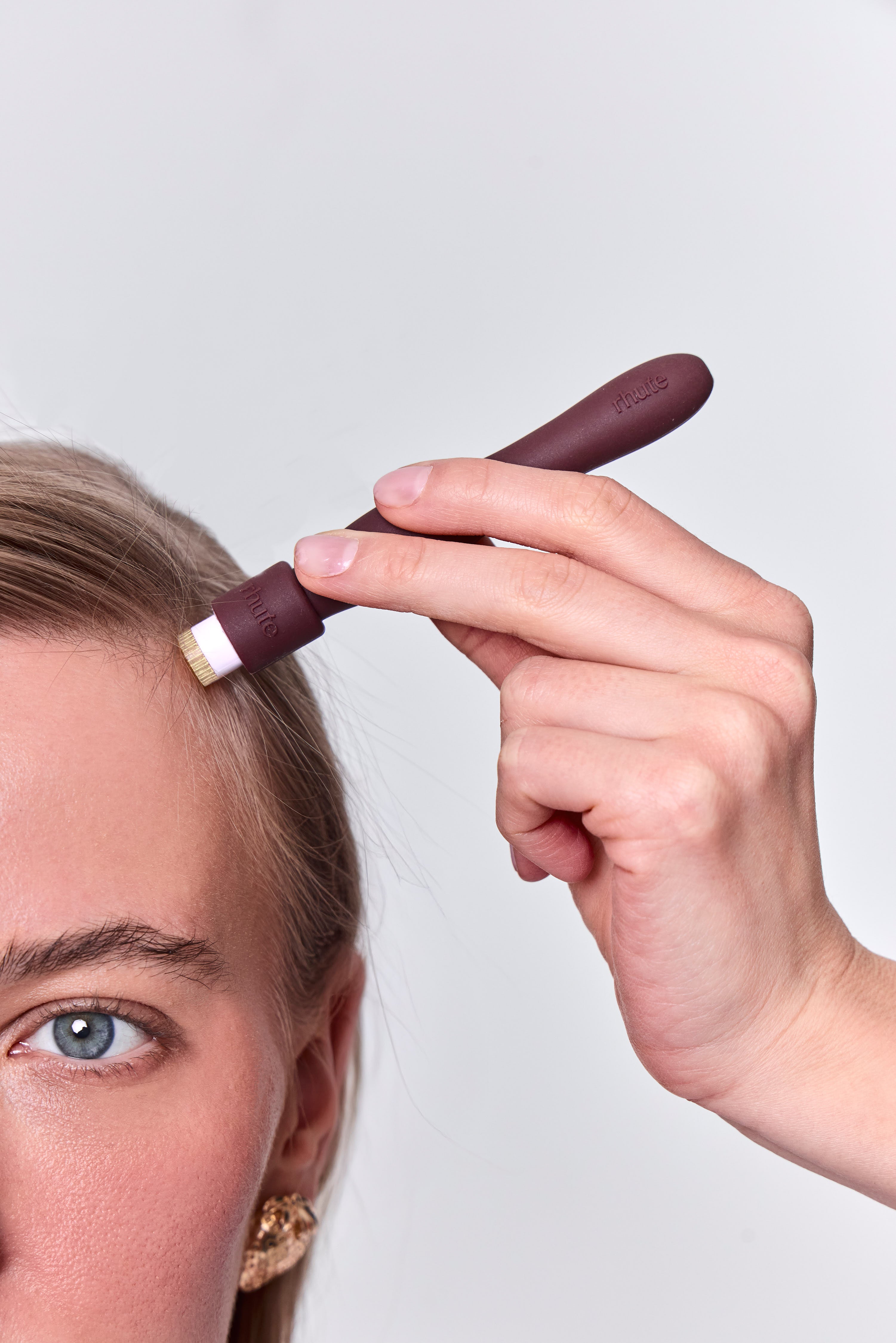
The two products most relevant during pregnancy are our Density Complex Pre-Wash Hair Oil and the Density + Repair Scalp Serum. The Pre-Wash brings together pumpkin seed oil, saw palmetto, rosemary extract, ceramides and conditioning lipids in a pre-shampoo treatment that supports your scalp barrier and nourishes the environment around the follicles. The serum is a leave-on, lightweight formula that brings in caffeine, peptides, niacinamide and panthenol for daily scalp support. Both are designed to do their work topically, on your scalp, which is exactly where you want active ingredients to stay when you're pregnant.
Other things worth doing
Beyond what you put on your scalp, the way you handle your hair makes a difference, especially when more of it is in the resting phase and more vulnerable to coming away under tension.
Loose styles beat tight ones. Slick-back buns, high ponytails and tight braids can pull on already-fragile follicles and cause traction shedding on top of whatever else is happening. Aim for low, loose styling and use soft fabric scrunchies rather than elastics when you can.
Heat and chemical treatments are worth dialling back. You don't need to swear off them, but pregnancy is a good time to give your hair a break from frequent bleach, peroxide, and high-heat styling. The hair you have is doing more work than usual, so less stress on the strand is a sensible default.
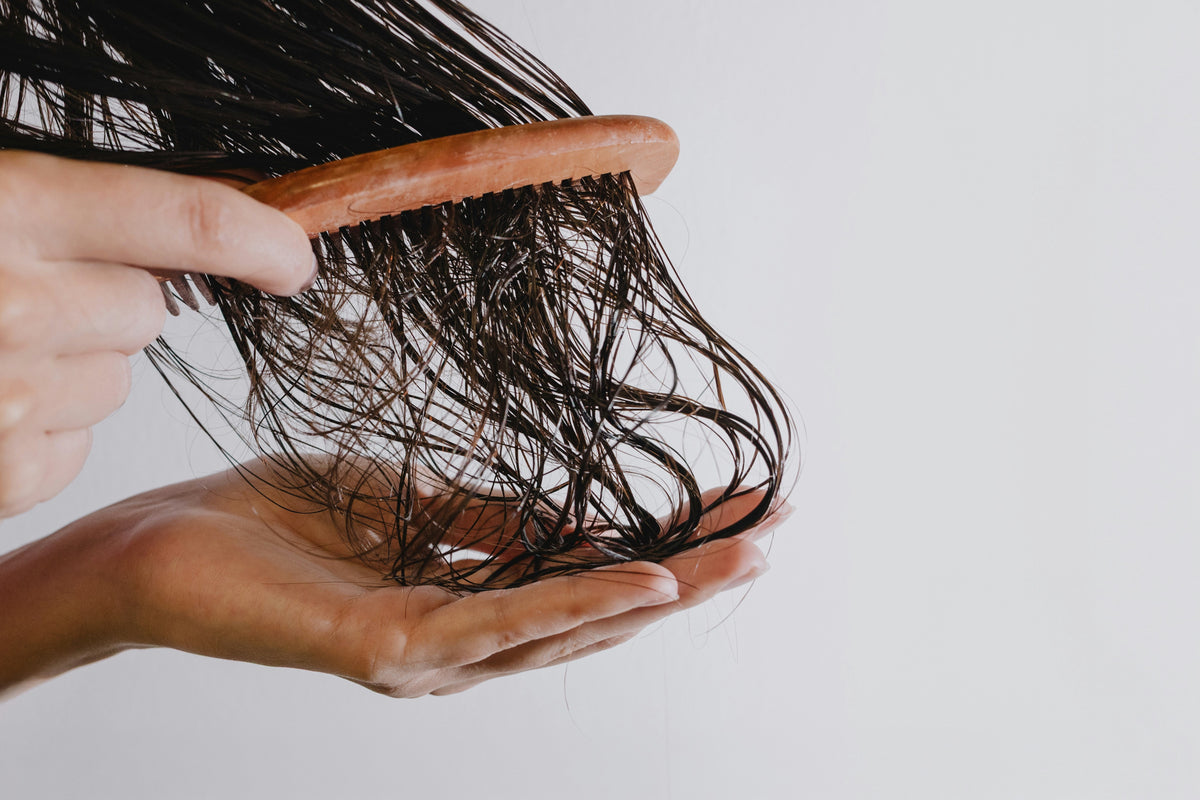
Brush gently and detangle with care. A wet-hair-safe brush or wide-tooth comb worked through with conditioner in your hair is much kinder than dry-brushing or yanking through tangles.
Setting your scalp up for postpartum
Here's something the during-pregnancy conversation usually misses. What you do now sets you up for what happens after.
Postpartum shedding is its own event. Roughly 40 to 50% of women experience it (some studies suggest more), and it tends to kick in around three to four months after delivery. The biology behind it is well-documented. During pregnancy, oestrogen holds a lot of your follicles in the growth phase past their natural end date. Once you deliver, oestrogen plummets, and all those overdue follicles drop into the resting phase at roughly the same time. Two to three months later, you start seeing the result: handfuls in the shower, regrowth along your hairline, the works.
You can't stop this from happening (it's a hormonal reset, not a deficiency), but you can change the conditions your follicles transition under. A scalp that's well-nourished and supported, with a healthy barrier and a stable environment, is better placed to handle a hormonal swing than one that's irritated or depleted. Going into postpartum with your iron, vitamin D and thyroid in good shape also makes a difference. The shedding is going to be what it is, but how quickly and densely your hair grows back depends a lot on what your body has to work with.
This is the proactive angle nobody talks about. If you're reading this in the second trimester, you have time. Look after your scalp, look after your nutrient status, and you give your hair the best possible runway for recovery on the other side.
For the full breakdown of what to expect after delivery and how to support recovery, our postpartum hair loss guide covers timing, treatment, and what's normal versus what warrants a GP appointment.
When to talk to your GP or midwife
Some shedding during pregnancy is within normal range. The body sheds 50 to 100 hairs a day at baseline, and it's easy to feel like you're losing more than you are when you're paying attention. The signs that are worth flagging in conversation are when shedding is dramatic (handfuls in the shower, hairs visibly thinning across the parting), when it's patchy rather than diffuse, or when it's coming alongside other symptoms that point to a treatable cause.
Watch out for fatigue beyond normal pregnancy tiredness, breathlessness on light effort, heart palpitations, restless legs at night, brain fog, sensitivity to cold, weight changes that don't track with your pregnancy, or persistent low mood. These are the symptoms that raise iron, thyroid and broader nutrient flags.
Your GP or midwife can order a simple blood panel that usually includes ferritin, a full blood count, thyroid function tests, and (where indicated) vitamin D and B12. It's a low-effort investigation that often returns useful answers. If something does come back, the treatments for these underlying causes are generally pregnancy-safe and well-established.
Most pregnancy-related hair loss is temporary and resolves once the underlying cause is treated, or once hormones settle after delivery. You don't have to figure it out alone, and you don't have to wait for it to get worse before you ask.
FAQs
Is it normal to lose hair during pregnancy?
It's normal to shed some hair during pregnancy, and a smaller proportion of women experience noticeable hair loss rather than the thickening that gets all the headlines. The most common triggers are hormonal shifts in the first trimester, iron deficiency, and thyroid changes. If your shedding feels heavier than normal, especially in the second or third trimester, it's worth a blood test with your GP or midwife to check for treatable causes.
Can pregnancy cause permanent hair loss?
In almost every case, no. Hair loss linked to pregnancy is temporary. The shedding driven by hormonal shifts, nutrient deficiencies, or postpartum oestrogen drop is reversible, and hair tends to come back over the months that follow once the underlying trigger settles. Permanent hair loss in pregnancy is rare and usually tied to a separate condition like female pattern hair loss or alopecia areata, which can be present alongside pregnancy but isn't caused by it. If your hair hasn't returned within 12 to 18 months postpartum, it's worth a dermatology appointment.
What trimester does hair loss happen in?
There's no single answer because the trigger matters. Hair loss linked to first-trimester hormonal shifts usually shows up in the second trimester, around two to four months after the trigger. Iron deficiency tends to develop later, with shedding most often noticed in the second half of pregnancy. Thyroid-driven shedding can happen at any point. And the famous postpartum shedding kicks in around three to four months after delivery.
Is hair loss a sign of pregnancy?
Hair loss isn't generally an early sign of pregnancy. The hormonal environment in early pregnancy usually slows shedding rather than triggers it, although telogen effluvium from the hormonal shift itself can show up later, in the second trimester. If you're losing hair and wondering whether you might be pregnant, hair loss alone isn't a reliable indicator. Other early signs (missed period, nausea, breast changes) are far more useful.
Can I use hair growth products while pregnant?
Some, yes; others, no. Minoxidil and prescription DHT blockers like finasteride aren't safe during pregnancy. Gentle, topical scalp care with botanical actives, ceramides and conditioning oils is generally considered safe, because systemic absorption from topical scalp products is minimal. All of rhute's products are confirmed safe for use during pregnancy and breastfeeding. If you're not sure about a specific product, check with the brand or your GP before using it.
Will my hair grow back after pregnancy?
For the vast majority of women, yes. Pregnancy and postpartum hair loss are temporary and self-resolving. Most people see their hair return to its usual density within nine to 12 months of delivery, sometimes a bit longer. Supporting your scalp and your nutrient status through pregnancy and postpartum can help that recovery happen more smoothly. If you're not seeing regrowth after 12 to 18 months, that's the point to speak to your GP or dermatologist about what else might be going on.