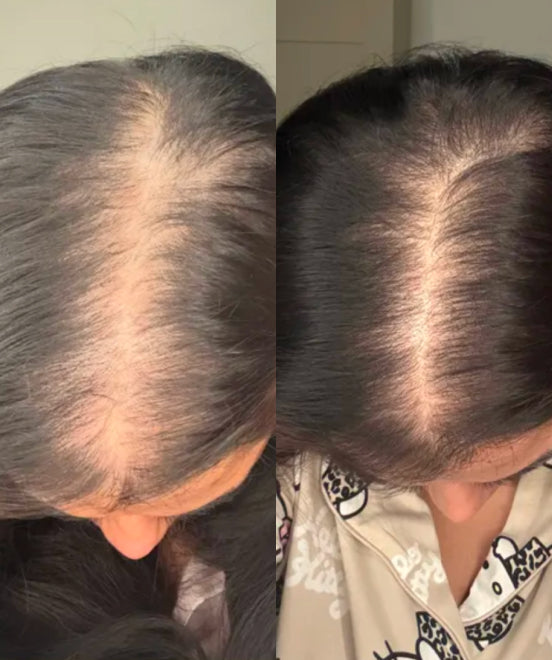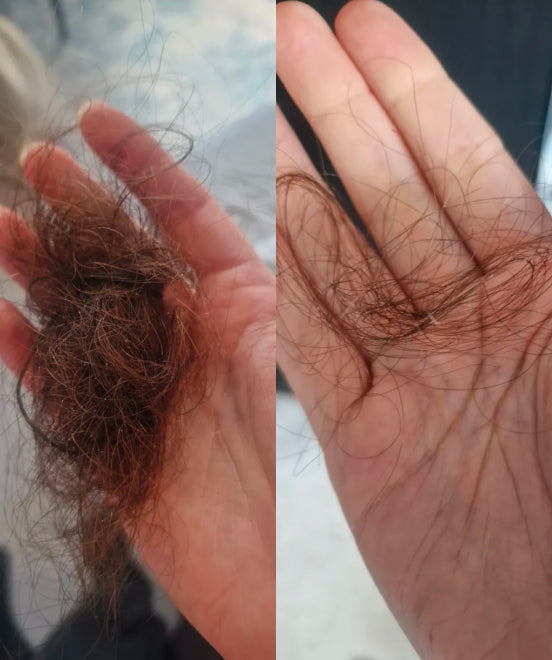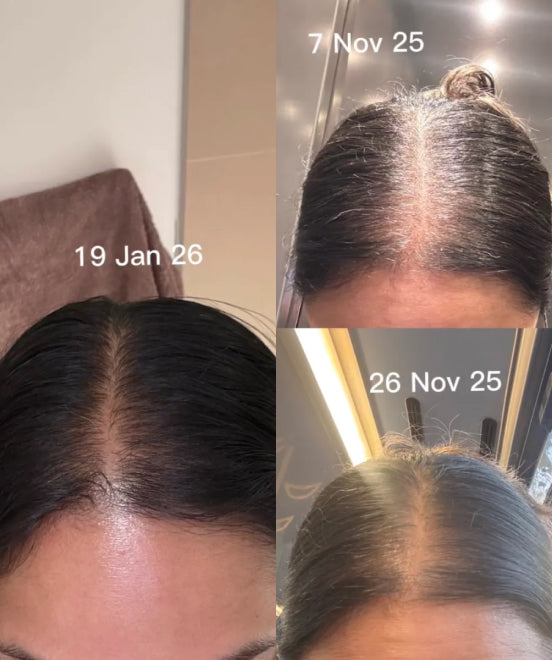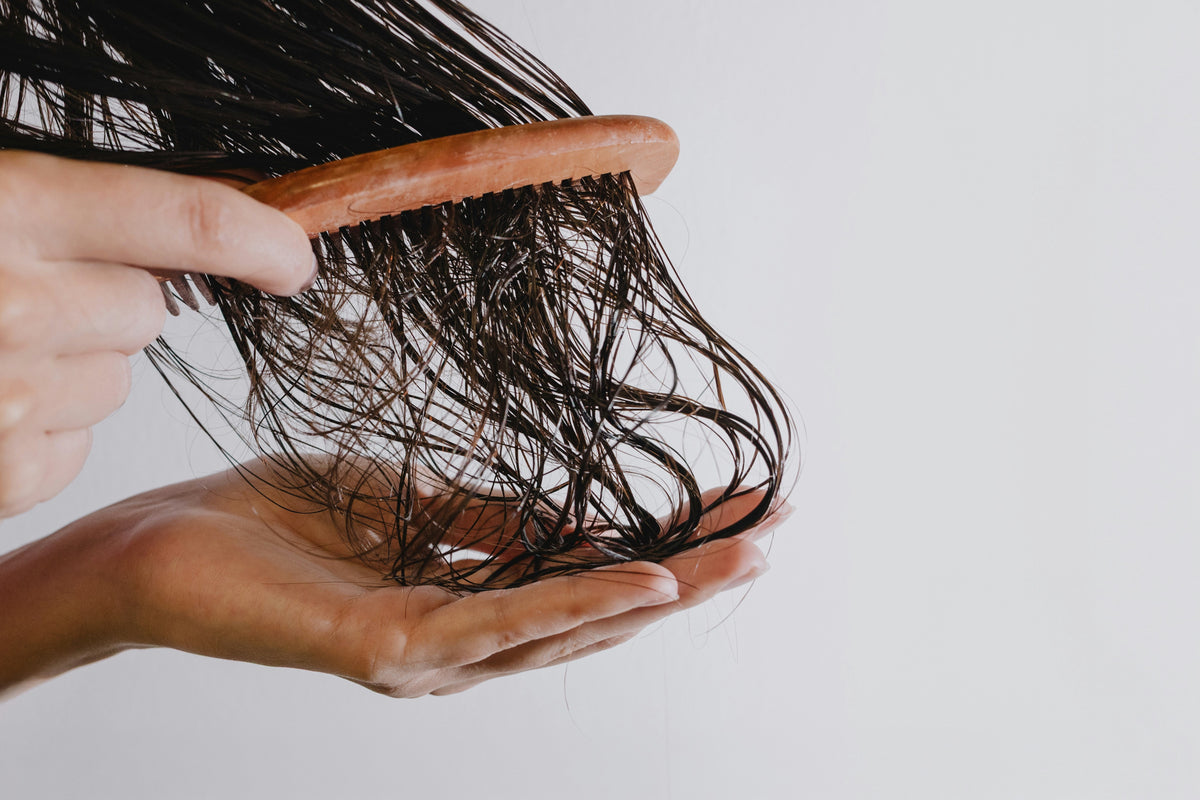


You're three or four months postpartum. There's hair in the shower drain, hair on your pillow, hair on the baby. Your scalp is showing along your parting in a way it never used to. And the algorithm has clocked it. Your feed is suddenly filled with capsules promising to fix postpartum hair loss in 30 days, all glossy packaging and before-and-after photos that look a little too good..
We're going to walk through what postpartum hair vitamins can actually do, what the evidence says about the headline ingredient (it's not what the packaging suggests), which nutrients genuinely matter postpartum, and what supplements can't fix even when they work.
A quick recap: why postpartum hair loss happens
During pregnancy, high oestrogen keeps a lot of your hair follicles in the growth phase past their natural end date. After delivery, oestrogen drops sharply, all those overdue follicles tip into the resting phase at the same time, and roughly two to four months later you start seeing the shed. The medical name for this is telogen effluvium (when a large proportion of follicles enter the resting phase together and then shed in unison). It's hormonal. It's not nutritional. And it resolves on its own.
The shedding itself is a hormonal reset that has to run its course. No capsule can short-circuit that timeline. What supplements can do is something more specific, and worth understanding properly. Learn more about the causes and signs of postpartum hair loss.
Do postpartum hair vitamins actually work?
Honest answer? It depends entirely on why you're losing hair.
If your shedding is the hormonal reset (which is the case for most women postpartum), no supplement is going to speed it up. Your hair cycle has its own schedule and a capsule can't override that.
If your hair loss has a nutritional layer sitting on top of the hormonal shift, which is more common than you might think postpartum, then addressing that specific deficiency can genuinely help. Iron stores can crash after childbirth. Vitamin D levels are low in a lot of UK women anyway, and breastfeeding adds to the demand. Zinc, B12 and folate are all under pressure during pregnancy and the recovery period.
The trouble with most postpartum hair vitamins is they don't make this distinction. They imply, sometimes subtly and sometimes not, that a capsule will fix the shedding. In reality, it can only fix the deficiency. And if you're not deficient in the first place, you're paying for very expensive urine and not much else.
The biotin question (and why the evidence doesn't match the marketing)
Open any postpartum hair supplement and biotin is almost certainly the hero ingredient. The packaging promises thicker, fuller, faster-growing hair. The reality is more complicated.
A 2024 systematic review pulled together the studies that have actually tested oral biotin for hair growth in adults. The highest-quality study (double-blind and placebo-controlled, which is the gold standard for this kind of question) found no difference between biotin and placebo. The other studies looked at specific patient groups with potential biases, and none had striking results in biotin's favour. The reviewers' conclusion was direct: there's a large gap between the public's belief in biotin and what the scientific literature actually supports.
Real biotin deficiency exists, but it's genuinely uncommon. Most adults get plenty from their diet, and the body doesn't store biotin in big reserves so true deficiency tends to show up in people with very restrictive eating, certain medications, or specific genetic conditions. The marker for hair loss postpartum is far more likely to be iron, vitamin D or zinc than biotin.
That matters when you're choosing where to put your effort. Biotin isn't the first-line consideration for postpartum shedding because the deficiencies that actually drive hair loss postpartum tend to be elsewhere. If a supplement leads with biotin, that's a marketing decision, not a clinical one.
There's also a less-talked-about risk worth flagging. High-dose biotin (anything above about 5 mg a day, and many hair supplements sit at 5,000 or 10,000 mcg which is 5 to 10 mg) can interfere with common laboratory blood tests, including thyroid function panels. The interference can produce results that look like hyperthyroidism when nothing is actually wrong, or mask a real thyroid problem. Given that postpartum thyroid issues are common and exactly the kind of thing your GP might want to test for, this isn't a small detail. If you're taking a high-biotin supplement and going for blood tests, the standard advice is to stop the supplement for at least three to five days beforehand and tell whoever's doing your blood tests.
The nutrients that actually matter postpartum (and how to know if you need them)
If biotin isn't the answer, what is? The nutrients with the most evidence behind them for hair loss are the ones your body uses constantly, and the ones pregnancy and breastfeeding put under the most strain.
Iron is the one to start with. Pregnancy roughly doubles your daily iron requirement, your blood volume increases by 30 to 50%, and the baby pulls iron from your stores to build their own. A 2024 narrative review put the prevalence of antenatal anaemia in the UK at around 24%, with postpartum rates in the 20 to 40% range. The most useful early-warning marker is ferritin (your stored iron), and below 30 mcg/l is the level UK guidance treats as clear depletion. Iron sits squarely on the hair growth pathway. If yours is low, your follicles slow down before your full blood count flags anything.
Vitamin D is the second to take seriously. Low levels have been associated with increased shedding in women, and a 2023 study found that oral vitamin D treatment improved hair density in patients with telogen effluvium. UK adults are commonly low on vitamin D, especially through winter and especially if you have darker skin or get little outdoor time (which is most new mothers).
Vitamin B12 and folate are both worth checking, particularly if you're breastfeeding, vegetarian or vegan, or have a history of low levels. Both feature in comprehensive reviews of the nutrient-hair loss link and both are easy to test.
Zinc plays a structural role in follicle cycling. A 2024 study comparing women with chronic telogen effluvium to controls found zinc and selenium were significant differentiators between the two groups.
The take-home is simple. Test, don't guess. Your GP can run a panel covering ferritin, vitamin D, thyroid function, B12 and folate from one blood draw. It's a low-effort investigation that usually returns something useful and points you to a targeted fix rather than a guesswork supplement stack. Taking iron when you don't need it isn't risk-free, and the same goes for several other nutrients. The evidence on supplementation without confirmed deficiency is weak at best, and some supplements can make hair loss worse rather than better.
What about postnatal multivitamins?
If you're still taking your prenatal, that's a reasonable bridge for the early postpartum period. Most prenatal and postnatal multis cover the same broad bases (iron, vitamin D, B12, folate, often zinc), at doses pitched for general support rather than for fixing a deficiency.
A good postnatal multi gives you a sensible baseline, especially when sleep is wrecked and meals are happening over the baby's head. What to look for: iron, vitamin D, B12, folate and zinc as the core, dosed at sensible levels. What to be a bit more careful about: mega-doses of single vitamins (especially vitamin A, which can be problematic at high doses), supplements that haven't been specifically tested for breastfeeding safety, and proprietary blends that don't tell you exactly what you're getting and at what dose.
If you find yourself reaching for a postnatal multi mainly because you're worried about hair loss, that's where it gets murkier. A general multi at maintenance doses won't fix a real deficiency, and it won't stop the hormonal shedding either. Use it as the steady-state background, get bloods done if you're worried, and treat any real deficiency directly with what's flagged.
What supplements can't do (and what your scalp actually needs)
Here's the part that doesn't get said often enough.
Supplements work on the inside. They top up nutrient levels in your bloodstream, your follicles take what they need from circulation, and that's a real and useful job. But that's not the only place hair grows from. Hair grows from a follicle that sits inside your scalp, and what's happening at the surface matters too.
Postpartum, your scalp environment shifts. Sebum production changes as oestrogen drops. The skin barrier becomes more reactive. And for many women, there's a quiet shift in the androgen-to-oestrogen balance (androgens are the hormone family that includes testosterone and its derivatives), which can mean DHT (dihydrotestosterone, the hormone implicated in pattern hair thinning) starts having more of an influence at the follicle level. A capsule isn't going to touch any of that.
Topical scalp care does. Pumpkin seed oil and saw palmetto are botanical 5-alpha reductase modulators (5-alpha reductase is the enzyme that converts testosterone into DHT, so slowing it down means less DHT reaching your follicles). Ceramides support your skin barrier so your scalp can hold on to moisture and stay calm. Rosemary extract supports circulation to the area. Caffeine and peptides give the follicle energetic and signalling support.
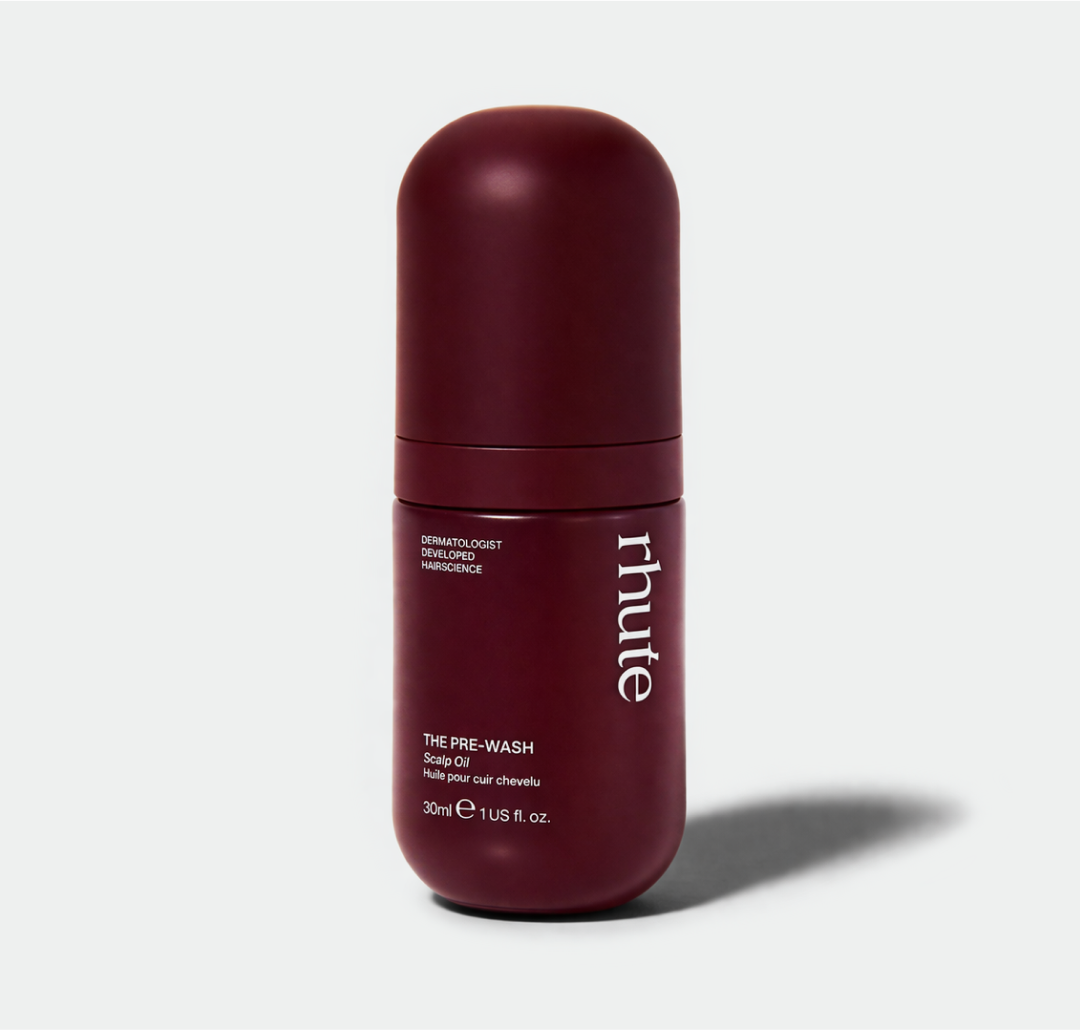
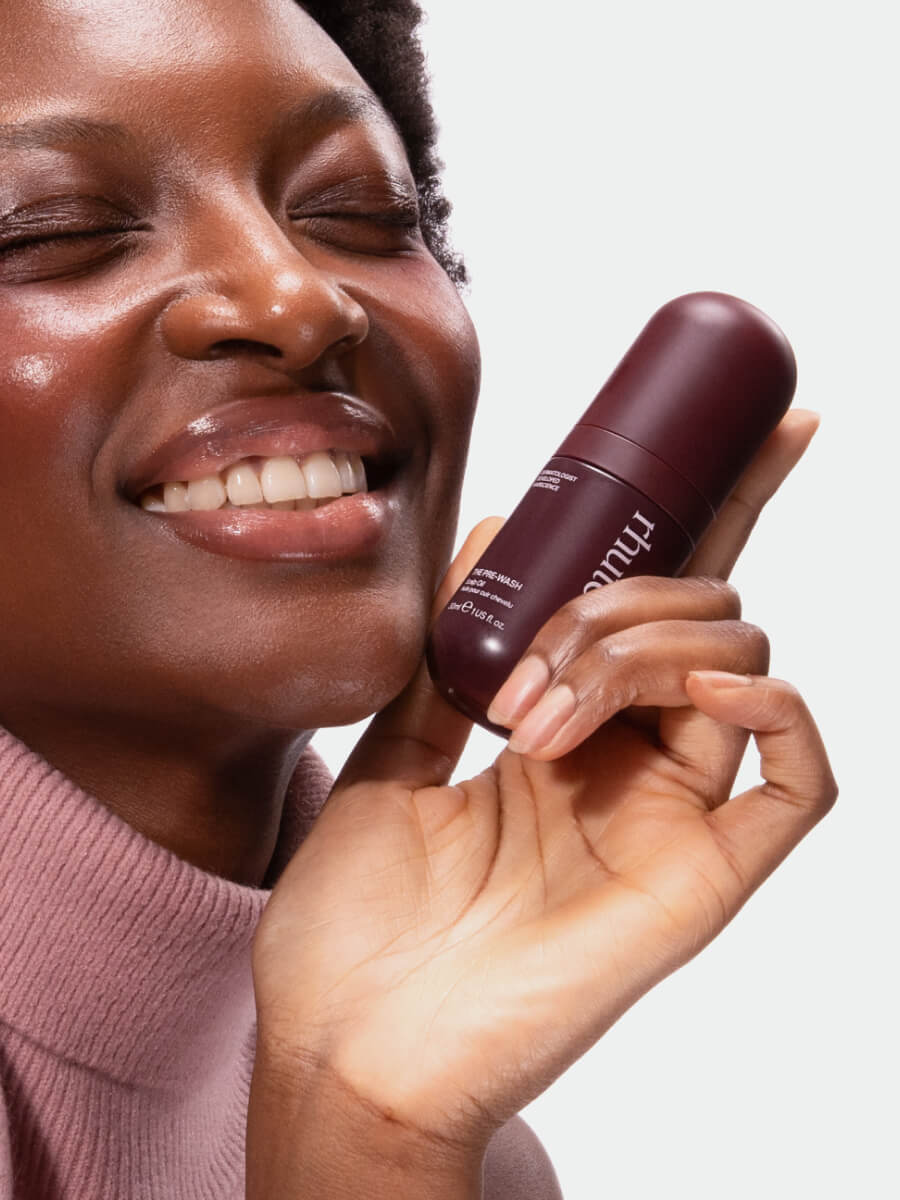
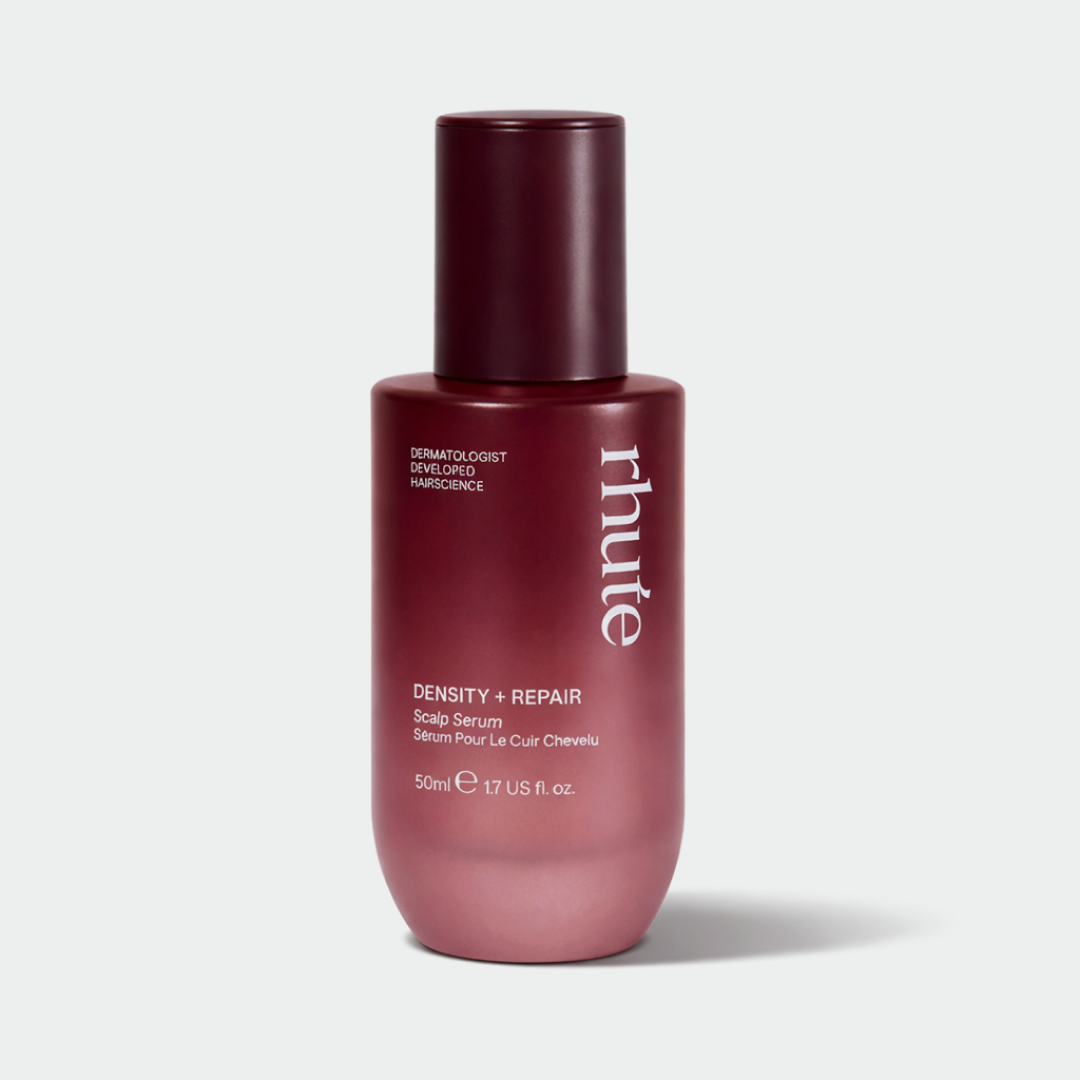
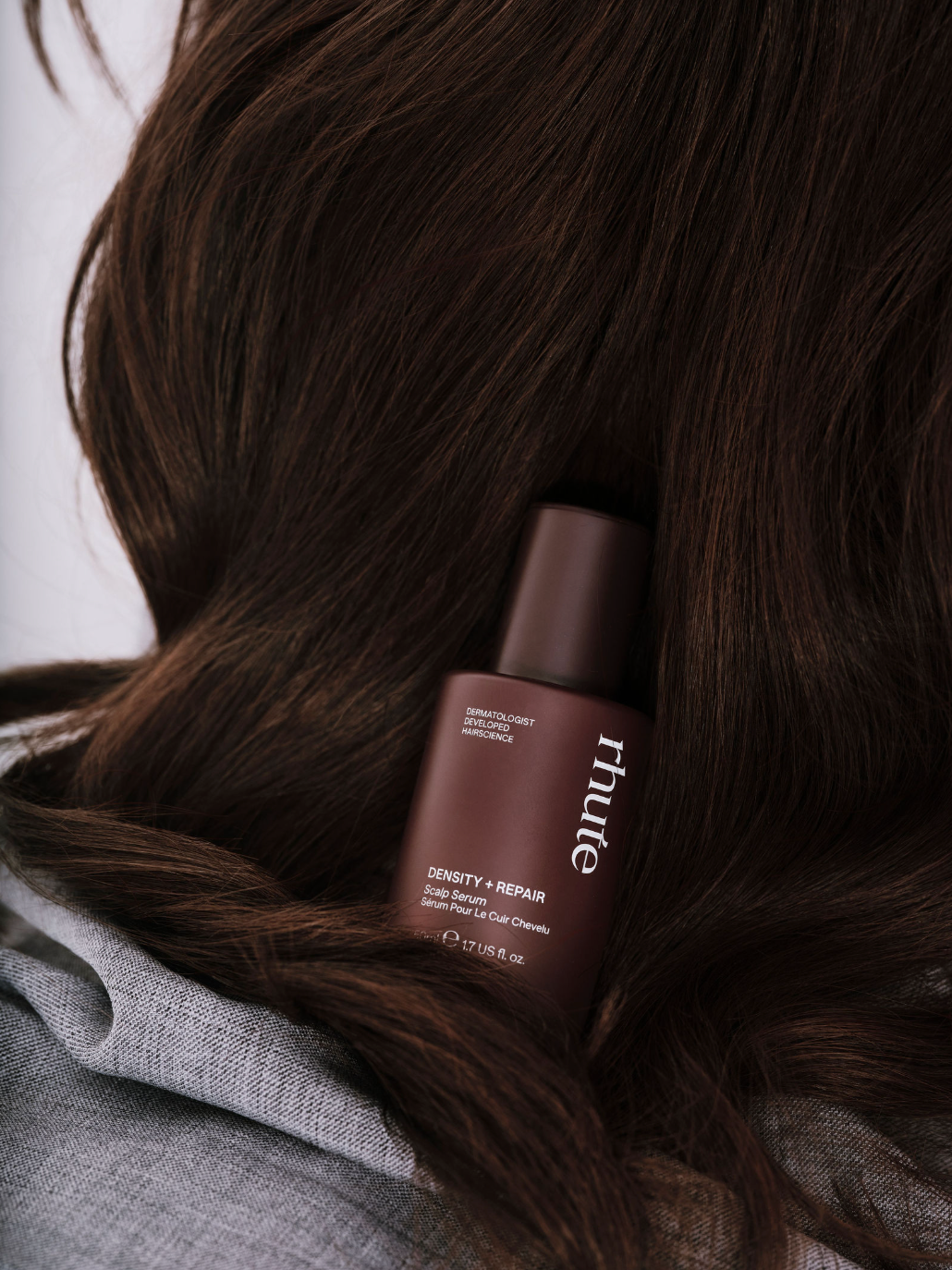
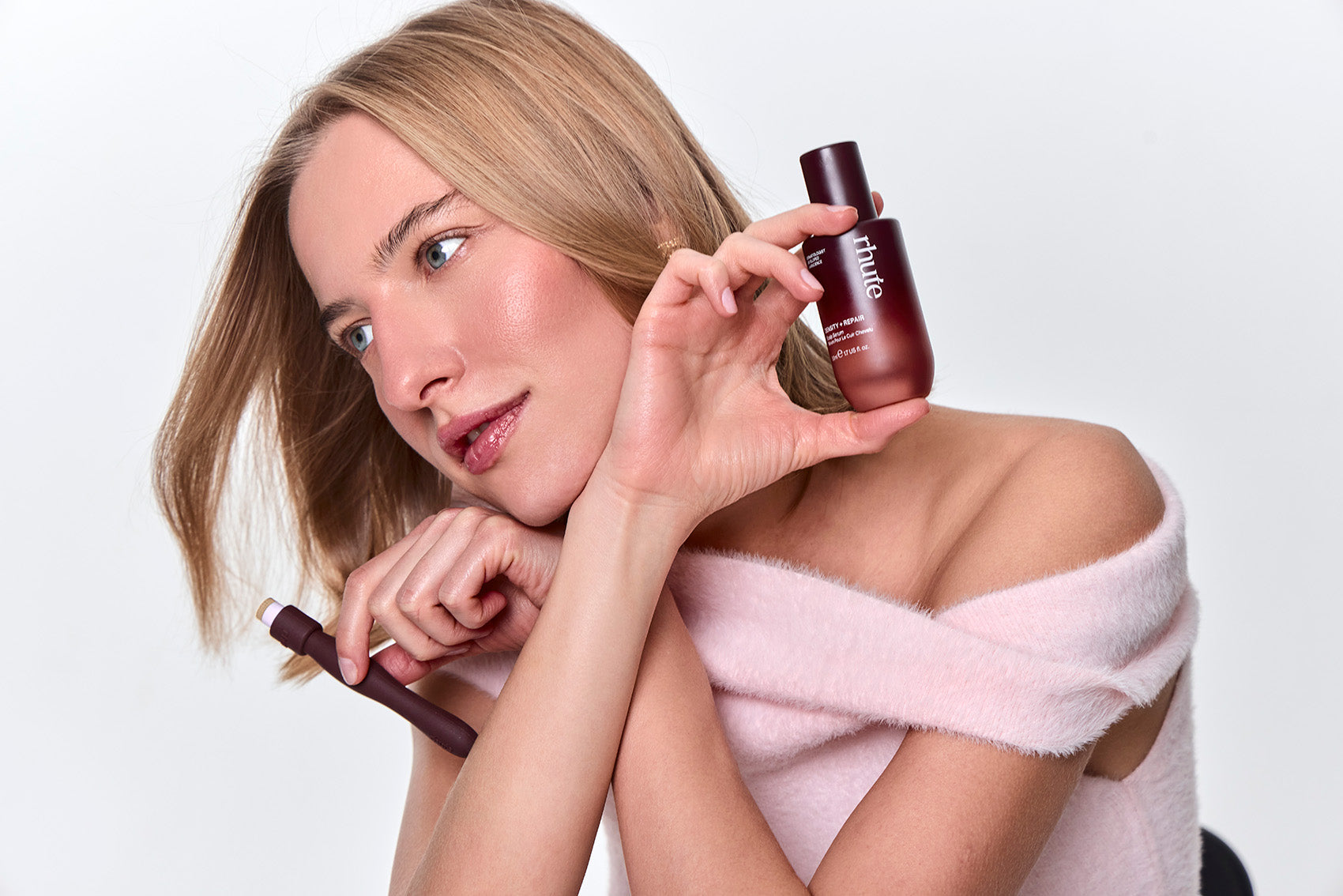
Our Density Complex Pre-Wash Hair Oil brings the DHT-modulating actives and the barrier support together in a rinse-out treatment you use two to three times a week before shampooing. Our Density + Repair Scalp Serum is the daily leave-on layer, with caffeine, peptides, niacinamide and panthenol to support follicle function on the daily.
Crucially, this isn't a replacement for supplementation if you actually need it. It's the other half of the picture. Address deficiencies from the inside if they're there, and support your scalp from the outside regardless. Most postpartum hair content treats this as a choice between supplements and topicals. It really shouldn't be.
Building your postpartum support plan
If you want a clear order of operations, here it is.
One: get tested. Ask your GP or midwife for a blood panel that covers ferritin, vitamin D, thyroid function, B12 and folate. If you're taking a high-dose biotin supplement, stop it three to five days before the bloods and flag it to the GP so your thyroid results aren't misread.
Two: treat what's flagged. If you have a confirmed deficiency, take what your GP recommends at the dose they recommend, for as long as they recommend. If everything comes back fine, a sensible postnatal multivitamin is reasonable maintenance, but don't expect it to stop the shedding.
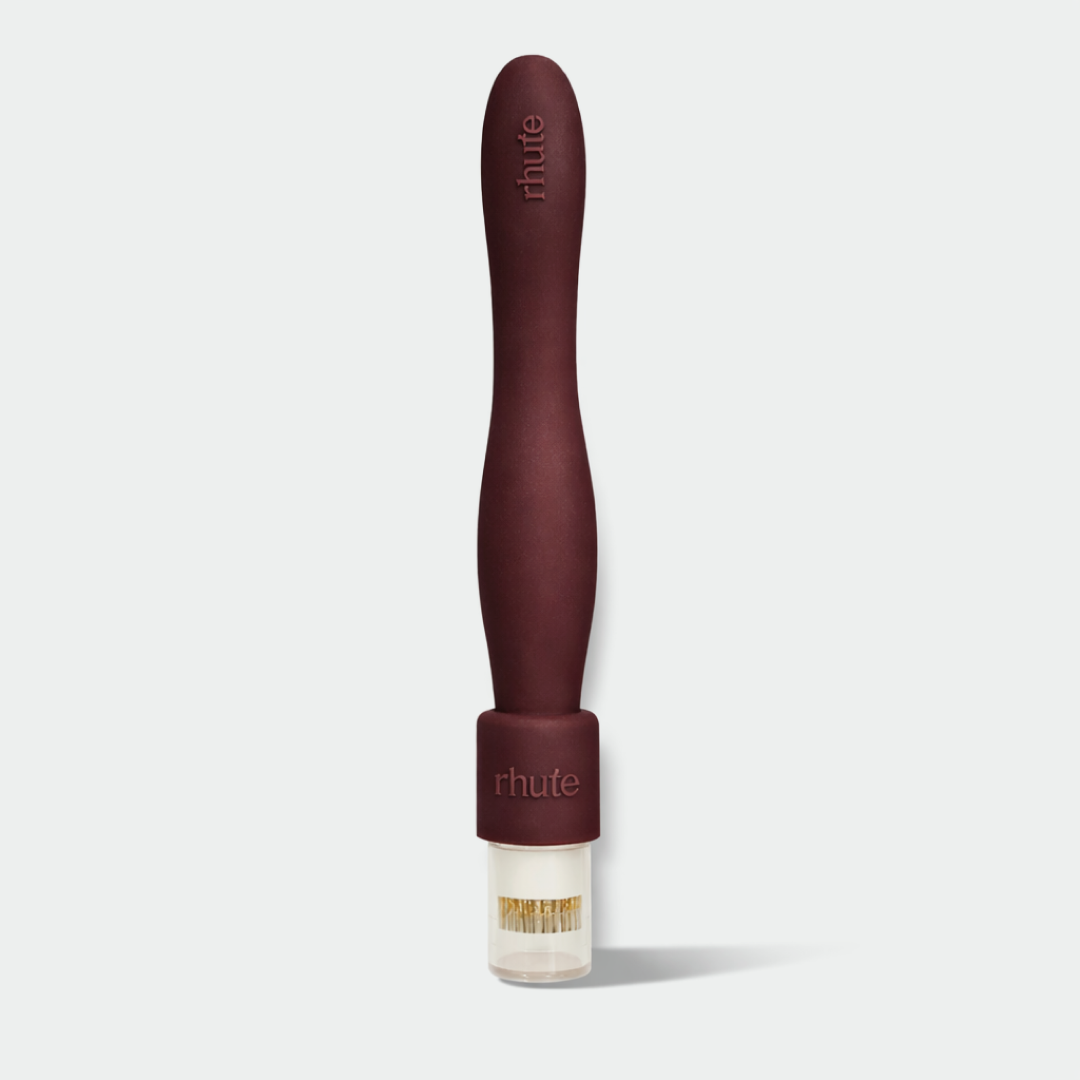
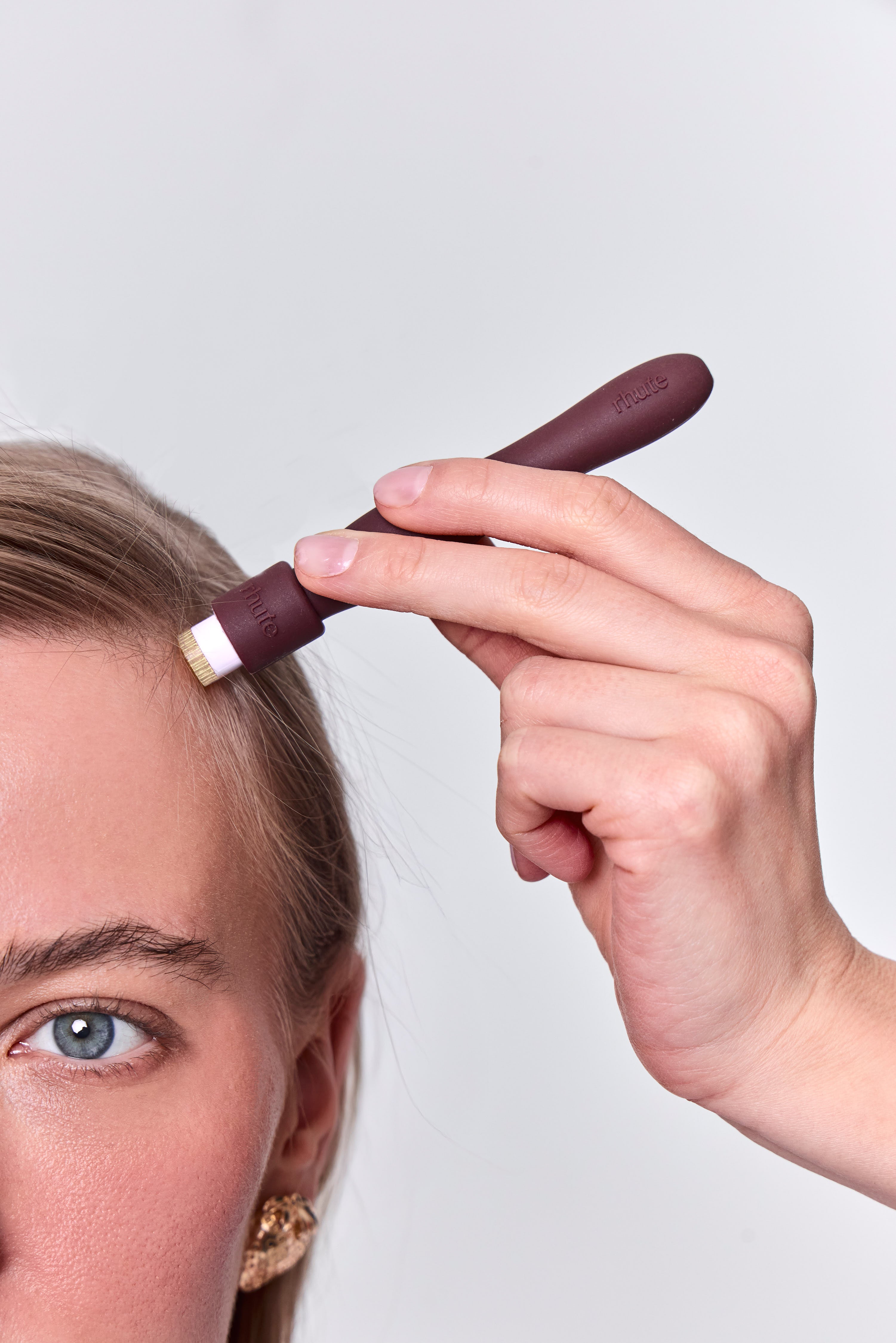
Three: support your scalp directly. Pre-wash treatment two to three times a week, daily leave-on scalp serum, and gentle handling on the strands. Microneedling devices like our Precision Dermastamp can be added in once your hormones have started to settle (usually somewhere between three and six months postpartum, and worth a quick check with your doctor if you're not sure when that is for you).
Four: be patient. Hormonal telogen effluvium resolves on its own. Most women see their hair return to its usual density within nine to 12 months. Consistency with scalp care builds the best possible conditions for the regrowth phase, which is the part you can actually influence.
For the fuller version of this plan and what to expect month by month, our postpartum hair loss article walks through the timeline in detail.
FAQs
Do postpartum hair vitamins actually work?
They work if you're deficient in a specific nutrient that's contributing to your hair loss, and not really otherwise. The hormonal reset that drives most postpartum shedding isn't something a supplement can speed up. A blood test is the only way to know whether you'd actually benefit from a targeted supplement or whether you're better off saving your money and looking at your scalp directly.
Is biotin good for postpartum hair loss?
It's good if you're biotin deficient, but most women aren't. The 2024 systematic review of biotin for hair growth found no difference between biotin and placebo in the highest-quality study. Biotin is also worth pausing before blood tests, because high doses can throw off thyroid panels and other lab results. It's not a first-line consideration for postpartum hair loss.
What's the best vitamin for postpartum hair loss?
There isn't one. The single most important thing is to test for what you might actually be low on. For most women postpartum, the high-yield candidates are iron (ferritin), vitamin D, zinc, B12 and folate. If your bloods show a deficiency in any of those, addressing it is where supplementation actually makes a difference. If nothing's low, no single vitamin is going to fix hormonal shedding.
How long does postpartum hair loss last?
The shed usually peaks around three to four months after delivery and tapers off over the next few months. Most women see their hair return to its usual density somewhere between nine and 12 months postpartum, sometimes a bit longer. If you're not seeing regrowth by 12 to 18 months, it's worth a follow-up with your GP or a dermatologist to check for other causes.
Can I take hair supplements while breastfeeding?
Some, yes; others, no. A standard postnatal multivitamin at the doses on the label is generally considered safe during breastfeeding, and many are designed specifically for it. Be more cautious about high-dose single-vitamin supplements (especially anything with vitamin A above standard prenatal levels), proprietary “hair growth” blends that don't disclose all doses, and any supplement where breastfeeding safety isn't clearly listed. If in doubt, ask your GP, midwife or pharmacist.
Should I get blood tests for postpartum hair loss?
If your shedding feels heavier than expected, or it's hanging around beyond about six months, yes. A simple panel covering ferritin, full blood count, thyroid function, vitamin D, B12 and folate gives you a real answer rather than guesswork. Iron and thyroid in particular are easy to miss because the symptoms overlap with normal new-parent exhaustion, and both are treatable once identified.