

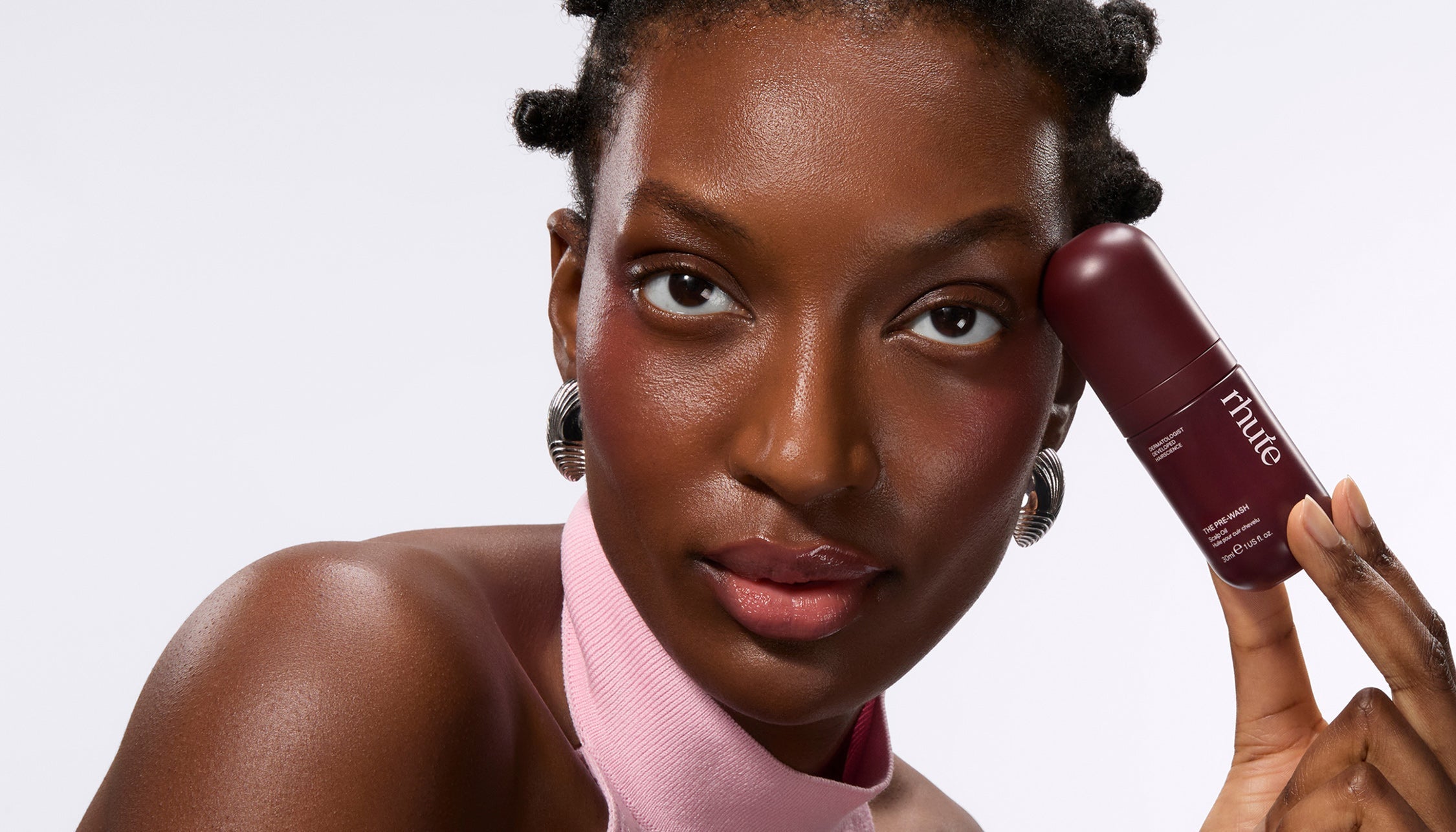

Let's be real: if you search "best scalp oil for hair growth," you'll get a wall of product roundups telling you which oils are "trending" this season. Ten products, a few affiliate links, and not a single explanation of why any of it would actually help your hair grow.
That's not what we're here for.
If you're noticing widening of your parting, shedding that's picked up pace, or hair that's gradually lost its fullness, what you need isn't a prettier bottle. You need to understand what's actually happening at your scalp, what ingredients can support that biology, and how to use scalp oil in a way that genuinely makes a difference.
That's exactly what this guide covers. We're getting into the follicle science behind thinning, the ingredients with clinical trial backing, why pre-wash oiling is an entirely different approach, and how a growth-focused routine actually comes together. Consider this your go-to for cutting through the noise and choosing with confidence.
Most hair oils aren't designed for growth
Walk down any beauty aisle, and you'll see shelf after shelf of hair oils. Argan for smoothing. Coconut for conditioning. Marula for shine. They're lovely products, many of them, but they share something in common: they're designed to sit on your strands, not treat your scalp.
A strand-coating oil works on the surface. It fills in gaps along the hair cuticle, reduces friction between fibres, and makes your hair look healthier from the outside. That's a genuine cosmetic benefit, and it's a real one. But it has almost nothing to do with what's happening underneath, where your hair actually grows.
Hair growth happens at your scalp. Specifically, it happens inside the follicle, in a tiny structure called the dermal papilla (the cells at the base of each hair follicle that control the growth cycle). If an oil isn't formulated with ingredients that can actually reach and support this process, it's doing surface-level work on a deeper problem.
This is why the whole "best oil for hair growth" conversation needs a reset. The question isn't which oil makes your hair look good today. It's which oil is actually formulated to support what's happening beneath the surface, at the root (or rather, the rhute).
What actually happens at the follicle level
A bit of biology goes a long way here. Once you understand what's driving thinning, you can spot the difference between ingredients that genuinely help and ones that just sound impressive on a label.
Your hair grows in cycles, with each follicle moving independently through three main phases. Anagen is the active growth phase, lasting anywhere from two to eight years, and at any given time, around 85% of your hair is in this stage. This is when the follicle is at its most productive, fed by a network of blood vessels that deliver the nutrients it needs to build each strand.
Catagen is a short transition period of about two weeks where growth stops, and the follicle begins to detach from its blood supply. Telogen is the resting phase, lasting two to three months before the hair sheds and the cycle starts over.
When things go wrong with density, it's usually because something is disrupting this cycle. Follicles spend less time in anagen, more time resting, and the hairs they produce get progressively finer and shorter with each cycle. This gradual process is called follicle miniaturisation, and it's what creates the thinning most people notice around their part line, temples, or crown.
One of the biggest drivers of miniaturisation is a hormone called DHT. Your body naturally produces it from testosterone, and it goes after hair follicles hard. It shrinks them. Each growth cycle gets shorter than the last until eventually, the follicle can't produce a visible hair at all.
This is where ingredients genuinely matter. A scalp oil formulated to help block DHT, support blood flow, and strengthen your scalp's barrier is working with your biology rather than just sitting on top of it. One that just coats your strands? Not so much.
The ingredients that actually support hair growth
Not all oils are created equal when it comes to what they can do for your scalp. These are the ingredients with real research behind them, not just trending hashtags.
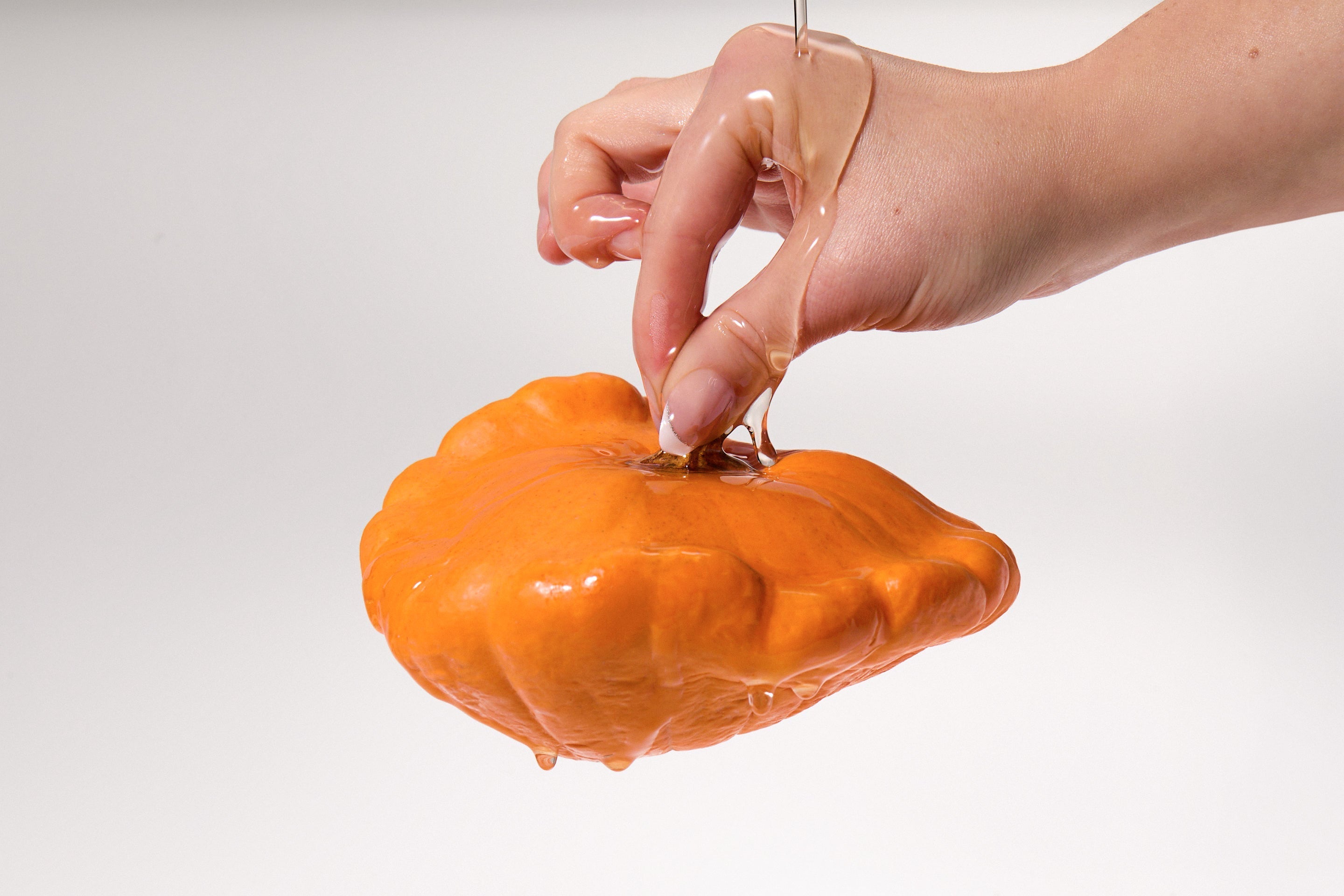
Pumpkin seed oil is one of the most studied natural ingredients for hair growth. One clinical trial on pumpkin seed oil for hair loss found that participants supplementing with pumpkin seed oil saw meaningfully greater improvements in hair count compared to placebo over 24 weeks. Pumpkin seed oil helps block DHT production, which is what causes follicles to shrink over time. It's one of the few natural ingredients with genuine clinical backing for hair growth, which is why it features so heavily in growth-focused formulations.
Saw palmetto works along similar lines. A placebo-controlled trial on saw palmetto oil for hair loss has shown it can help reduce DHT levels and support hair density, with studies finding meaningful reductions in hair fall over treatment periods of 16 weeks or more. The Pre-Wash Density Complex pairs it with beta-sitosterol, a plant-derived phytosterol that also helps block DHT production, tackling the problem from two angles without the side effects that come with pharmaceutical options.
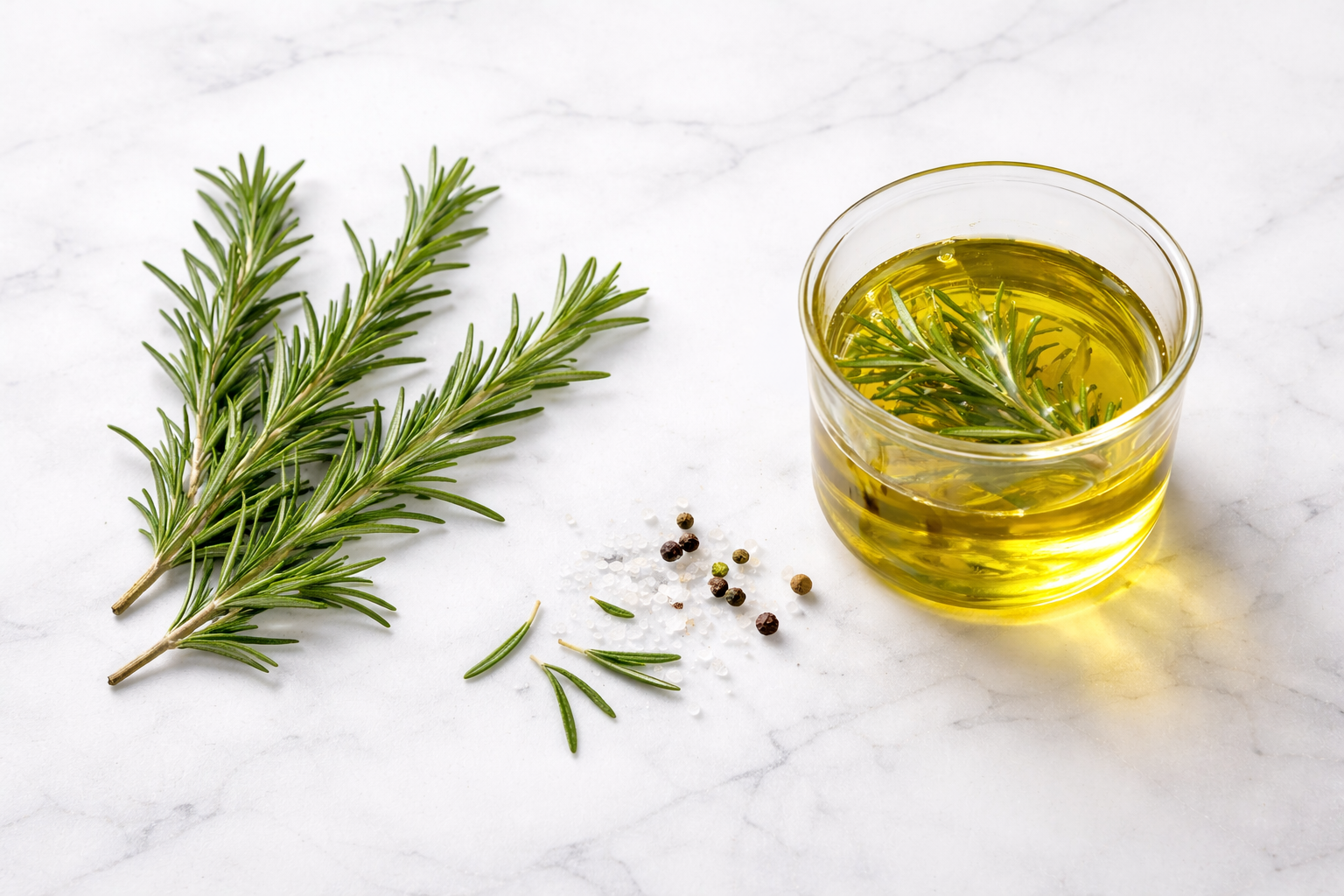
Rosemary oil has built a serious reputation in the hair growth space especially on social media platforms, however the science is a little weaker. A clinical trial comparing rosemary oil to 2% minoxidil found that both showed comparable improvements in hair count after six months. Rosemary may support blood flow to your scalp, helping deliver more oxygen and nutrients to follicles that need them. Better circulation means a healthier environment for growth.
Ceramides might surprise you on a hair growth ingredients list, but they play a role that often gets overlooked. Your scalp is skin, and like all skin, it has a barrier that needs to be intact to function properly. When that barrier is compromised, your scalp loses moisture, becomes more reactive, and creates a less stable environment for your follicles. Ceramides help reinforce that barrier, locking in hydration and creating healthier conditions for growth. Research shows ceramides may contribute to hair growth if they can support the cells responsible for hair production at the follicle level, so they're doing more than just surface-level work.
Black seed oil is one of the lesser-known ingredients in the hair growth conversation, but it deserves a seat at the table. Its key active compound is thymoquinone, which has been studied for its role in supporting hair density through multiple pathways. Research suggests thymoquinone can help calm inflammatory activity at the scalp level, which matters because chronic low-grade inflammation is one of the quieter contributors to follicle miniaturisation. It also appears to support hormonal hair loss pathways, working alongside other DHT-modulating ingredients rather than duplicating them. Think of it as a multi-tasker: it's not targeting just one mechanism but supporting several of the biological processes that keep follicles in their active growth phase.
Beta-sitosterol is a plant-derived phytosterol, and it's one of the reasons ingredients like saw palmetto and pumpkin seed oil are so effective for hair density. While those botanicals get the headlines, beta-sitosterol is doing a lot of the heavy lifting behind the scenes. Clinical studies have shown it can help modulate 5-alpha reductase activity, the enzyme responsible for converting testosterone into DHT, with research demonstrating its potential to support hair density when delivered topically (a 2014 study on phytosterols and hair loss). Including it as a distinct active alongside saw palmetto strengthens the overall DHT-modulating profile of a formulation rather than relying on a single pathway.
Why pre-wash matters: the case for oiling before you cleanse
Here's something almost nobody talks about in the scalp oil conversation: when you apply your oil matters just as much as what's in it.
Most people reach for hair oil as a finishing product. A few drops on damp ends, maybe a quick scalp massage before bed. The issue with post-wash application is that your scalp is already clean, your cuticle is already sealed, and whatever you apply next has a limited window to do anything meaningful before your next wash strips it away.
Pre-wash oiling flips this entirely. Applying a treatment oil to your scalp before shampooing gives the ingredients extended time to absorb properly. You can leave it on for as little as one hour or up to six hours, giving those follicle-supporting ingredients real time to penetrate your scalp and reach where they're needed.
There's a protective benefit too. A 2019 study on protecting hair's natural lipid barrier has shown that pre-wash oiling helps shield both your scalp and hair fibre from the moisture stripping that happens during washing. Shampoo does its job by removing oil, but it doesn't discriminate between the product buildup you want gone and the natural oils your scalp needs to maintain its barrier. A pre-wash oil creates a protective layer that lets you cleanse thoroughly without over-stripping.
There's a practical reason these ingredients work better in an oil format, too. Things like pumpkin seed oil and saw palmetto are naturally oil-soluble, which means they absorb into your scalp more effectively when they're carried in oil rather than water-based products. A pre-wash oil gives them the best possible route in.
This is why pre-wash isn't just another step in your routine. It's not about aesthetics or adding complexity for the sake of it. It's there for a reason: giving the ingredients the best possible conditions to actually reach your scalp and do their job.
The rhute Triple Density Complex Pre-Wash Scalp & Hair Oil: What a growth-focused scalp oil looks like
Everything we've covered in this article, the biology, the ingredients, the pre-wash approach, comes together in the rhute Triple Density Complex Pre-Wash Scalp & Hair Oil.
This isn't a styling oil or a strand-coating treatment. It's a density complex in oil form, built specifically to work at your scalp level before your wash rhutine. The hero ingredient is pumpkin seed oil, backed by clinical trial data showing it can meaningfully improve hair count by helping to block DHT production. Alongside it, saw palmetto and rosemary extract work to block DHT and boost blood flow to your scalp.
For your scalp's barrier, ceramides help lock in moisture and keep things balanced, while bisabolol (derived from chamomile) soothes irritation and calms any inflammation that could get in the way of healthy growth.
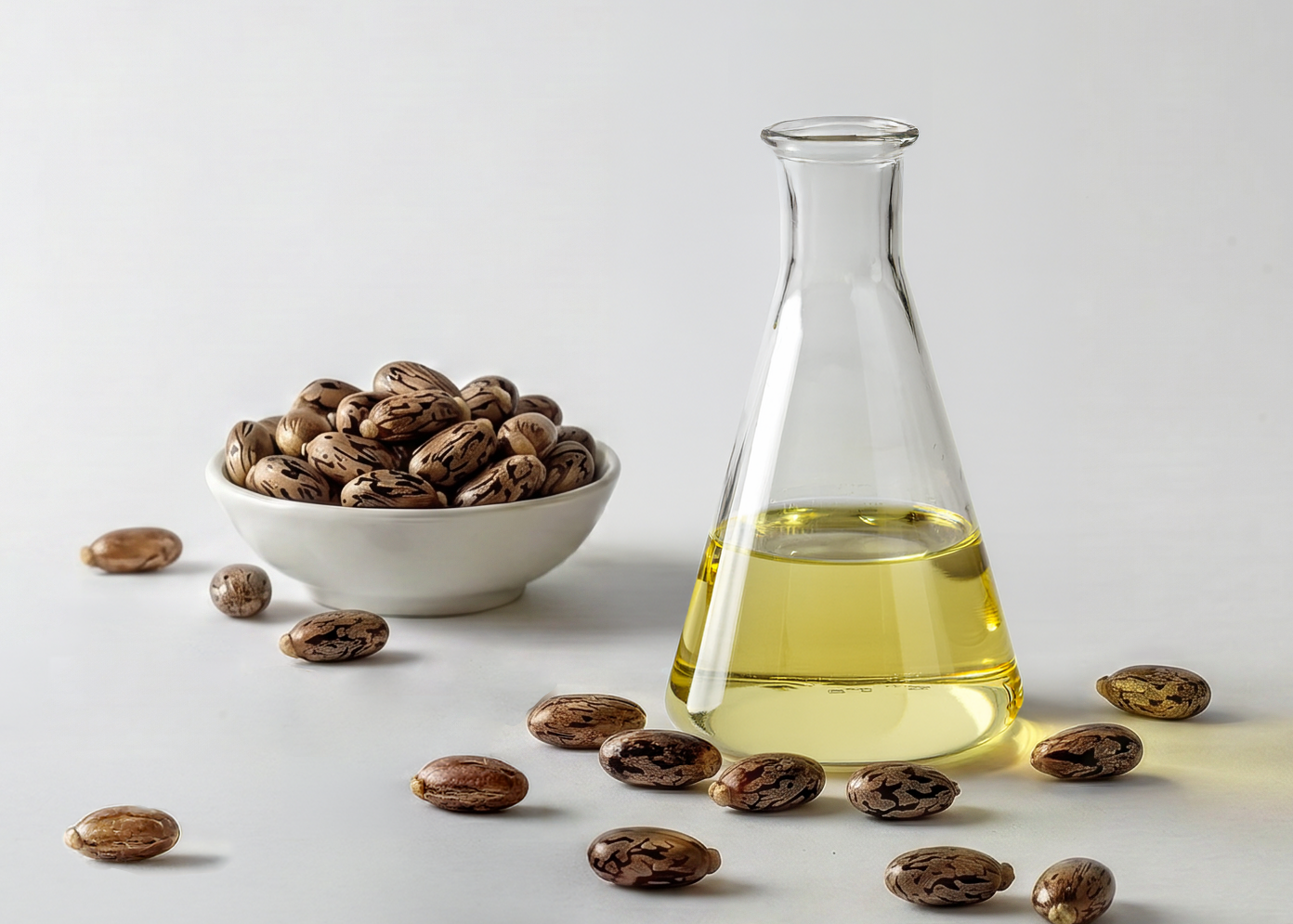
The oil blend combines jojoba, sweet almond, argan, olive, and castor oils with an Amazonian botanical complex, chosen for their lightweight feel and ability to deliver ingredients without clogging follicles or weighing your scalp down.
In testing with real people, 94% found their scalp felt less dry after first use, and 91% reported their hair looking fuller and thicker after four weeks of consistent use. It's designed to rinse out cleanly during your regular wash, leaving your scalp treated but never greasy.
Hair oiling, redesigned.
Scalp oil vs scalp serum: do you need both?
This is one of the most common questions we hear, and the honest answer is that oils and serums do genuinely different things. Understanding the difference helps you build a ‘rhutine’ that actually covers all your bases.
A scalp oil carries ingredients like pumpkin seed oil, saw palmetto, and rosemary directly to your scalp. It conditions, protects during washing, and works best as a pre-wash treatment with time to absorb. Think of it as the treatment phase of your rhutine: targeted, ingredient-rich, and designed to work before the wash cycle.
A scalp serum is water-based and designed to deliver a different set of ingredients: things like peptides, caffeine, and niacinamide. Serums are typically leave-on products applied to a clean scalp after washing, where they can absorb throughout the day without being rinsed away.
Different delivery systems. Complementary benefits.
This is the thinking behind the Density Rhutine. Three products, three different mechanisms, one rhutine built around how hair actually grows. The Triple Density Complex Pre-Wash Scalp & Hair Oil goes on two to three times a week before washing, delivering DHT-modulating botanicals and scalp barrier support while the oil has time to absorb. The Dermastamp is used once to twice a week to create micro-channels across the scalp, stimulating your skin's natural repair response and priming the scalp for better ingredient absorption. The Density + Repair Serum is applied daily after washing (and straight after stamping on dermastamp days, when those micro-channels are at their most receptive), delivering peptides, caffeine, and niacinamide directly where they're needed.
Each product targets a different layer of the hair growth equation. The oil works on hormonal pathways and scalp conditioning. The dermastamp works on physical stimulation and absorption. The serum works on follicle-level delivery. They're formulated to work together, not as add-ons to each other.
How to use a scalp oil for best results
Getting the most from your scalp oil comes down to application, timing, and consistency.
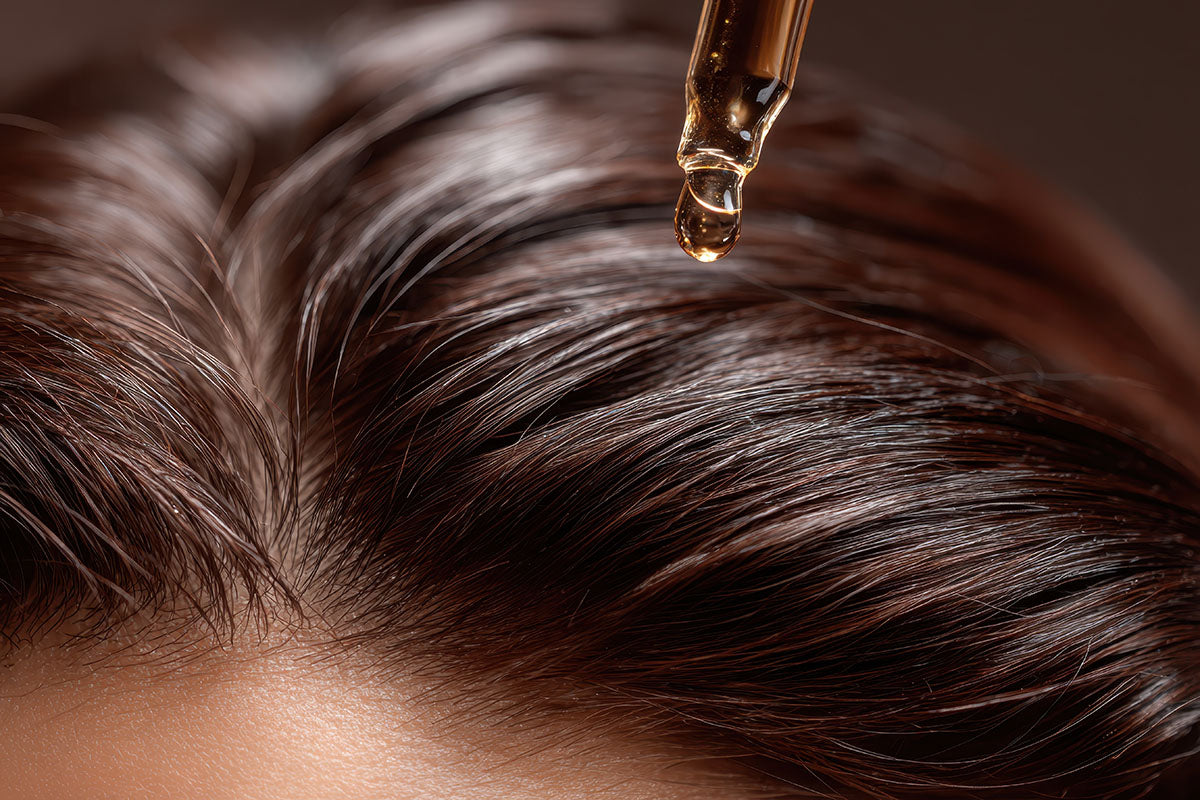
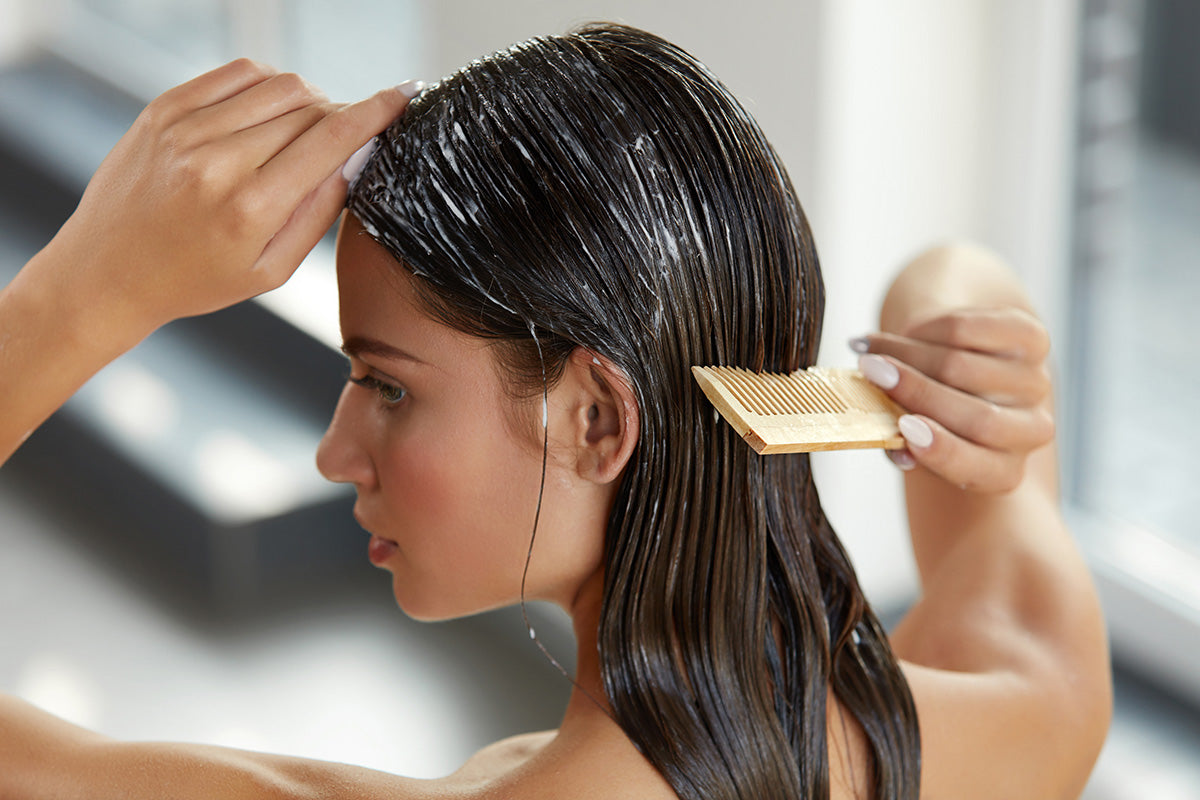
Apply two to three droppers directly onto your scalp and through your hair before washing. Use the dropper to target the areas where you want the most support, whether that's your part line, temples, crown, or all three. Section your hair if needed so the oil reaches your scalp rather than sitting on top of your strands.
Massage gently with your fingertips in small circular motions for a minute or two. This helps distribute the oil evenly across the treatment area and supports the scalp environment. Don't rush this step.
Leave the oil on for a minimum of one hour, or up to six hours. Some people apply their pre-wash oil before bedtime, before a pilates class, or while running errands, which gives the ingredients extended time to absorb. There's no wrong approach as long as you're giving the ingredients time to work.
Wash it out with your regular shampoo. A properly formulated pre-wash oil like the Pre-Wash Density Complex is designed as a lightweight, easy-to-rinse formula, so it rinses out cleanly without needing double-cleansing or harsh clarifying products.
For frequency, two to three times per week is the sweet spot. This gives your scalp consistent exposure to the ingredients without overdoing it. Pair it with your regular wash schedule and it becomes part of your rhutine rather than an extra step you have to remember.
What to avoid in a scalp oil
Knowing what to steer clear of is just as important as knowing what to look for.
Heavy occlusive oils used neat. Pure coconut oil, castor oil, or olive oil applied directly to your scalp can cause issues for some people. These heavy oils can sit on your scalp's surface, potentially clogging follicles rather than nourishing them. When they're part of a properly formulated blend (balanced with lighter oils and active ingredients), they work beautifully. Applied on their own in generous amounts? Your scalp might disagree.
Fragrance-loaded formulas. Synthetic fragrances and heavy essential oil blends can irritate your scalp, especially with regular use. If a product smells amazing but the fragrance list takes up more room than the active ingredients, your scalp might not thank you for it.
Essential oils without a carrier base. Rosemary oil may help hair growth, but applied undiluted to your scalp, it's a recipe for irritation and potential sensitisation. Essential oils always need a carrier oil base to be used safely on the skin.
DIY blends without proper formulation. Mixing your own oils at home might seem cost-effective, but getting the right concentration of ingredients, the right balance of oils, and stability over time matters more than it might seem. A poorly balanced blend can irritate rather than support.
FAQs
Does oiling your scalp help hair grow?
It can, but it depends entirely on what's in the oil. A basic carrier oil like coconut or argan will condition your hair and may help with breakage, but it won't do much at the follicle level. For a scalp oil to genuinely support hair growth, it needs active ingredients that target the biological mechanisms behind thinning, things like DHT modulation, scalp inflammation, and follicle miniaturisation. That's where ingredient-led formulations come in. Research-backed actives like pumpkin seed oil, saw palmetto, and rosemary extract have all been studied for their potential to support hair density when applied topically. So it's less about whether oiling works and more about whether your oil is actually formulated to do something.
Which oil is best for thinning hair?
Look for a scalp oil that goes beyond surface-level conditioning and includes clinically studied ingredients that may help address the root causes of thinning. Single-ingredient oils like castor or rosemary can play a role, but they're each only targeting one pathway. A multi-active formulation gives you broader coverage. The Triple Density Complex Pre-Wash Scalp & Hair Oil was developed by a dermatologist to combine DHT-modulating botanicals (pumpkin seed oil, saw palmetto, beta-sitosterol), scalp barrier support (ceramides, bisabolol), and strand-conditioning lipids (jojoba, sweet almond, Amazonian oils) in a single pre-wash treatment. It's the difference between using one ingredient and using a formulation designed around how hair loss actually works.
How often should you oil your scalp?
Two to three times per week is the sweet spot for most people. This gives your scalp consistent exposure to the active ingredients without overwhelming it or disrupting your wash schedule. The Triple Density Complex Pre-Wash Scalp & Hair Oil is designed to slot into your existing rhutine as a pre-wash step, so you apply it before washing and rinse it out when you're ready to shampoo. Consistency matters more than frequency here. Three times a week, every week, will do more for your hair than daily use for a fortnight followed by nothing.
Can you leave scalp oil on overnight?
With most scalp oils, you'd want to check the formulation first. Some heavier oils can clog pores or irritate the scalp if left on too long. The Triple Density Complex Pre-Wash Scalp & Hair Oil is designed to be left on for a minimum of one hour and up to six hours, giving the active ingredients time to absorb without needing an overnight commitment. Apply it before bedtime and wash before bed, before your pilates class, or while you're running errands. It's a lightweight, easy-to-rinse formula, so it washes out cleanly with your regular shampoo when you're ready.
Does rosemary oil really work for hair growth?
There's encouraging research behind it. A well-known clinical trial found that rosemary oil performed comparably to 2% minoxidil over a six-month period for supporting hair density, with participants reporting less scalp itching as a side effect (randomised trial comparing rosemary oil to minoxidil 2%). The key active compound is rosmarinic acid, which has been studied for its antioxidant and circulation-supporting properties at the scalp level. Where rosemary gets even more interesting is when it's combined with other actives rather than used alone. In the Triple Density Complex Pre-Wash Scalp & Hair Oil, rosemary extract works alongside DHT-modulating ingredients like pumpkin seed oil and saw palmetto, so you're supporting multiple hair growth pathways in one step rather than relying on rosemary to do everything by itself.

Share:
When Does Postpartum Hair Loss Start?
Saw Palmetto Benefits for Hair: How This DHT-Blocking Botanical Supports Growth