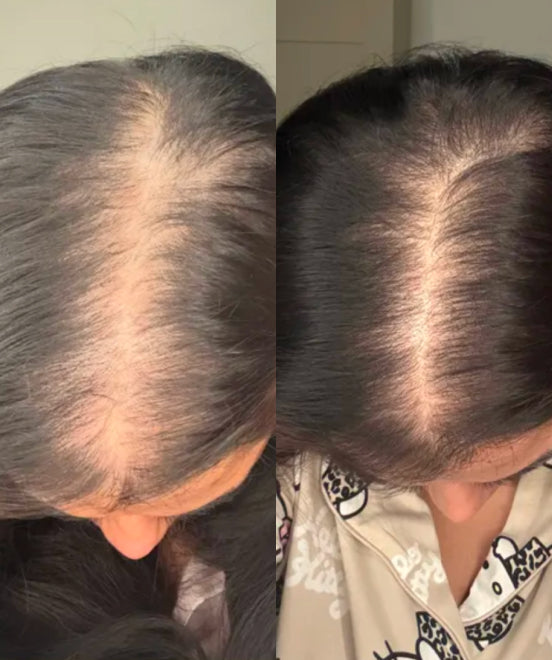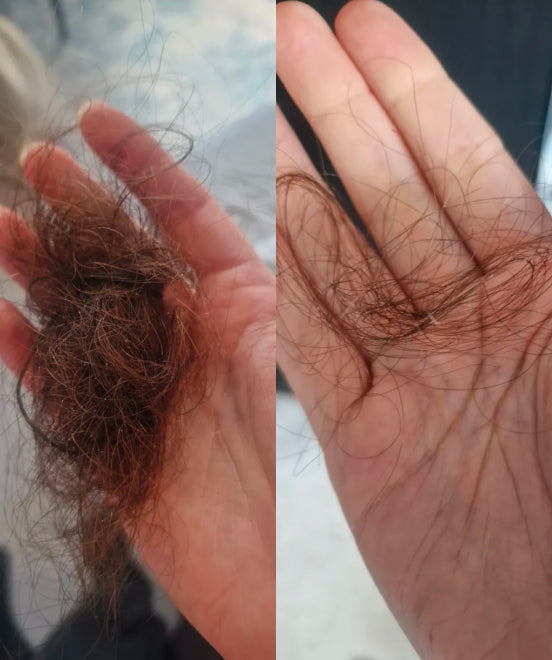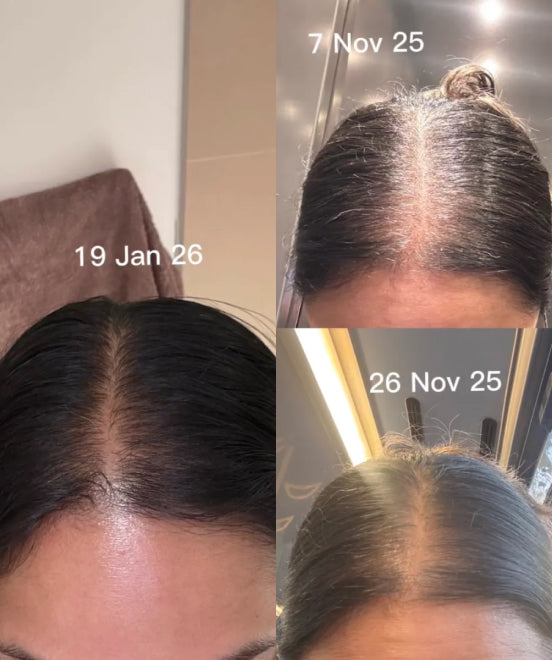

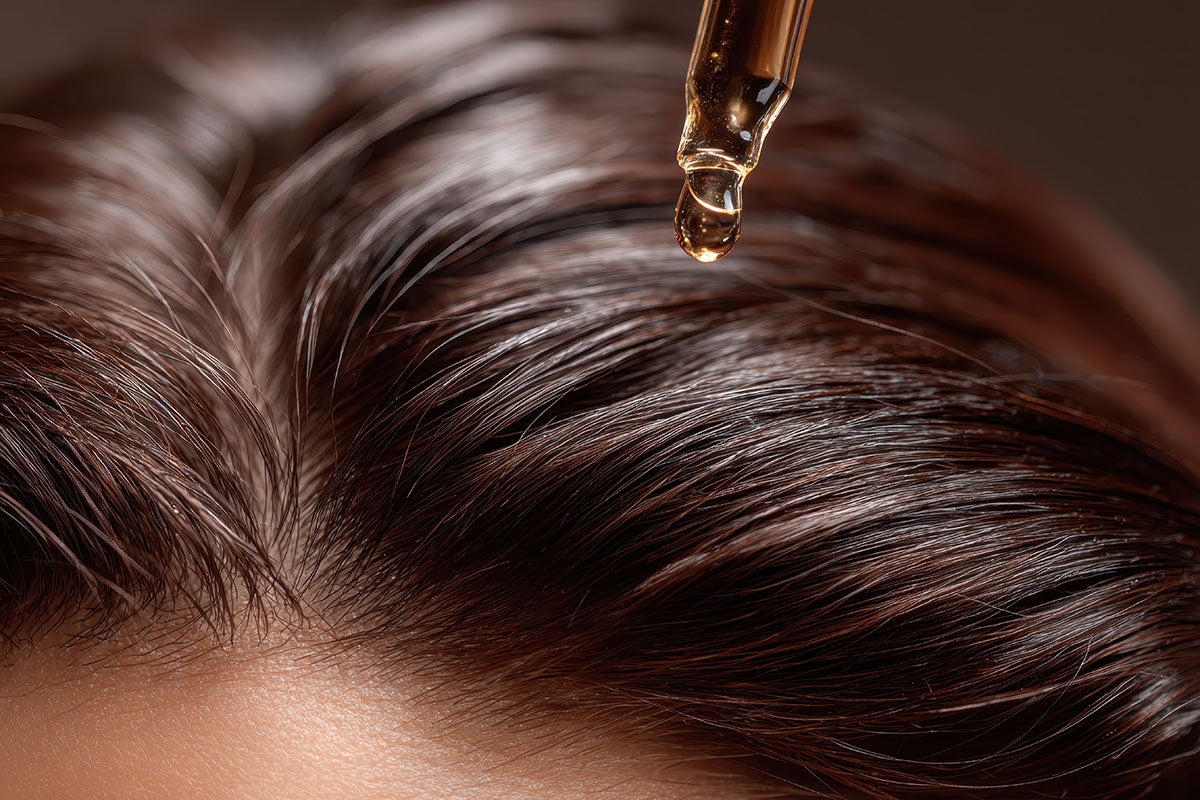

Yes, the right serum can genuinely help, but only within limits the marketing rarely mentions. Let's get into what the evidence really shows, who tends to see results, and when a serum was never going to be enough.
The short answer: do hair loss serums work?
For a lot of people, yes. A well-formulated scalp serum can reduce daily shedding, support a healthier scalp, and encourage thicker growth over time. But it works best on follicles that are still alive and active, just underperforming or thinning. That's the crucial bit most claims skip over.
What a serum can't do is regrow hair from follicles that have been dormant for years or are permanently scarred, and it won't override a medical condition that needs treating at the source. So "do they work?" really depends on three things:
-
What's actually causing your hair loss.
-
Whether the serum contains evidence-backed ingredients at meaningful levels.
-
Whether you use it consistently, for long enough to see results.
Get those three right and a serum can be a genuinely effective part of your routine. Get them wrong and you'll be left wondering why the miracle never arrived. The rest of this guide unpacks each one honestly.
What the evidence actually shows
This is where we separate proper science from wishful thinking. Plenty of serum ingredients have real clinical research behind them. Others are riding on a nice-sounding name. Here's an honest read of where the evidence stands across the category.
The genuinely well-supported ingredients:
-
Caffeine. A 2025 systematic review of clinical trials on topical caffeine found the results consistently pointed in favour of treatment, while noting the quality of evidence varied between studies (Szendzielorz & Spiewak, 2025). Encouraging direction, with the honest caveat that many trials were small.
-
Rosemary oil. When tested head to head against 2% minoxidil over six months, rosemary oil produced a comparable improvement in hair count, with less scalp itching (Panahi et al., 2015). Worth knowing it was compared with the weaker 2% minoxidil, not the 5% version, so it has limits. We dig into this in our guide to whether rosemary oil is good for hair.
-
Bioactive peptides. A 2025 study of women with telogen effluvium (a temporary, diffuse shed often triggered by stress, hormones, or having a baby) found that peptide-based serums meaningfully reduced shedding over 90 days (Chandrashekar et al., 2025).
The promising-but-newer ingredients:
-
Stem cell extracts. A literature review found stem cell-derived growth factors show real promise for supporting blood supply to follicles and waking up quieter ones, though the field is still young (Stem cell applications in human hair growth, 2023).
-
Multi-ingredient serums as a whole. A 16-week controlled study of a serum with new natural actives found it reduced hair loss and improved quality of life in women with chronic telogen effluvium (Hair serum controlled study, 2024).
The honest summary: the evidence leans positive, but a lot of it comes from small or short studies, and "supports growth" is not the same as "regrows a full head of hair." If you want the full ingredient-by-ingredient breakdown of what to look for, our guide to the best scalp serums for hair growth covers that in detail. Here, the point is simpler: the science is real, but it's evidence of support, not magic.
Why some serums work and others fall flat
If serums have decent evidence behind them, why do so many people feel let down by them? Usually it comes down to the formula, not the format. Two serums can look almost identical on the shelf and perform completely differently. Here's what actually drives the gap:
-
Ingredients at meaningful levels. An active only does its job if there's enough of it in the bottle. Plenty of serums include a trendy ingredient in trace amounts so it can appear on the label, not so it can work.
-
A formula that works on more than one pathway. Hair loss rarely has a single cause, so a serum leaning entirely on one hero ingredient often underdelivers. Formulas that pair growth-supporting actives with scalp-barrier support tend to do more.
-
Whether it actually absorbs. A lightweight serum reaches the follicle. A heavy oil mostly sits on top of your hair. Delivery matters as much as the ingredient list.
-
Whether you stick with it. This is the unglamorous truth. Most clinical results come from daily use over three to six months. Using a serum for a fortnight and giving up is the single most common reason people conclude it "didn't work."
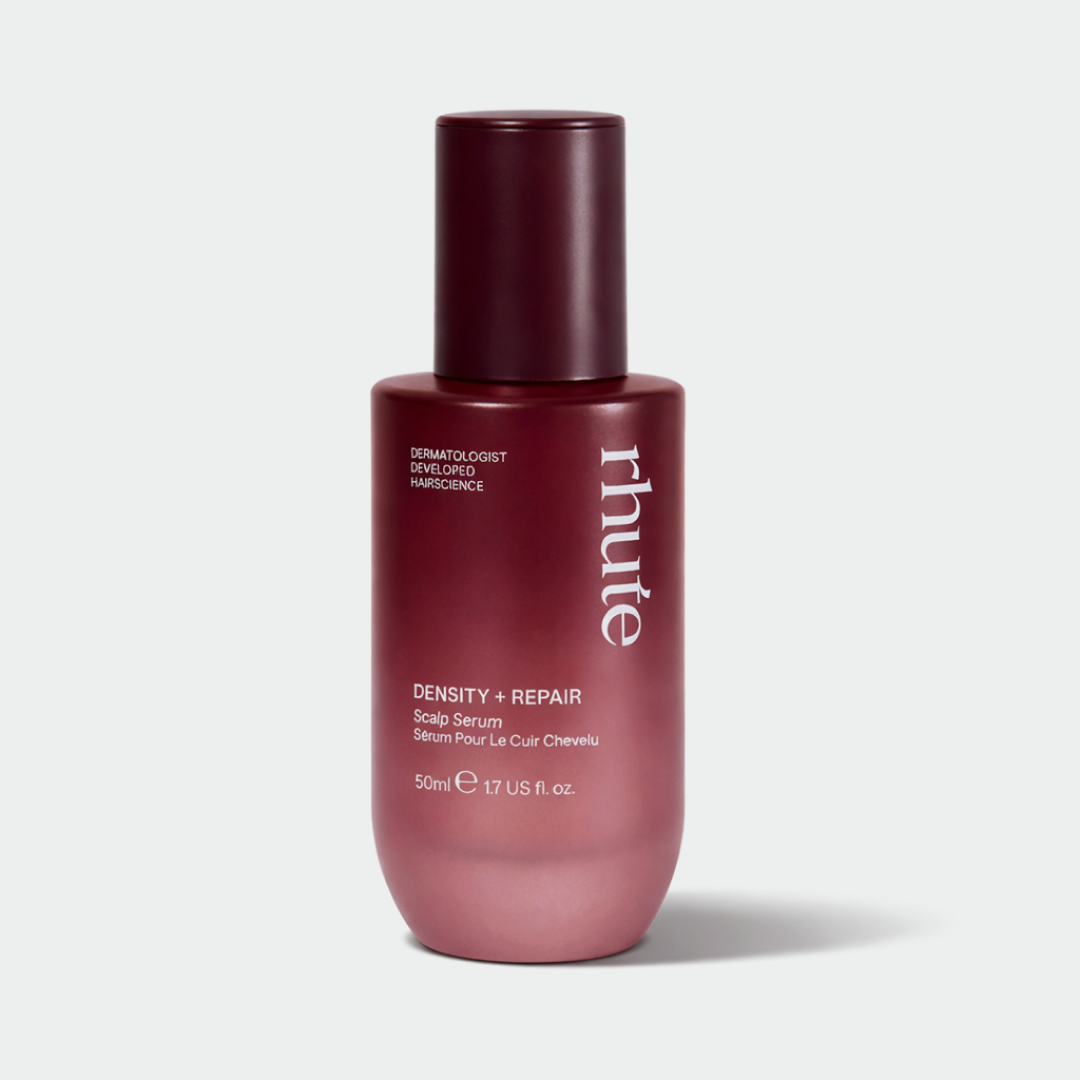
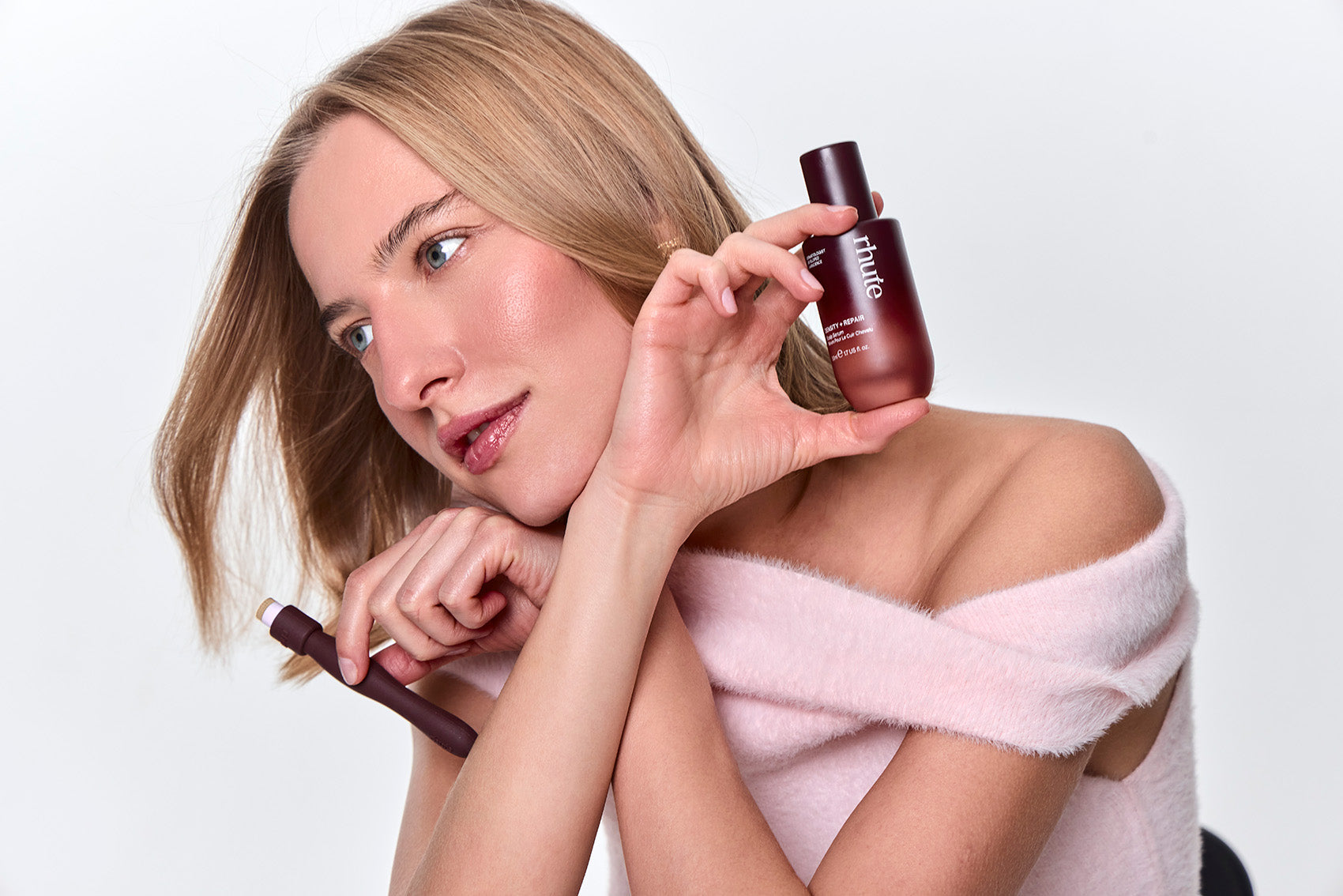
This is exactly why rhute's Density + Repair Scalp Serum combines stem cell extracts, bioactive peptides, caffeine, and niacinamide rather than betting on one ingredient. Working several pathways at once is the design, not a marketing flourish.
What a serum can and can't do
This is the bit that separates honest advice from hype. Knowing both sides sets you up for a realistic experience rather than a disappointing one.
A well-formulated serum can:
-
Reduce daily shedding by helping more hairs stay in their active growth phase for longer.
-
Support thicker, denser-looking growth over time with consistent use.
-
Improve the scalp environment, calming the dryness, flaking, or low-grade irritation that can undermine growth.
A serum cannot:
-
Revive follicles that have been completely dormant for years or are permanently scarred.
-
Replace medical treatment for advanced or strongly genetic hair loss, where prescription options may be needed.
-
Deliver results overnight, because hair biology simply doesn't move that fast.
-
Fix hair loss driven by an untreated medical issue, like a thyroid problem or iron deficiency, without addressing that cause first.
None of that is discouraging. It's the opposite. It tells you exactly when a serum is likely to be your answer and when it's worth getting some help instead.
How serums compare to other hair-loss treatments
If you're weighing your options, it helps to see where serums sit in the wider landscape. This isn't about crowning a winner. It's about knowing what each does so you can choose well.
-
Minoxidil is the most clinically validated topical treatment and the only one with FDA approval specifically for regrowth. It works by widening blood vessels (it's a vasodilator) and extending the growth phase. The honest trade-offs: it doesn't work for everyone (Vañó-Galván et al., 2018), it has to be used indefinitely to keep your gains, and it can cause initial shedding or scalp irritation. rhute's serum is designed as a minoxidil-free alternative for people who'd rather avoid those drawbacks, and that's simply how it was built, not a knock on minoxidil itself.
-
PRP (platelet-rich plasma) uses growth factors concentrated from your own blood, injected into the scalp. Research suggests it may add benefit when combined with minoxidil, though the overall certainty of the evidence is still low (Hou et al., 2024). It can help, but it means ongoing in-clinic sessions and real cost.
-
Oral supplements like biotin and multi-ingredient blends take a whole-body approach. The evidence is mixed: biotin generally only helps if you're actually deficient (University Hospitals, 2025), while some combination formulas show more promise for reducing shedding. Our take on postpartum hair loss vitamins goes deeper on this.
-
Low-level laser therapy uses red light to stimulate follicle activity. Some studies show improvements in density, though results vary and the devices aren't cheap.
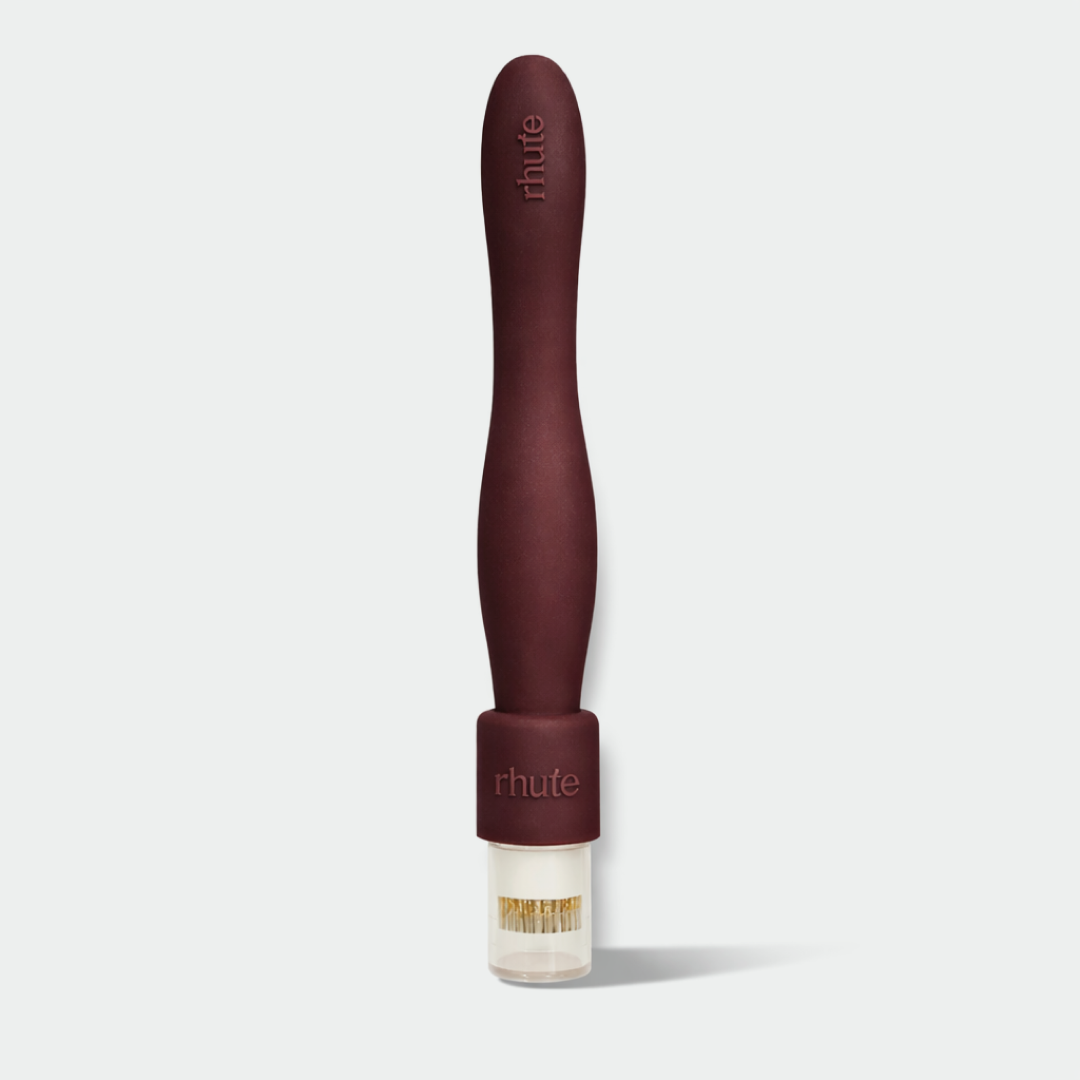
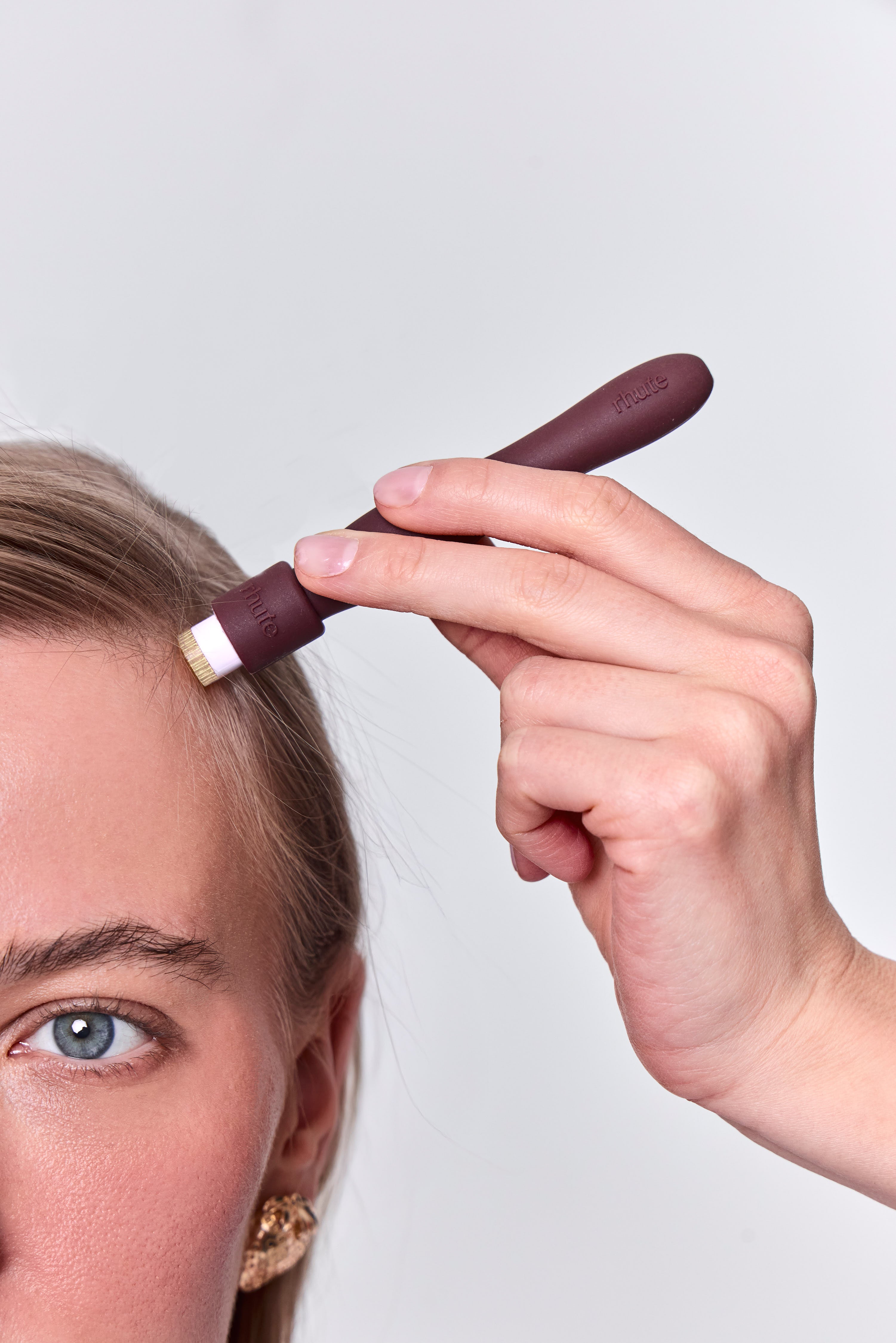
The reality is that many people combine approaches, and a topical serum complements the others nicely. For mild to moderate thinning, a well-formulated serum may genuinely be all you need. You can also boost absorption by pairing it with gentle scalp microneedling, which a 2024 meta-analysis found significantly improved results when added to topical treatment (Pei et al., 2024). The rhute Derma Stamper is designed for exactly that.
Who actually sees results from a serum
Hair loss isn't one experience, and a serum's success depends a lot on what's going on beneath the surface. Serums tend to work best when follicles are still active but underperforming, which is good news for some of the most common types of thinning:
-
Temporary sheds like postpartum or stress-related telogen effluvium, where follicles have been pushed into the resting phase but are still healthy. A serum can support recovery while your body rebalances. If this is you, our guides on when postpartum hair loss starts and cortisol and hair loss are worth a read.
-
Hormonal thinning around menopause, where declining oestrogen shortens the growth phase. Around half of women notice hair changes through this transition (Gupta et al., 2025), and a serum can be a meaningful part of managing it. More in our piece on hair loss during menopause.
-
Early-stage thinning generally. The earlier you start, the more active follicles a serum has to work with. Waiting until thinning is advanced gives any topical less to do.
Where serums struggle is scarring alopecia (where the follicle is permanently destroyed and replaced with scar tissue) and follicles that have been dormant for years. For more on matching an approach to your specific trigger, our best scalp serums for hair growth guide breaks it down by concern.
When a serum isn't enough: see a dermatologist
rhute was founded by a dermatologist, so here's the bit she'd want you to hear. A serum is a brilliant tool for the right situation, but some signs mean it's time for a professional eye rather than another product. Book an appointment if you notice:
-
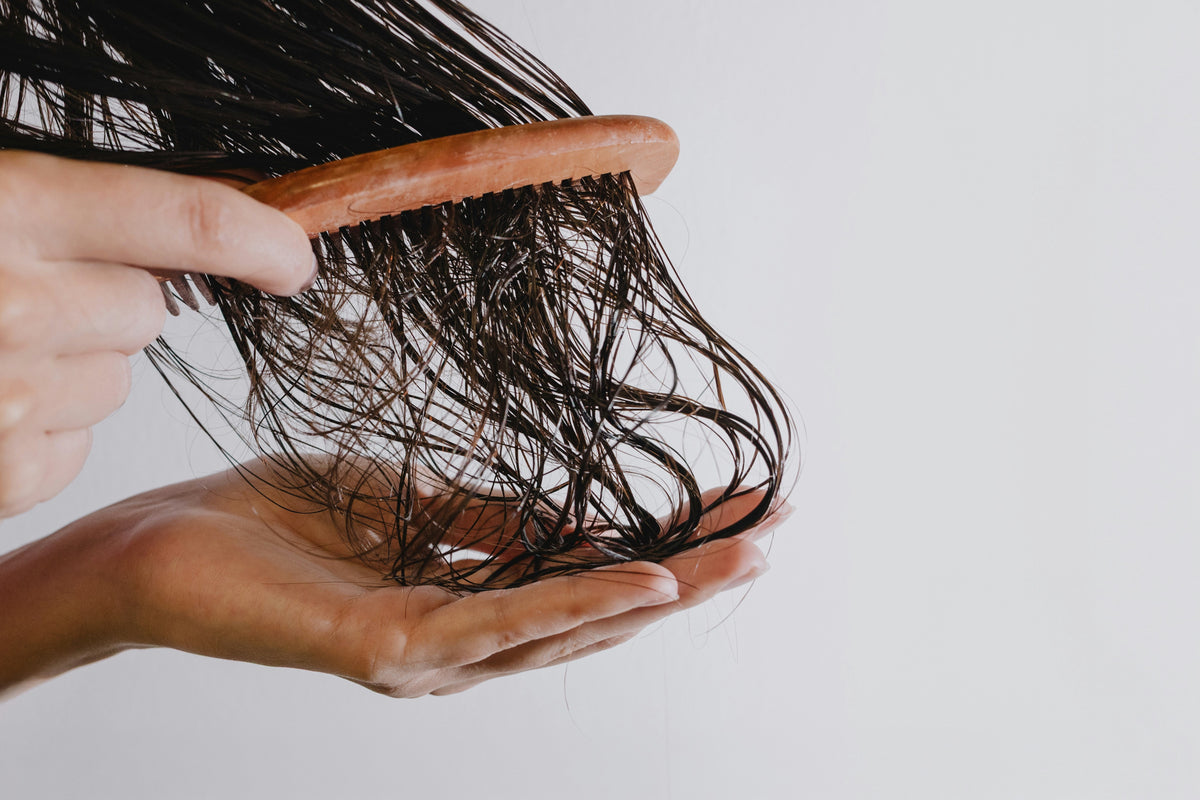
Sudden or rapid hair loss, or hair coming out in clumps.
-
Patchy bald spots rather than diffuse, all-over thinning.
-
Hair loss with scalp pain, redness, scaling, or scarring.
-
Thinning that hasn't budged after several months of consistent treatment.
These can point to conditions like alopecia areata, scarring alopecia, or an underlying health issue that needs proper evaluation. Getting answers early genuinely improves your options, so it's never a step backwards.
A realistic timeline: what consistency buys you
Hair grows in cycles, so patience isn't just a nice idea, it's built into the biology. Here's roughly what to expect, though individual timelines vary with the cause of your hair loss and how consistent you are:
-
Weeks one to four: groundwork. Your scalp may feel healthier and less irritated, but you won't see hair changes yet.
-
Weeks four to eight: reduced shedding is often the first real sign. Fewer hairs in the brush and the shower.
-
Weeks eight to 12: new growth starts to show, with short, fine baby hairs around the hairline or parting.
-
Beyond 12 weeks: density and coverage keep building with continued use.
The single biggest predictor of whether a serum works for you? Showing up consistently. If you want help building the habit, our step-by-step guide to using a scalp serum makes it easy.
Myth vs fact: clearing up the scepticism
The serum market has earned some of its scepticism, so let's set a few things straight.
-
Myth: serums work overnight. They don't, and anything promising dramatic results in days isn't being straight with you. When a serum does work, the results are gradual but real.
-
Myth: more ingredients means a better serum. A kitchen-sink label often signals trace amounts of everything and effective levels of nothing. A focused formula with clinically supported actives at meaningful doses wins.
-
Myth: all serums are basically the same. They're not, any more than all moisturisers are. Ingredients, concentrations, and formulation quality vary enormously.
-
Myth: natural always means effective. Some botanicals have genuine evidence (rosemary oil being the standout), but "natural" on its own tells you nothing about whether it's been tested.
-
Myth: a serum can regrow hair from a bald, shiny patch. If follicles are scarred or long dormant, topical serums can't bring them back. They shine on active-but-struggling follicles.
FAQs
Do hair loss serums actually work?
For the right person, yes. Clinical research on ingredients like caffeine, peptides, and stem cell extracts shows serums can reduce shedding and support thicker growth over time. They work best on follicles that are still active but underperforming, and they need consistent use over several months. They won't regrow hair from scarred or long-dormant follicles, and they can't replace medical treatment for advanced hair loss.
How long before I know if a serum is working?
Most people notice reduced shedding within four to six weeks and visible new growth around the eight to 12 week mark, with fuller results building over three to six months. Because hair grows in cycles, judging a serum before the eight-week point usually means giving up too soon.
Are hair loss serums worth the money?
If you have early-stage or temporary thinning and choose a serum with evidence-backed ingredients used consistently, it can be a worthwhile, lower-commitment option compared with in-clinic treatments. If your hair loss is advanced, patchy, or scarring, you'll get better value from seeing a dermatologist first rather than spending on products that can't address the cause.
Are the results permanent?
Like most hair treatments, the benefits depend on continued use. Serums support an ongoing process rather than delivering a one-off fix, so maintaining your routine helps you keep your gains. For temporary sheds like postpartum or stress-related loss, hair often recovers on its own too, and a serum can simply help speed and support that.
How is a serum different from minoxidil?
Minoxidil is a pharmaceutical vasodilator with FDA approval specifically for regrowth, and it has to be used indefinitely to maintain results. Non-minoxidil serums use ingredients like peptides, caffeine, and stem cell extracts to support hair growth through different routes. Some people prefer minoxidil-free options to avoid side effects like irritation or initial shedding, or simply as a gentler long-term approach.
Can I use a hair loss serum during pregnancy or breastfeeding?
It depends entirely on the formula. Minoxidil-based serums are generally not recommended during pregnancy or breastfeeding, while gentle, non-pharmaceutical formulas with peptides, niacinamide, and plant-based actives may be suitable. Always check with your doctor or midwife before starting anything new during this time.
So, do hair loss serums actually work? For active, struggling follicles, used consistently, the evidence says they genuinely can. Just go in with realistic expectations, choose a formula with science behind it, and know when it's time to call in a professional instead.
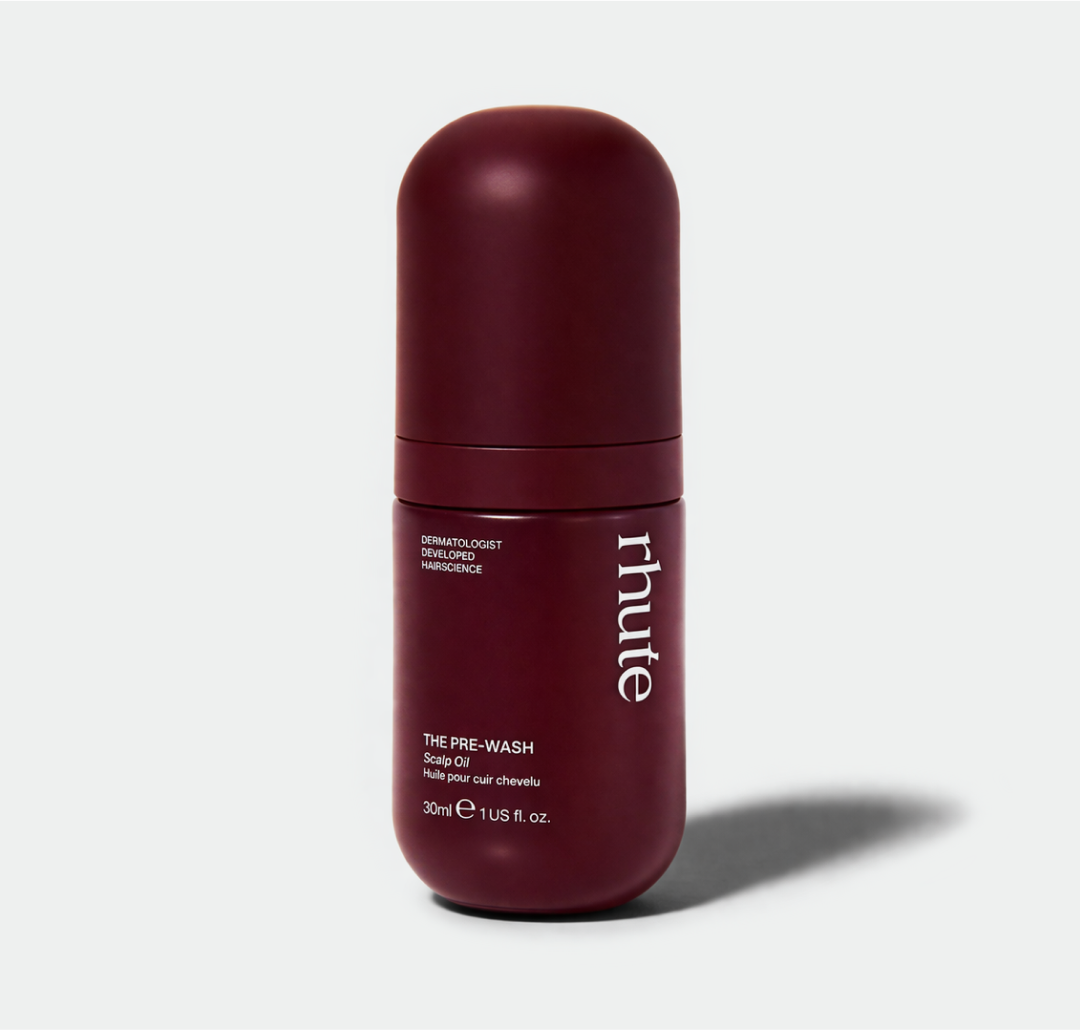
Ready to give your hair its best shot? rhute's Density + Repair Barrier-Boosting Scalp Serum was developed by a practising dermatologist to support the full hair cycle in one intelligent formula. Or start with The Density Rhutine to build the whole routine. From rhute to tip.