



The Short Answer: It Can Help, but It's Not the Full Story
If you've been on hair TikTok for more than five minutes, you've probably seen someone swearing that rosemary oil transformed their hair. And look, it's not a bad ingredient. It has some genuine benefits for your scalp, and there is clinical research behind it. But the evidence is weaker than the internet makes it sound, and using rosemary oil on its own is unlikely to give you the results you're hoping for.
This article breaks down what rosemary oil can actually do, why the science isn't as strong as the hype suggests, and what you should be combining it with if you're serious about hair density.
How Rosemary Oil Works on Your Scalp
Most articles will tell you that rosemary oil "increases blood flow to the scalp" and leave it there. That's true, but it's worth understanding the details.
The two active compounds that matter are rosmarinic acid and carnosic acid. Rosmarinic acid is an antioxidant and anti-inflammatory. It helps protect hair follicles from oxidative stress (the everyday cellular damage from pollution, UV, general wear) and supports micro-circulation to the scalp, meaning more oxygen and nutrients reach the follicle.
Carnosic acid has nerve-stimulating properties, and one study found it can support tissue repair around hair follicles. There's also some early lab research suggesting it may have mild activity against 5-alpha reductase, the enzyme that converts testosterone into DHT (dihydrotestosterone, the hormone most linked to pattern hair loss). But that hasn't been shown in human hair loss studies, so it's speculative at this point.
Rosemary oil also has antimicrobial properties, which can help if your scalp tends towards flaking, irritation, or build-up. Scalp inflammation is one of the most underrated contributors to hair thinning. When your scalp is chronically inflamed, even at a low level, the hair growth cycle shortens, and follicles don't perform at their best. So anything that calms that is worth having in your rhutine.
Where rosemary oil falls short is on the hormonal side of hair loss, which is where most thinning actually comes from. But we'll get to that.
What the Clinical Evidence Actually Says (and Doesn't Say)
Here's where it's important to be straight with you, because most rosemary oil articles aren't.
The study behind virtually every "rosemary oil is as good as minoxidil" claim is a single trial from 2015. It compared rosemary oil against minoxidil over six months, and both groups saw a similar increase in hair count. The rosemary group also reported less scalp itching.
That sounds great. But there are some significant caveats. The study was small, just 50 people per group. It compared rosemary against the weaker 2% version of minoxidil, not the 5% concentration most commonly used today. There was no placebo group. And nobody has replicated the results at scale in the decade since.
A more recent trial in 2025 tested a rosemary-based product and found improvements in hair growth and thickness over 90 days. But it was a blended formula with multiple oils, so it's impossible to say how much rosemary was actually contributing.
None of this means rosemary oil does nothing. It clearly has scalp health benefits, and the 2015 results were encouraging enough to warrant further research. The problem is that further research hasn't really happened, and in the meantime, social media has turned one small, imperfect study into "rosemary oil regrows hair." That's a stretch.
The honest take: Rosemary oil has more clinical data than most trending hair ingredients (which have none), but significantly less than ingredients like minoxidil, pumpkin seed oil, or saw palmetto. It's a useful part of a hair care rhutine, not the hero of one.
What Rosemary Oil Can't Do on Its Own
This is the section most rosemary oil articles skip, because it means being upfront about limitations.
Rosemary oil is good at supporting scalp circulation, calming inflammation, and providing antioxidant protection. If your scalp is dry, tight, or irritated, it can genuinely help with that. A healthier scalp is always a better foundation for growth.
But rosemary oil can't reliably block DHT or reverse follicle miniaturisation. Pattern hair loss, the most common type of thinning, is primarily driven by DHT shrinking your hair follicles over time. Rosemary oil's strengths are in circulation and scalp health, not in addressing that hormonal pathway.
It's also not going to regrow hair where follicles have already shut down. Its benefits are about creating better conditions for the follicles you still have, not bringing back ones that are gone.
This matters because it changes how you should think about rosemary oil. On its own, it's a decent scalp-health ingredient with some growth-supporting properties. But if thinning or density loss is your actual concern, rosemary oil alone is unlikely to move the needle in a meaningful way. You need ingredients that target the mechanisms rosemary can't reach.
Where Rosemary Oil Needs Help (and What Actually Has Better Evidence)
If density is your goal, you need to think about DHT. DHT binds to receptors in your hair follicles and gradually shrinks them, shortening the growth phase and producing thinner, weaker hair over time. This is what drives pattern hair loss in both men and women.
Rosemary oil doesn't have strong evidence for blocking the enzyme that produces DHT. For that, you need ingredients with a different mechanism and more robust clinical backing.
Pumpkin seed oil is one of the strongest options. One trial found it significantly increased hair count over 24 weeks compared to a placebo, with the proposed mechanism being 5-alpha reductase inhibition, directly targeting DHT production. That's a bigger, placebo-controlled study with clearer results than the rosemary trial.
Saw palmetto works through a similar pathway. A review of the available research supports its potential for reducing shedding and improving density with consistent use.
The smarter approach isn't choosing rosemary oil or these ingredients. It's combining them. Rosemary brings the circulation and scalp support. Pumpkin seed oil and saw palmetto bring the hormonal modulation. Together, you're covering more of the biology behind thinning than any single ingredient can reach. (We go deeper into how different scalp oil ingredients work together on Rhute Answers.)
The Smarter Way to Use Rosemary Oil: rhute Triple Density Complex Pre-Wash Scalp & Hair Oil
This is the thinking behind the Triple Density Complex Pre-Wash Scalp & Hair Oil. Rather than relying on rosemary alone (with its limited evidence base), it was developed by a dermatologist to combine rosemary extract with ingredients that have stronger clinical backing: pumpkin seed oil, saw palmetto, beta-sitosterol, ceramides for scalp barrier repair, and conditioning oils like jojoba, sweet almond, black seed oil, and Amazonian oils (babassu, pracaxi, and andiroba).
It keeps what rosemary does well and adds the actives that address what it can't. Think of it as the rosemary oil trend with the gaps filled in.
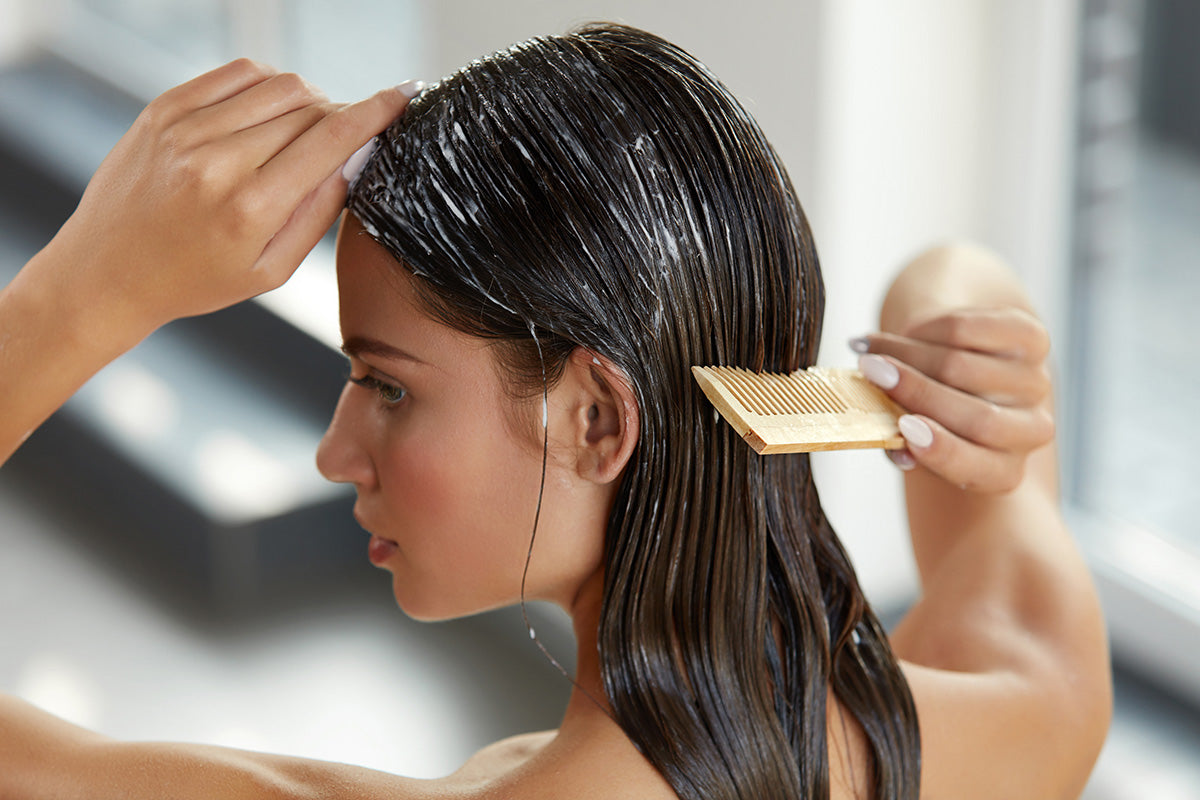
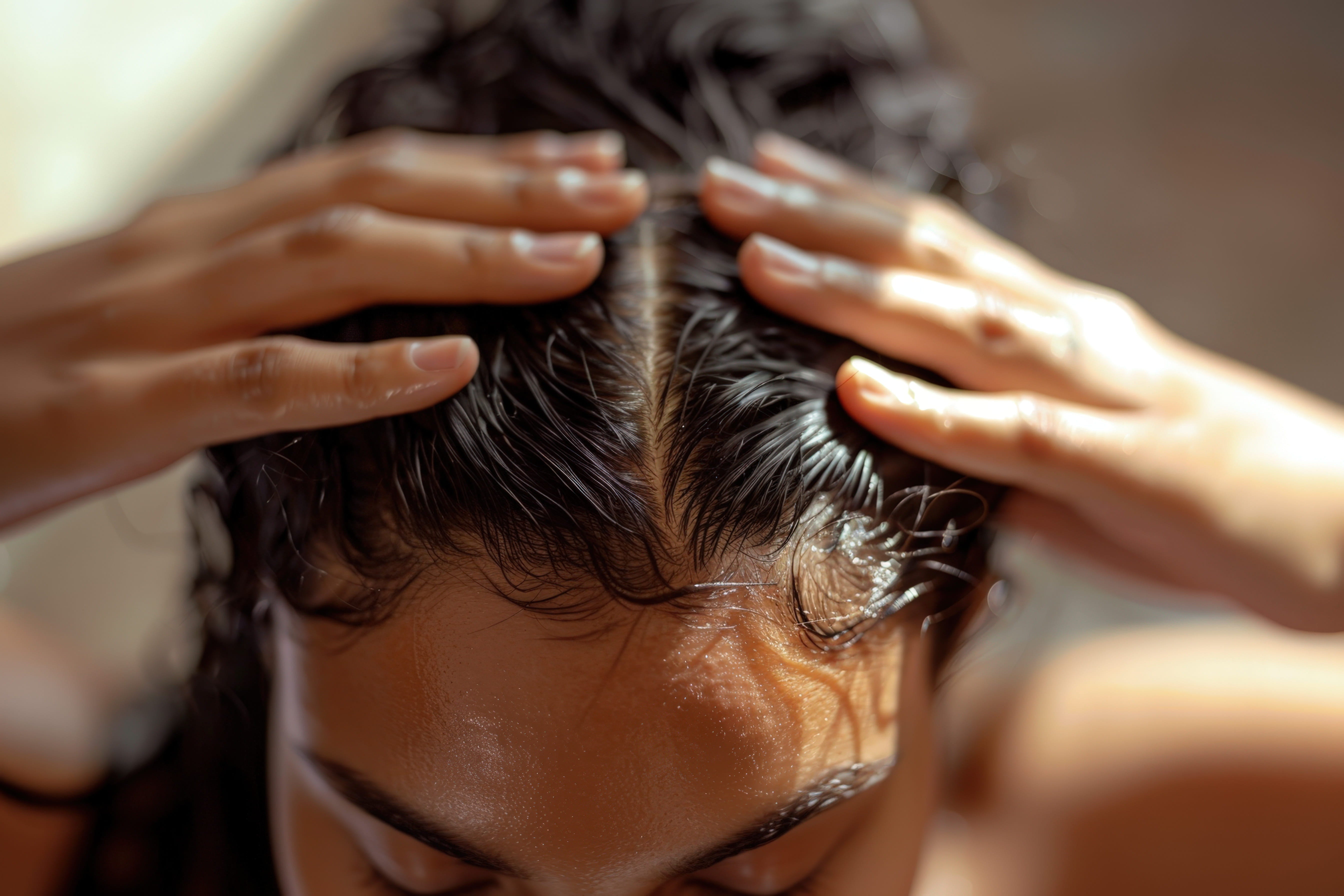
As a pre-wash treatment, you apply 2 to 3 droppers directly onto your scalp before shampooing. Leave it on for one hour or up to 6 hours, then wash out. It's lightweight, rinses clean, and doesn't leave the heavy residue you'd get from mixing your own essential oil blends. Use it 2 to 3 times per week.
If you're already using rosemary oil, the Triple Density Complex Pre-Wash Scalp & Hair Oil can replace that step while adding the clinically backed actives your rhutine is probably missing. If you're new to scalp oils, it's a simpler and more effective starting point than DIY blending.
FAQs
Is rosemary oil better than minoxidil for hair growth?
Not based on the current evidence. One small study found comparable results over six months, but it used the weaker 2% version of minoxidil and hasn't been replicated. Minoxidil has decades of large-scale research behind it. Rosemary oil is a reasonable natural option with fewer side effects, but calling it "as good as minoxidil" overstates what one small trial can tell us.
Can rosemary oil cause hair loss?
Rosemary oil itself doesn't cause hair loss, but using it incorrectly can cause problems. Applying it undiluted can irritate your scalp, trigger inflammation, and potentially worsen shedding short-term. Always dilute with a carrier oil and patch test first. If you notice increased irritation after starting rosemary oil, stop and let your scalp recover.
How long does rosemary oil take to work?
Give it three to six months of consistent use. Hair grows roughly 1 to 1.5cm per month, and any intervention needs time to influence the growth cycle. The clinical research didn't show significant changes until the six-month mark. Patience and consistency matter more than how much you apply.
Can you put rosemary oil directly on your scalp?
Not undiluted. Pure rosemary essential oil is too concentrated for direct skin contact and can cause redness, burning, or reactions. Dilute with a carrier oil at roughly 2 to 3 drops per tablespoon, or use a product that already contains rosemary at a safe concentration.
Does rosemary oil work on all hair types?
Yes. Its anti-inflammatory and circulation-boosting properties work at the scalp level regardless of hair texture. For finer hair, keep the carrier oil light. For coarser or more textured hair, rosemary oil works well as part of a pre-wash treatment, helping with both scalp health and conditioning.
Can rosemary oil thicken hair?
There's no clinical evidence that it increases the diameter of individual strands. What it may do is support healthier follicle function, and healthier hair tends to look and feel thicker because it retains more moisture and breaks less. But that's different from actual strand thickening.
Should you use rosemary oil or a rosemary-based product?
Both can work. Pure rosemary essential oil is affordable but needs diluting correctly, which adds steps and room for error. A well-formulated product takes the guesswork out and usually combines rosemary with other actives that address the mechanisms rosemary can't reach alone. If density is your main concern, a multi-ingredient approach will get you further than rosemary on its own.



Share:
Do Hair Loss Serums Actually Work? What a Dermatologist Wants You to Know
Pumpkin Seed Oil for Hair: Why Dermatologists Rate It So Highly