

Derma Stamp vs Roller: Which Microneedling Tool Is Best for Hair Growth?
You've seen the TikToks. You've read the Reddit threads. And now you're standing in front of two tiny devices, wondering which one is actually going to help your hair. Welcome to the derma stamp vs roller debate.
Both tools use microneedling to stimulate your scalp and encourage hair growth, but they work quite differently. One stamps, one rolls, and that distinction matters more than you'd think when there's hair involved. So which tool actually delivers? Let's get into the science, the practical stuff, and which one might become part of your new rhutine.
What Is Scalp Microneedling and Why Does It Work?
Microneedling (sometimes called collagen induction therapy) involves creating tiny, controlled micro-injuries in your skin using fine needles. Sounds counterintuitive, right? Poke holes in your scalp to grow hair? But here's the thing: your body is incredibly good at healing itself, and microneedling takes advantage of that.
When you create these micro-punctures, your scalp kicks into repair mode. Blood flow increases, growth factors get released, and sluggish hair follicles start waking up. It's essentially a reset button for your scalp.
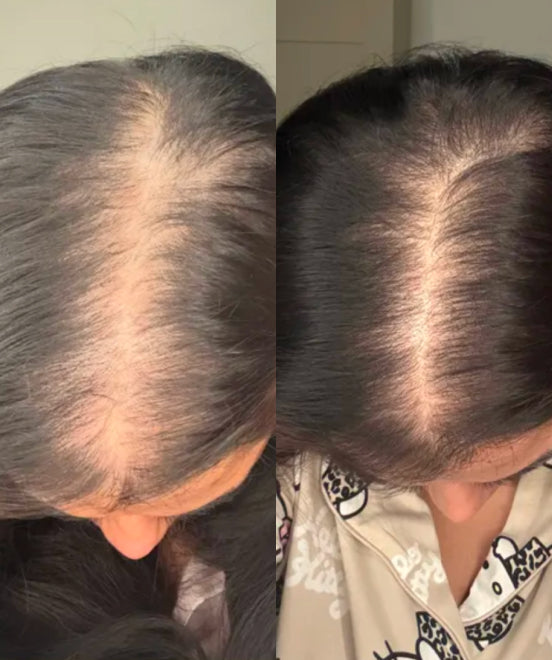
The research backs this up in a big way. A 2025 meta-analysis in Archives of Dermatological Research looked at 12 randomised controlled trials with 631 people experiencing hair thinning. The finding? Microneedling combined with topical treatment significantly outperformed topical treatment alone. And this held true whether practitioners used deeper or shallower needles.
What's happening at the cellular level is pretty fascinating. The micro-injuries stimulate your dermal papilla cells, which are key players in hair follicle regeneration. They also trigger the release of platelet-derived growth factor and vascular endothelial growth factor, both of which support the anagen (growth) phase of your hair cycle. Even better, microneedling can help break down perifollicular fibrosis, that stubborn scarring around follicles that can block regrowth in later stages of hair loss.
Basically, your scalp gets the memo that it's time to grow.

The Derma Stamp: Precision Where You Need It
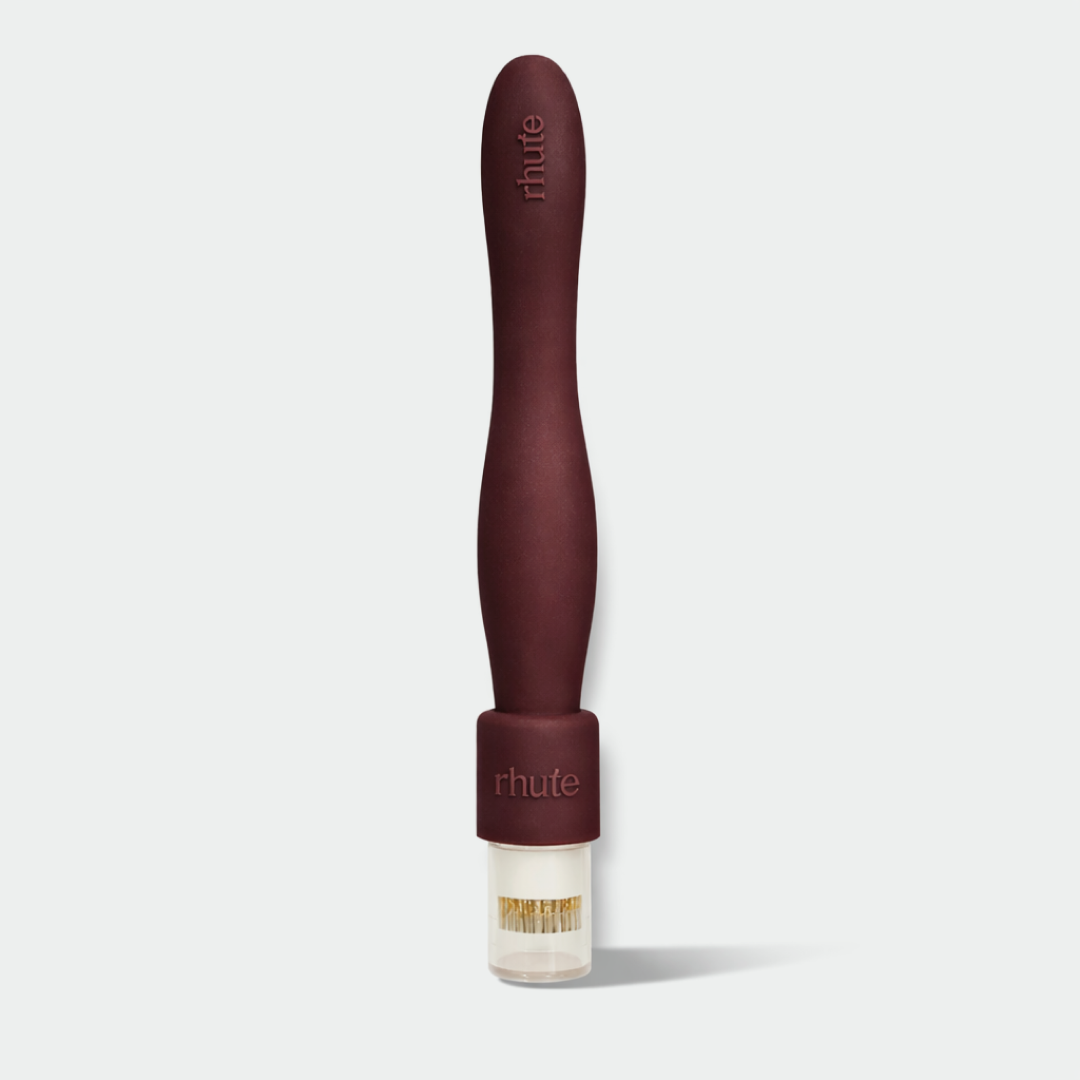
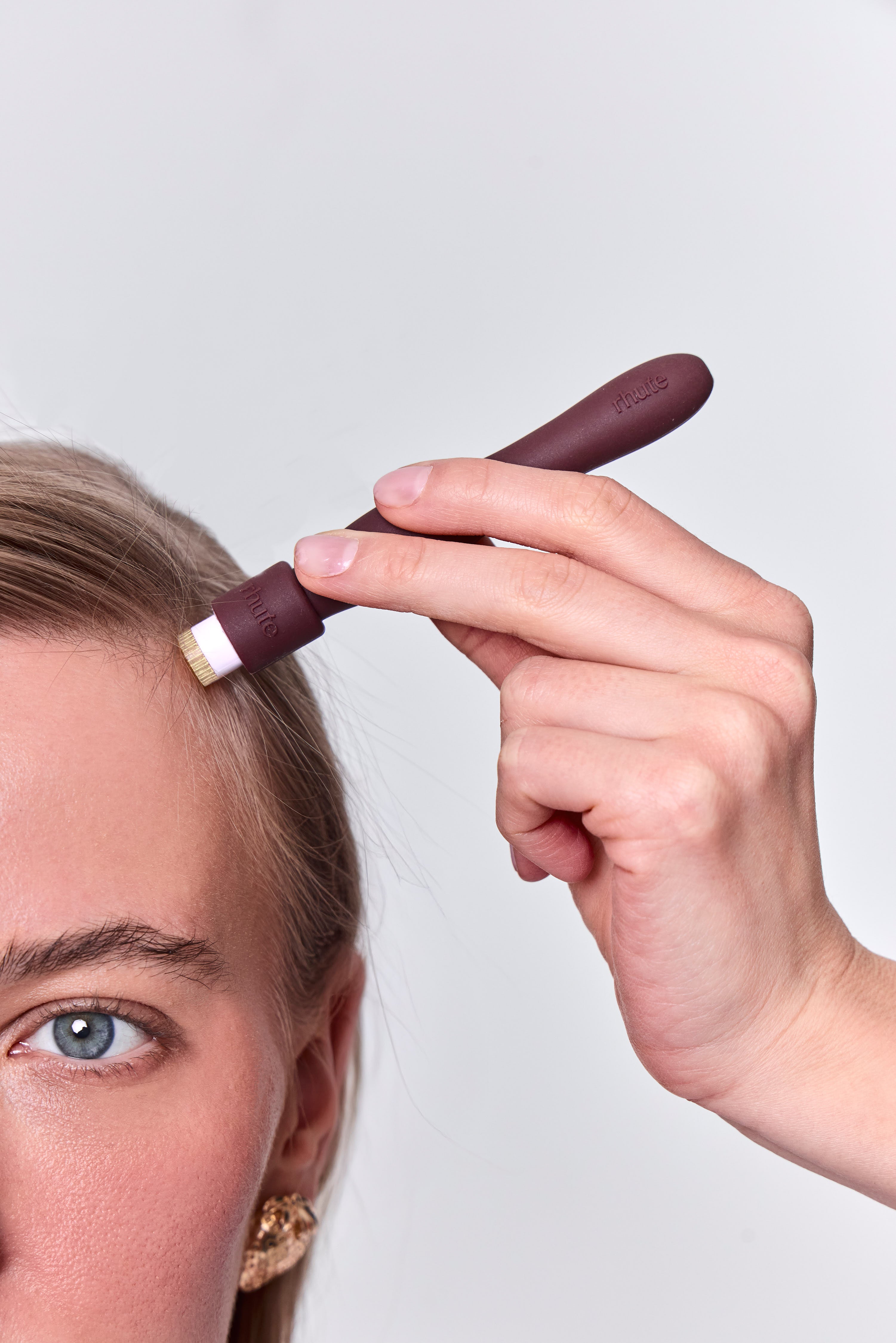
A derma stamp has a flat head covered in fine needles. Instead of rolling across your scalp, you press it straight down, lift, and move to the next spot. Simple, controlled, and very scalp-friendly.
Here's why stamps are becoming the go-to for hair growth: that vertical stamping motion means needles go in and out at a clean 90-degree angle. No dragging, no tugging, no catching on your hair. If you've ever tried to roll a derma roller through anything longer than a buzz cut, you know exactly why this matters.
Stamps also give you precision. Targeting your hairline? A widening part? That one spot at your crown that's been thinning? A stamp lets you treat exactly where you need to without affecting areas that are doing fine on their own.
The vertical entry creates cleaner micro-channels, too, which is great news when you're following up with a serum. Ingredients like peptides, caffeine, and niacinamide can penetrate more effectively through those uniform punctures, getting the good stuff right to your follicles.
Many stamps come with adjustable needle depths as well, so you can customise as you get more comfortable or as your scalp's needs change. It's the kind of control that makes a real difference when you're building a consistent rhutine.
The Derma Roller: The OG Microneedling Tool
The derma roller is probably what you picture when you think of at-home microneedling. It's a small barrel covered in rows of tiny needles that you roll across your skin. The rolling motion covers ground quickly, which is why it became popular in the first place.
Here's the trade-off, though: as that barrel rotates, needles enter your skin at varying angles rather than straight down. This creates less consistent micro-channels than stamping, and can cause more lateral tearing and trauma to surrounding skin tissues. That said, derma rollers have been used successfully in plenty of clinical studies, so the mechanism clearly still works.
The real issue for scalp use? Hair tangling. If you have any length to your hair at all, the rolling motion can catch and pull strands. It's uncomfortable at best and can cause breakage at worst. This is actually why a lot of people start with a roller and eventually switch to a stamp for their scalp.
Rollers do tend to be cheaper and they're everywhere, which explains their popularity. If you keep your hair very short or shaved, the tangling issue disappears and a roller can work just fine.
Stamp vs Roller: The Key Differences for Your Scalp
Let's break this down practically.
Motion and precision: Stamps use vertical pressing for targeted treatment. Rollers use horizontal rolling for broader coverage. If you need to focus on specific areas, stamps win. If you're treating your whole scalp uniformly with very short hair, rollers can be faster.
Needle penetration: Stamps create perpendicular entry points at consistent depths. Rollers create angled entries that vary with rotation. For serum absorption, those cleaner stamp channels have an edge. Stamps also cause less lateral tearing compared with rollers, meaning lower trauma to surrounding skin tissues.
Hair compatibility: This is where stamps really shine. The press-and-lift motion completely avoids your hair. Rolling? Not so much. If you're treating thinning areas but still have surrounding hair (which, let's be honest, most of us do), a stamp will be significantly more comfortable.
Professional preference: Most dermatologists and trichologists now recommend stamps over rollers specifically for scalp microneedling. The precision, comfort, and hair-friendly design just make more sense for your head.
Professional preference: Most dermatologists and trichologists now recommend stamps over rollers specifically for scalp microneedling. Rollers rely on a rolling motion that makes it easy to apply uneven pressure across the scalp, which can lead to patchy, inconsistent results. Worse, that rolling action means needles enter the skin at an angle rather than vertically, increasing the risk of hair follicle scarring. Stamps let you control the pressure evenly and needles go straight down, exactly where you want them.
What the Research Actually Says
The clinical evidence for microneedling and hair growth is genuinely solid, though most studies don't specifically compare stamps to rollers. What we know is the microneedling mechanism works.
A 2013 study in the International Journal of Trichology found something remarkable: 82% of participants using microneedling plus minoxidil reported over 50% improvement in hair growth after 12 weeks. The minoxidil-only group? Just 4.5% hit that mark. That's not a subtle difference.
More recent research has reinforced this. A 2024 systematic review in the Journal of Cosmetic Dermatology examined 13 randomised controlled trials with 696 patients and confirmed that combined microneedling therapy showed statistically significant improvements in both hair density and hair diameter compared to medication alone.
A 2024 meta-analysis also found that microneedling worked across different needle depths, with both sub-1mm and over-1mm depths producing significant increases in hair count when combined with topical treatment. So there's flexibility in how you approach it.
The takeaway? Microneedling works by stimulating stem cells in the hair follicle bulge, boosting growth factor release, and improving how well your scalp absorbs topical treatments. When you combine the mechanical stimulation with the right serum, you're giving your follicles their best shot at growth.
Choosing the Right Needle Depth
Needle depth matters for both safety and results, but bigger isn't always better. For at-home scalp microneedling, depths between 0.25mm and 1.0mm can all be effective depending on your goals.
0.25mm to 0.5mm: These shorter needles reach the dermis effectively while minimising trauma and the risk of follicle scarring. They create channels that let serums penetrate beyond your skin's outer barrier. Comfortable, minimal recovery, and you can use them more frequently. Research supports that shallower depths can be just as effective as deeper ones. One study found that 0.6mm needles actually outperformed 1.6mm for hair regrowth.
0.5mm to 1.0mm: This range also stimulates collagen production and activates wound-healing responses. Many clinical studies showing hair growth benefits used needles in this range.
Beyond 1.0mm: Generally best left to professionals. While some studies have used 1.5mm needles successfully, deeper needling means more discomfort, longer recovery, and a higher risk of scarring if done incorrectly. And scarring is the opposite of what we want for hair growth.
Starting with a shallower depth and using your device 1-2 times per week is a solid approach. See how your scalp responds, then adjust from there.

How to Use a Derma Stamp for Hair Growth
Good technique makes all the difference. Here's how to get it right.
Before you start: Wash your scalp thoroughly. Disinfect your stamp with cleansing alcohol, giving it a proper clean for 1-2 minutes to ensure thorough sanitation. Clean tools, clean scalp, better results.
The technique: Part your hair to expose the area you're treating. Press the stamp firmly (but not aggressively) against your scalp, then lift straight up before moving to the next spot. Work systematically, slightly overlapping each stamp for even coverage. Start horizontally, then vertically, aiming for 2-3 passes over areas where you want to improve growth.
Afterwards: Your scalp might look a bit pink and feel tender. Totally normal. This is the perfect moment to apply your growth serum since those micro-channels are open and ready to absorb. Look for formulations with peptides to strengthen follicles, caffeine to boost circulation, or niacinamide to soothe and balance your scalp. Remember to disinfect your stamp again after use.
Frequency: 1-2 times per week works for most people. More isn't necessarily better here and might just irritate your scalp. Consistency over time beats intensity every time.
Pairing Microneedling with the Right Serum
Here's where it gets good. Microneedling on its own can stimulate hair growth, but combining it with a targeted serum amplifies your results significantly. Those micro-channels you just created? They're basically express lanes for active ingredients to reach your follicles.
Bioactive peptides signal your follicle cells to shift into growth mode. Caffeine stimulates blood flow and may help extend the anagen phase of your hair cycle. Niacinamide strengthens your scalp barrier while calming inflammation that can contribute to hair loss.
Stem cell extracts and growth factors are newer players in the hair serum world, supporting cellular regeneration around the follicle. When applied right after microneedling, these ingredients penetrate far more effectively than they would on intact skin.
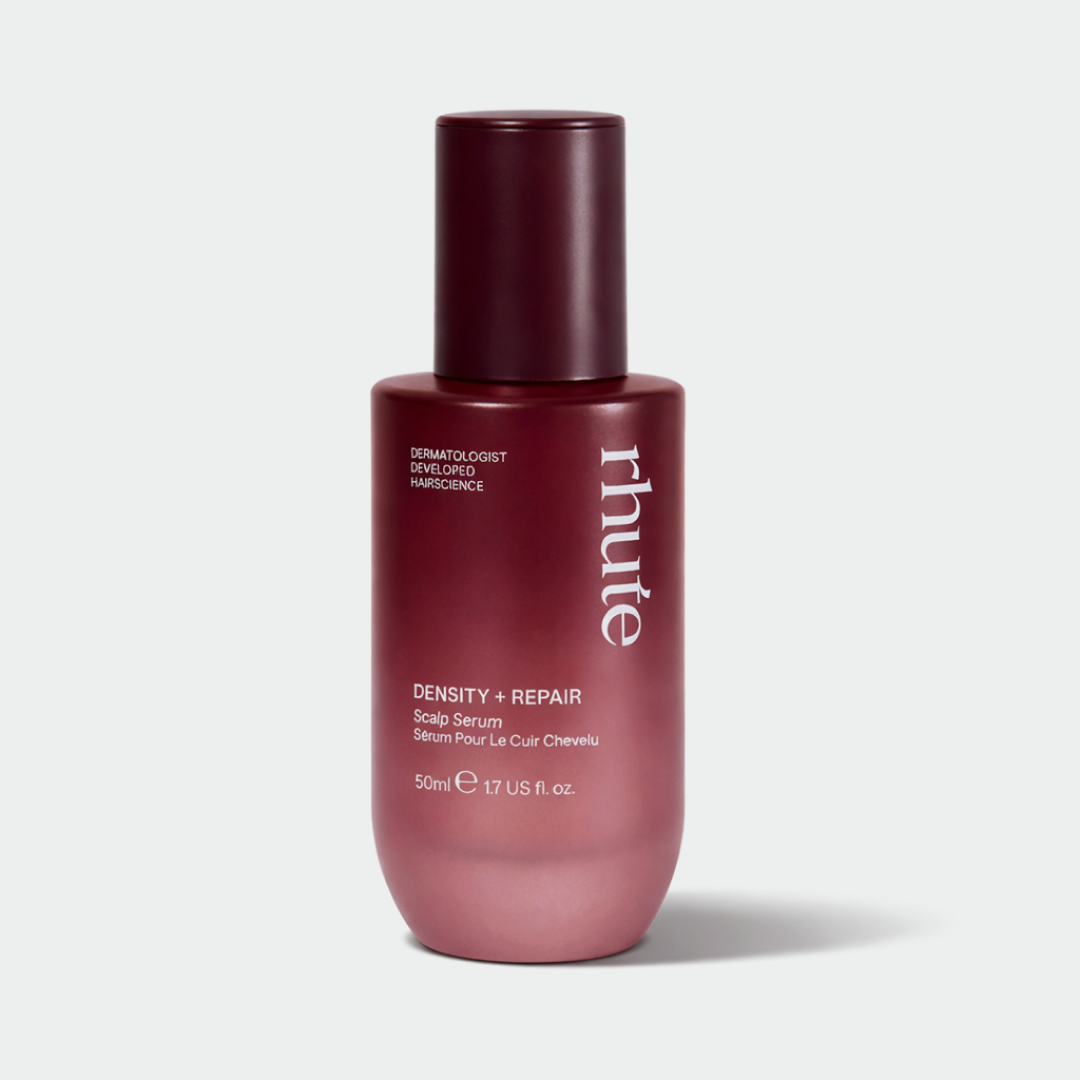
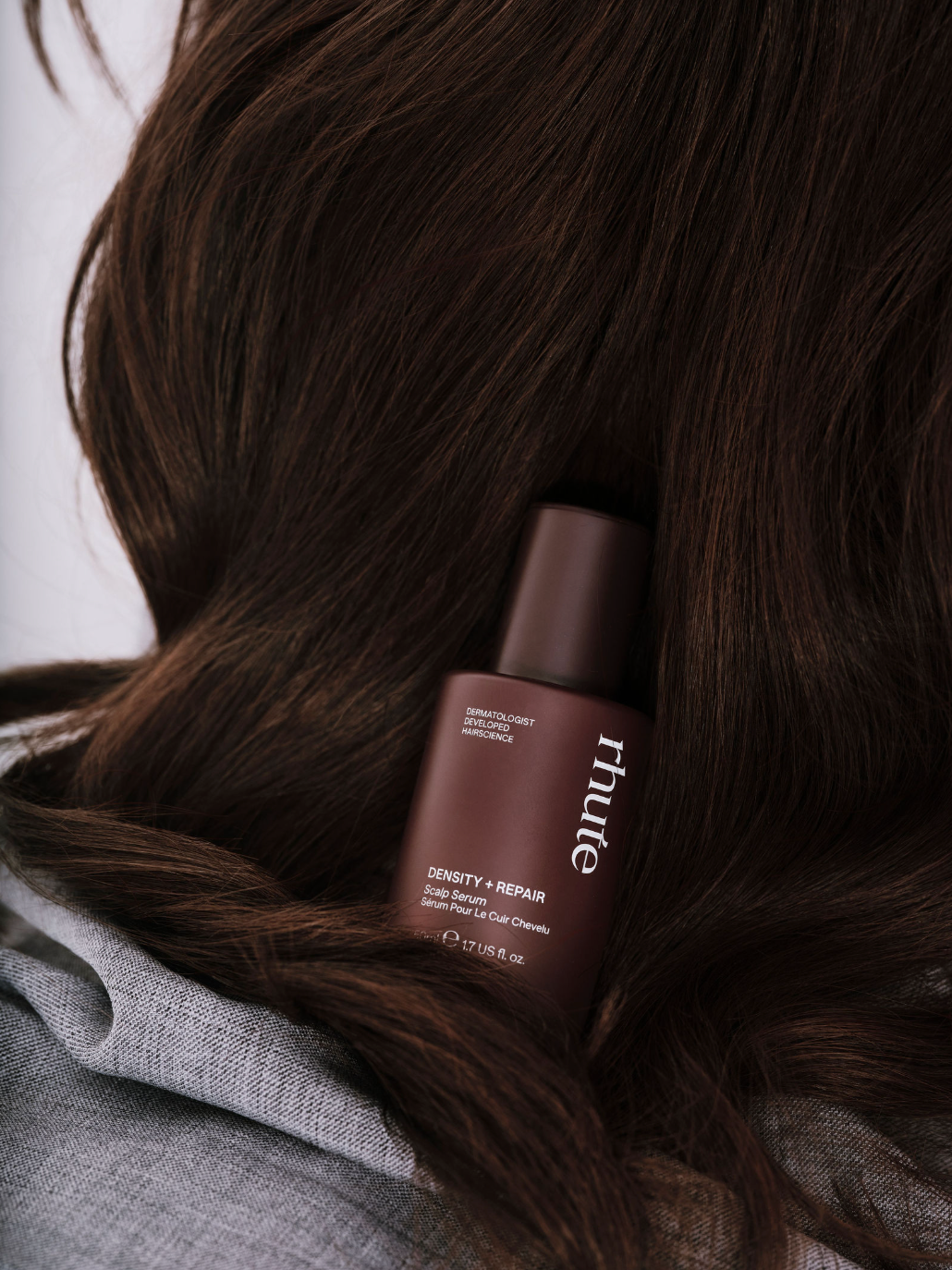
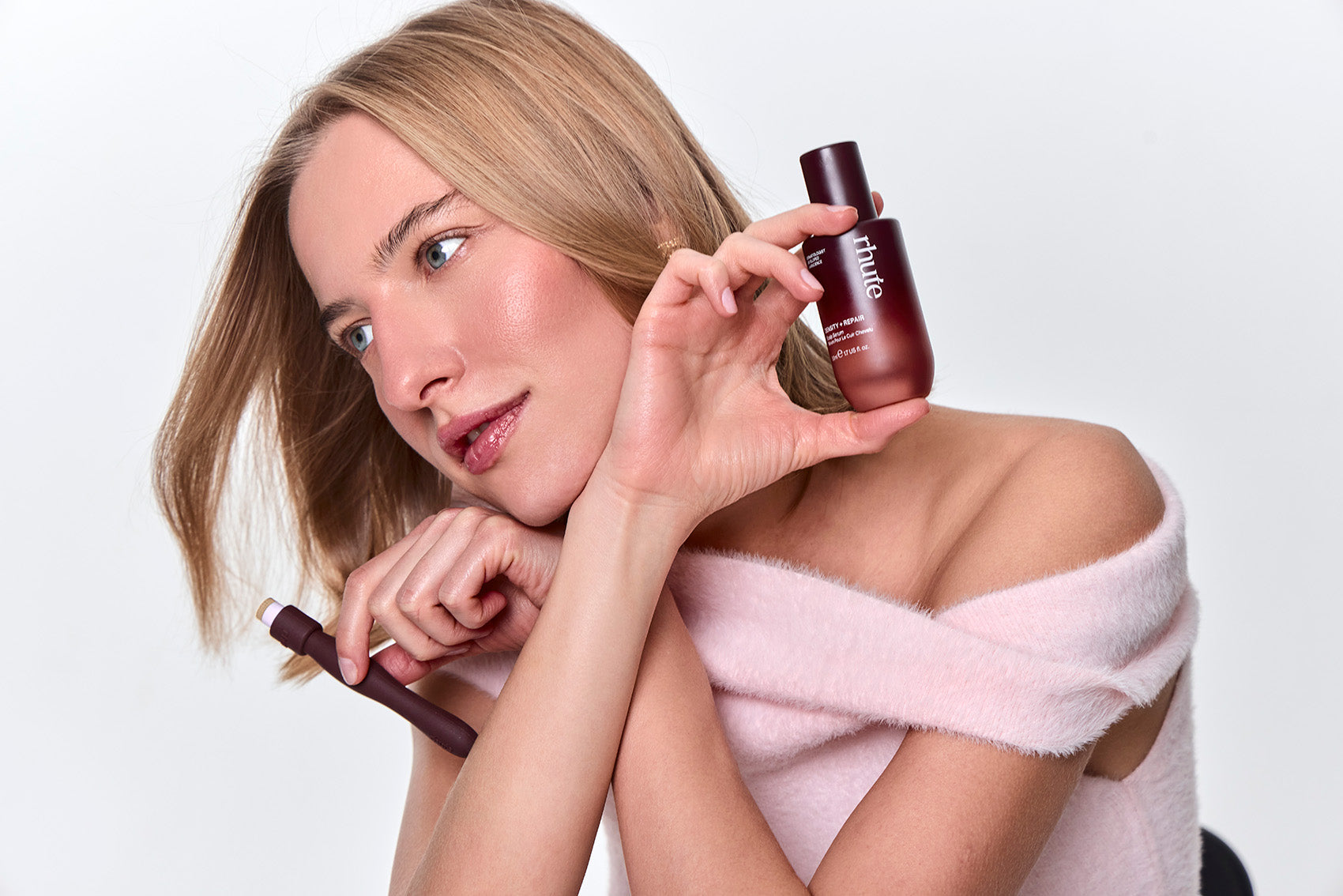
The research on combination therapy is clear. Studies consistently show microneedling plus topical treatment outperforms either approach alone. Your serum works harder, your microneedling works harder, and your follicles get the full benefit of both. rhute's Density + Repair Scalp Serum brings all of these together in one lightweight formula designed to work with your microneedling rhutine. Pair the rhute dermastamp with our Density + Repair Scalp Serum for the full rhutine.

So, Which Tool Should You Choose?
For most people dealing with hair thinning, a derma stamp is the better choice for scalp treatment. The vertical motion avoids tangling, creates consistent depth, and lets you target exactly where you need to. These practical advantages add up, especially when you're building a long-term rhutine.
Derma rollers can still work if you keep your hair very short or want to cover larger areas quickly. The mechanism is sound and they've been used successfully in clinical research. But that hair-catching issue makes them less practical for most of us.
Go with a derma stamp if: You want to target specific areas. You have any hair length. Precision matters to you. You're in this for the long haul and want something comfortable.
Consider a roller if: Your hair is very short or shaved. You want to treat your whole scalp quickly. Budget is your main concern.
Either way, consistency is what counts. Microneedling works through cumulative sessions over weeks and months. Pick the tool you'll actually stick with, pair it with a serum that supports your follicles from rhute to tip, and give the process time. Your hair didn't thin overnight, and it won't transform overnight either. But with the right approach? Growth is absolutely possible.
FAQs
How often should I microneedle my scalp for hair growth?
1-2 times per week is the standard recommendation for home microneedling. This gives your scalp time to heal between sessions while keeping stimulation consistent. Going more often doesn't speed things up and might cause irritation.
Does microneedling hurt on the scalp?
Most people describe it as mild prickling rather than actual pain, especially at shallower depths. It should feel a bit uncomfortable but not painful. If you're experiencing real discomfort, you're probably pressing too hard or using needles that are too long for home use.
How long until I see results from scalp microneedling?
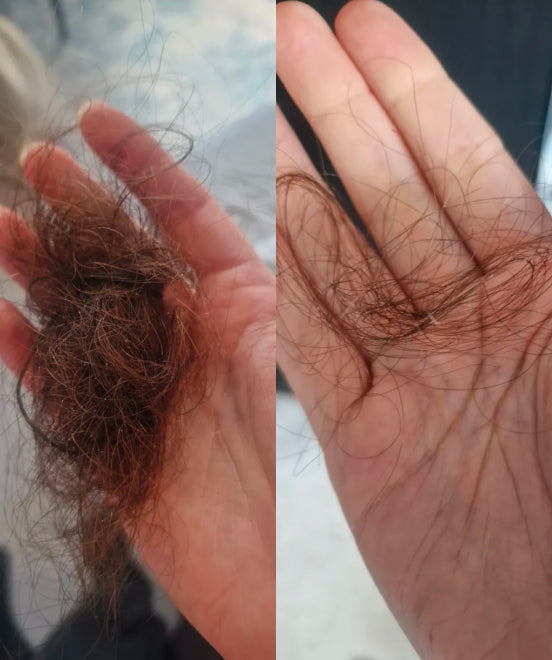
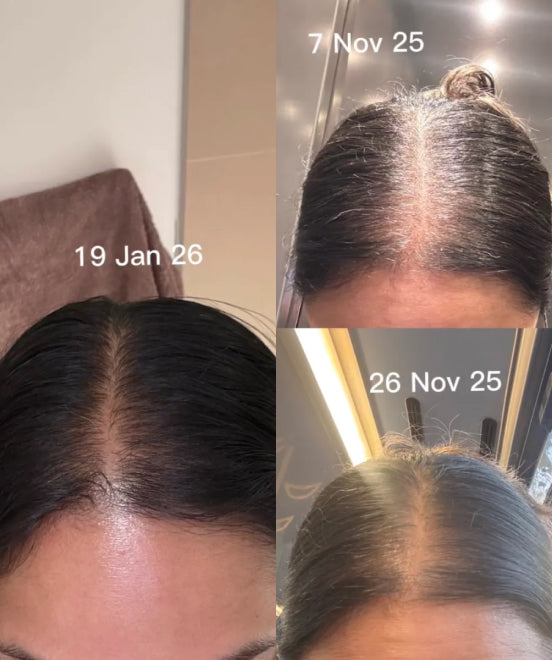
Clinical studies typically show measurable improvements after 12 weeks of consistent treatment. You might notice reduced shedding earlier, but visible thickness usually takes 3 to 6 months. Hair growth is gradual, so patience and consistency are your friends here.
Can I use a derma stamp with long hair?
Absolutely. That's one of the stamp's biggest advantages. Just part your hair to expose the scalp where you're treating, stamp that section, then move your part and continue. Much more practical than trying to roll through longer hair.
Should I apply serum before or after microneedling?
After, always after. Those micro-channels are most open right after treatment, so that's when active ingredients can penetrate deepest. Applying products beforehand could push bacteria into the punctures and won't give you the same absorption benefits.