

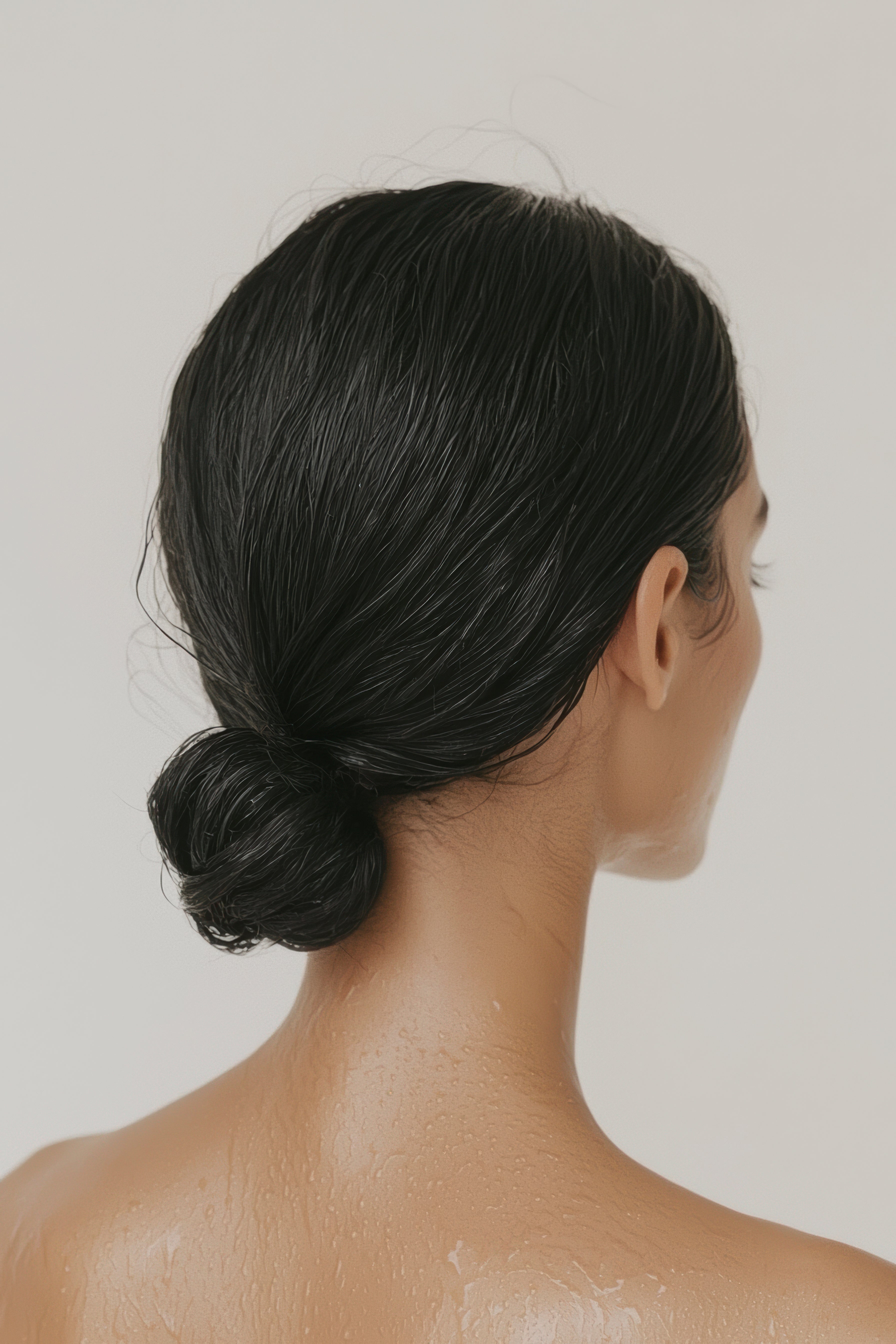


The secret to strong, healthy, growing hair? It starts with understanding your unique hair type.
In this guide, we’ll break down the different types of hair, how exactly to identify your hair type, and what affects it. From your follicles to your ends - by using hair serums to scrubs - we’ll also discuss the best ways to support growth, shine, and overall health.
The Science of Hair Type: Follicles & Shafts
Your hair type is determined by two key parts of your hair structure:
-
Hair follicle - the root, where hair growth begins
-
Hair shaft - the visible strand that grows out of the scalp
Hair Follicles: The Shape of Things to Come
Whether you have pin-straight strands or bouncy curls, it all starts with the shape of your follicles:
-
Round follicles → straight hair
-
Oval or elliptical follicles → wavy or curly hair
But your hair type isn’t set in stone. Hormones, medications, and aging can reshape follicles over time - and with them, your hair’s texture.

What Can Change Your Hair Type?
1. Hormones
Androgens like DHT can shrink follicles and lead to hair loss. During pregnancy, oestrogen levels rise, extending the growth phase - which is why many experience fuller hair. After childbirth, oestrogen drops, often triggering postpartum shedding. Menopause also causes thinning and dryness due to reduced oestrogen.
2. Medications
Some medications, like chemotherapy, affect rapidly dividing cells - including those in follicles - often leading to temporary hair loss and texture changes (e.g. “chemo curls”). Hormonal contraceptives can also influence hair growth, thickness, or even hair loss depending on your body’s sensitivity to hormonal shifts.
3. Aging
As we age, follicles shrink and sebaceous (oil) glands slow down. This means finer, shorter hair will experience more dryness and breakage over time. At the same time, the oil-producing sebaceous glands in the scalp start to slow down. Less natural oil leads to drier, more brittle hair that’s prone to breakage. While you can’t stop the clock, you can care for your hair in a way that keeps it strong, soft, and full of life.
The Hair Shaft & Hair Porosity
The hair shaft is made up of three layers:
-
Cuticle - the outermost layer that locks in moisture
-
Cortex - the central layer that provides strength and pigment
-
Medulla - the soft core (not always present)
The cuticle’s condition affects how your hair absorbs and retains moisture - this is known as hair porosity .

Understanding Hair Porosity
The tightness or looseness of the cuticle layer determines what is known as hair porosity - which is how well your hair absorbs and holds on to moisture.
-
Low porosity hair: the cuticles are tightly packed, which makes it difficult for moisture to penetrate. While this can protect your hair from damage, it also means that water and products tend to sit on the surface rather than soak in. Deep conditioning helps open cuticles for better absorption.
-
Medium (or normal) porosity hair: this is the sweet spot! The cuticle isn’t too tight or too open, allowing just the right amount of moisture in and out. Hair with medium porosity tends to be manageable, shiny, and holds styles well.
-
High porosity hair: this type of hair has gaps and holes in the cuticle, often due to damage from things like heat styling, chemical treatments, or the environment. While it absorbs moisture quickly, it also loses it just as fast. That’s why high porosity hair often feels dry and frizzy, requiring extra hydration.
DIY Porosity Test:
Drop a clean, dry strand of hair in a bowl of water.
- Sinks quickly = high porosity
- Floats = low porosity
- Floats then sinks = medium porosity

Identifying Your Hair Type (The Andre Walker System)
Hair is classified into four main types, each with subcategories ‘a’, ‘b’, and ‘c’. Let’s break it down:
Hair is classified into four main types, each with subcategories ‘a’, ‘b’, and ‘c’. Let’s break it down:
Type 1: Straight Hair
-
1A - Very straight, fine, flat, and prone to oil buildup
-
1B - Still straight but with more body and volume
-
1C - Coarse, frizz-prone straight hair
Hair SOS:
-
Oily roots
-
Limp ends
-
Product buildup
Top Tips:
-
Use a gentle, sulphate-free shampoo as often as needed
-
Limit dry shampoo to no more than 2x/week\Apply lightweight conditioner only to the ends

Type 2: Wavy Hair
-
2A - Loose, gentle waves; easy to style
-
2B - Defined “S” waves with moderate thickness
-
2C - Thick, coarse, frizz-prone waves
Hair SOS:
-
Frizz
-
Dryness
Top Tips:
-
Choose sulphate- and silicone-free hydrating shampoos
-
Use conditioners or masks made for wavy hair
-
Detangle with fingers or wide-tooth combs
-
Dry with a microfiber towel and use low heat
Type 3: Curly Hair
-
3A - Loose, shiny curls
-
3B - Voluminous ringlets (medium-coarse)
-
3C - Tight corkscrew curls with bounce and shrinkage
Hair SOS:
-
Dehydration
-
Flyaways
Top Tips:
-
Use curl-specific products
-
Co-wash or shampoo less frequently to retain natural oils
-
Deep condition regularly
-
Detangle wet hair gently with wide-tooth combs
-
Sleep with a silk or satin bonnet
Type 4: Coily Hair
-
4A - Defined coils with visible curl pattern
-
4B - Fluffy coils with sharp angles and less curl definition
-
4C - Tightest coils; fragile and highly shrinkable
Hair SOS:
-
Breakage
-
Tangles
Top Tips:
-
Moisture is key! Deep condition weekly
-
Use fingers or a wide-tooth comb on damp, conditioned hair.
-
Always protect hair at night with silk or satin scarves or bonnets
Note: Afro-textured hair commonly ranges from Type 3B to 4C, and requires targeted moisture retention and protective styling.

Universal Hair Health Tips
Regardless of hair type, make sure you:
-
Trim regularly to remove split ends and keep hair looking fresh
-
Avoid excessive heat styling to protect the cuticles.
-
Protect your hair overnight with silk or satin materials
-
Listen to your scalp - it’s the root of healthy hair!
If you’re experiencing unusual hair loss, thinning, or scalp changes, it’s always best to speak to a healthcare professional for personalised advice.
Final Thoughts
Understanding your hair’s type and porosity isn’t just a beauty thing - it’s a care thing. When you understand the science behind your strands, it’s easier to pick the right products, build the right routine, and finally stop guessing about what your hair needs.
For answers to other questions you might have about hair care, check out our blog page.
Share:
Does Hair Oiling Work?
Hair Hack or Hype? The Science Says…