

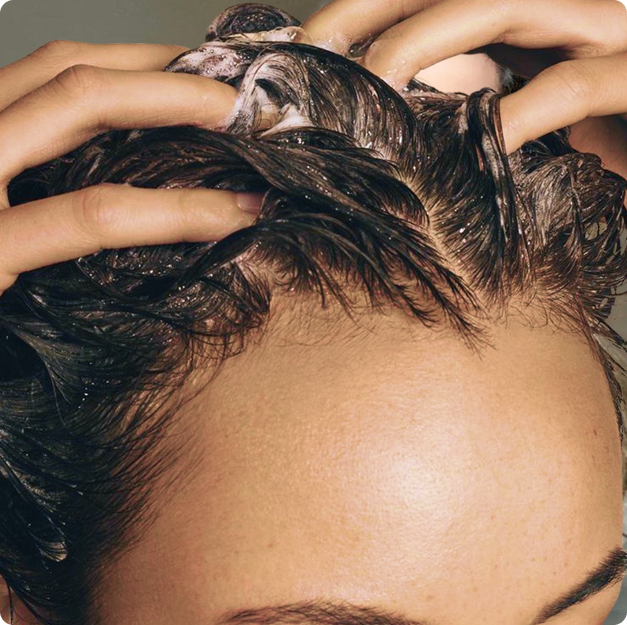


The secret to long, luscious hair is what everyone is trying to hack, and recently, one player has been insanely popular: minoxidil.
Minoxidil may be trending now, but its story began in the 1960s, when it was used as a blood pressure drug. Doctors soon noticed it boosted hair growth, especially on the scalp. Soon after, a topical formulation was developed to be applied over the scalp to encourage hair growth…and it did.
By 1988, the FDA had approved it for the treatment of male-pattern hair loss. Once marketed mainly to men, it’s now widely used and considered safe for women as well.
Before you hit “buy,” here’s the gist on minoxidil - what it is, how it works for different people, and when it does (or doesn’t) pair well with hair serums and speciality shampoos in your routine.
What is Minoxidil, and How Does it Work?
Minoxidil is a synthetic molecule, which means that it was created in a lab, and does not naturally occur and is not produced in your body. While it has been used widely for hair loss, its exact mechanism of action is not yet fully understood. Several theories have been proposed, including:
-
Improving blood flow: strengthening hair follicles by dilating scalp blood vessels to deliver more oxygen and nutrients.
-
Extending the growth phase: keeping hair in its active cycle for longer.
-
Reducing inflammation: creating a healthier environment around follicles.
-
Boosting growth factors: stimulating proteins that encourage new blood vessels and stimulate activity.
What Minoxidil Cannot Do
It’s very important to note that minoxidil cannot create any hair where there was never any. While the mechanism is not fully understood, the primary modulation occurs in your natural hair growth cycle and its environment, but it does not increase or affect the follicle count in any way.
Think of minoxidil as a fertiliser for your hair. If the follicle is completely gone, minoxidil won’t be able to create new ones. Just like fertiliser can’t make flowers grow where no seeds are planted.
We have discussed the process, the science, and the mechanisms sufficiently. Let’s focus a bit more on what you should be aware of before making the jump.

Will Minoxidil Work For Me?
Whether minoxidil will work for you depends on several key factors, which explains why some people see great results - and others notice very little.
Studies show that around 60-80% of individuals will experience some improvement, with the best results observed in androgenetic alopecia (male- or female-pattern hair loss) a condition driven by genetic and sensitivity to dihydrotestosterone (DHT).
DHT is a by-product of testosterone, which can cause follicles to shrink and stop producing hair. Minoxidil doesn’t block DHT, but it does help counter its effects.
Additionally, for minoxidil to work, your body must convert it into its active form using an enzyme called sulfotransferase.
Some people can naturally have lower levels of this enzyme, making the treatment less effective.
Consistency is, however, the most crucial step: it typically takes about six months to see results, with peak improvement occurring after a year. This journey definitely requires patience and commitment, as it is also a lifelong treatment. If you stop using it, any regrowth will gradually be lost. Restarting later may also be less effective than the first time, as you can build some resistance to it.
When Else Can Minoxidil Be Used?
While minoxidil is best known for treating pattern hair loss, it can also be used in other situations:
-
Alopecia areata: Alopecia areata is an autoimmune condition which results in hair loss in a patchy pattern. With long-term and consistent use, minoxidil can support regrowth in some people.
-
Chronic telogen effluvium: This condition results in hair loss due to chronic stress, illness and certain medications. Minoxidil may help with regrowth if the hair follicles remain active, though it’s usually not needed for sudden, short-term shedding (like after childbirth or an acute illness), which typically improves on its own.
-
Traction alopecia: Years of tight hairstyles, such as braids or ponytails, can cause thinning. Minoxidil may encourage regrowth, but only once the pulling/tension on the hair is stopped, which should be the first step.
-
Hormonal-related hair loss and thinning (including PCOS): Hormonal changes can lead to hair thinning, especially in women. In these cases, minoxidil can strengthen existing hair and help slow further loss.
Who Should Definitely Think Twice Before Using Minoxidil?
The Side Effects You Should Know About
As powerful a tool as minoxidil can be, it is most definitely not a one-size-fits-all product and may create more problems than it solves.
-
Pre-existing skin condition: Alcohol and propylene glycol are known to irritate the skin and are commonly used in minoxidil formulations. If you suffer from eczema, psoriasis, seborrheic dermatitis, or sensitive skin, minoxidil may worsen your condition. The foam version is usually better tolerated, but it’s always best to perform a patch test before applying it to your whole head.
-
Pregnancy and post-partum hair loss: It’s very important to note that minoxidil is not recommended for use during pregnancy as it may affect the fetus or newborn. If your main concern is hair shedding after pregnancy, this is usually a temporary condition that often settles on its own.
-
Irreversible hair loss: In scarring alopecias (also called cicatricial alopecia), inflammation permanently destroys the follicles. The key treatment for these conditions is to address the inflammation as early as possible to preserve the remaining hair. Minoxidil won’t regrow follicles that are already scarred.
-
Unwanted hair growth: Some people notice unwanted hair growth on the cheeks, chin, or jaw if minoxidil spreads beyond the scalp. This occurs only where follicles already exist, so it does not create new ones. If you’re prone to facial hair, apply carefully and wipe your face with a damp cotton pad to remove any residue.
-
Harmful to cats: Topical minoxidil is highly harmful to cats and can be fatal, even in minimal amounts. This doesn’t necessarily mean that you can’t use it at all, but you should be very cautious. Apply at night, wash your hands thoroughly, and let your hair dry completely before contact. Keep cats away from your face, bedding, and towels after use to avoid accidental exposure.
Choosing the Right Form of Minoxidil
If you’ve decided to try minoxidil, that’s great! The aim here is to inform you, not deter you. Before you commit, it's helpful to understand the different strengths and textures available, so you can choose what suits you best.
The two most common options are 2% and 5% formulations. Research shows that the 5% solution works faster and can provide up to 45% more regrowth compared to the 2% solution. It’s FDA-approved for both men and women, but the downside is that it can cause some irritation, especially if your scalp is already sensitive. If that is a concern, starting with 2% might be a gentler choice, and you can always move up to 5% later if you tolerate it well.

Both strengths come as a liquid or foam:
-
The liquid allows more precise application but often contains propylene glycol, which can irritate sensitive skin.
-
The foam is usually propylene-glycol-free, absorbs quickly, and feels lighter.
In terms of effectiveness, both are equally potent. It really comes down to your scalp’s tolerance and what fits best into your daily routine!
A Deeper Look Into the Minoxidil Timeline
Despite personal differences and one's feelings about it, the one thing that everyone can agree on is that the hair journey with minoxidil is one of patience and consistency. To see results, you need to stick with it and not get discouraged if you don’t see an impact immediately. Here’s the timeline of what you should expect:
-
When you first start minoxidil, you may notice more shedding in the first 2–6 weeks. This happens because older hairs are being pushed out as the follicles reset, making space for new growth.
-
By the third month, you may start to see some tiny hair growth in the areas where you have applied it.
-
The significant difference and noticeable improvement in density and length typically occurs between 4-6 months, with some people not experiencing the full impact until up to 12 months.
Consistency remains key: Minoxidil acts like a booster for your natural hair cycle. Once you stop using it, the follicles lose that extra support and gradually return to their pre-treatment state. Research indicates that this shedding typically occurs over a period of 12–24 weeks.
If the alarm bells are ringing and you’re worried that you might lose all your hair if you stop using it, rest assured that that will not be the case at all. Stopping minoxidil doesn’t cause extra loss; it just means you’ll return to where you would have been if you’d never started.
Final Thoughts: Minoxidil is Great, But Not a Magic Fix
Minoxidil is a safe and well-established solution for treating hair loss, but like any other medication or treatment, it also has its pros and cons. Hair loss is deeply multifactorial, and feeling torn or indecisive about starting one treatment over another is completely understandable and normal!
Before considering minoxidil as an option, it’s essential to understand the cause of your hair loss and whether the commitment aligns with your lifestyle. Don’t feel pressured by trends, as this decision should be yours.
When used correctly, it can do wonders for the right person and in the right situation. However, if minoxidil is not the right choice for you, there are many other options available to support your hair loss journey.
For more information on the latest in hair health and the science behind recent trends, check out our blog.




Share:
How to Spot Early Signs of Hair Thinning Before It’s Too Late
Caffeine in Hair Care: Energising Your Scalp for Growth