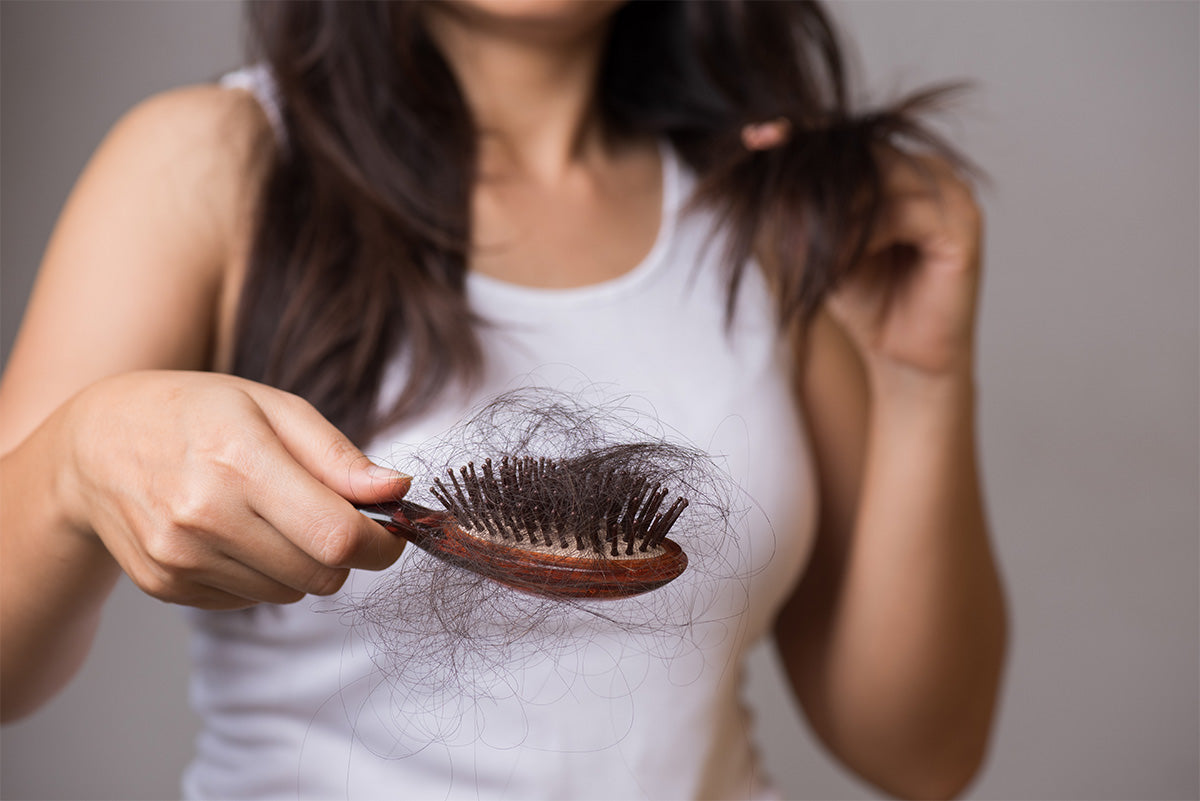



If you're reading this, your hair is probably doing something you don't want it to. More strands in the shower drain than there used to be. A parting that's wider than last year. A ponytail that feels noticeably thinner. The hair on your pillow when you wake up. Or just a sense that your hair isn't the hair you used to have.
You're in the right place, and you're far from alone. Hair loss affects more women than the conversation usually suggests, across every age group and life stage. The reasons are varied, and most of them are treatable once you know which one is yours. The harder part is working out where to start.
We'll walk through what counts as normal shedding, the difference between thinning and loss, the main types of hair loss and what each one looks like, the diagnostic clues that help you work out which one applies to you, and the practical steps that genuinely help.
How much hair loss is normal?
Most healthy adults lose somewhere between 50 and 150 hairs a day. None of these losses are remotely noticeable on their own. Your scalp has roughly 100,000 hair follicles, and losing 100 of them in a day is less than 0.1% of the total. Your hair grows back at a similar rate, which is why you've kept the same amount of hair on your head all your life.
What's worth paying attention to is a change. If you've gone from never noticing hair coming out to your hairbrush being full of hair every day, or your ponytail width has changed, or your scalp shows through your parting in a way it didn't a year ago, those are the signals that something is shifting. Most women dismiss these signs for months before something clicks, which is a shame because hair loss is almost always more treatable when it's caught early.
Hair shedding is the daily loss of completed hairs that have reached the end of their natural lifecycle. This is normal and continuous.
Hair thinning is a gradual reduction in the diameter and number of hairs your follicles are producing. It usually shows as a wider parting, a thinner overall feel, or noticeably finer strands.
Hair loss is the umbrella term that covers both an increase in shedding (more hairs falling out than usual) and thinning (fewer or finer hairs being produced). Both can happen at the same time, which is part of why diagnosis matters.
The two big categories: scarring and non-scarring
Medically, all hair loss is sorted into one of two camps based on what's happening to the follicle itself.
Non-scarring hair loss is the more common version. The follicle is still alive but isn't producing hair the way it should. Once whatever is causing the problem is addressed, the follicle can usually go back to growing hair normally. Most of the hair loss women experience falls into this category.
Scarring hair loss is rarer but more serious. The follicle has been damaged or destroyed by inflammation, infection, injury or an autoimmune process. Once the follicle is gone, no hair can grow from it again. Early diagnosis matters a lot more here because what's lost can't be brought back, but the spread can be stopped.
Non-scarring hair loss: the common causes
Female pattern hair loss
This is the most common type of hair loss in women across a lifetime. The medical term is androgenetic alopecia. The follicles are still alive but they're gradually shrinking in response to a hormonal signal, producing finer, shorter, weaker hairs over time until eventually they stop producing visible hair at all. The clinical name for this shrinking is miniaturisation.
In women, the pattern looks different from the male version. There's usually no receding hairline. The thinning shows up as a widening parting and a gradual reduction in overall density across the crown and the top of the scalp. The hairline and the back of the head tend to be preserved.
The driver is DHT (dihydrotestosterone, a more active form of testosterone that your body makes from circulating testosterone). Whether DHT becomes a problem in your follicles depends on a genetic sensitivity that runs in families. About half of women will see some degree of female pattern hair loss by 65, with onset commonly in the thirties or forties, sometimes earlier if there's a strong family history or an underlying condition like PCOS.
The reassuring part is that there's more we can do about female pattern hair loss than the conversation suggests. Learn more about treatments in our hormonal hair loss guide.
Telogen effluvium (stress-related and postpartum shedding)
Telogen effluvium is the medical name for shedding that happens when a higher-than-usual proportion of follicles enter the resting phase at the same time, then release together a couple of months later. It looks like a sudden, diffuse increase in shedding across the whole scalp, usually two to three months after a trigger event. Common triggers include major stress, a serious illness or fever, surgery, postpartum hormonal shifts, significant weight loss, a thyroid problem, or starting or stopping certain medications.
The good news is that telogen effluvium is temporary in almost every case. The follicles aren't damaged. Once the trigger is resolved or the body has had a chance to recover, the hair cycle resets and density returns over the following nine to 12 months.
The most common versions worth knowing about are cortisol (stress) induced hair loss and postpartum hair loss that affects 40 to 50% of new mothers. The smaller hair shedding that affects most women in late summer and early autumn sits in the same category, just on a smaller and more predictable scale.
Alopecia areata
Alopecia areata is an autoimmune condition where the immune system mistakenly attacks the hair follicles. The result is patchy, often round, well-defined areas of hair loss that can appear over weeks. It can affect the scalp, eyebrows, lashes, beard area or other body hair, and the pattern can change over time.
It affects around 2% of people across a lifetime and can start at any age. About half of cases begin in childhood. Some people experience one episode that resolves on its own. Others have recurring episodes, and a smaller group develop more extensive versions (alopecia totalis or alopecia universalis) that need specialist treatment.
Stress is often discussed as a trigger, and it can precipitate or worsen episodes, but it isn't the underlying cause. The underlying mechanism is the immune system itself. If you're seeing distinct round or oval patches rather than diffuse thinning, this is worth flagging to your GP for a dermatology referral. Earlier treatment (steroid creams, injected steroids, or in more severe cases the newer JAK inhibitor medications) generally produces better outcomes.
Traction alopecia
Traction alopecia is what happens when hair is repeatedly pulled tightly enough, often enough, that the follicles eventually give up. The most common culprits are tight ponytails, slick-back buns, tight braids, cornrows, extensions, weaves, and hairstyles that pull on the hairline.
The early version is reversible. If you're seeing thinning at the hairline, temples, or the nape of the neck, especially if you wear a lot of tension styles, this is worth addressing now. Switching to looser styling, taking breaks from extensions, and using softer hair ties can let the follicles recover. The catch is that if traction alopecia goes untreated for long enough, the follicles eventually scar, and the hair loss becomes permanent. Catching it early matters.
Hormonal hair loss
This is its own broad category because hormonal hair loss isn't one condition. It's an umbrella covering the loss you see during pregnancy, postpartum, perimenopause and menopause, PCOS, thyroid issues, and contraceptive shifts. Each one has its own mechanism, timeline and treatment route, and we've written a dedicated guide to each. Learn more about hormonal hair loss.
The specific deep-dive articles cover the menopause and hair loss, PCOS-driven hair loss and the impact of birth control on hair. Each is a different version of the same broad story: oestrogen and androgens interact in ways that affect how your follicles cycle, and shifts in either direction can show up as hair loss.
Nutrient deficiencies
Several specific deficiencies can cause hair loss on their own, or make any other type of hair loss worse. The big four to ask about at a GP appointment are iron (specifically ferritin, which is your stored iron), vitamin D, and vitamin B12. Folate is worth checking too, especially if you're vegetarian, vegan, or in the postpartum window.
Iron deficiency is the most common, particularly in women of reproductive age who menstruate, women who have had heavy periods, women who have been pregnant recently, or women on restrictive diets. Vitamin D deficiency is common in UK adults generally and worse in winter. Zinc has been shown to be a meaningful differentiator in studies of women with telogen effluvium.
The most useful thing you can do here is ask your GP for a blood panel rather than guessing or stacking supplements. Once you know what's actually low, targeted supplementation under medical guidance produces much better results than a generic multivitamin, and avoids the risk of taking nutrients you don't need (which isn't always harmless).
Medications and medical treatments
A long list of medications can cause hair loss as a side effect. The most well-known are chemotherapy drugs, which often cause complete but temporary hair loss across the whole body. Beyond chemotherapy, the list includes some blood thinners (warfarin, heparin), beta-blockers, some antidepressants (especially lithium), retinoid acne treatments (isotretinoin), some thyroid medications, and certain types of hormonal contraception.
If your hair loss started within a few months of a new medication, that's the first thing to flag to your GP. Most medication-related hair loss is reversible once the medication is stopped or switched, but you shouldn't stop anything without medical advice.
Scarring hair loss: the rarer but more urgent causes
These are the conditions that cause permanent damage to the follicle. They're less common than the non-scarring causes above, but they need earlier attention because what's lost can't be regrown.
Frontal fibrosing alopecia
Frontal fibrosing alopecia (FFA) is a scarring autoimmune condition that mostly affects postmenopausal women, although it can show up in younger women too. The hairline gradually moves back, and you often lose eyebrows around the same time. The scalp at the affected hairline can look paler than the surrounding skin.
FFA has become noticeably more common over the past two decades, and research is still catching up on the causes. There's a known genetic link to hormonal contraceptive use in women who carry a specific gene variant. If you're seeing a slowly receding hairline along with eyebrow loss, this needs a dermatology referral rather than a wait-and-see approach.
Central centrifugal cicatricial alopecia (CCCA)
CCCA is a scarring form of hair loss that starts at the crown and spreads outward. It's more common in Black women, and the link with hairstyling practices that involve tension, chemical relaxers, or significant heat is well-documented. If you're seeing scalp tenderness, redness, or a smooth, shiny area at the crown where hair used to be, this is worth raising with your GP for dermatology referral.
Lichen planopilaris and other inflammatory scarring conditions
These are rarer scarring conditions where inflammation around the follicle leads to its destruction. The signs are usually scalp redness, itching, burning, or visible inflammation around the affected areas. They need specialist input.
Scalp infections
Fungal infections of the scalp (called tinea capitis) cause patchy hair loss with scaling, broken hairs, and sometimes inflammation. It's more common in children but can affect adults. Tinea is treatable with oral antifungal medication, but if left long enough it can lead to permanent hair loss. Antifungal shampoos help but aren't usually enough on their own.
Trauma and injury
Burns, accidents, surgical scars and radiation therapy can all destroy hair follicles in the affected area. The hair loss is permanent on the damaged tissue, but doesn't spread beyond it.
How to know which type is yours
Most women don't fit neatly into one box. A common pattern is female pattern hair loss as the underlying tendency, with telogen effluvium triggered by a stressful event or postpartum hormones piled on top. Working out the dominant cause matters because it changes what works.
A few clues that help narrow it down.
Pattern of loss. Diffuse thinning across the whole scalp suggests telogen effluvium or female pattern hair loss. Round patches with clear borders suggest alopecia areata. Loss along the hairline or at the temples could be traction alopecia or, in postmenopausal women, frontal fibrosing alopecia. Crown thinning could be female pattern or CCCA.
Onset. Sudden onset (within weeks) tends to point to telogen effluvium or alopecia areata. Gradual onset over years points to female pattern hair loss. Sudden onset with scarring or inflammation needs urgent dermatology attention.
Time relationship to a trigger. Hair loss two to four months after a major event (illness, surgery, childbirth, big stressor, starting a new medication) is classic telogen effluvium.
Family history. Strong family history of female or male pattern baldness on either side raises the likelihood that what you're seeing is the same.
Symptoms beyond the hair. Irregular periods, acne, weight changes or fatigue alongside hair loss point to a hormonal driver (PCOS, thyroid, perimenopause). Heavy periods or tiredness alongside hair loss suggest iron deficiency. Scalp itching, redness, pain or visible scaling points toward scarring conditions or scalp infection.
Our early signs of hair thinning guide covers the day-one signals that something might be shifting, which is genuinely the best moment to start investigating.
When to see a GP or dermatologist
Some hair loss resolves on its own without any medical input. Other types meaningfully benefit from earlier intervention. The signs that move it up the priority list are heavy shedding that's been going on for more than three months, patchy round loss, a parting that's been widening over years, any visible scarring, redness or scaling on the scalp, hair loss along the hairline specifically, and any combination of hair loss with other symptoms that point to a hormonal or nutritional cause.
A standard GP appointment for hair loss usually includes a blood panel that covers ferritin (your stored iron), a full blood count, thyroid function tests, vitamin D and B12. Depending on what your history suggests, the GP may add testosterone, free androgen index, or a pelvic ultrasound if PCOS is suspected.
If your GP isn't able to give you the answers you need, a dermatology referral is the next step. Dermatologists have tools (a dermoscope or trichoscope, both of which let them look closely at the scalp and follicles) that give a more precise diagnosis and can prescribe the off-label treatments like spironolactone and topical anti-androgens that GPs often won't.
In the UK, you can self-refer to the British Association of Dermatologists' patient resources for general information, and Alopecia UK offers support groups and resources for women dealing with more significant hair loss.
What actually helps
The approach depends on what's driving your hair loss. Here's how we think about it.
Treat the underlying cause
This is the most important step and the one most articles skip past too quickly. If your hair loss is hormonal, treating the hormones produces the best results. If it's nutritional, addressing the deficiency. If it's stress-driven, the stress-management work matters as much as the topical care. If it's medication-related, switching or pausing the medication (with your GP's involvement). If it's traction-driven, changing how you style your hair.
Medical treatment options where appropriate
For female pattern hair loss in particular, the medical options worth knowing about are topical minoxidil (over the counter in the UK as Regaine for women), oral spironolactone (prescription-only, anti-androgen with strong recent evidence), and finasteride or dutasteride (off-label in postmenopausal women, never in women of childbearing age because of the risk of fetal harm). For alopecia areata, the options range from steroid injections to the newer JAK inhibitors for severe cases. For scarring conditions, the treatments are aimed at stopping the inflammation that's driving the damage.
Learn more about what minoxidil is.
Scalp-side support
This is the layer most women have the most control over, and it works regardless of which type of hair loss you're dealing with. A well-supported scalp environment improves how follicles cycle and how well topical actives are absorbed, and it gives the regrowth phase the best possible starting point.
Topical ingredients with the most evidence behind them include caffeine (a 2024 systematic review of nine trials confirmed effects on hair count and density), pumpkin seed oil and saw palmetto (both DHT-modulating botanicals with growing trial data, including a 2023 randomised study), rosemary extract (which performed comparably to topical minoxidil 2% in a head-to-head trial), ceramides for scalp barrier support, niacinamide for inflammation, and peptides and panthenol for follicle and hydration support.
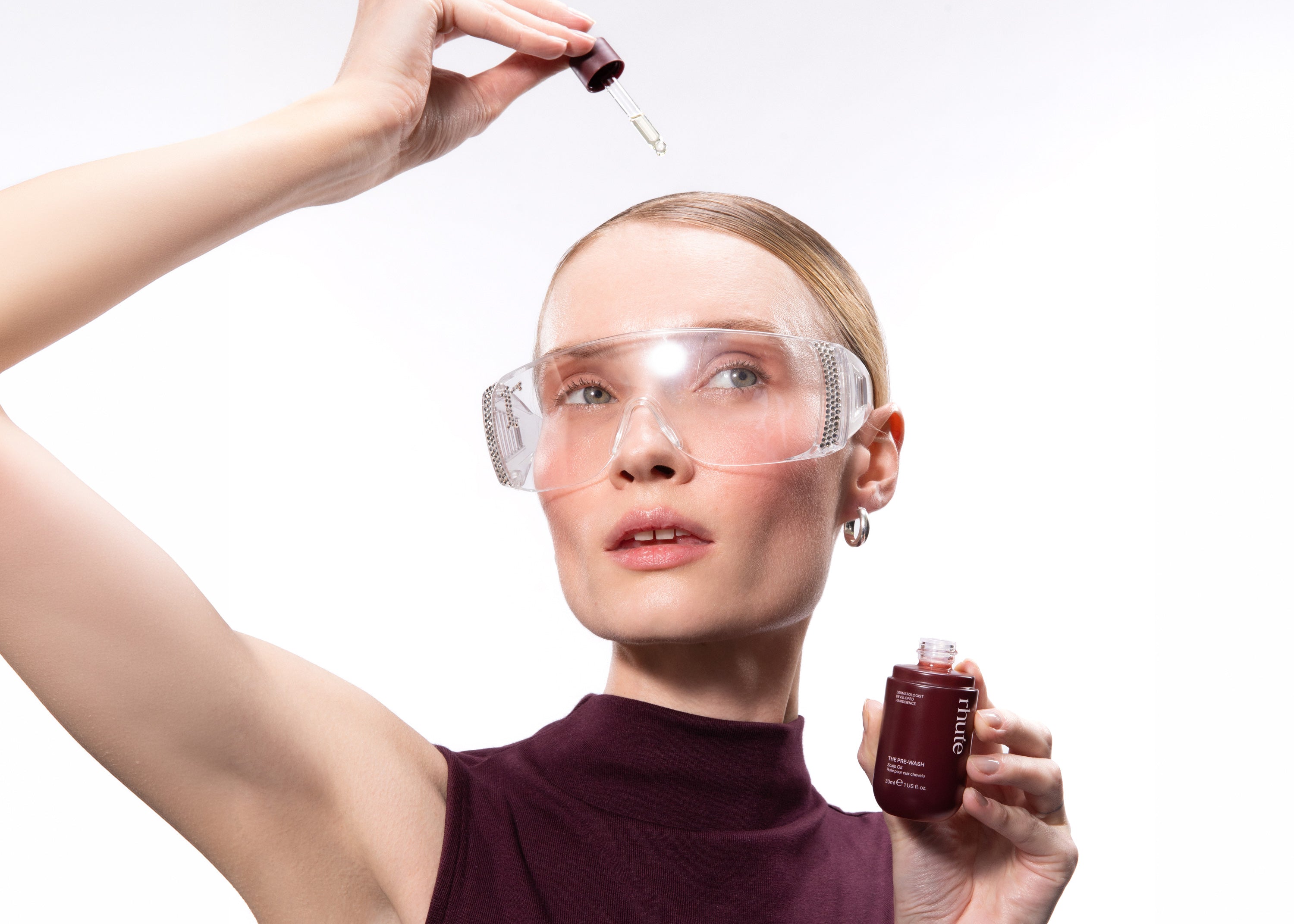
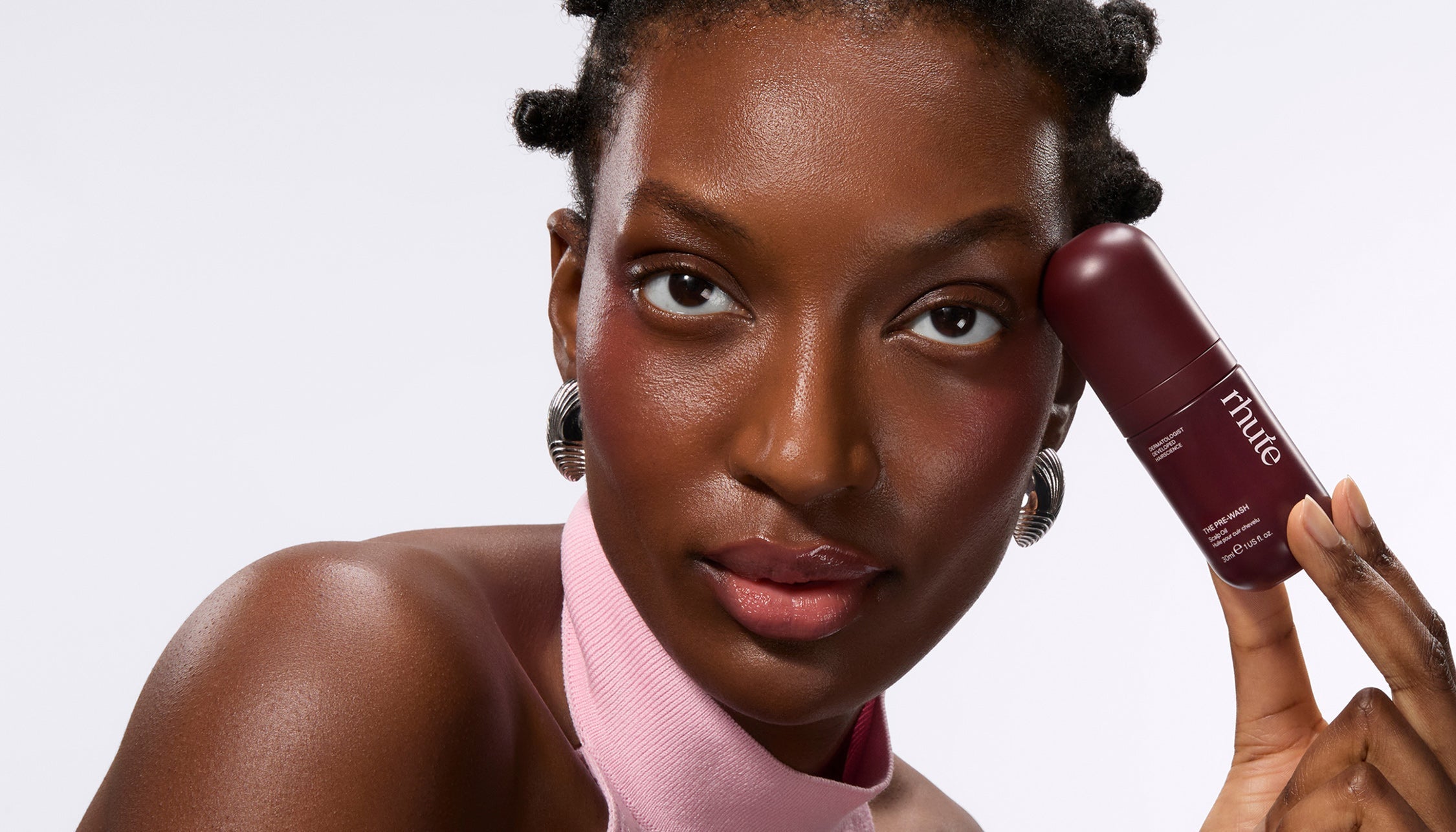
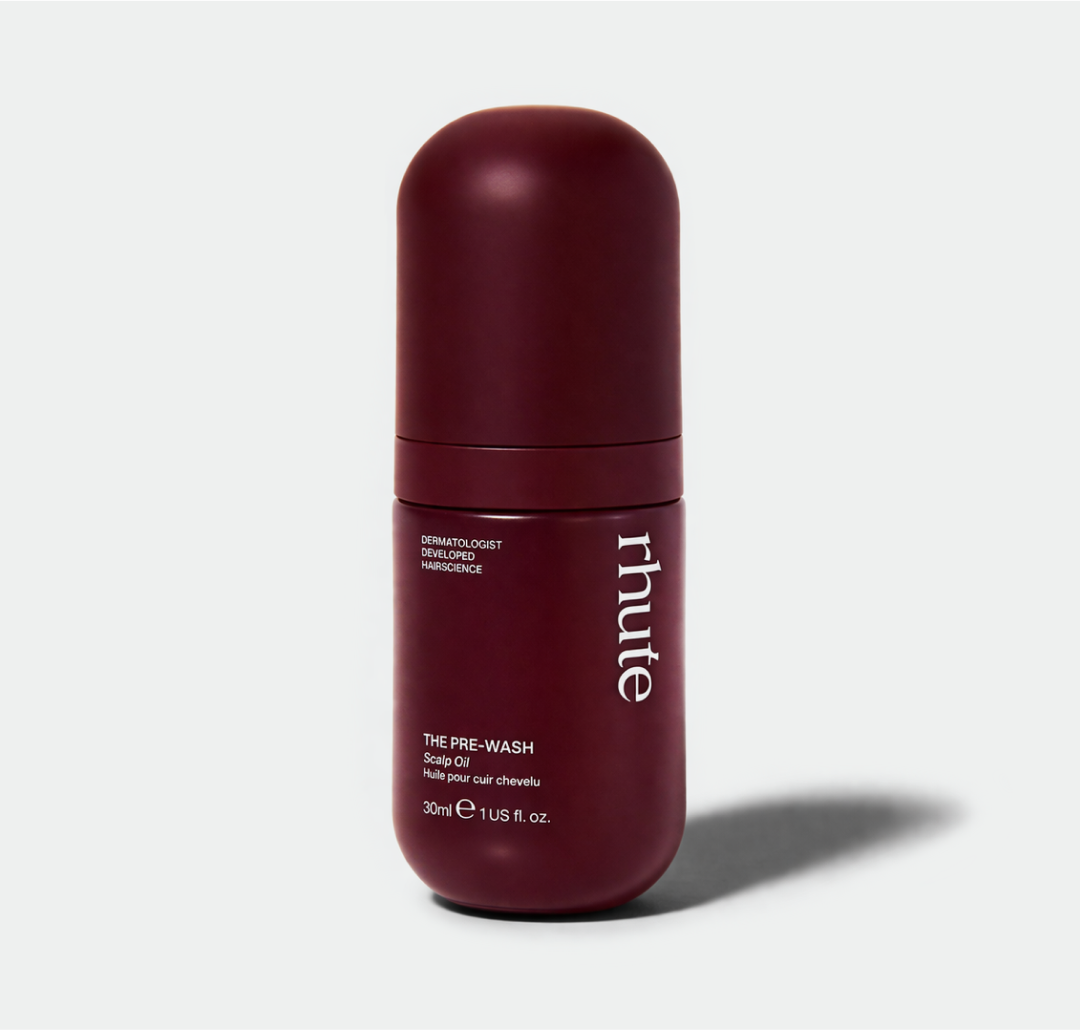
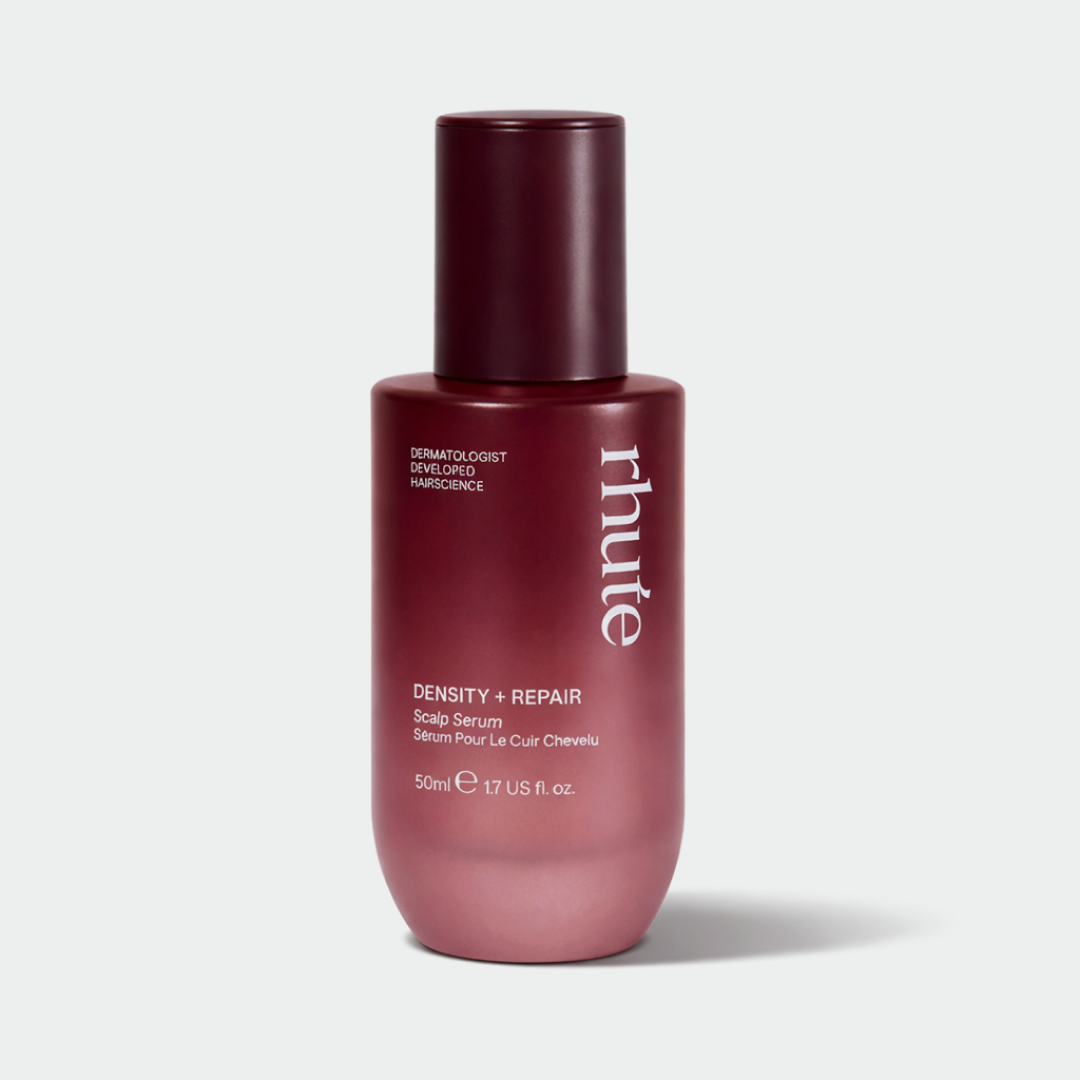
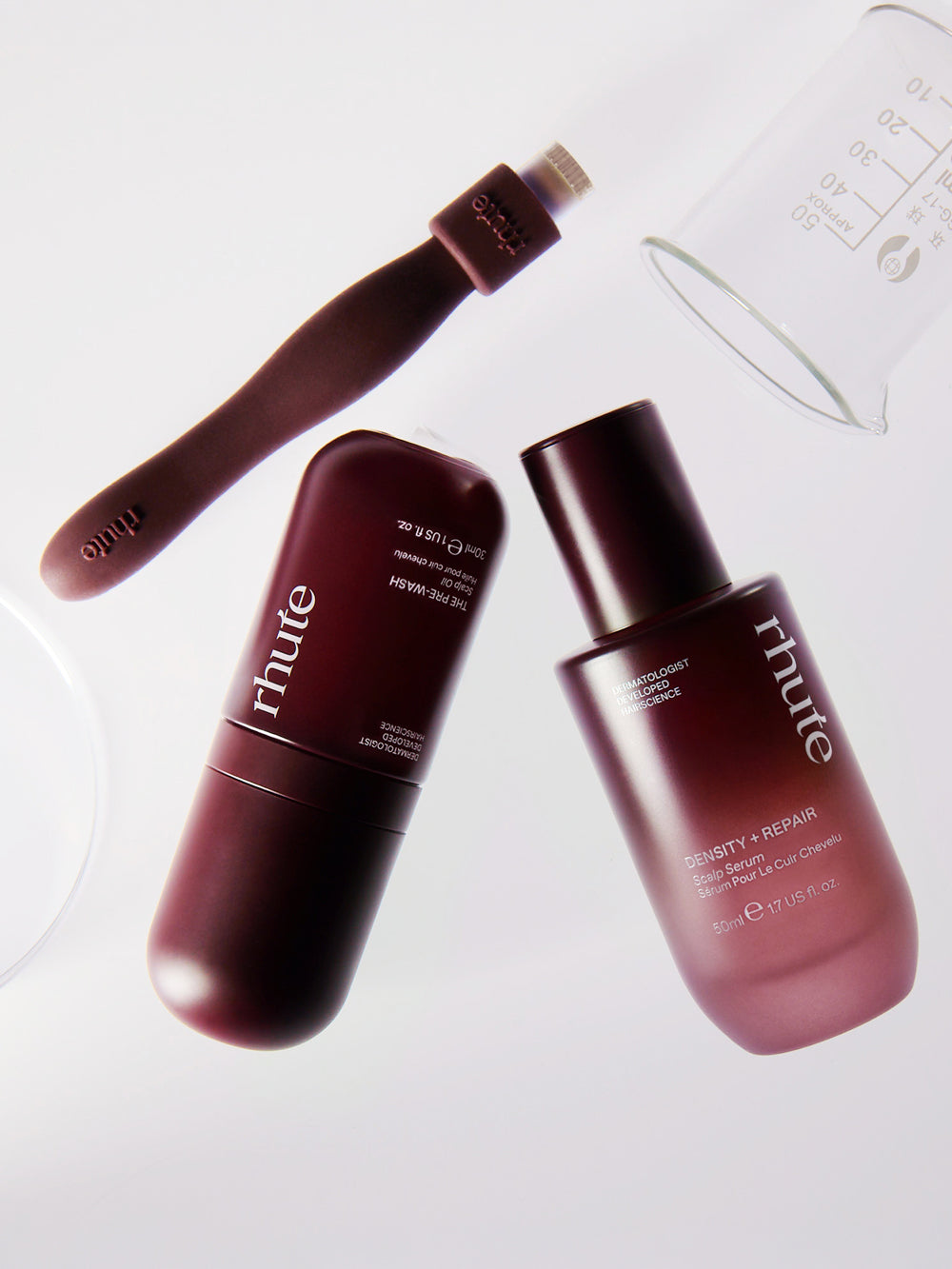
Our Density + Repair Scalp Serum is the daily leave-on layer with caffeine, peptides, niacinamide and panthenol. Our Density Complex Pre-Wash Hair Oil is the pre-shampoo treatment with pumpkin seed oil, saw palmetto, rosemary and ceramides, used two to three times a week. Both are minoxidil-free and safe to use during pregnancy and breastfeeding, which matters for women who want to keep their options open. The natural DHT blockers article goes deeper into the ingredient evidence.
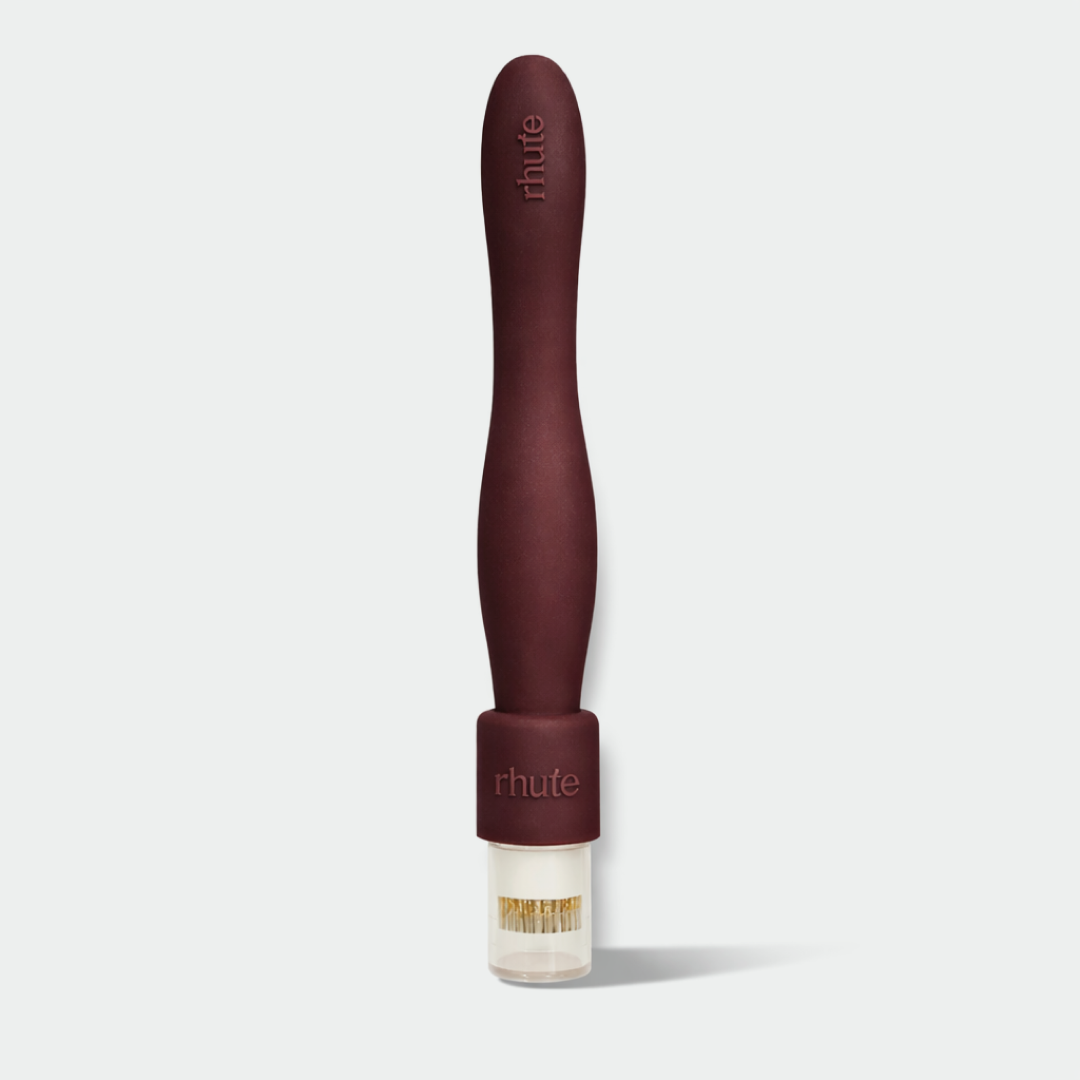
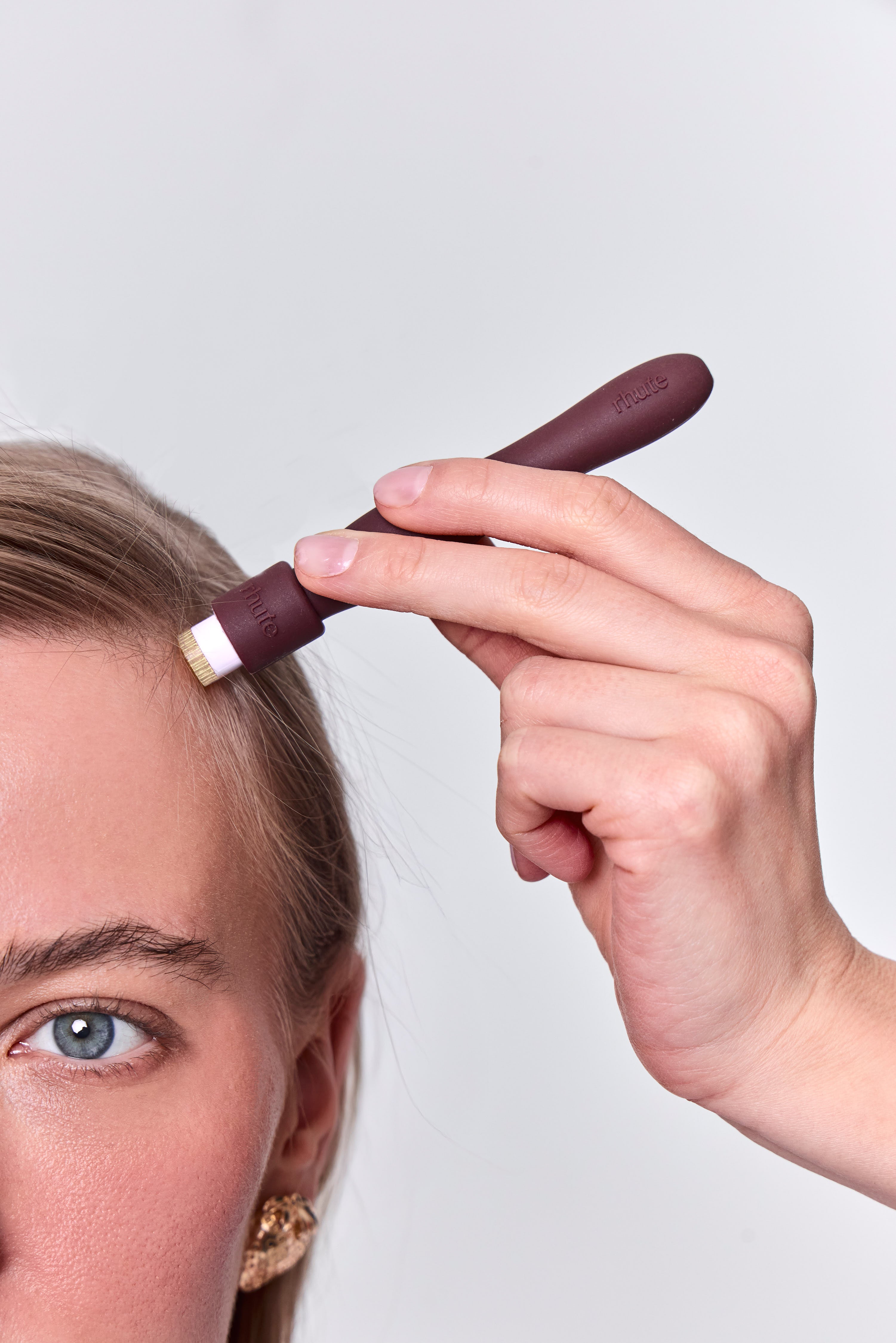
For women who want to deepen the at-home routine, microneedling the scalp (with a tool like our precision dermastamp, used one to two times a week) improves how well topical actives absorb and triggers a wound-healing signal that supports follicle activity.
Look after the basics
Sleep, protein in your diet, iron and vitamin D status, stress management, and gentleness with how you handle your hair all sit underneath whatever else you do. None of these will reverse a significant hair loss issue on their own, but they meaningfully change the conditions for everything else.
Cosmetic options
Hair fibres (small powders that cling to existing hair and make the parting look less obvious), volumising styling products, well-cut hairstyles, and where appropriate, wigs and toppers, can all help with how your hair looks day-to-day while you're working on the underlying picture. The NHS offers some support with wigs for women who qualify, and the British Association of Dermatologists can point you toward appropriate professionals if you want to explore this side.
How long it takes
Hair growth is slow. Most medical and topical treatments need three to six months of consistent use before you'd expect to see anything visible, and six to 12 months for the full benefit. Telogen effluvium typically resolves within nine to 12 months once the trigger is settled. Female pattern hair loss is a longer-term management situation rather than a fixable event, and starting earlier produces better outcomes than starting later.
The temptation to stop after two months because nothing seems to be happening is real and worth resisting. The hair cycle takes that long to respond to anything. Consistency over 12 months is the right measure, not week to week.
What rhute brings to the picture
We're a dermatologist-developed brand specifically focused on supporting women through the kind of hair loss that hormonal shifts, life events and genetic predisposition produce. Our products are minoxidil-free by design and developed under the guidance of Dr Aamna Adel, a practising NHS dermatologist. Everything we make is safe to use during pregnancy and breastfeeding, which matters because so much of the conversation around hair loss treatment shuts out women who are or might be pregnant.
We exist to be the both-and option. If your hair loss has a medical cause, work with your GP or dermatologist on that side. If it's also worth supporting your scalp directly, that's where we can help. Healthy hair starts here.
For the full picture of where to go next, the deep-dive articles linked throughout this piece cover each cause in detail. Our guide to scalp serums is a useful next read if you're thinking about adding a serum to your routine.
FAQs
What causes hair loss in women?
The most common causes of hair loss in women are female pattern hair loss (genetic, gradual thinning over time), telogen effluvium (synchronised shedding triggered by stress, illness, postpartum hormones or significant weight loss), hormonal conditions like PCOS, thyroid changes or menopause, nutrient deficiencies (especially iron, vitamin D and zinc), and traction alopecia from tight hairstyles. Alopecia areata (autoimmune, patchy) is less common but worth knowing about. Most women have a combination of factors rather than a single cause.
How can I tell what type of hair loss I have?
The pattern of loss helps a lot. Diffuse thinning across the whole scalp suggests telogen effluvium or female pattern hair loss. Round patches with clear borders point to alopecia areata. Hairline loss with eyebrow involvement in postmenopausal women suggests frontal fibrosing alopecia. Loss along the temples or hairline in someone who wears tight styles suggests traction alopecia. The most useful single step is a GP appointment with a proper blood panel.
Why is my hair falling out?
If your hair has suddenly started shedding more than usual, the most common cause is telogen effluvium, which is triggered by something that happened to your body two to three months earlier. Major stress, illness, surgery, postpartum hormonal shifts, significant weight loss, a thyroid problem, starting or stopping certain medications and severe nutrient deficiencies are all common triggers. The shedding is usually temporary and resolves over the following six to 12 months once the trigger is settled.
Is hair loss in women reversible?
Most types are, especially when treated early. Telogen effluvium resolves on its own once the trigger is removed. Hormonal hair loss usually improves once the underlying hormonal picture is rebalanced. Female pattern hair loss is progressive without treatment but can be slowed and partially reversed with evidence-based interventions. Alopecia areata often resolves on its own in mild cases. The exceptions are the scarring conditions (frontal fibrosing alopecia, CCCA, lichen planopilaris), where what's lost can't be regrown but the spread can usually be stopped with treatment.
When should I see a doctor about hair loss?
A GP appointment is worth booking if your shedding has been heavier than normal for more than three months, you're seeing patchy round loss, your parting has been gradually widening for years, you're noticing thinning at the crown or temples, you have other symptoms (irregular periods, fatigue, weight changes, palpitations) that suggest a hormonal or nutritional cause, or you're seeing scalp redness, itching or visible scarring. The earlier you start the conversation, the more options tend to be on the table.
What can I do at home for hair loss?
The most useful at-home steps are getting enough protein in your diet, keeping iron and vitamin D status in healthy range, managing stress with the evidence-based approaches (sleep, exercise, therapy where appropriate), being gentle with how you style your hair (looser styles, less heat, less tension on the hairline), and supporting your scalp directly with topical actives that have evidence behind them (caffeine, peptides, niacinamide, pumpkin seed oil, saw palmetto, rosemary). None of these will reverse a significant medical issue on their own, but they meaningfully support whatever else you're doing.
Does stress cause hair loss?
Stress can cause hair loss in two main ways. The first is by triggering a synchronised shedding pattern called telogen effluvium that shows up two to three months after a significant stressor. The second is by raising cortisol over a longer period, which can interfere with how follicles cycle and exacerbate any underlying hair loss tendency. Learn more in our cortisol and hair loss article.
Can hair loss be a sign of something serious?
Most hair loss in women is the result of common, treatable causes. Occasionally, hair loss is one of several symptoms of an underlying condition like thyroid disease, anaemia, PCOS, lupus or other autoimmune conditions. The combination matters: hair loss alongside fatigue, weight changes, irregular periods, joint pain, or skin changes is worth flagging to your GP rather than treating in isolation. Hair loss alongside scalp pain, redness or scaling needs urgent dermatology attention because the scarring conditions are treatable but only if caught early.