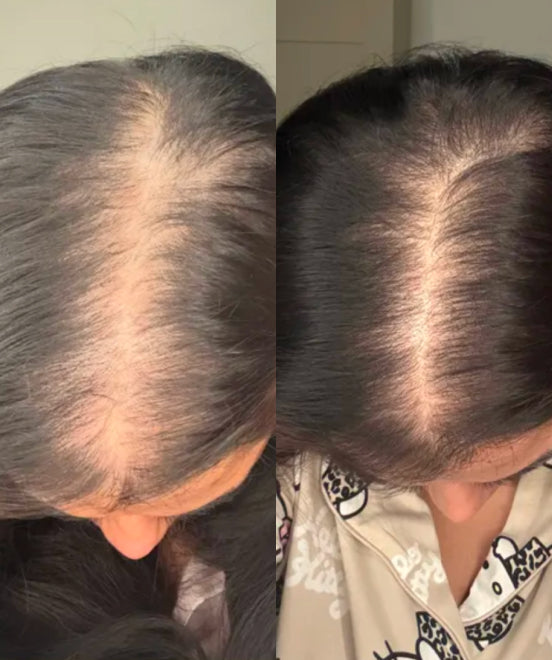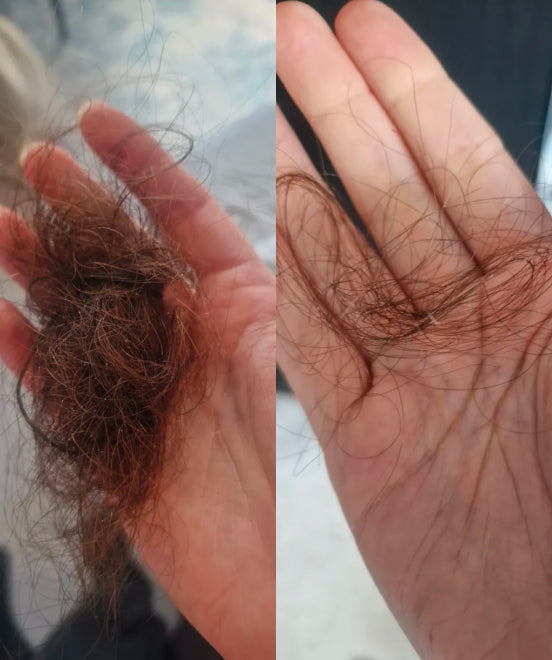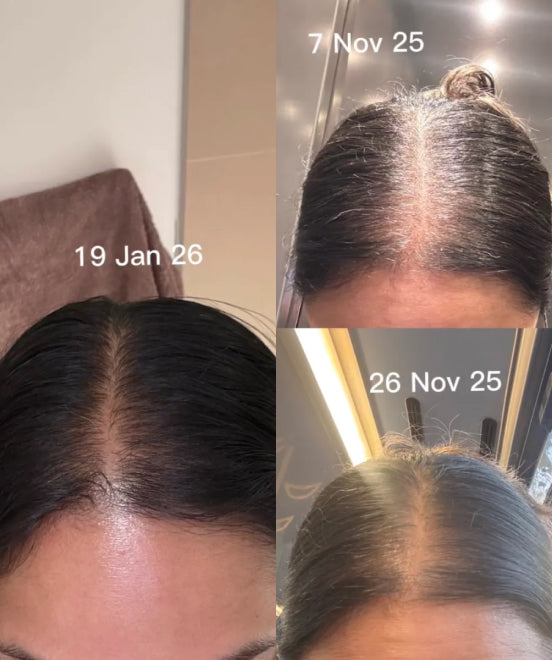


You've seen the before and after photos. You've read the hype. Maybe you've already bought a derma stamper, and you're wondering why your hair looks worse two weeks in than when you started.
First: don't panic. Second: you're probably right on track.
Microneedling works. The research is solid and the results are real. But nobody talks about what actually happens between "just started" and "wow, look at my hair." That's what we're here for.
This is your honest, week-by-week guide to what's coming. The good bits, the "is this normal?" bits, and exactly when you can expect to see those baby hairs everyone's talking about.

Quick refresher: how does scalp microneedling actually work?
Tiny needles create micro-injuries in your scalp. Sounds brutal, works brilliantly. Your body responds by rushing blood flow to the area, releasing growth factors, and essentially telling your hair follicles to wake up and get to work.
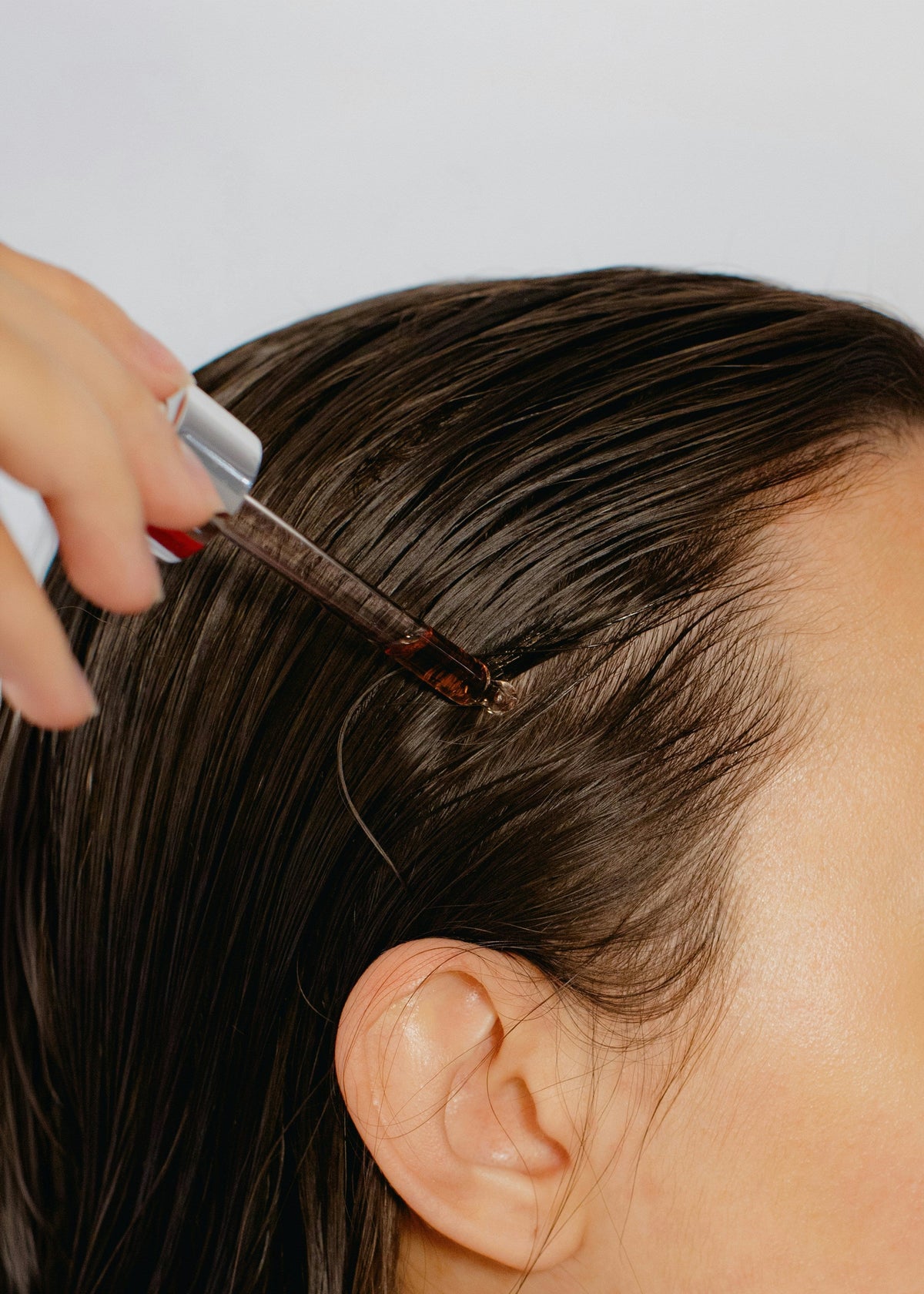
The bonus? Those micro-channels make your scalp way more receptive to whatever you're putting on it. So that serum you're using post-treatment? It's actually getting where it needs to go.
For the science lovers: research shows microneedling activates the Wnt/β-catenin pathway, which is basically your hair follicle's "grow" switch. New blood vessels form, dormant follicles get the memo, and things start happening beneath the surface long before you see results in the mirror.
Who sees the best results?
Microneedling isn't magic. It works best when your follicles are still alive but just... underperforming. Think of it as a wake-up call, not a resurrection.
You're a good candidate if you're dealing with:
Androgenetic alopecia (the most common type) responds really well to microneedling, especially in the early to moderate stages. If you're noticing a widening part, thinning at the temples, or your ponytail feels half the size it used to be, this is your sweet spot. The research specifically targets this type of hair loss, and the results are consistently positive when combined with supportive topicals.
Stress-related shedding (telogen effluvium) can benefit once the acute phase passes. Your body pushed a bunch of follicles into rest mode all at once. Microneedling helps nudge them back into action. If you've been through a rough patch, an illness, surgery, or a major life event and noticed increased shedding a few months later, this could help speed up your recovery.
Postpartum hair changes fall into similar territory. Those hormonal shifts after pregnancy can trigger significant shedding around the 3-4 month mark. Once your body starts to stabilise, microneedling can support the regrowth process. Because new motherhood needed another thing to deal with, right?
Traction alopecia from tight hairstyles, extensions, braids, or heat damage may improve with microneedling, particularly in areas where follicles haven't been permanently scarred. The key word is "may." If you've been wearing your hair pulled back tightly for years and notice thinning at your hairline or temples, catching it early gives you the best chance.
Menopausal hair thinning is another area where microneedling shows promise. Hormonal changes affect how your follicles respond to androgens, often leading to diffuse thinning across the scalp. Microneedling won't fix the hormonal component, but it can support healthier follicle function as part of a broader approach.
It's less likely to help if:
You have areas that have been completely smooth and hairless for years. If there's no fuzz, no fine hairs, nothing at all, those follicles may be past the point of revival. Microneedling can't create new follicles from scratch. For advanced hair loss, you might need to explore other options alongside microneedling, or have an honest conversation with a dermatologist about what's realistic.
Your week-by-week timeline
Here's what nobody tells you: the journey isn't linear, and the first few weeks can feel like you're going backwards. Knowing what to expect makes all the difference.
Weeks 1-2: The "wait, is this making it worse?" phase
What's happening: Your scalp is in repair mode. Inflammation (the good kind) is triggering all those growth factors we talked about. Follicles are getting the signal.
What you'll notice: Redness after treatment that fades within a day or two. Maybe some tenderness. Your scalp might feel warm or sensitive to touch for a few hours. If you're using longer needles, you might see some pinpoint bleeding during the session itself, which is completely normal. And here's the fun part: you might shed more than usual.
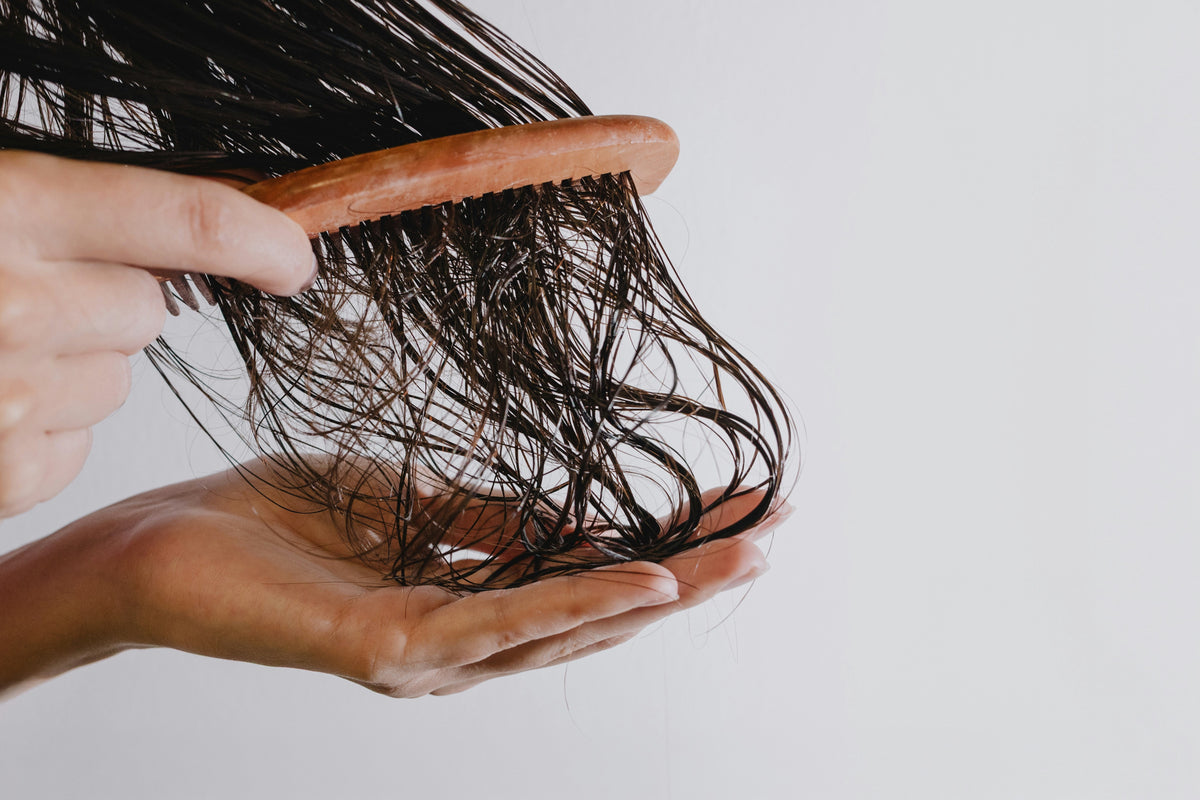
Don't freak out. Temporary shedding is common, and it's actually a sign that things are working. Weak hairs are making way for stronger ones. It's unsettling to see more hair in your brush when you're doing this to keep hair on your head, but stick with it. This "dread shed" phase typically lasts a week or two and then calms down. Your follicles are clearing out the old to make room for the new.
Your job right now: Establish your rhutine and trust the process. If you're using a serum, now's when it matters most. Those micro-channels are wide open and ready to absorb active ingredients far more effectively than your skin would normally allow. Consistency is everything at this stage.
Weeks 4-6: The "is anything even happening?" phase
What's happening: Collagen production is ramping up. New blood vessels are forming around your follicles through a process called angiogenesis. Your scalp is doing a lot of behind-the-scenes work. The dermal papilla at the base of each follicle is getting better nutrient delivery, and stem cells are receiving consistent activation signals with each treatment.
What you'll notice: Shedding should calm down. Your scalp might feel healthier overall. Less dry, less itchy, less flaky. Existing hair might feel a bit more anchored when you run your fingers through it. Some people notice their scalp just feels "better" without being able to pinpoint exactly why.
What you won't notice yet: Visible new growth. And that's completely normal.
This is the danger zone. Most people quit around week 4-5 because they expected faster results. They've been doing everything right, spending time and money, and their hair looks... exactly the same. Don't be that person. The visible changes are coming, but your follicles need time to shift gears. Hair growth is slow. That's just biology, not a sign that it isn't working.
Your job right now: Keep going. Take comparison photos in the same lighting and angle as your baseline. You won't spot a gradual change in the mirror, but photos don't lie. Trust the process even when you can't see it working yet.
Weeks 8-10: The "oh hello, baby hairs" phase
What's happening: Follicles that were stuck in rest mode (telogen) are finally shifting into growth mode (anagen). All that groundwork from the past two months is starting to show. Gene expression favouring hair growth is elevated, and the cumulative effect of improved blood flow and growth factor stimulation is kicking in.
What you'll notice: Baby hairs. Those fine, short strands popping up at your hairline, part, or crown. Existing hair looking and feeling thicker. Before and after photos that actually show a difference. This is the moment you've been waiting for.
One thing: New growth often starts fine and wispy. It won't look like your normal hair immediately. These are vellus-like hairs that will thicken up with continued treatment. Don't expect them to blend in right away, but do expect them to get stronger over the coming weeks.
Your job right now: Document everything. These baby hairs are about to become real density. Take photos, note the changes, celebrate the wins. This is the point where consistency really pays off.
Weeks 12-16: The "wow, this actually worked" phase
What's happening: Your hair growth cycle is in full swing. Miniaturised follicles are producing thicker hairs. The cumulative effects of everything you've been doing are fully manifesting. New blood vessel networks are mature and delivering nutrients efficiently. This is the payoff phase.
What you'll notice: Real density improvements. A tighter-looking part. Ponytails that feel thicker and look fuller. Those baby hairs from earlier weeks are growing out and blending with the surrounding hair. Before and after photos that make you want to send them to everyone you know.
Your job right now: Think about maintenance. This isn't a one-and-done situation. Most people move from weekly or biweekly sessions to monthly maintenance after hitting their goals. The aim now is to keep what you've gained while continuing to support healthy follicle function.

What affects your timeline?
Everyone's different. Here's what can speed things up or slow them down:
How much thinning you're starting with. Early-stage responds faster than advanced loss. More active follicles = more potential for improvement. If you're catching things early, while follicles are miniaturised but still functioning, you have more to work with than someone whose follicles have been dormant for years.
Your age. Younger scalps tend to heal faster and may show results sooner, but microneedling works across all ages. Don't write yourself off because you're not in your twenties. The research includes participants across a wide age range with positive outcomes.
Needle depth and frequency. Clinical studies have used needle depths ranging from 0.5mm to 1.5mm, with most protocols recommending weekly or biweekly sessions. Shorter needles (0.25-0.5mm) are gentler and can be used more frequently. Longer needles require more healing time between treatments. Finding the right balance for your scalp matters.
What you're pairing it with. Microneedling alone is good. Microneedling plus the right topicals is better. One study found 82% of people using microneedling with topical treatment saw significant improvement, compared to just 4.5% using topicals alone. That's not a small difference. The micro-channels you create make your products work harder.
How consistent you are. Skipping sessions or giving up during the "nothing's happening" phase is the number one reason people don't see results. The biological changes that support hair growth need sustained stimulation. One treatment won't cut it. Neither will sporadic efforts when you remember.
Your overall health. Nutritional deficiencies (especially iron, vitamin D, and biotin), thyroid issues, chronic stress, hormonal imbalances... these affect hair growth no matter what treatments you're using. If something underlying is working against you, microneedling can only do so much. Worth addressing the root causes alongside your microneedling rhutine.
How to track your progress (because the mirror lies)
Your brain adapts to gradual change. You see yourself every day, so you won't notice slow improvement. Photos are the only way to really track what's happening.
The photo rules:
Same lighting every time. Natural daylight from a window is best. Avoid direct sunlight, it washes out details and creates harsh shadows.
Same angle, same position. Straight on for front views, 45 degrees for sides. Find a spot in your bathroom and stick with it.
Same parting. Even tiny variations change how dense your hair looks in photos.
Dry hair only. Wet hair clumps together and looks thinner than it actually is.
How often? Monthly is enough. Weekly photos can actually be discouraging because change is so gradual. You want enough time between shots to see real difference.
What to capture: Your hairline, your part, your crown, and any specific areas you're concerned about. Progress often shows in some spots before others.
Level up: Handheld scalp cameras (trichoscopes) can reveal baby hairs and follicle changes before they're visible to the naked eye. Not essential, but satisfying if you like data.
Real talk: what microneedling can and can't do
We're not about overpromising.
It can: Strengthen weak follicles. Wake up dormant ones. Improve scalp health. Boost absorption of your hair products. Support thicker, denser growth where you have active follicles.
It can't: Bring back follicles that are completely gone. Reverse areas that have been bald for years. Replace hair transplants for advanced loss. Work as a one-time fix.
The key question: Can you see any fine hairs in the area? Even tiny ones? If yes, there's potential. If an area has been smooth and shiny for years, microneedling alone probably won't change that.
Getting the most from your treatment
What you put on your scalp after microneedling matters. Those micro-channels are primed for absorption, so use them wisely.
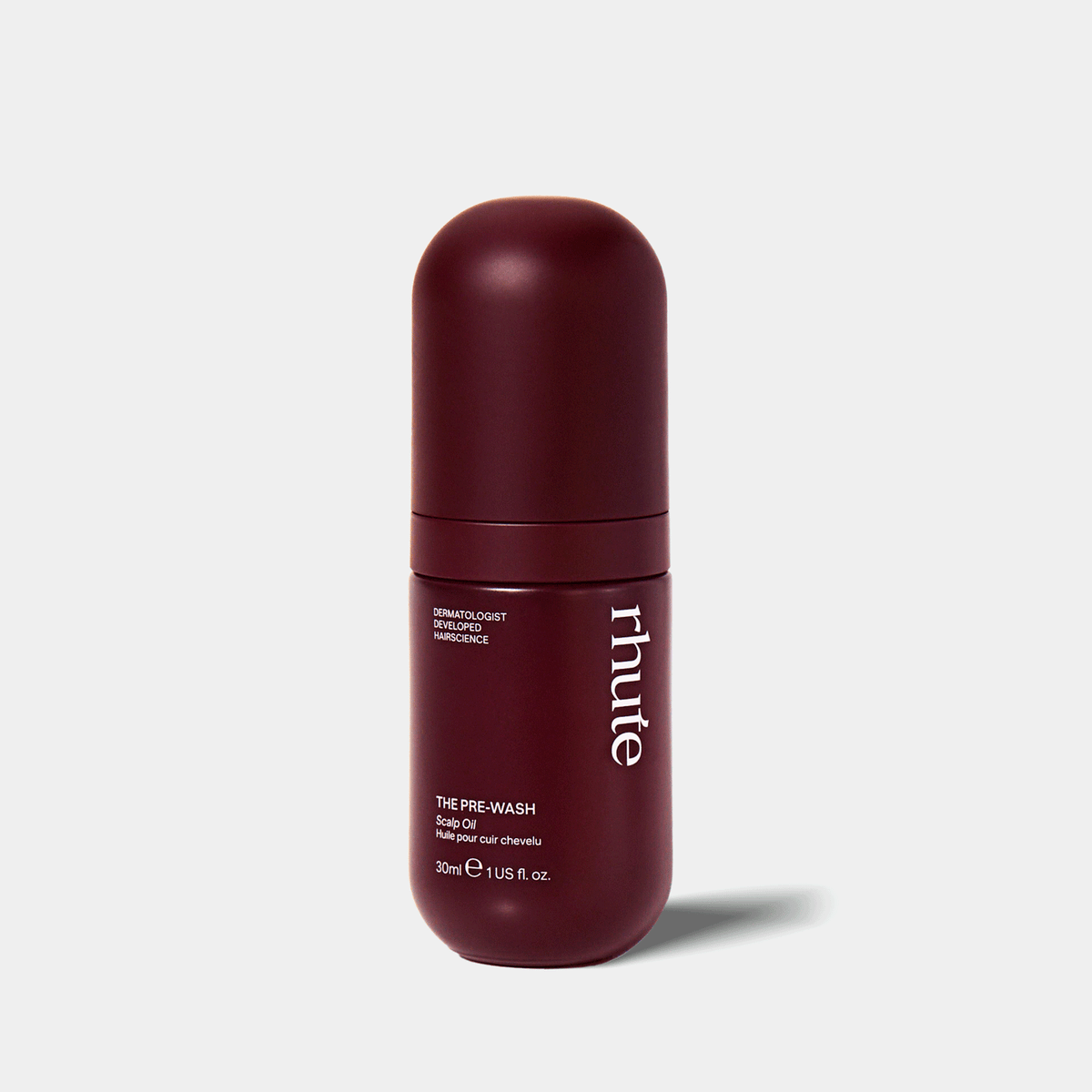
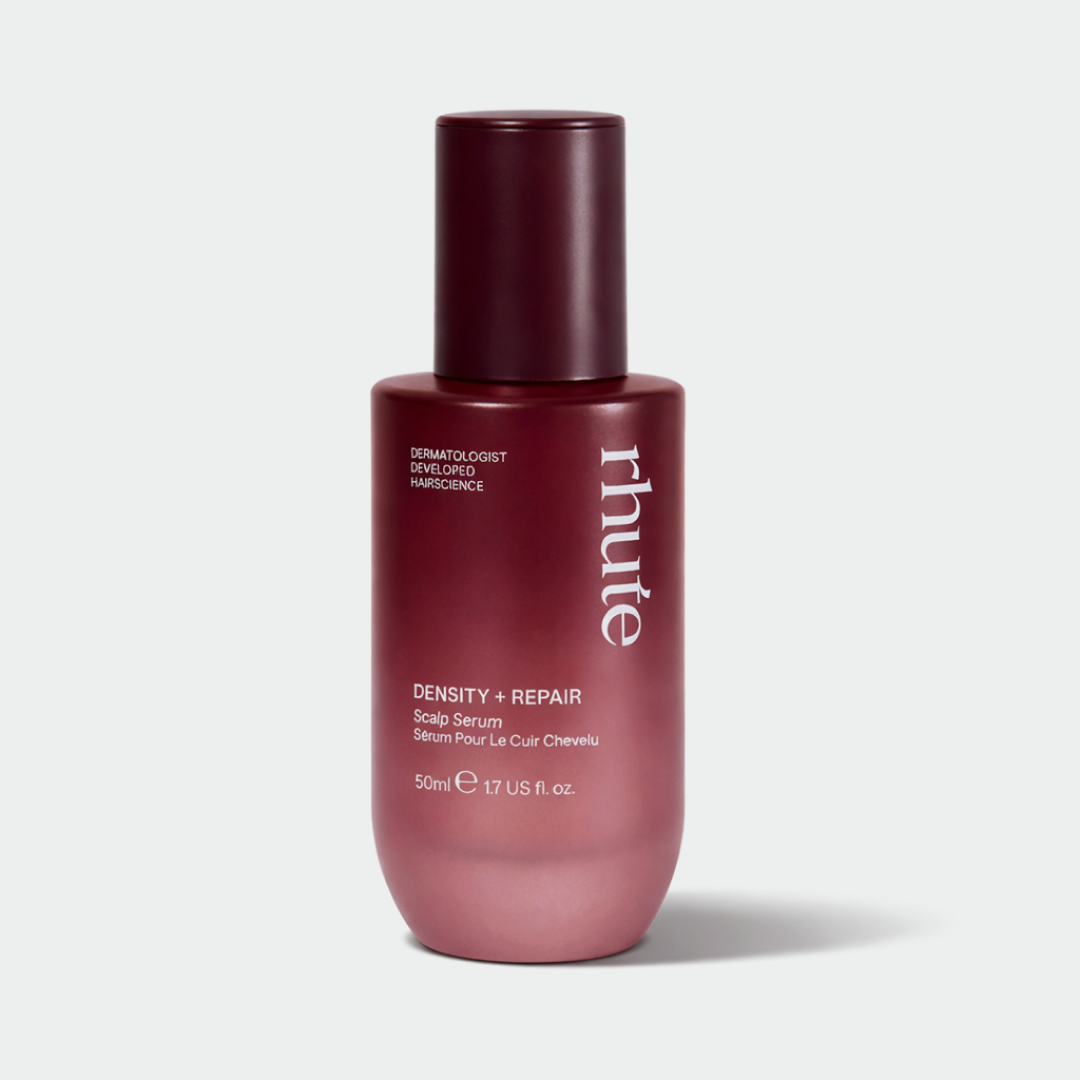
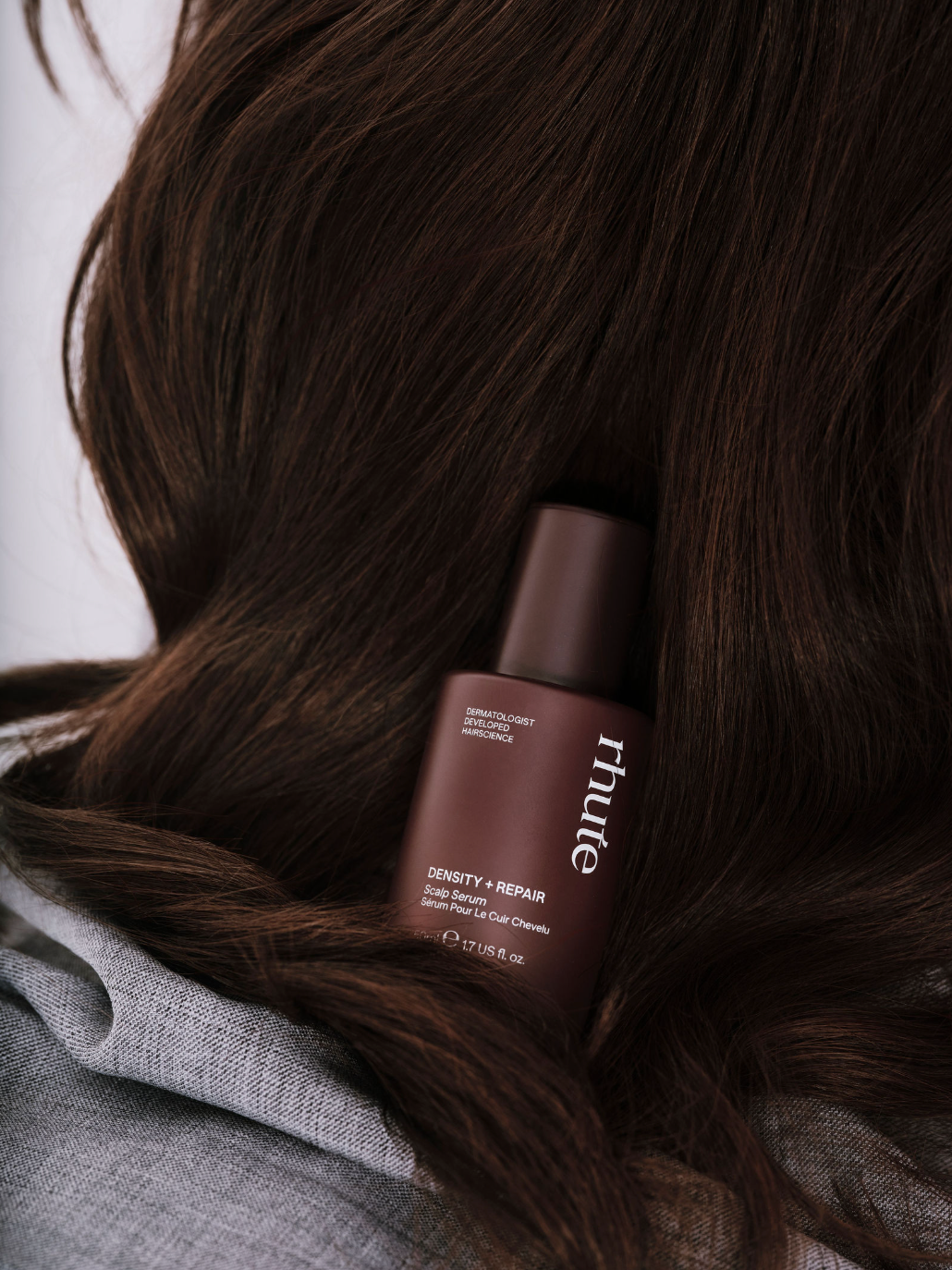
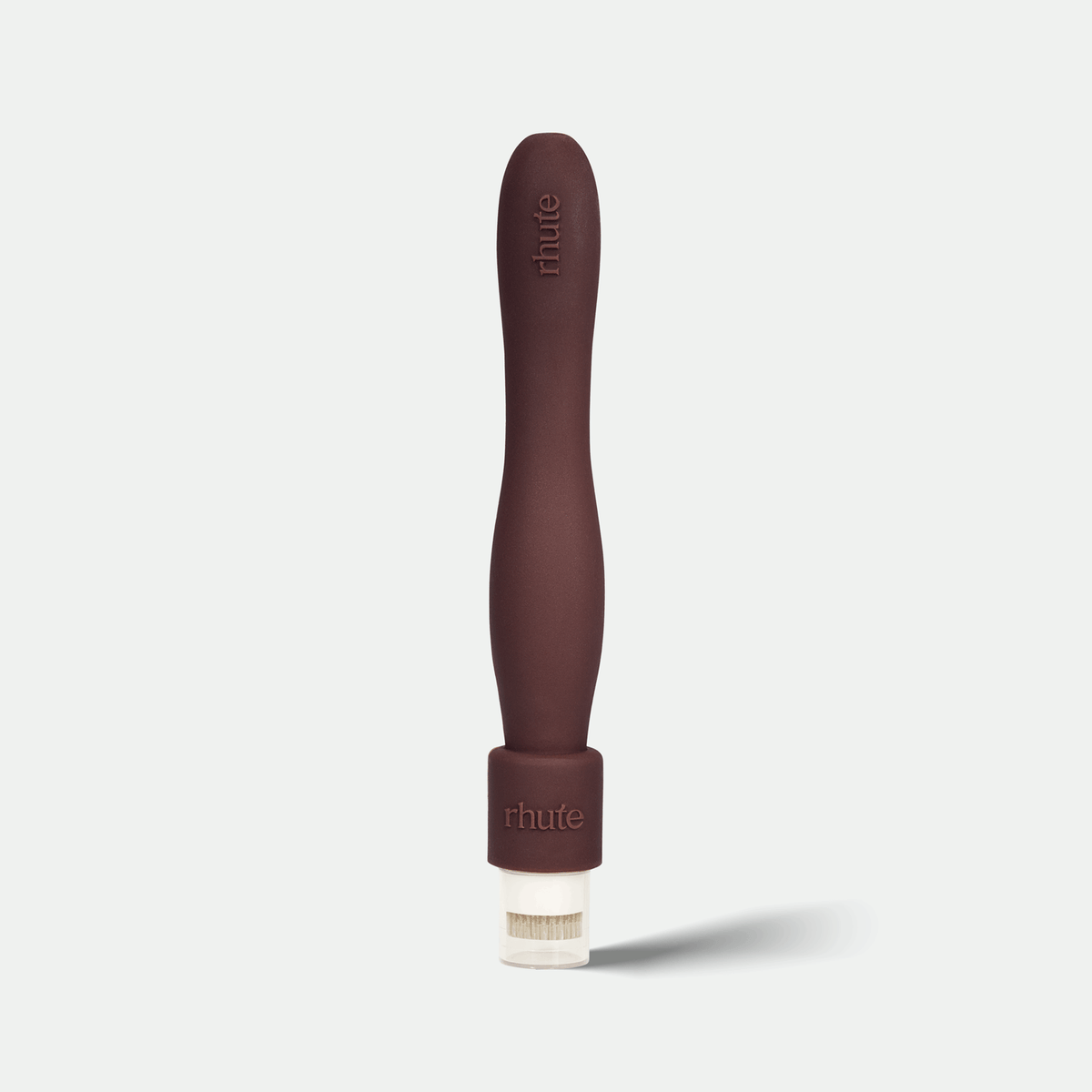
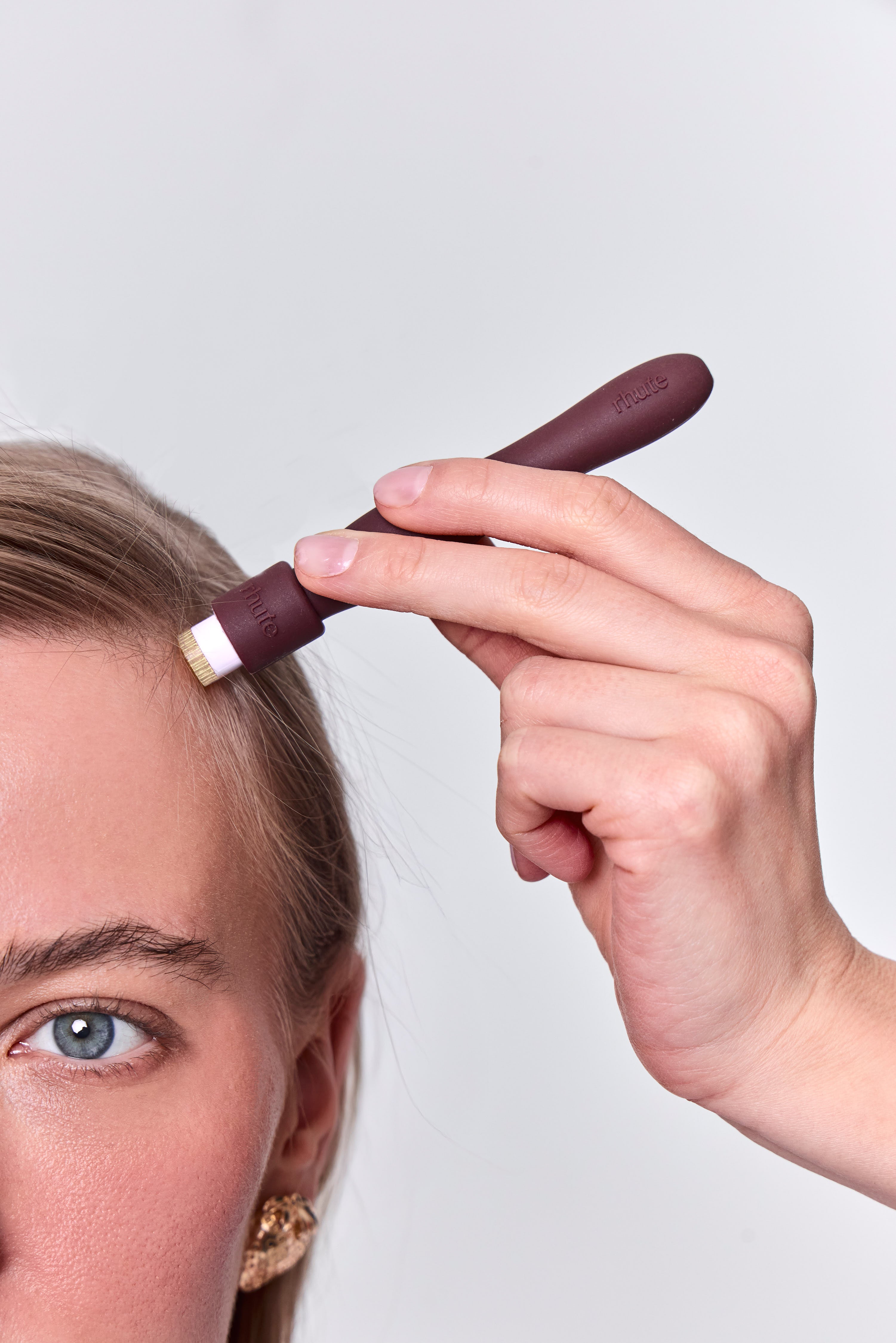
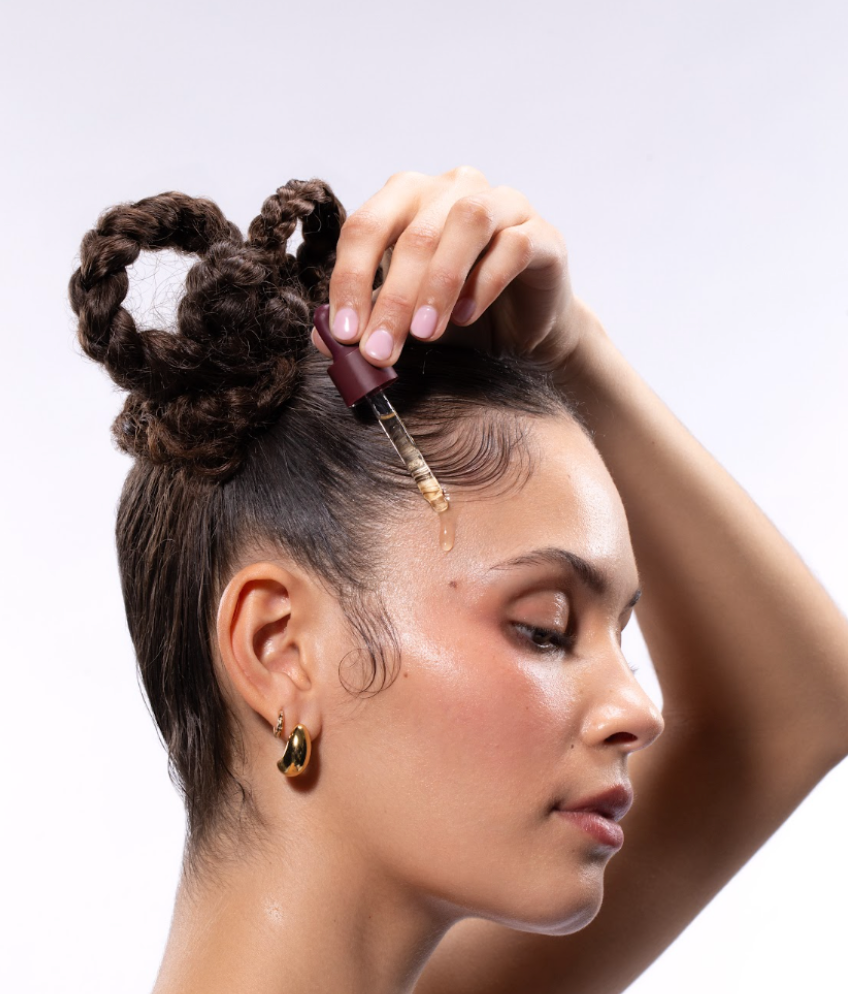
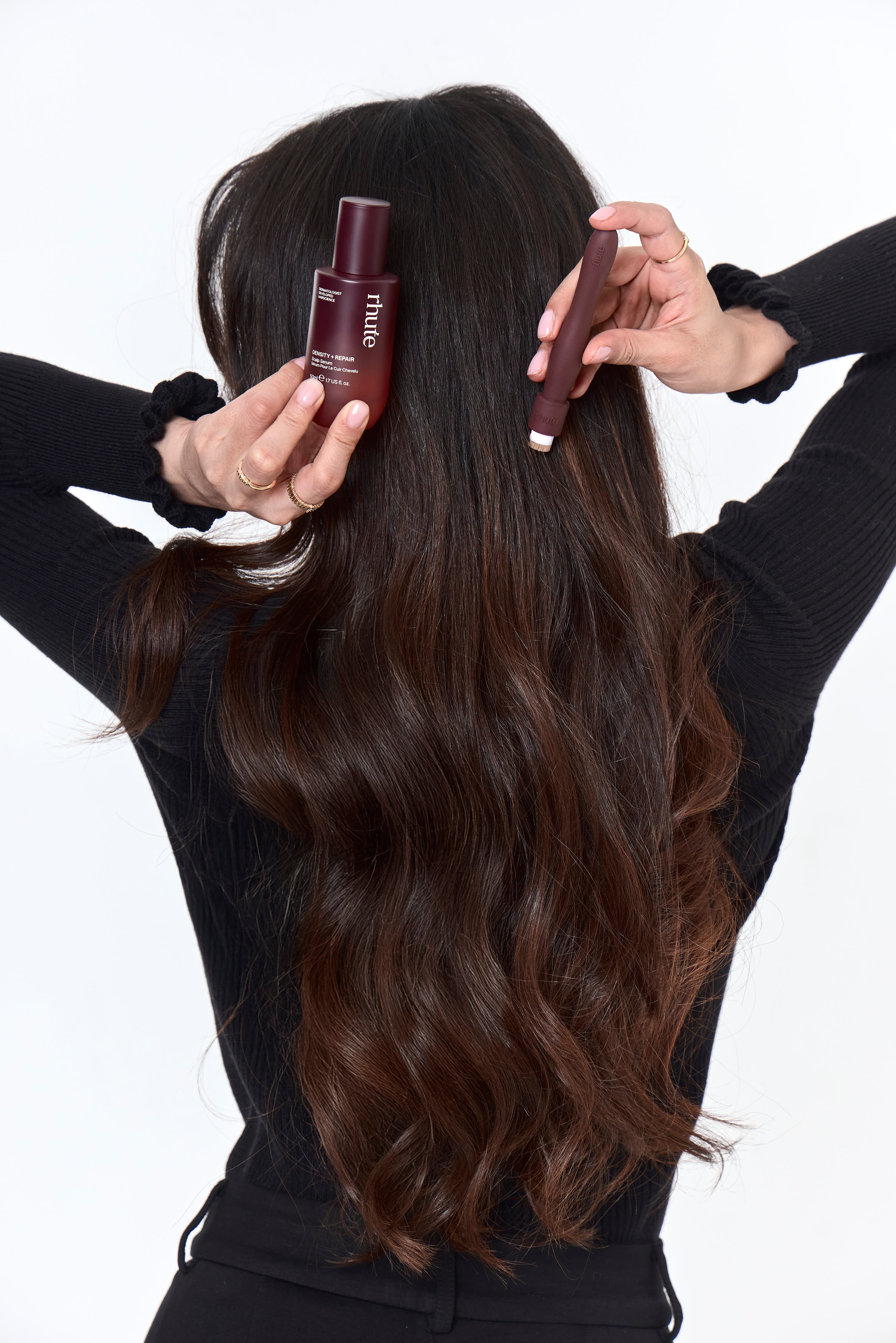
The rhute Density + Repair serum is formulated with exactly this in mind, combining stem cell extracts, bioactive peptides, caffeine, and niacinamide. When paired with the rhute dermastamp, you're creating the optimal environment for those active ingredients to reach where they're needed most.
Apply your serum immediately after treatment when absorption is at its peak. The micro-channels start closing within a few hours, so timing matters. Just make sure whatever you're using is formulated to be safe on freshly treated skin. Not all products are meant for this purpose, and some ingredients (like retinol or strong acids) can cause irritation on a freshly needled scalp.
Beyond topicals, the basics matter too. Adequate protein supports keratin production. Staying hydrated keeps your scalp healthy. Managing stress helps prevent additional shedding. Sleep is when your body does its repair work. None of this is glamorous, but it all contributes to an environment where your hair can actually thrive.
Frequently Asked Questions
When will I actually see results?
Most people notice baby hairs around weeks 8-10, with real density improvements by weeks 12-16. Early signs like reduced shedding and better scalp feel can show up by weeks 4-6. Your timeline depends on your hair loss type, consistency, and what you're pairing with microneedling.
Why am I shedding more after starting?
Temporary increased shedding in the first couple of weeks is normal. Microneedling can push weak hairs out faster, making room for stronger growth. Think of it as clearing the way. It usually stabilises by weeks 4-6.
How do I know if it's working?
Early signs: less daily shedding, healthier-feeling scalp, hair that feels more anchored. Visible signs: baby hairs at your hairline or part, noticeable density in comparison photos. If you're 12 weeks in with zero changes, chat with a derm about adjusting your approach.
What if I don't see results after 12 weeks?
Could be a few things. Your hair loss type might need a different treatment. Underlying issues like thyroid problems or nutritional deficiencies could be limiting results. Your needle depth or frequency might need tweaking. A dermatologist or trichologist can help figure out what's going on.
Do results last?
With maintenance, yes. Most people move from weekly or biweekly sessions to monthly after hitting their goals. Without ongoing treatment, results gradually fade because the underlying causes of your hair loss are still there. Think of it as an ongoing investment, not a one-time fix.
At-home or professional: which is better?
Both work. Professional treatments use longer needles (1.0-1.5mm) and sometimes combine with things like PRP. At-home devices use shorter needles (0.25-0.5mm) for more frequent use. Plenty of people get great results at home with consistency and good technique.