
Microneedling for Hair Loss: Does It Actually Work?
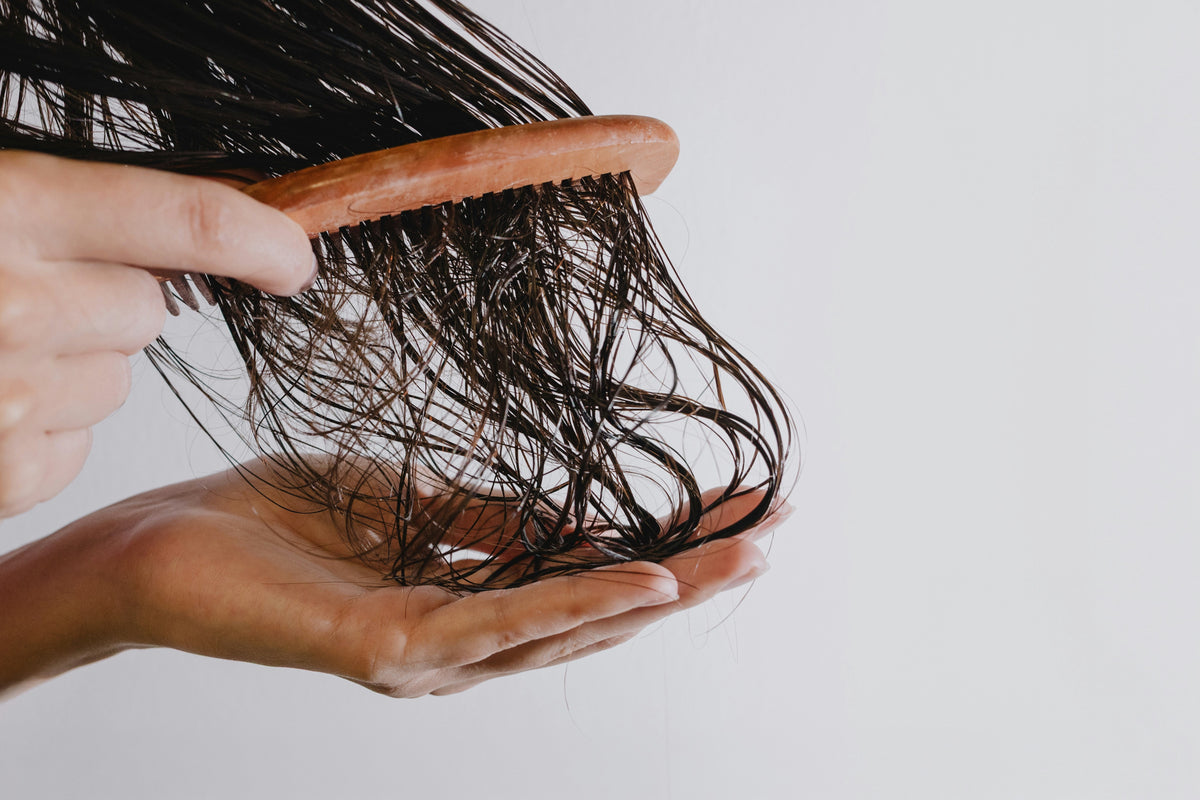
More hair in your brush than on your head? A part that's getting a little too wide for comfort? You're not imagining it, and you're definitely not alone.
If you've been down the hair loss rabbit hole (we see you, 2am Google searches), you've probably come across microneedling. The idea sounds slightly unhinged at first. Poking tiny holes in your scalp to grow more hair? But here's the thing: the science actually backs it up.
A 2025 meta-analysis found that adding microneedling to topical treatments significantly outperformed topical treatments alone. Translation: those tiny needles might be onto something.
Whether you're dealing with postpartum shedding, stress-induced thinning, or your genes just didn't get the memo about keeping your hair, our dermatologist founder Dr. Aamna Adel breaks down what microneedling can (and can't) do for you.
What Is Scalp Microneedling?
Think of it as a wake-up call for your scalp. Microneedling uses fine, medical-grade needles to create tiny micro-channels on your scalp's surface. Needle depths typically range from 0.25mm to 1.5mm, though research suggests bigger isn't always better. One study found that 0.6mm needles actually outperformed 1.6mm for hair growth. These controlled little pokes trigger your skin's natural "time to repair" response.
The technique goes by a few names. You might hear it called collagen induction therapy (because of what it does for skin) or percutaneous collagen induction. For hair purposes, the principle is the same: create micro-injuries, let your body's healing response do its thing.
It's been a skincare staple for over 25 years, but its hair growth benefits are the newer, very exciting development. Dermatologists and trichologists started noticing that patients getting scalp microneedling for other reasons were also seeing improvements in hair density. Research caught up, and now there's solid clinical evidence backing what practitioners were observing.
Most people describe microneedling as mild discomfort rather than actual pain. Think "slightly annoying" rather than "absolutely not." The needles are designed to be fine enough that they don't reach nerve endings, so while you'll feel something, it shouldn't be unbearable. At-home devices with shorter needles (around 0.3mm) are generally even more comfortable while still delivering results.
How Does Microneedling Help Hair Grow?
Here's where it gets interesting.
When your scalp detects those micro-injuries, it kicks into healing mode. This triggers a cascade of good things: increased blood flow, release of growth factors, and activation of stem cells in your hair follicles. Your body essentially sends reinforcements to the area, creating the perfect environment for hair to thrive.
The needles reach two key areas that matter for hair growth. First, the dermal papilla, the control centre at the base of each follicle, that regulates hair production. Second, the bulge region, where your hair follicle stem cells live. When microneedling activates these stem cells, it can coax follicles that have gone dormant back into their active growth phase (that's the anagen phase, if you want to get technical).
The real MVP? Microneedling wakes up the signalling pathways that tell those dormant follicles to get back to work. Those hairs that have been taking an extended break? They get the nudge they need to start growing again.
Bonus: those micro-channels also allow your topical treatments (serums, we're looking at you) to penetrate deeper and work harder. Your products finally earn their keep. Studies show that microneedling can significantly boost the absorption of topical treatments, which is why combining it with a targeted serum tends to deliver better results than either approach alone.
What Are the Benefits?
Let's talk results:
More density. Clinical studies consistently show measurable increases in hair count. More hairs per square centimetre = visibly fuller hair over time. The wound healing response triggers your body to produce growth factors like VEGF and PDGF, which support stronger, healthier follicles.
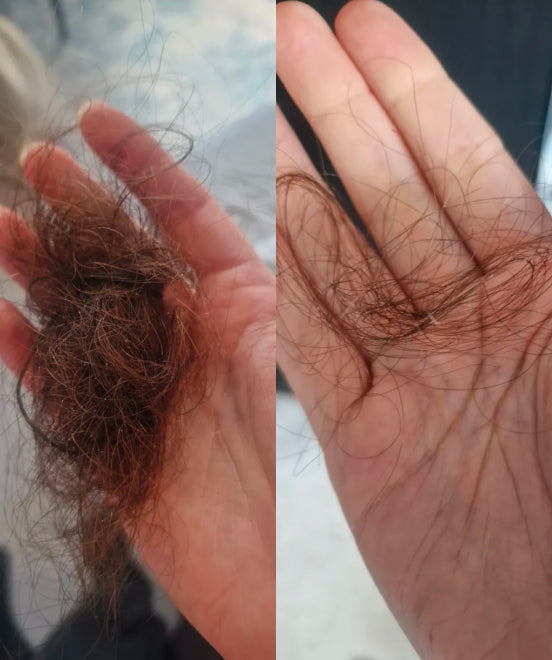
Less shedding. A healthier scalp environment means hair stays put longer. Less drama in the shower drain. When your scalp barrier is functioning well and blood flow is optimised, hair has a better foundation to grow from.
Better product absorption. Those micro-channels turn your scalp into a sponge for active ingredients. Your serum can finally reach where it needs to go, penetrating deeper into the scalp rather than sitting on the surface.
Works across hair types. Curly, straight, coily, wavy, thick, fine. Microneedling supports overall scalp health regardless of texture. It's addressing the environment where hair grows, not the hair itself.

Does the Research Actually Support This?
Short answer: yes.
A 2025 systematic review looked at 12 clinical trials involving over 600 patients with pattern hair loss. The findings? Combined microneedling therapy significantly improved hair count compared to topical treatment alone. We're talking statistically significant, clinically meaningful results.
Another 2024 analysis of 13 trials (nearly 700 patients) confirmed improvements in both hair density and hair diameter, with a solid safety profile.
The evidence is strong enough that microneedling has become a standard recommendation in many dermatologists' treatment plans. This isn't fringe wellness. It's science-backed hair care.
What Types of Hair Loss Does It Help?
Microneedling works best when your follicles are still present but underperforming. Think of it as a performance review for lazy hair.
Pattern hair loss (androgenetic alopecia). The most researched, most responsive type. This is the genetic kind where DHT (dihydrotestosterone) gradually miniaturises hair follicles over time. Microneedling can help coax those weakened follicles back into fuller production, and works particularly well alongside topical treatments that target DHT or stimulate growth.
Alopecia areata. The patchy kind. Studies show microneedling can help modulate the local immune response while stimulating regrowth.
Telogen effluvium. The stress/illness/hormonal shedding situation. While this often resolves on its own, microneedling can potentially speed up the bounce-back.
Postpartum and menopause-related thinning. For the hormonal hair changes life throws at us, microneedling offers a non-hormonal approach that addresses scalp health directly.
Where it's less likely to help: scarring alopecia (where follicles are permanently destroyed) or hair loss caused by untreated nutritional deficiencies or medical conditions.
Who Should Skip It?
Microneedling is suitable for most people, but there are some "not right now" situations:
Active scalp infections. Bacterial, fungal, or viral. Sort those first.
Inflammatory flare-ups. If your psoriasis or eczema is having a moment, wait until things calm down.
Blood thinners or clotting disorders. Increased bleeding risk means this one needs a chat with your doctor.
Pregnancy and breastfeeding. The cautious approach is to wait. Your hormones are doing enough already.
History of keloid scarring. The controlled trauma could trigger abnormal scarring in some people.
Recent scalp treatments. Chemical peels, laser therapy, or isotretinoin use all mean your skin needs recovery time first.
Not sure if you're a good candidate? A dermatologist consultation can help you figure out both the cause of your hair loss and whether microneedling makes sense for you.
What Results Can You Actually Expect?
Real talk: this isn't an overnight fix. Hair growth takes time, and microneedling works with your natural cycles rather than against them.
Weeks 1-2: Your scalp starts feeling healthier. Less dry, less itchy, less of that tight feeling. The repair process is beginning beneath the surface, even if you can't see it yet.
Weeks 4-8: Shedding starts to slow down. Less hair in your brush, less panic in your morning routine. This is your scalp environment stabilising.
Weeks 8-12: New growth appears. Those "baby hairs" along your hairline or in thinning spots? That's progress. You might notice your existing hair feels stronger too.
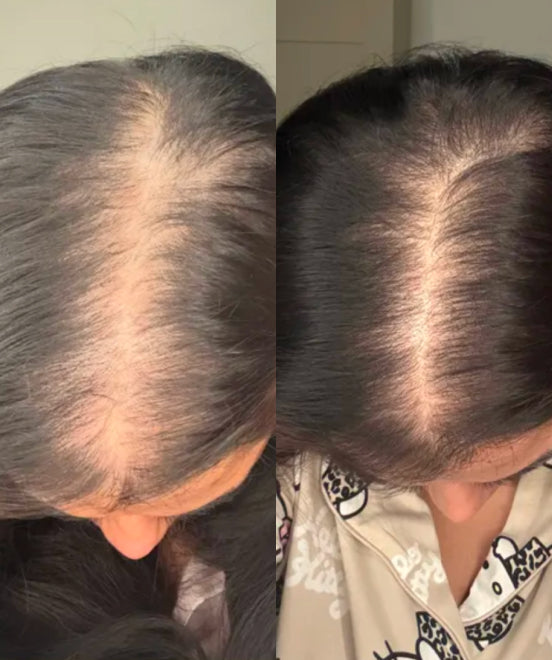
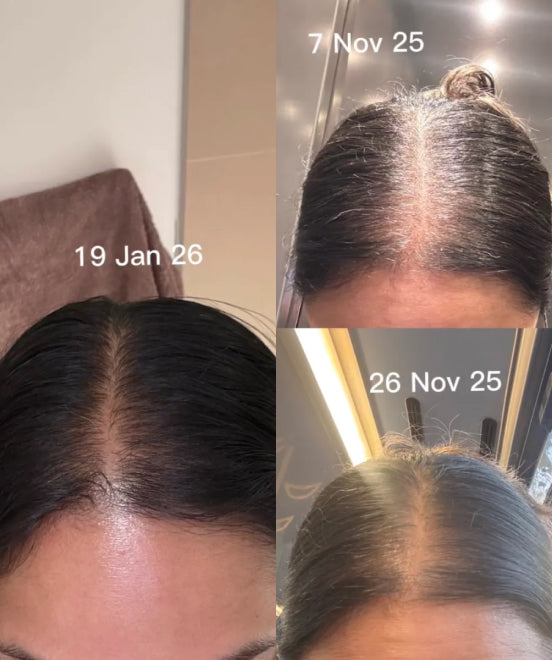
Months 3-6: Visible improvements in density and thickness. This is when the compliments start. Photos from before and after will show the difference even if day-to-day changes felt gradual.
The hair growth cycle means patience is non-negotiable. Each follicle operates on its own timeline, cycling through growth, rest, and shedding phases. You're essentially convincing thousands of them to spend more time in the growth phase. That takes consistency.
Once you're happy with results, maintenance sessions (usually monthly) help sustain them. The underlying factors that caused thinning in the first place, whether genetic, hormonal, or environmental, don't disappear. Maintenance keeps your scalp in optimal condition.
Professional vs At-Home: What's the Difference?
Both options exist, but at-home microneedling has become the go-to for most people, and for good reason.
At-home devices use shorter needles (typically 0.25mm to 0.5mm), and that's not a limitation. Research shows that bigger doesn't always mean better. A 2020 study found that 0.6mm needles actually outperformed 1.6mm for hair regrowth. Shallower depths can effectively reach the dermis and stimulate follicles while minimising trauma and the risk of follicle scarring. With consistent use, at-home microneedling delivers real, measurable results.
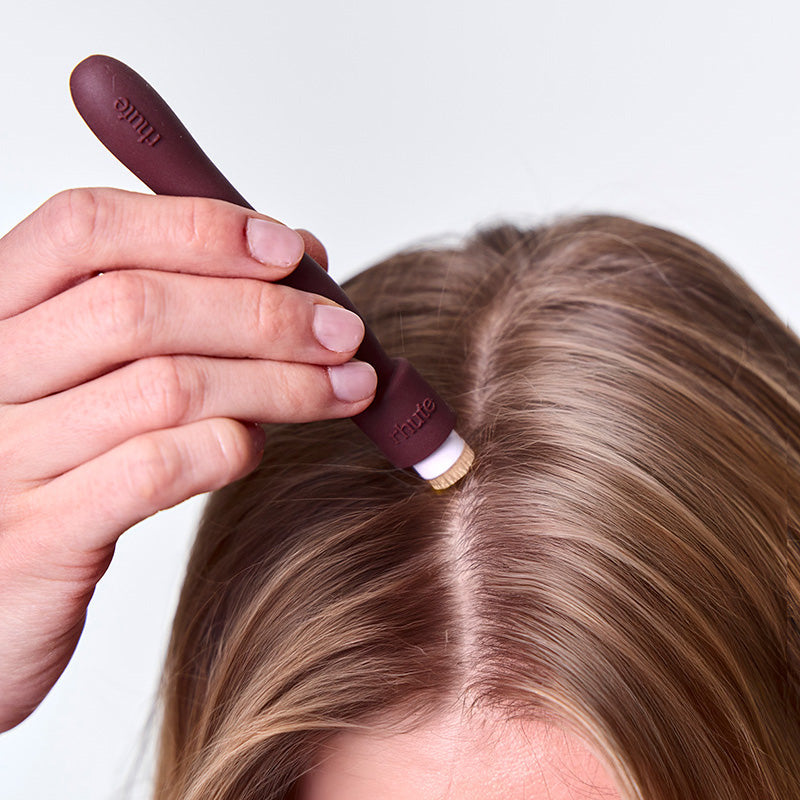
When it comes to at-home tools, you'll encounter two main options: derma rollers and derma stamps. Rollers cover more ground quickly, rolling across larger areas of the scalp. Stamps offer more precision for targeted spots and are less likely to pull on existing hair, which matters for scalp use. Studies have shown that vertical penetration (stamps) causes less damage than rollers to both hair follicles and surrounding skin, with no risk of tangling or catching hair.
Hygiene is everything. Disinfect thoroughly before and after every use with cleansing alcohol. Pour some into the lid, insert the stamp, and spin in circular motions for a proper 1-2 minute clean. Replace your device every 10-12 uses or when needles become blunt (whichever happens first). Use 1-2 times per week, and give your scalp time to heal between sessions.
Professional treatments are also available at clinics, typically costing £100-£300 per session with multiple sessions required. Some people opt for professional treatments if they want to combine microneedling with other procedures like PRP (platelet-rich plasma). But for most people experiencing thinning, an at-home dermastamp paired with a targeted serum delivers the results they're looking for without the ongoing clinic costs.
Side Effects: What to Expect
Microneedling is generally well-tolerated, but let's set realistic expectations:
Normal: Redness and mild warmth for 24-48 hours. Some temporary dryness or flaking as your scalp heals. Minor pinpoint bleeding with deeper treatments.
Less common: Temporary itching during healing. Post-inflammatory hyperpigmentation (more likely with deeper treatments on darker skin tones).
Rare but possible: Infection if hygiene is neglected. This is why clean tools aren't optional.
Pro tips: Skip the sun exposure right before and after. Avoid harsh actives (retinoids, acids) for a few days post-treatment. Let your scalp focus on healing.
Ready to Start? Here's Your Game Plan
If you're new to this: An at-home dermastamp paired with a targeted serum is the ideal starting point. If you're unsure about the underlying cause of your hair loss, a dermatologist can help identify what's going on, but you don't need to wait for a consultation to begin supporting your scalp health.
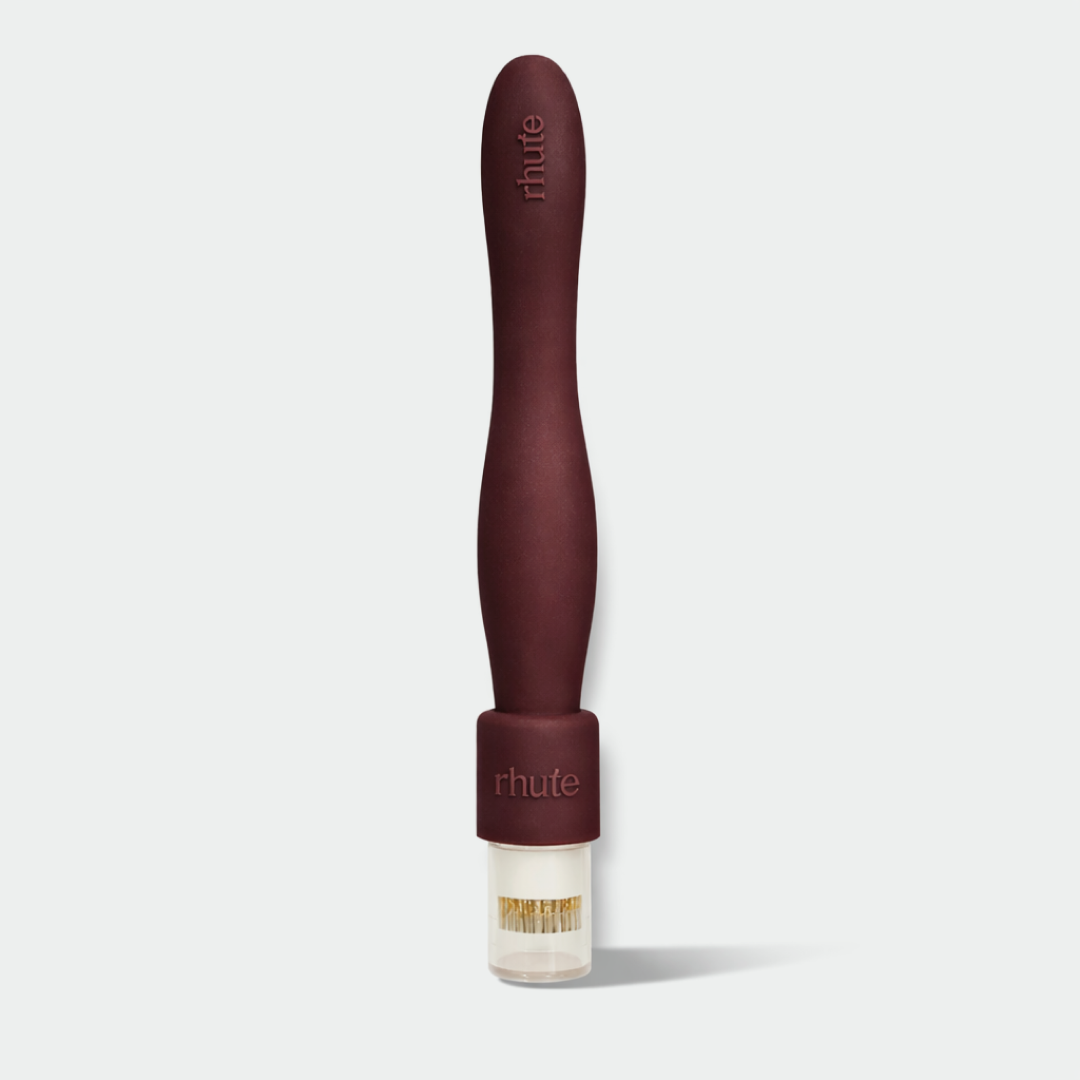
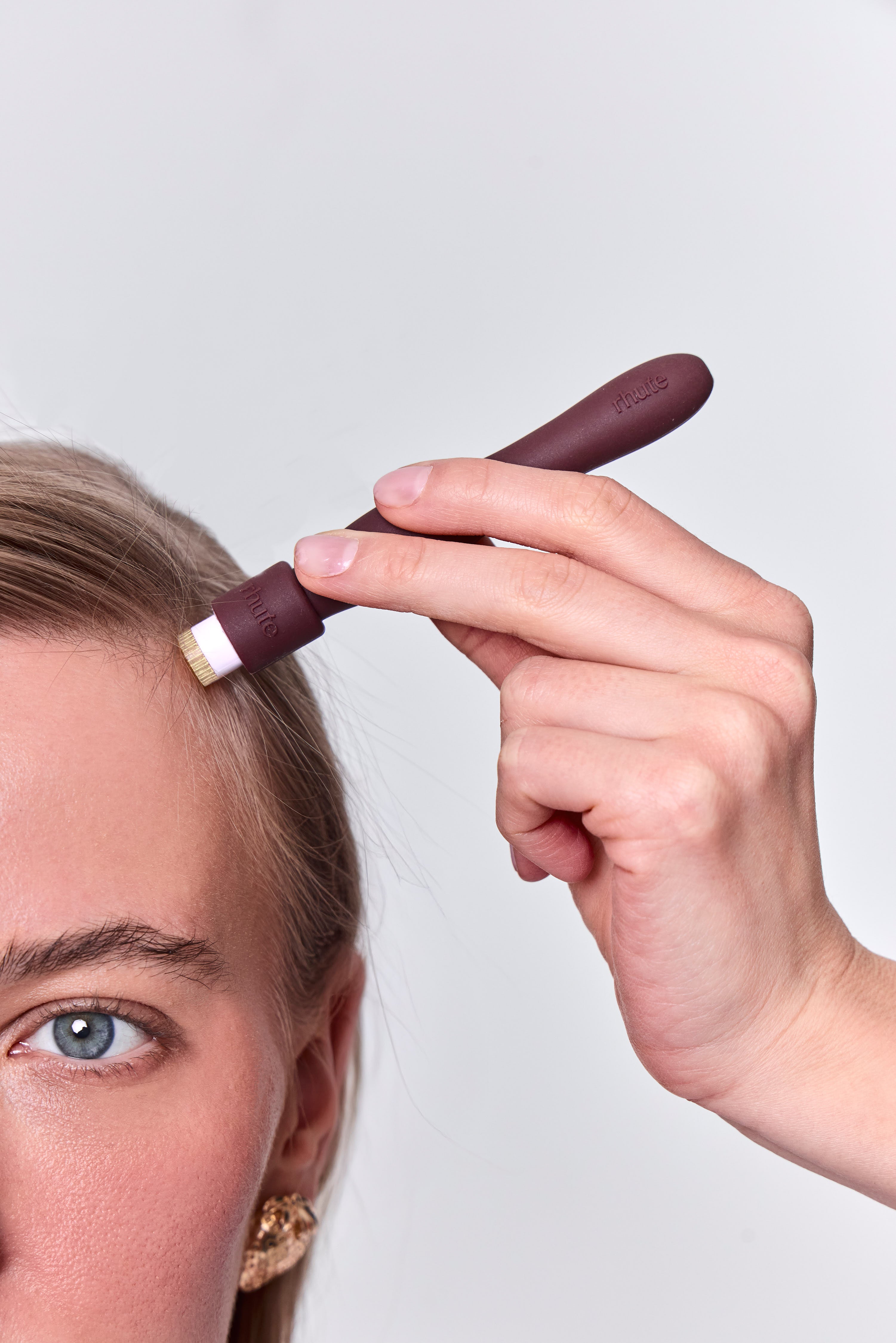
Choosing your tool: A derma stamp offers precision for targeted areas and won't catch or pull on existing hair. For scalp use, look for devices specifically designed for the job, with needle lengths around 0.3mm that effectively reach the dermis without unnecessary trauma. The Dermastamp is a great choice.
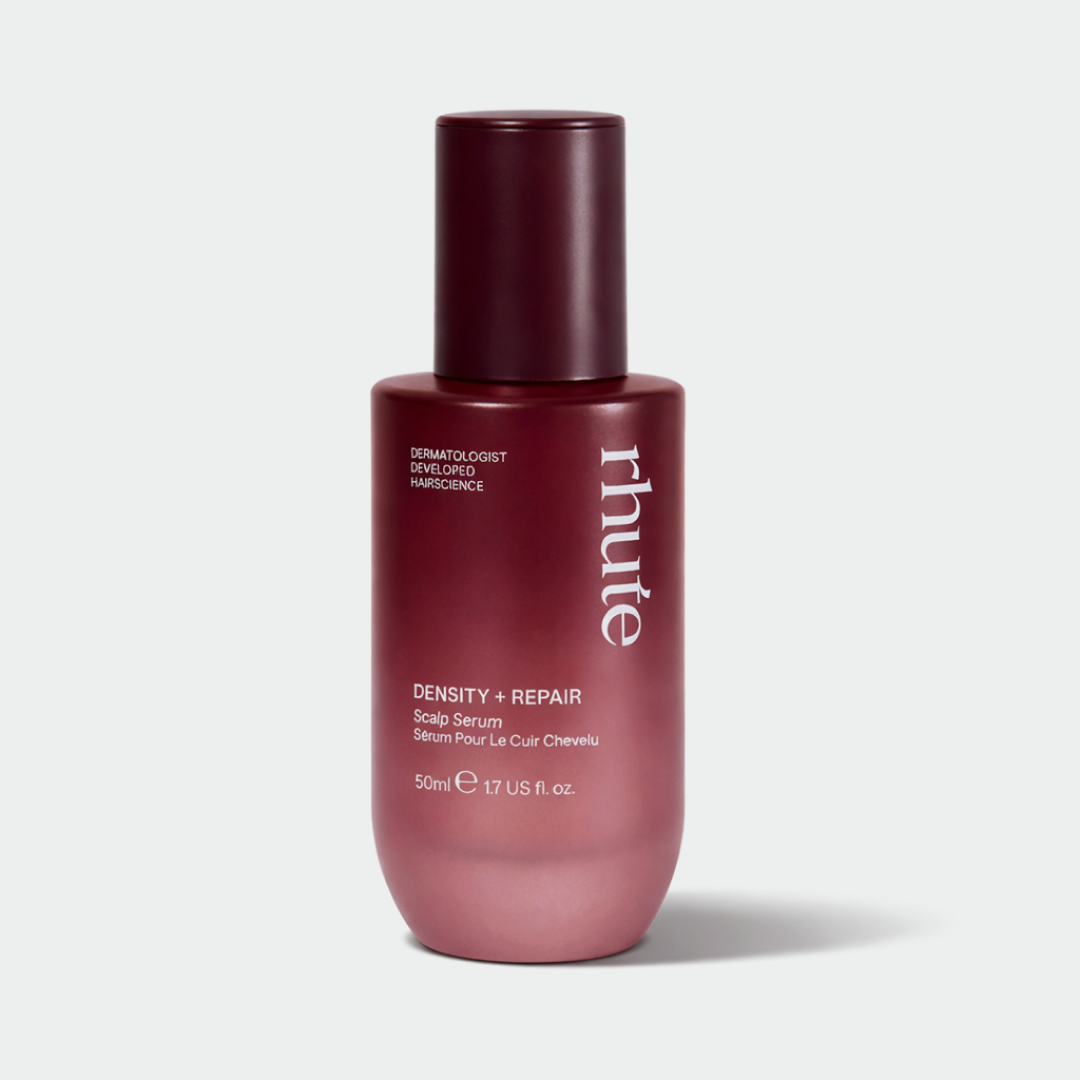
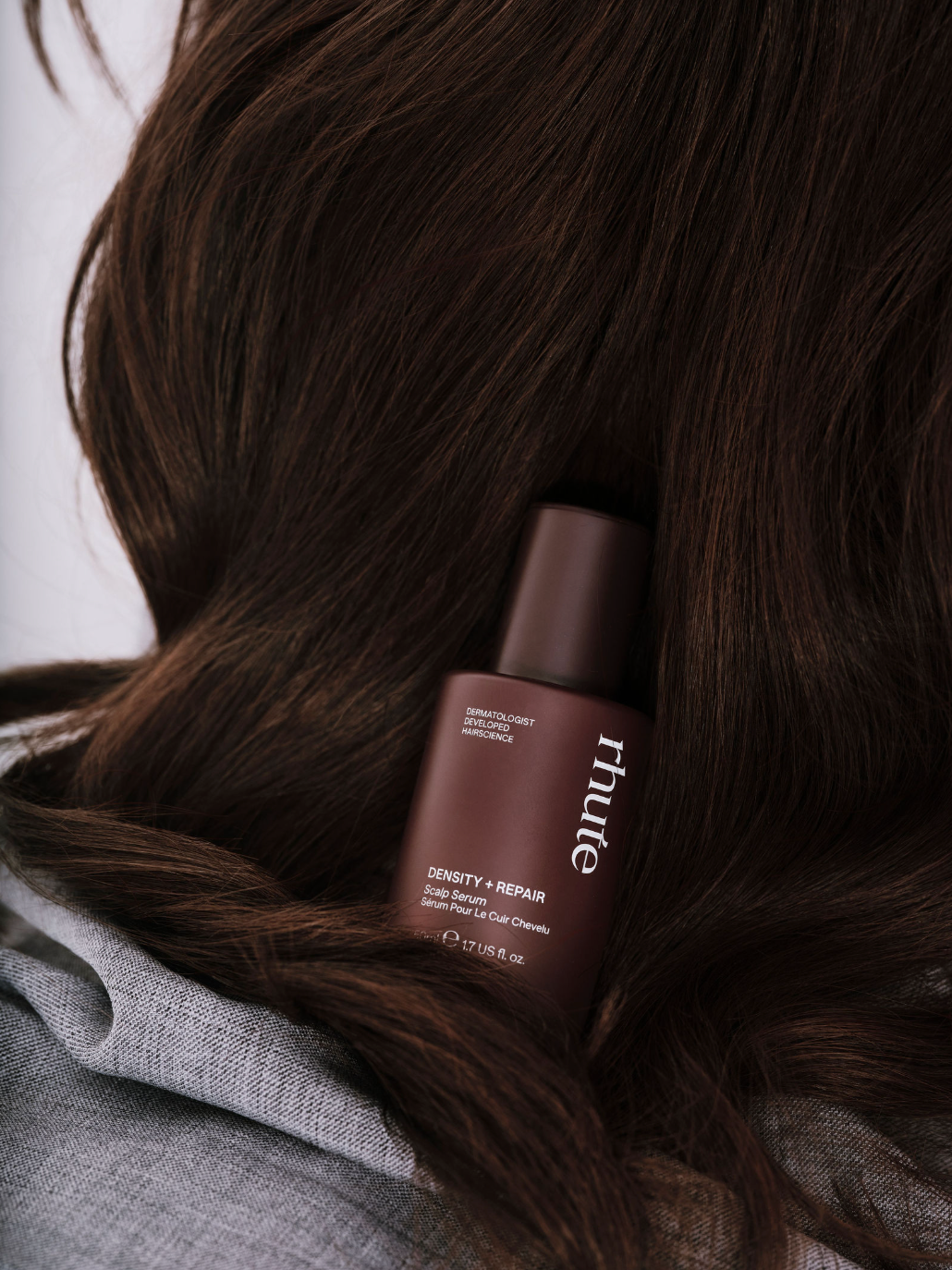
Pair it with the right products: Microneedling works best alongside a targeted serum for maximum impact. rhute's Density + Repair Scalp Serum is formulated with exactly this in mind, combining peptides, niacinamide, and caffeine to support both scalp barrier health and follicle stimulation. Apply it after your microneedling session while those microchannels are still open.
Consistency over intensity: Regular sessions matter more than aggressive ones. Using your dermastamp 1-2 times per week during the initial phase builds momentum, and then you can maintain once you see results.
Track your progress: Same lighting, same angle, monthly photos. Changes happen gradually, and having a visual record keeps you motivated.
The rhute Approach
The rhute dermastamp is designed specifically for scalp use, because your scalp isn't your face, and it shouldn't be treated with the same tools.
Our 0.3mm 24ct gold-plated surgical-grade steel needles hit the sweet spot: deep enough to reach the dermis and stimulate follicles, shallow enough to minimise trauma and scarring risk. The bespoke round stamping head follows the natural contour of your scalp (and works brilliantly for getting between braids and tight patterns), while the ergonomic silicone handle gives you control and even pressure distribution. The protective lid doubles as a disinfecting vessel. Pour in your cleansing alcohol, insert the stamp, and spin for a thorough clean.
Replace your dermastamp head every 10-12 uses or when it becomes blunt, whichever comes first.
When paired with our Density + Repair serum (hello, stem cell extracts, bioactive peptides, caffeine, and niacinamide), you're creating the optimal environment for those active ingredients to reach where they're needed most.
Less shedding, more growth, healthier scalp. That's the rhute to better hair. 💧

Frequently Asked Questions
Does microneedling on the scalp hurt?
Most people describe it as mildly uncomfortable rather than painful. At-home devices with shorter needles (around 0.3mm) are generally well-tolerated. If you're nervous, paracetamol beforehand can help.
How much does professional scalp microneedling cost?
Professional treatments typically run £100-£300 per session in the UK, with multiple sessions required. At-home devices offer comparable results at a fraction of the cost, with the added convenience of treating on your own schedule. Professional treatments typically run £100-£300 per session in the UK, with multiple sessions required. At-home devices can deliver impressive results at a fraction of the cost, but the key is using the right tool at the right depth with the right technique. A shallow 0.25-0.3mm derma stamp (rather than a roller) paired with a consistent routine is what makes the difference between real results and wasted effort.
Can microneedling regrow hair on completely bald areas?
Microneedling works best where follicles are still present but underperforming. In areas of complete, long-standing baldness where follicles have been destroyed, regrowth is unlikely. The treatment excels at revitalising weakened follicles, not creating new ones.
Is microneedling safe for colour-treated hair?
Absolutely. Microneedling affects the scalp, not the hair shaft, so it's compatible with colour, relaxers, and other chemical treatments. Just make sure any recent chemical work has fully healed before your session.
Can I combine microneedling with other hair loss treatments?
This is often where the best results happen. Microneedling significantly enhances absorption of topical treatments like serums containing peptides, caffeine, and niacinamide. The micro-channels allow active ingredients to penetrate deeper and work harder. The rhute hair serum with the dermastamp is a powerful combo.
How long do I need to keep microneedling to maintain results?
Initial treatment typically spans 3-6 months of regular sessions (1-2 times per week). Once you've achieved your goals, continuing once a week or every other week helps sustain them. The underlying factors that caused thinning in the first place, whether genetic, hormonal, or environmental, don't disappear, so ongoing use keeps your scalp in optimal condition.