



Hair thinning doesn’t always announce its arrival with a dramatic bald patch. More often, it can be subtle, creep in slowly - until one day you realise your ponytail feels lighter or your hair part looks wider.
The good news is that if you spot the signs early, you can take action before they become noticeable to everyone else. Here’s how to tune in to the whispers your hair is sending; read on to discover what hair thinning looks like, plus what science says you should do next.
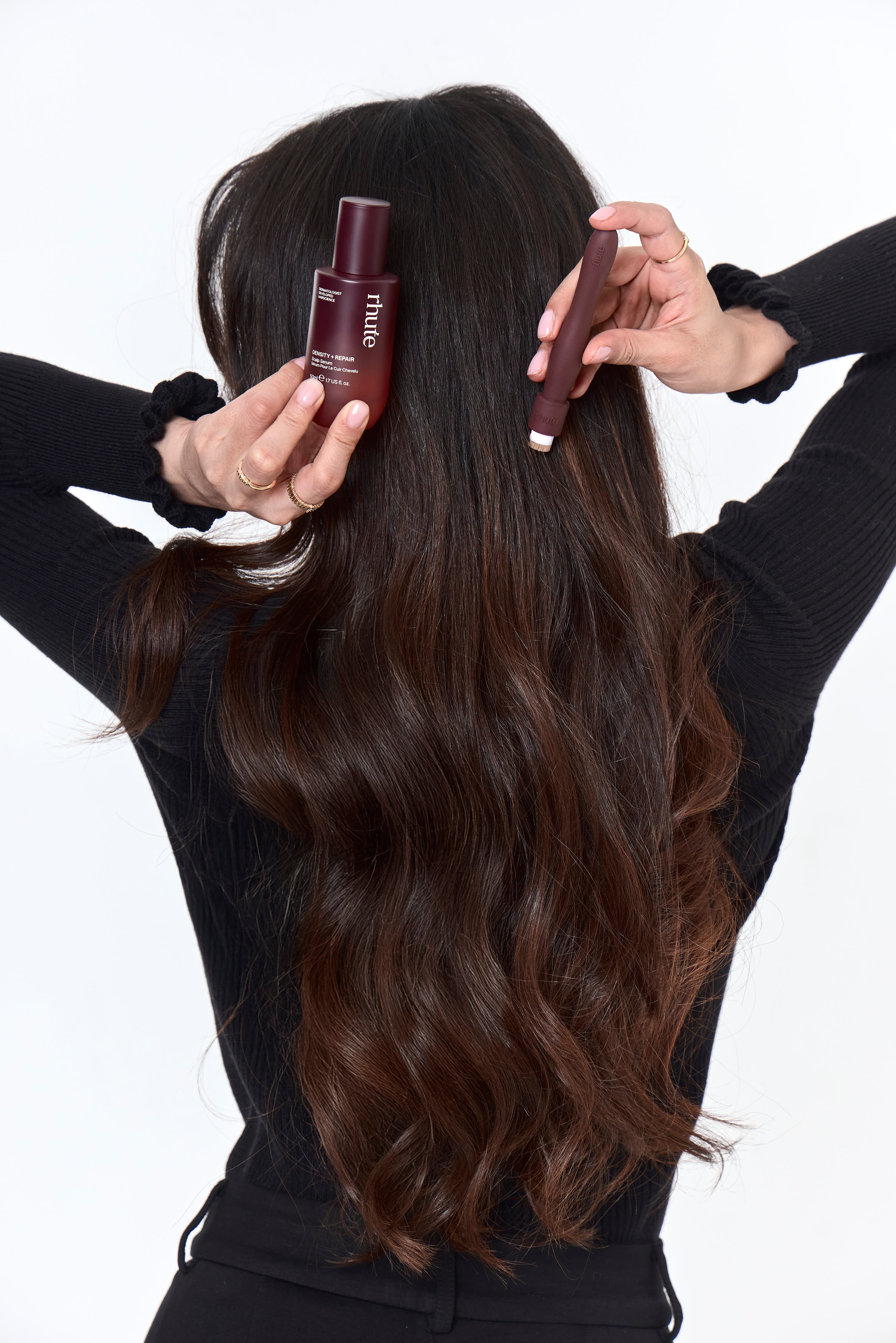
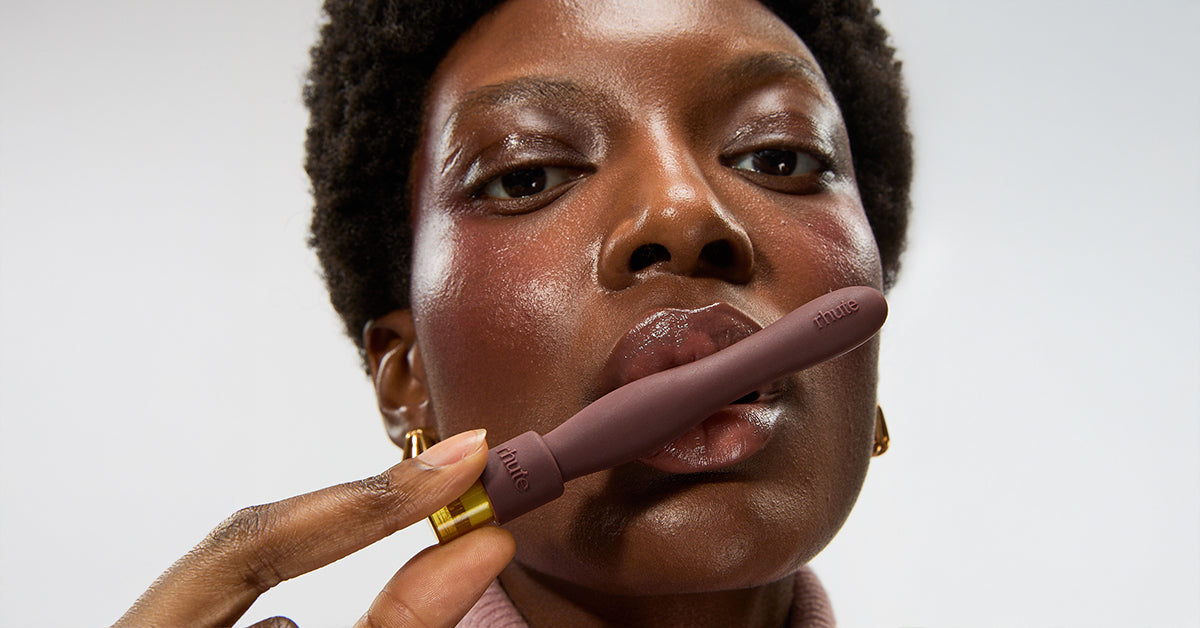
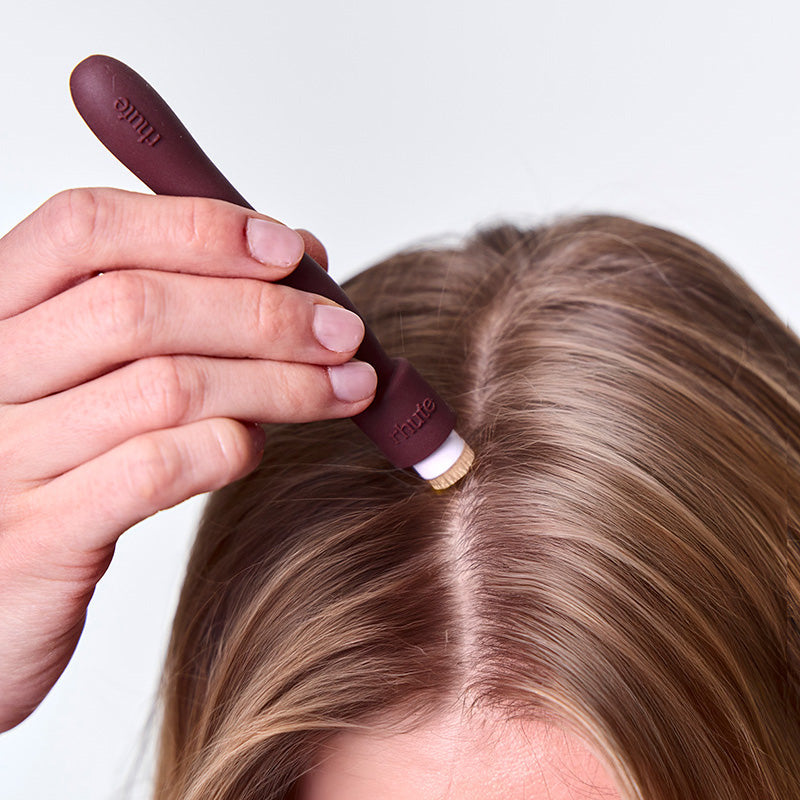
And if you’re interested in a product that can help stimulate growth in your scalp, check out rhute’s very own hair serum.
What Does Hair Thinning Look Like?
Your Ponytail Feels Thinner
Have you ever noticed your ponytail suddenly doesn’t look as full as it used to? If you need an extra wrap of the hair tie to secure it, that can be a sign of declining hair density. A small amount of thinning is expected with age; most people naturally lose some fullness in their 30s and beyond. But when the change feels sudden, progressive or out of proportion to your age, dermatologists suspect follicular miniaturisation: a process where hair follicles shrink and produce finer, weaker strands.
Dr Aamna’s Pro Tip: Keep a “pony log.” Snap a photo of your ponytail once a month from the same angle. It helps you spot whether your hair changes are gradual and age-related - or accelerating faster than expected, a sign worth checking with your doctor.
A Widening Part or More Visible Scalp
For females with a widening part, it can be the earliest indicator of thinning. Males usually see it at the temples or crown. Harvard dermatologists note that this pattern reflects the typical progression of androgenetic (hormone-driven) hair loss.
Dr Aamna’s Pro Tip: Look at your part in natural light before styling. If more scalp is showing than six months ago, it may not just be your imagination. Using a fine-tooth comb to mark your parting spot weekly and checking if it shifts is surprisingly accurate in indicating whether you are losing density.

Shedding That Feels “Above Normal”
We all shed about 50–100 hairs a day, but if you’re noticing clumps in the shower drain, on the pillow, or in your brush? Well, sometimes this is temporary like telogen effluvium, which is shedding triggered by stress, illness, or hormones. However, persistent loss may point to a more chronic condition, such as:
-
Androgenetic alopecia (male or female pattern hair loss): the most common cause of ongoing thinning, driven by genetics and hormones.
-
Chronic telogen effluvium: long-term shedding (often 6+ months) without bald patches.
-
Autoimmune conditions (e.g., alopecia areata): the body’s immune system mistakenly targets hair follicles. This usually leads to small, patchy bald spots, though in some cases, hair loss can be more widespread.
-
Scalp disorders (psoriasis, seborrheic dermatitis, scarring alopecias): inflammation that can damage follicles over time.
Dr Aamna’s Pro Tip: Do a “card test.” Place a white index card under damp hair and gently comb. The hairs that fall against the card are easier to count. If you’re seeing consistently more hair than usual, make a note. Similarly, keep a hair count diary. Empty your brush or shower drain into a tissue, take a photo once a week, and compare. This helps you and your dermatologist see if the shedding is trending beyond “normal.” If shedding spikes and persists beyond a few weeks, jot down any recent stressors (illness, childbirth, surgery). It may help pinpoint telogen effluvium, which typically resolves with time and proper care.
Finer, Flatter, or Wispy Strands
So much of thinning comes down to the feel. Hair that feels different, such as having less spring or being more fragile, can signal miniaturisation in action. Over time, thick terminal hairs can shrink into softer peach-fuzz-like hairs.
Dr Aamna’s Pro Tip: Run your fingers through your hair now vs. an old photo memory (say, six months ago). If your hair feels thinner, even if shedding hasn’t spiked, that’s still an early clue.
A Receding Hairline
Men often spot changes at the temples or crown first, forming that familiar “M” or “U” shape. Dermatologists use the Norwood scale to measure this, but you don’t need a chart; just take side-profile photos every few months.
Dr. Aamna’s Pro Tip: Snap pictures from the same distance and lighting. What feels “sudden” usually builds over time, and photos keep you honest.
What is The Science Behind the Signs?
-
Follicular miniaturisation is the culprit: This is where hair follicles gradually shrink in size, making each new hair strand grow thinner and weaker than before. In androgenetic alopecia, the hormone that drives follicle shrinkage is called dihydrotestosterone (DHT) - and shortens the anagen (growth) phase. As this phase gets shorter, more follicles shift into the telogen (resting/shedding) phase. Over time, the follicle may stop producing a visible hair shaft altogether.
-
Men vs. Women: Men typically thin at the temples and crown, while women widen along the part. Post-menopause thinning often accelerates in women as oestrogen’s protective effect declines.
-
Modern stressors don’t help: Poor sleep, crash dieting, or environmental stressors can all trigger follicles to enter shedding mode.
-
Not all hair thinning is genetic: Thyroid dysfunction, iron deficiency, hormone-related conditions such as Polycystic Ovary Syndrome and vitamin D deficiency can also affect the hair cycle and lead to thinning. A simple blood test can help rule these out.

How to Stop Hair Loss & Thinning: Taking Action Early
1. Track it:
Use photos, card tests, or a “pony log.” Data makes conversations with a dermatologist much clearer.
2. Check your health:
- Iron: Low iron can contribute to hair shedding.
- Thyroid hormones: Both underactive and overactive thyroid can disrupt the hair cycle.
- Vitamin D: Deficiency is linked with weaker hair growth.
- Sex hormones: Imbalances (e.g., in PCOS) can affect hair density.
Medical Treatments - Start Early!
Minoxidil (5%): A topical foam or solution applied directly to the scalp. It improves blood flow to hair follicles and helps prolong the anogen (growth) phase, making new hairs thicker and stronger. It’s safe for both men and women. However, consistency is key! It must be applied daily, and visible benefit typically takes 3–6 months of continuous use. It is the most widely studied first-line therapy for pattern hair loss and is safe for both males and females.
Finasteride: An oral prescription medication for males. Originally developed for prostate enlargement, it was later found to block the hormone DHT. By reducing DHT, it can slow or partially reverse thinning in males. Females with hormone related hair loss may benefit instead from anti-androgen therapy under medical supervision.
4. Adjunct Options
Low-level laser therapy (LLLT) uses gentle light energy to stimulate cellular activity in hair follicles, helping them stay in the growth phase longer. Available in clinics, salons, or at-home devices - though cost varies and sessions may be required multiple times per week.
A large analysis of multiple clinical studies shows modest but reliable improvement in male and female pattern hair loss, and it is most effective alongside medical therapy, not as a replacement.
5. Microneedling
Creates tiny micro-injuries in the scalp, increasing blood flow and improving the absorption of topical treatments like minoxidil. Studies suggest both are most effective when combined with standard treatments, rather than used alone.
A 2013 study found that combining microneedling with minoxidil led to significantly greater hair regrowth compared to minoxidil alone in male pattern hair loss.
6. Nutrition
Ensure you eat sufficient protein (meat, eggs), iron-rich foods (spinach, red meat, cereals), and omega-3 fatty acids (fatty fish, flaxseed).
Dietary habits can vary widely; vegetarians or those with restrictive diets may require supplements if blood tests show deficiencies.
7. Styling
Avoid tight hairstyles, excessive heat (straighteners, curling irons), and harsh chemical treatments.
These practices can mechanically stress hair and worsen thinning over time.
8. Lifestyle
Poor sleep, high stress, and crash dieting can push hair into the shedding phase, causing noticeable hair loss.
Small, sustainable changes like stress management, a balanced diet, and adequate rest can support hair health.
9. Professional evaluation
Trichoscopy (a dermatologist’s magnified scalp exam) can reveal miniaturisation invisible to the naked eye. Documenting changes early gives you the widest range of treatment options.
Always check with a dermatologist before starting these treatments, as what works best can depend on your age, health, and type of hair loss.
Final Thoughts
Hair thinning rarely happens overnight; it usually happens gradually. By tuning in early, tracking changes objectively, and addressing both health and haircare factors, you give yourself the best chance to preserve your hair and improve its thickness. The sooner you act, the more options you have to protect and optimise your hair.
For more information on the latest in hair health and the science behind recent trends, check out our blog.


Share:
Understanding Hormonal Hair Loss (Part Two)
Why Minoxidil Isn’t for Everyone: Understanding Its Risks and Side Effects