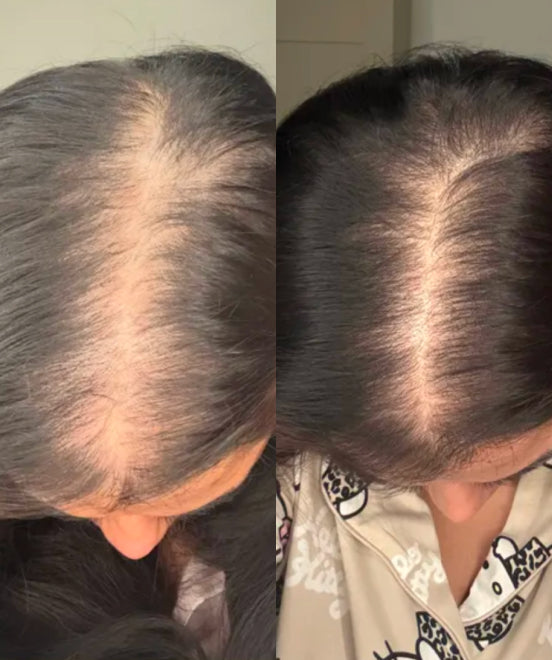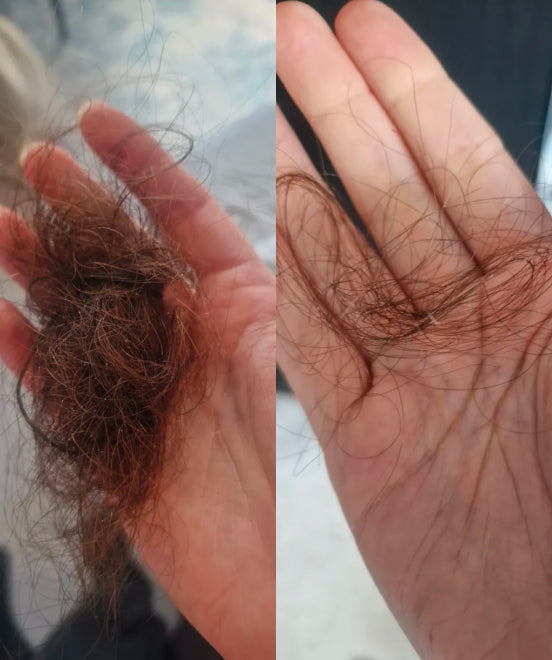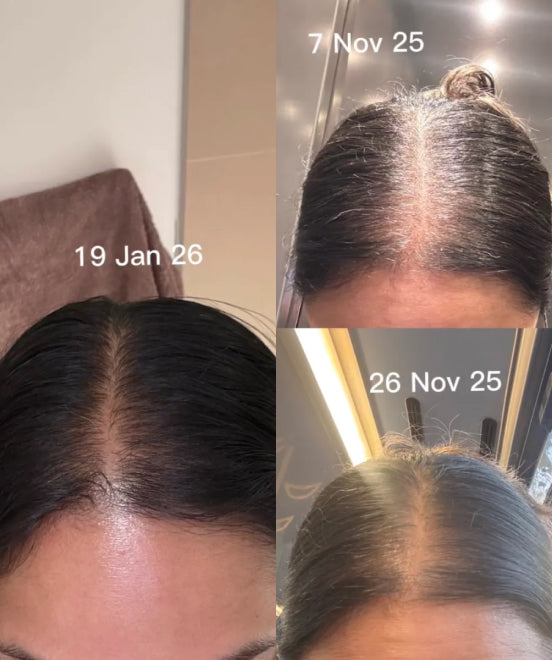



If your hairline has crept back a little, your edges feel thinner than they used to, or your scalp gets sore after a tight ponytail, you might be dealing with traction alopecia. It’s one of the most common forms of hair loss in women, and unlike a lot of hair concerns, it has a clear cause and, in the early stages, a clear way back.
Caught early, your follicles are still alive and your hair can grow back. Caught later, the picture is more mixed, but you can still stop it from spreading. This guide walks through what to look for, why it happens, how to support your scalp through recovery, and when to bring in a professional.
What traction alopecia actually is
Traction alopecia is hair loss caused by repeated pulling on your hair (Syed & Kaliyadan, 2025). The tension is mechanical, which means it comes from the styling, accessories or coverings that tug on your follicles every day. Over time, that tension stresses the follicle, weakens the hair shaft and slows growth in the affected area.
The "clean girl bun" is the perfect example. It looks effortless and polished. But the scraped-back, gelled-down tightness that holds it is exactly the kind of repeated pull your follicles don't love over the long run. That's especially true around your hairline and edges, where the tension lands hardest. You don't have to swear off it completely. It just helps to know that wearing it day in, day out is where the risk quietly builds. Over time, that constant tension stresses the follicle, weakens the hair shaft and slows growth in the affected area.
What makes it different from a lot of other hair loss is that it follows a biphasic pattern. In the early phase, the follicles are still alive, just stressed, and hair can return once the tension stops. In the late phase, repeated traction has caused scarring, the follicles are lost, and the hair will not grow back without a transplant (Billero & Miteva, 2018). That makes early detection useful, because the same condition has very different outcomes depending on when you act.
What causes traction alopecia?
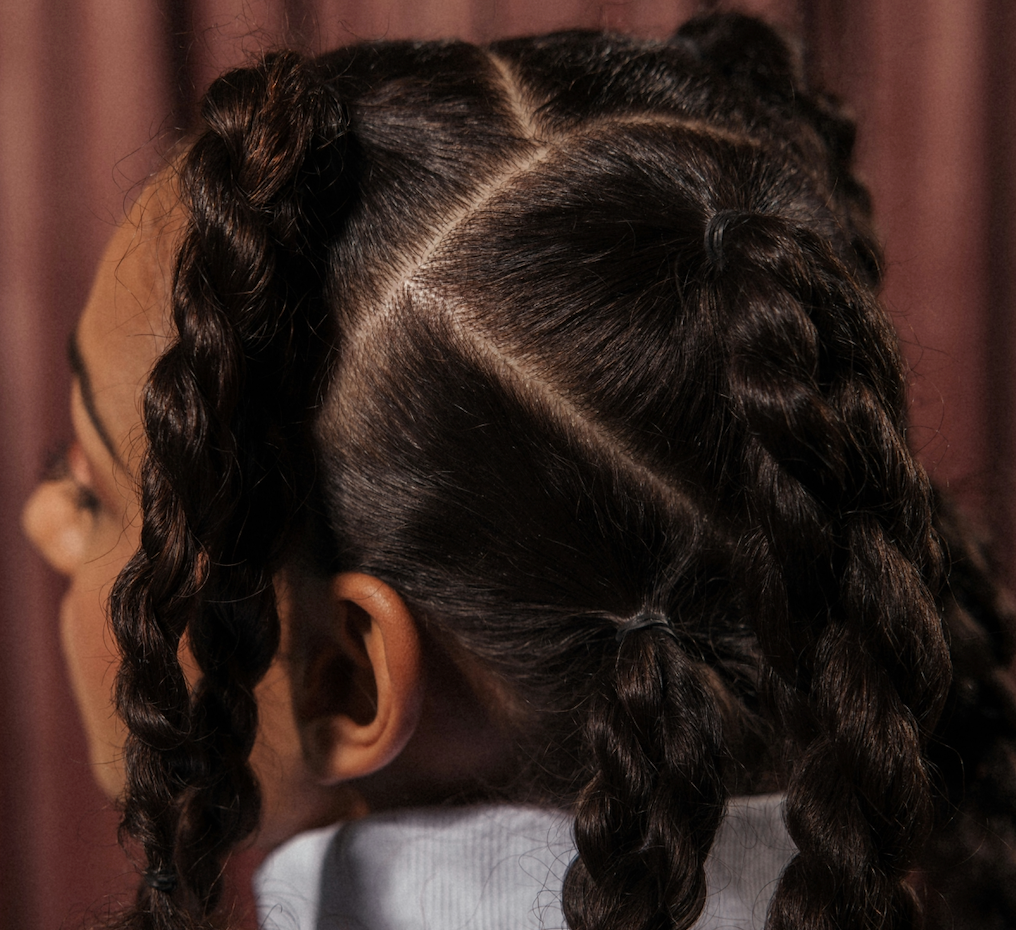
Traction alopecia happens when the same hairs get pulled in the same direction, day after day. The styles most often linked to it are tight ponytails, sleek buns, braids, cornrows, locs, weaves and hair extensions, particularly when they are heavy or worn for long stretches without a break (American Academy of Dermatology). Tight hijabs, turbans, helmets and the buns required for ballet, gymnastics or some workplaces can do the same thing if they pull at the hairline or compress your scalp every day (Syed & Kaliyadan, 2025).
These styles exist for good reasons. Protective styling can be a genuinely helpful way to keep curly and coily hair healthy, look polished for work, manage hair under religious dress or get through a workout without stopping to fix things. The point is not to give them up. The point is to understand the mechanism: the hair shaft is anchored in the follicle, and if you pull on it for long enough, the follicle gets inflamed, hairs break, and the follicle itself starts to miniaturise (Billero & Miteva, 2018). Chemical relaxers, heavy heat styling and excessively long, weighty hair add to the load by weakening the hair shaft so it breaks more easily under the same tension (British Skin Foundation).
Who’s most likely to get traction alopecia?
Traction alopecia can affect anyone who styles with tension, but some groups are more affected because of the styles that are common in their lives. Black women are most often diagnosed, partly because tightly coiled hair textures are more vulnerable to breakage and partly because the styling traditions that look after coily hair, like braids, cornrows and locs, also put more sustained pull on the follicle (Billero & Miteva, 2018). Sikh men are another group seen frequently in the research, because long, uncut hair tied tightly under a turban over decades can build up tension at the hairline (Syed & Kaliyadan, 2025). Ballet dancers, gymnasts, military personnel, nurses and anyone whose work or hobby requires a tight, secured hairstyle are also at higher risk, and long, heavy hair is a quieter risk factor in its own right. None of this is about blame, it’s about pattern recognition. For broader context on the many drivers of hair thinning in women, see our causes of hair loss guide.
The early warning signs of traction alopecia
The fringe sign. If you have a patch of thinning at the temple or hairline, look at the very edge of that patch. A rim of finer, shorter hairs that have stayed behind, while the longer hairs in front have gone, is called the fringe sign. It is one of the most reliable early signs of traction alopecia and helps doctors tell it apart from other hairline issues like frontal fibrosing alopecia (Samrao et al., 2011).
Hair casts. If you spot small, tubular white flakes wrapped around individual hair shafts, those are hair casts. They look a little like dandruff at first glance, but they slide along the hair rather than flake off the scalp, and they are a sign that traction is still active (Syed & Kaliyadan, 2025).
Small bumps around your follicles. Spot-like bumps clustered around the affected follicles are a sign of folliculitis, which is inflammation at the follicle. It often shows up alongside redness or tenderness when traction has been going on for a while.
Scalp soreness after styling. If your scalp feels tight, tingly or tender after braids, a bun or a ponytail, that is your scalp telling you the tension is too much. A useful rule of thumb: if it hurts, it’s too tight. Pain is not part of a good install.
Broken hairs at uneven lengths. Short, broken hairs of mixed lengths inside or just beside a thinning patch suggest the hair is snapping under tension rather than falling out from the root.
Dermatologists confirm what they see with a tool called a dermatoscope and grade severity using the Marginal Traction Alopecia Severity Score, or M-TAS (Khumalo et al., 2007). Worth knowing if you end up at a clinic, because that’s how a specialist decides how serious it is and whether treatment is working.
Common patterns of traction alopecia
Traction alopecia most often turns up at the temples and along the front and sides of the hairline. This is where the pull is highest from ponytails, sleek buns, edge styling and braids that start at the temples. That said, hair loss can also show up at the back of your head (the occipital area), especially in styles that pull hair into a low bun, in turban-related cases, or where heavy extensions weigh down a particular section. If you are seeing thinning in less obvious places and the rest of the picture fits, it is worth keeping traction on the list.
Inflammation, redness, and your scalp environment
Alongside the patchy thinning, your scalp itself often gives away that traction is still active. The British Association of Dermatologists and DermNet describe early signs that include redness, itching, scaling, soreness and folliculitis, the spot-like bumpiness around follicles mentioned above (British Association of Dermatologists, 2019; Kapadia, 2014). In later, scarred cases your scalp may look smooth, shiny, and slightly waxy where follicles have been lost. That difference matters for routine-building: a red, sore, slightly bumpy scalp is your barrier asking for support, while smooth shiny skin with no follicular openings is a sign things have moved into the scarring phase and need a specialist.
How to tell if you have early or late-stage traction alopecia
Traction alopecia is split into two stages, and the difference is significant. In the early, non-scarring stage, your follicles are still alive. Some are inflamed, some have miniaturised (shrunk and started producing finer hairs), but they have not been permanently destroyed. Stop the tension, support your scalp, and hair can return (Billero & Miteva, 2018).
In the late, scarring stage, repeated traction has caused enough damage to leave fibrotic scar tissue where follicles used to be. Visually, you might see smooth, shiny skin in the affected area or follicular openings that have closed up. At this point, removing the tension will not bring those follicles back, although it will protect the hair that remains.
You cannot give yourself a definitive answer at home. What you can do is use the visual clues. Soreness, fringe sign, hair casts, bumpiness and broken hairs suggest the early stage. Smooth, shiny skin where the hair used to be, with no visible follicular openings, points towards the later stage. Either way, this is a good moment to see a GP or dermatologist to confirm where you sit.
Can traction alopecia be reversed?
Yes, in the early stages, often completely. Once the tension stops, your hair cycle can restart. The British Skin Foundation notes that regrowth typically begins around three months after high-tension styling is discontinued, with the best results usually visible between six and 12 months in. In the late, scarring stage, traction alopecia will not reverse on its own, although stopping the cause will prevent the area from spreading. Most people sit somewhere between the two, with a mix of follicles that can recover and some that cannot, which is why early action and a good recovery routine are both worth doing.
Changing your styling: practical, non-judgemental advice
Saying "stop wearing tight styles" is the kind of advice that sounds simple and lands badly. Realistic styling changes look different in real life.
Loosen up at the edges. Even a small amount of slack around your hairline and temples reduces tension on the most vulnerable follicles. If you have braids or cornrows installed, ask your stylist to ease off at the front. If you are doing your own ponytail, position it lower and looser, and avoid pulling so tightly that your eyebrows lift.
Vary the tension points. If you wear protective styles, switch them up so the same hairs are not pulled in the same direction for months at a time. A braided look one month, two-strand twists the next, then a stretch of loose styling, gives your scalp a chance to recover between installs. The American Academy of Dermatology (AAD) suggests keeping braids, weaves or extensions in for no longer than around six to eight weeks, with heavier styles needing shorter wears.
Sleep softer. Silk or satin pillowcases and bonnets reduce friction overnight, which is where a lot of breakage happens for people who already have stressed follicles. And find a stylist who gets it. A good braider will adjust tension if you ask, and speaking up before the install is finished is much easier than living with the headache afterwards. The AAD’s rule still applies: if it hurts, it’s too tight.
What GPs and dermatologists actually offer
If you see a GP or dermatologist, the conversation usually starts with confirming the diagnosis and grading the severity. From there, topical minoxidil (typically 2% or 5% in solution or foam) is often offered as the first medical line. It won’t fix scarred follicles, and it works best alongside removing the tension, but it can help shift more follicles into the growing phase. Intralesional steroid injections are sometimes used in the early, inflamed phase to calm the immune response around the follicles, and topical or oral antibiotics may be added if folliculitis is significant (Syed & Kaliyadan, 2025). For late, scarred traction alopecia, hair transplantation is the most established cosmetic option and is generally a private rather than NHS-funded procedure in the UK.
Supporting your scalp while it recovers
This is where scalpcare earns its keep. While medical treatment is doing the lifting on follicle stimulation, your scalp environment is doing the quieter work of holding everything together. Follicles that are still alive but stressed do better when your skin barrier is intact, the area is calm, and ingredients with research behind them are showing up consistently.
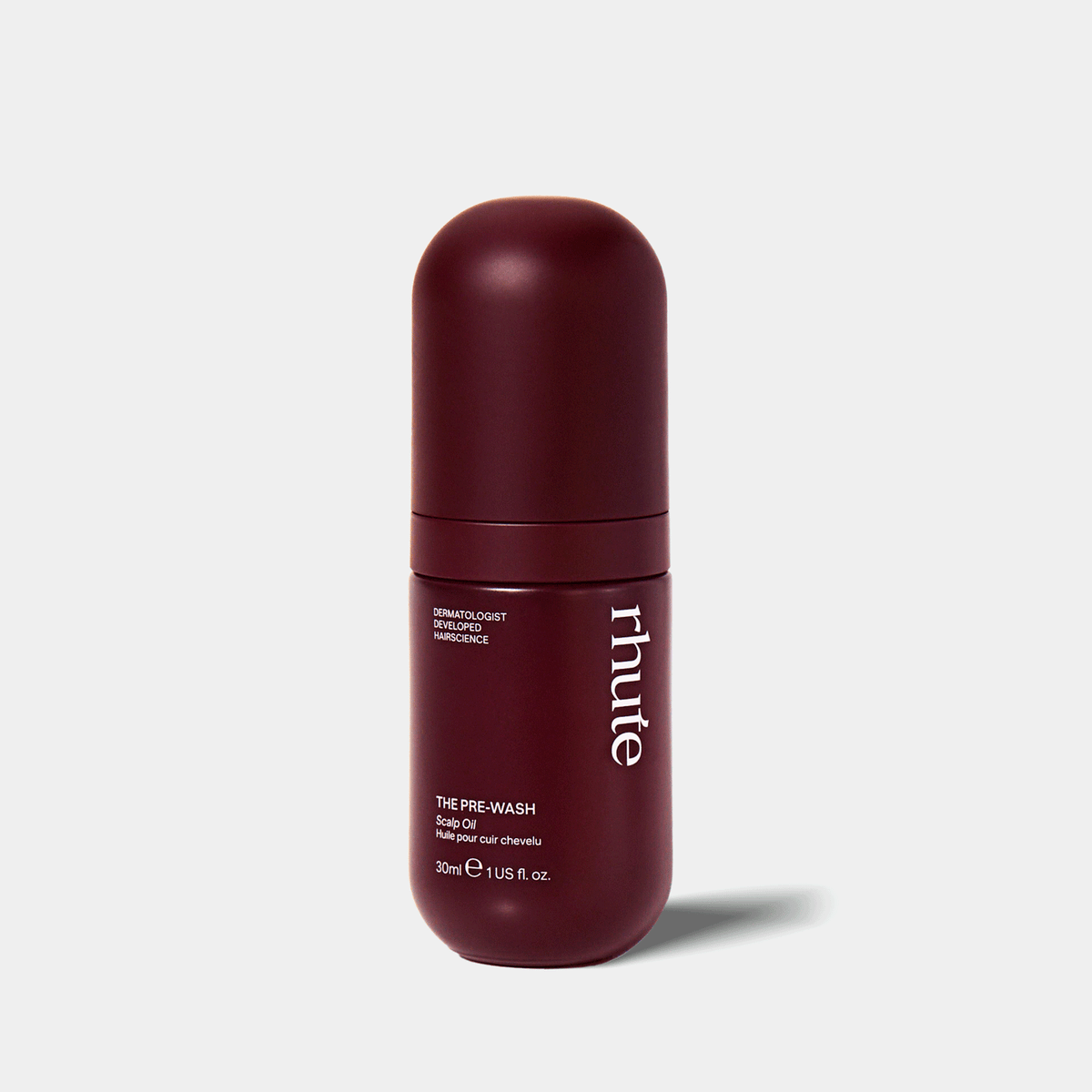
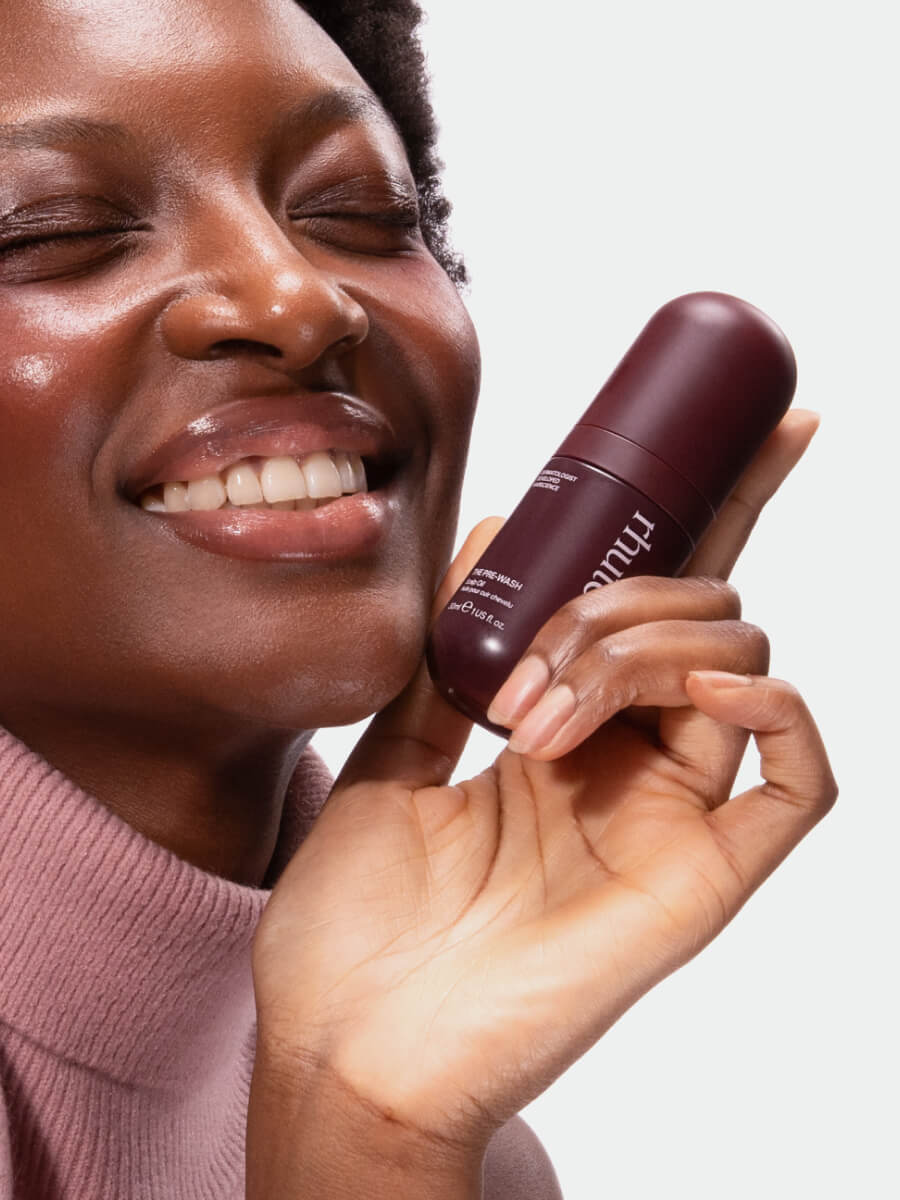
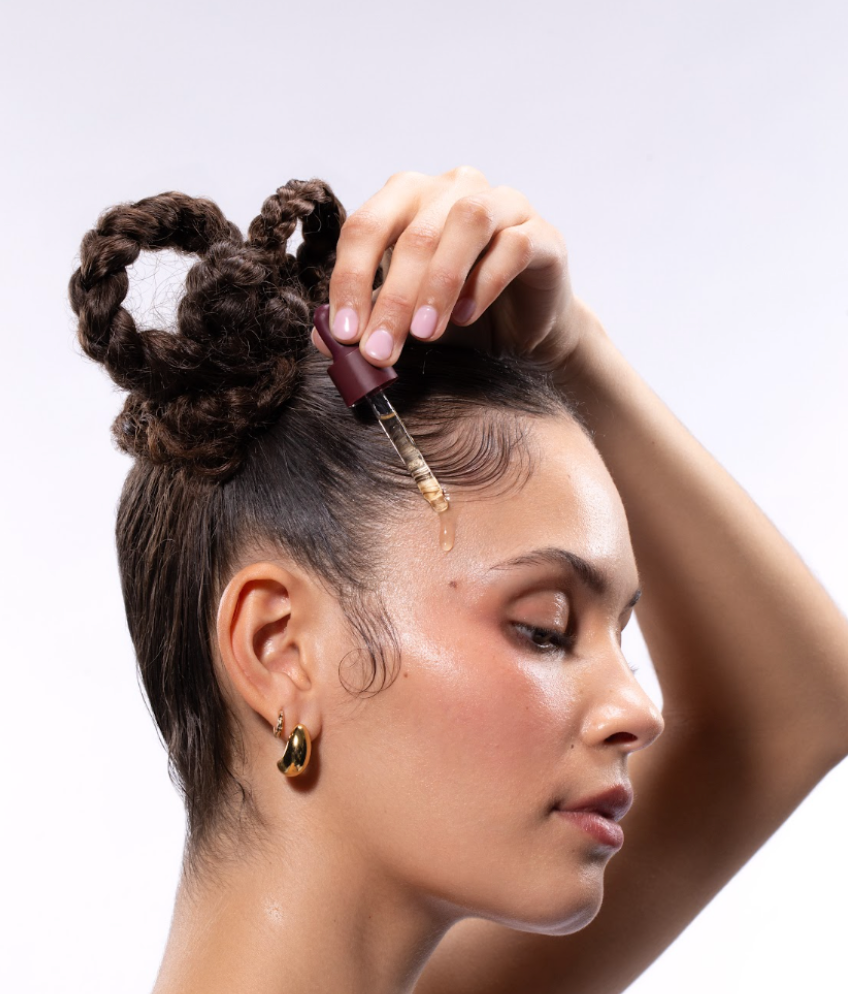
Our Pre-Wash Density Complex Scalp & Hair Oil is built for this support role. It goes on dry scalp before you wash, sits for one hour (or up to six hours if you have time), and rinses out with shampoo. Pumpkin seed oil, saw palmetto and beta-sitosterol are botanicals studied for their effect on the hormonal drivers of hair thinning, ceramides and bisabolol help calm and support a barrier-disrupted scalp, and black seed oil, jojoba and Amazonian oils condition the hair shaft while it recovers. You can read more in our guide to the best ingredients for hair growth.
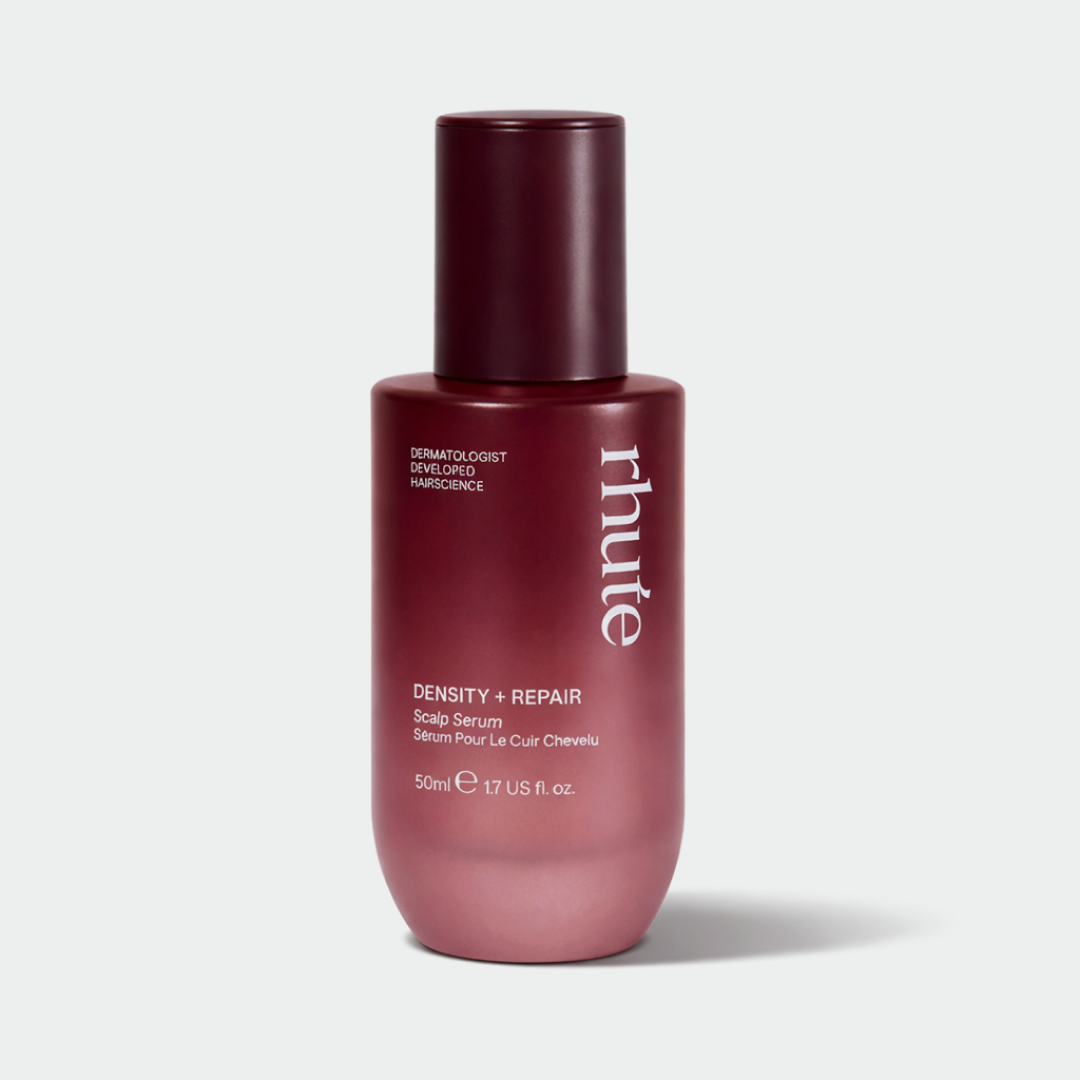
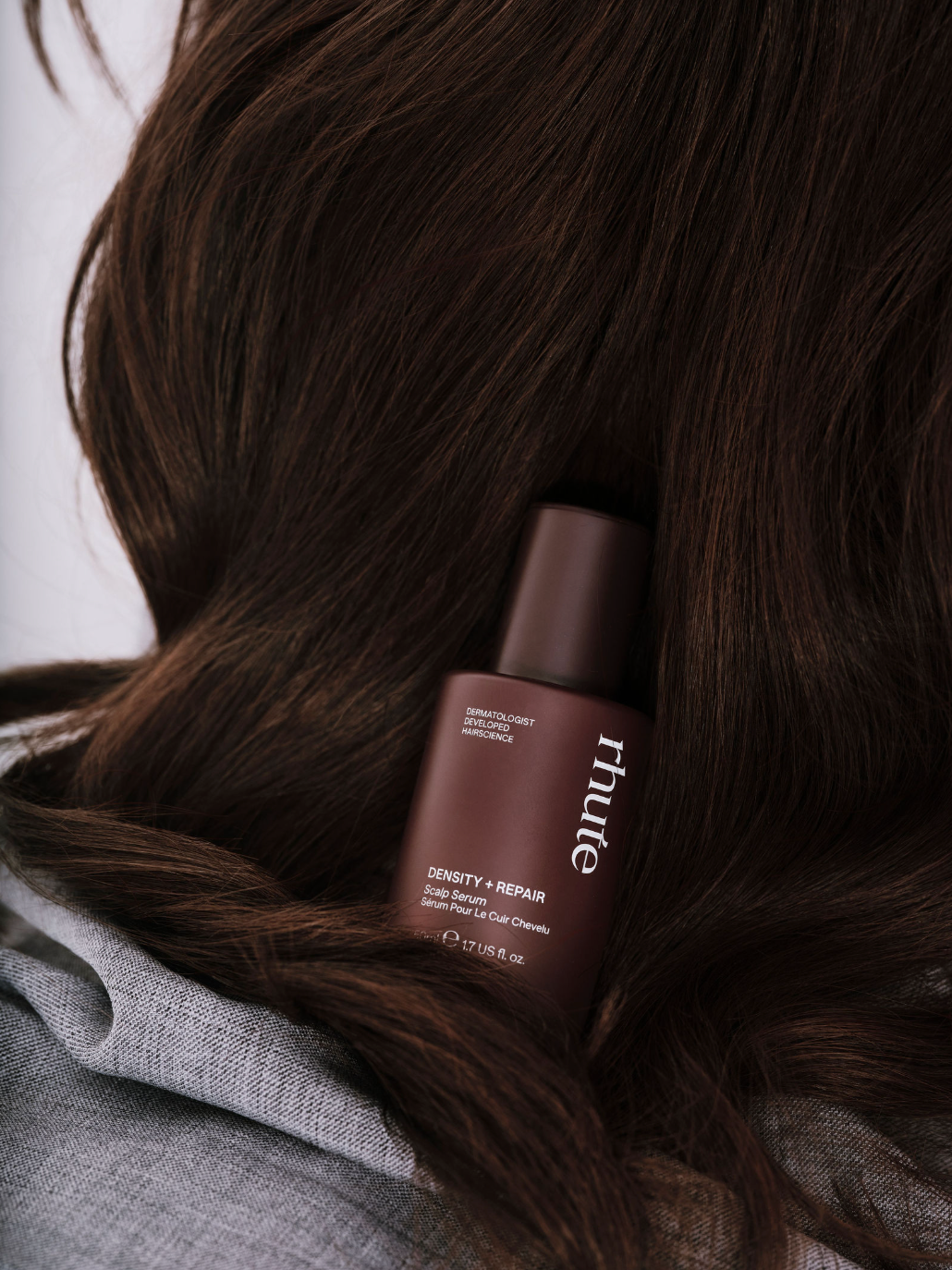
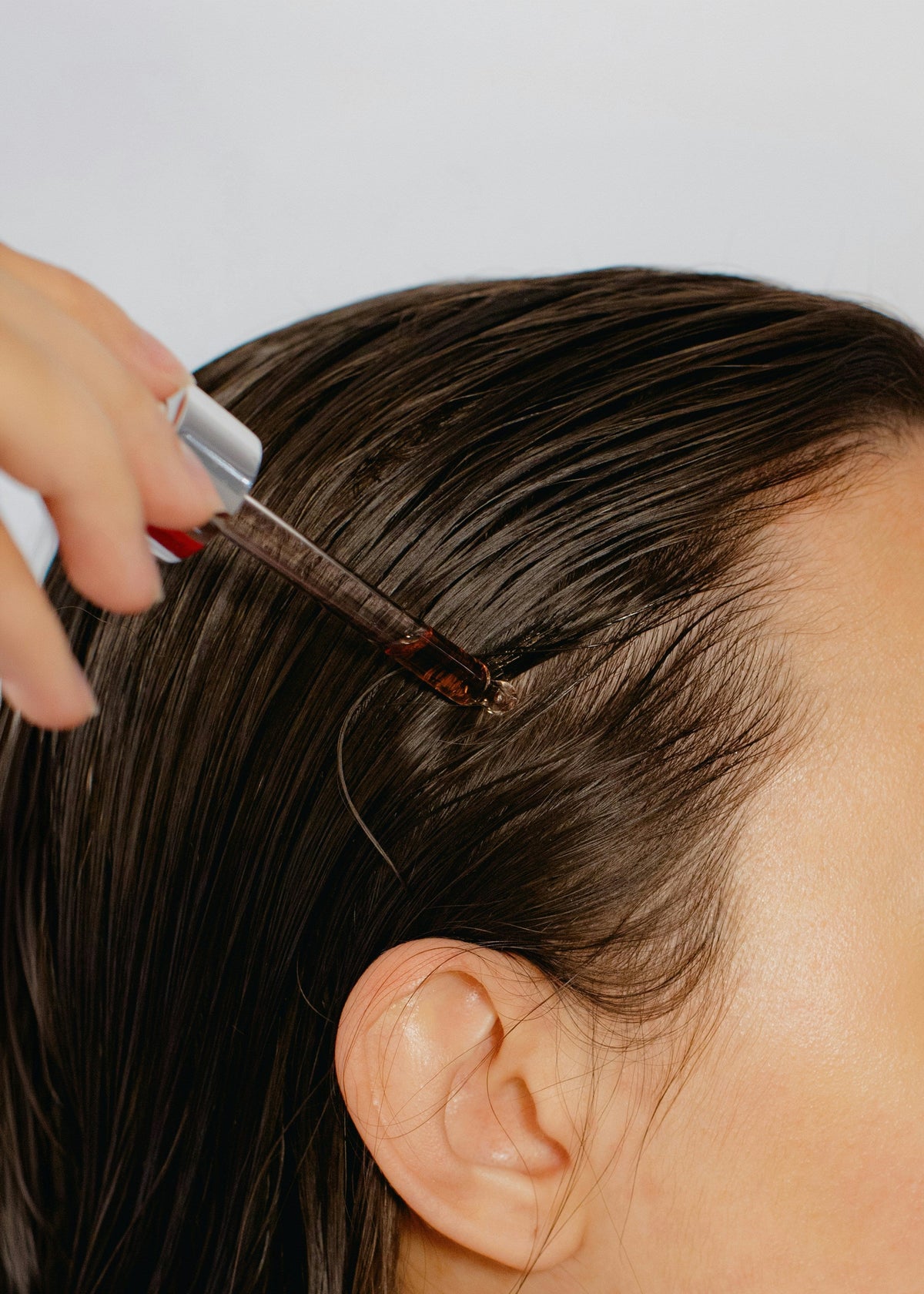
After washing, the Density + Repair Scalp Serum goes onto a clean, dry scalp. It’s our hero product and the one most likely to fit into a traction alopecia recovery routine. Caffeine and peptides support follicle activity, niacinamide and panthenol look after the barrier, and the formula is minoxidil-free, lightweight and oil-free. The brand promise of less shedding, more growth works the same way here: a calmer, better-supplied environment for the follicles that are still alive to grow back in.
One of the most supportive things you can do for your scalp also happens to cost nothing. A few minutes of gentle massage with your fingertips encourages blood flow to the area, and research has shown that regular, consistent scalp massage can increase hair thickness over time, likely by gently stretching the cells at the base of each follicle and nudging them into a healthier growth pattern (Koyama et al., 2016). It's also the perfect moment to tie in your other steps: work the pre-wash oil in with slow circles before you shower, then press the serum in the same way once your scalp is clean and dry, so you're caring for the follicles and getting the most from your products at the same time. Keep the pressure light, especially around tender or recovering spots.
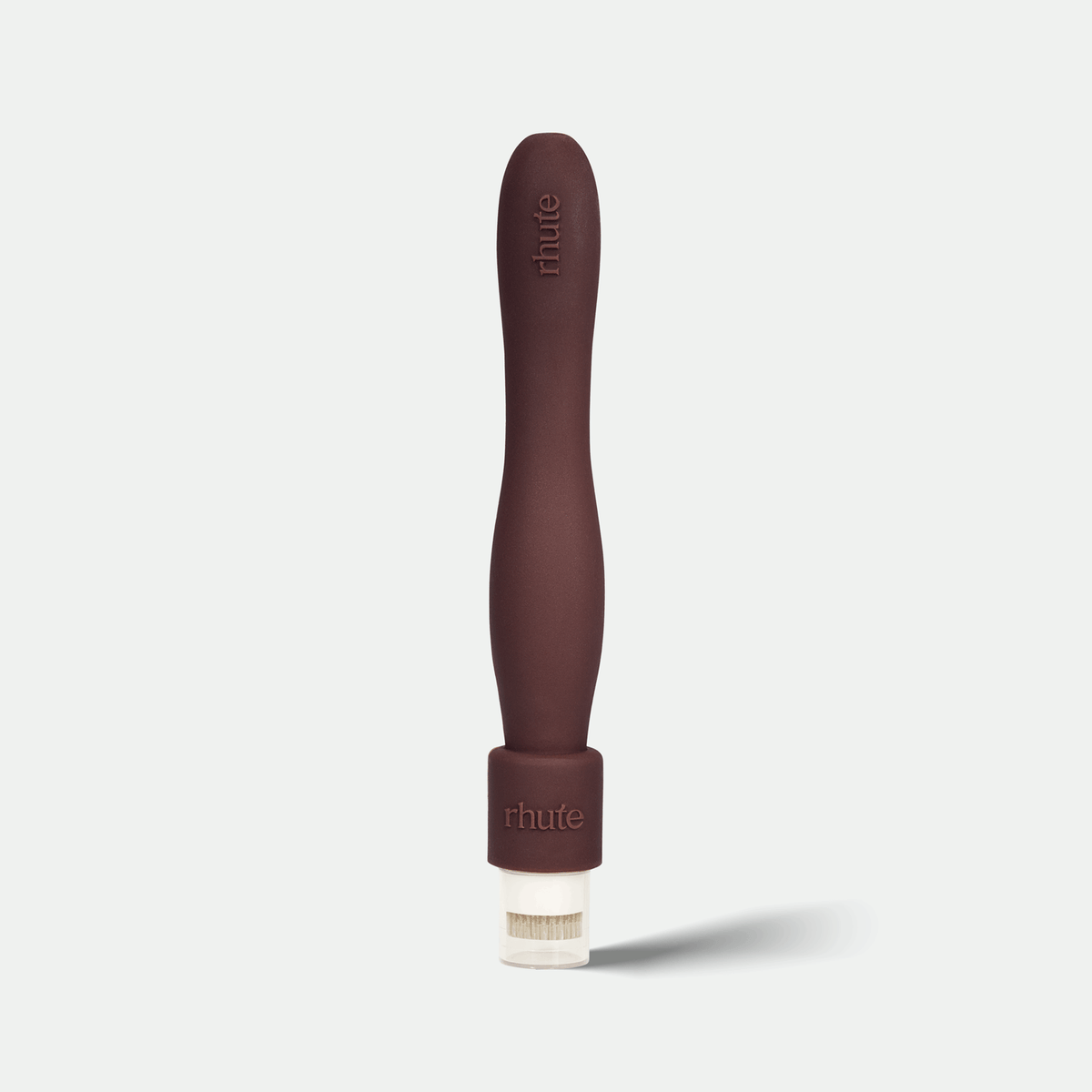
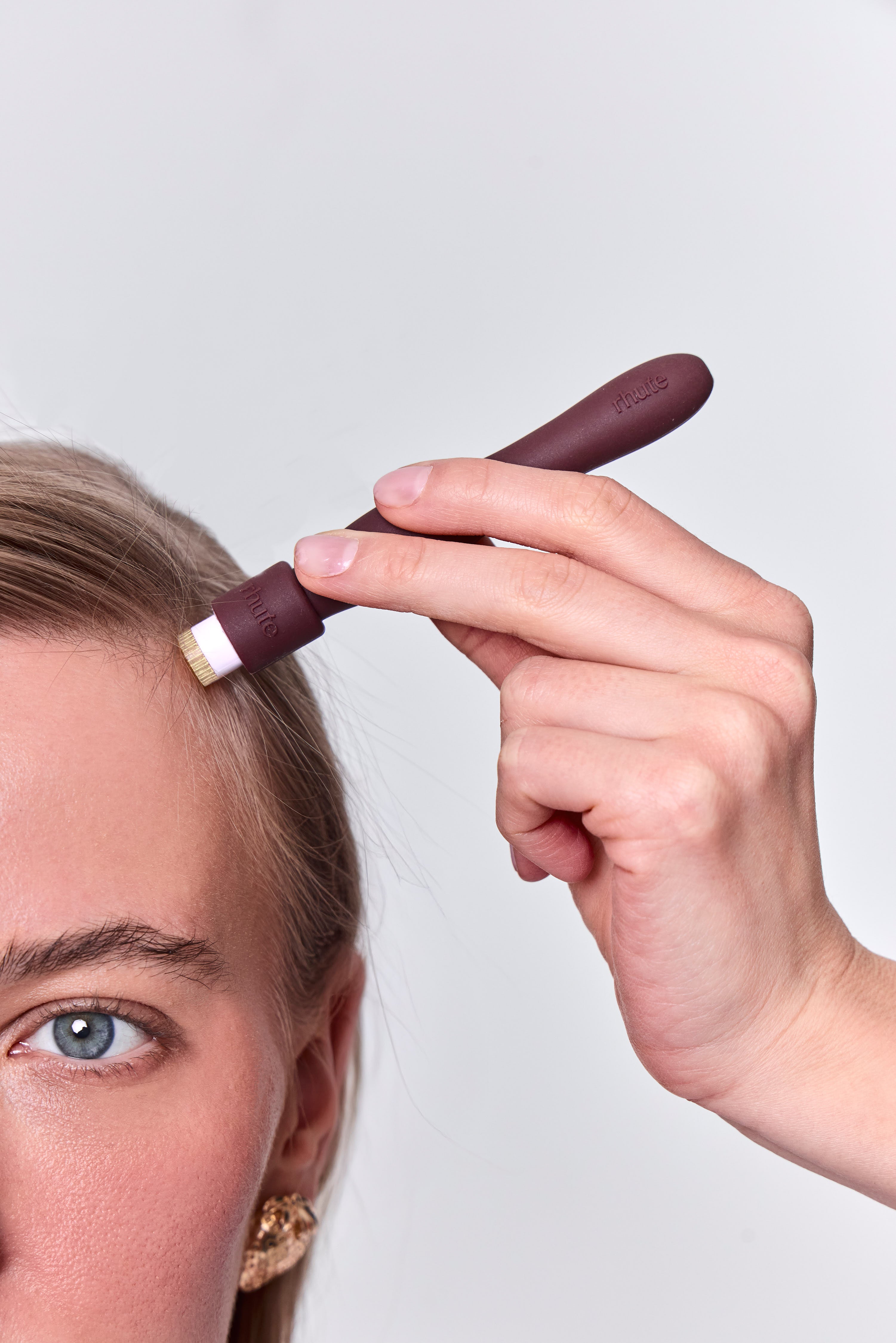
Once your scalp is no longer actively inflamed and the tension is off, microneedling with our Precision Dermastamp can layer on top. The Derma Stamper has 24ct gold-plated surgical-grade steel needles set at 0.3mm, which is the sweet spot for at-home use: deep enough to reach the dermis and stimulate follicles, shallow enough to keep trauma and scarring risk low. Research on microneedling for hair growth has shown that adding microneedling on top of a topical treatment can meaningfully outperform the topical alone (Dhurat et al., 2013), and a separate comparison study found that a shallower 0.6mm needle depth actually beat a deeper one for both hair count and thickness, so bigger is not always better here. Our microneedling guide walks through technique: light pressure, all directions, 1 to 2 times a week, and clean before and after using the lid as a sanitising vessel. Wait until your scalp is calm before starting.
It's also worth thinking about what sits on top of your scalp day to day, especially if you wear cultural or religious head coverings. If you wear a hijab, for example, styling your hair in something loose like a soft braid rather than a tight bun underneath an already snug cap means you're not doubling up on tension in the same spots. You can also vary things by time and place: a looser covering at home, with tighter or more structured styles saved for going out or special occasions, gives your scalp regular windows to recover. Pay particular attention to higher-risk areas like your hairline, where the pull tends to be greatest and traction thinning often shows up first.
If stress is part of your hair picture too, our guide to cortisol and hair loss covers that side.
When to see a GP or dermatologist
Some signs are a sensible nudge to book an appointment. Smooth, shiny patches where hair used to be, scalp pain or redness that persists even after you have stopped the tension, and hair that has not started to return after about six months of styling changes are all worth a professional look. In the UK, your GP can refer you to NHS dermatology, and both the British Association of Dermatologists patient information leaflet and the British Skin Foundation have plain-English resources. For peer support, Alopecia UK runs groups and communities for anyone living with hair loss, including traction alopecia.
Realistic timelines for regrowth
If you stop the tension and support your scalp, the rough timeline looks like this. The first new, fine hairs tend to show up around three months in. Visible improvement in density usually appears by six months. Maximum recovery typically lands somewhere between nine and 12 months, although gains can continue beyond that if you stay consistent. Late-stage scarred traction alopecia will not reverse on its own, but stopping the tension prevents the area of loss from spreading, and hair transplantation completes the picture for those who want it.
FAQS
Can traction alopecia be reversed?
Yes, in the early, non-scarring stage. Once the tension is removed and the follicles get a calmer environment, hair can grow back. First new hairs usually appear around three months, with visible improvement by six and fuller recovery between nine and 12 months. Late-stage scarred traction alopecia will not reverse without a transplant, but stopping the cause prevents the area from spreading.
How long does traction alopecia take to grow back?
Around three months for the first fine hairs, six months for more obvious improvement, and nine to 12 months for fuller recovery in early-stage cases, assuming the tension has been removed and your scalp is being looked after.
Does minoxidil work for traction alopecia?
Topical minoxidil is one of the most commonly recommended medical treatments for early-stage traction alopecia, working by shifting more follicles into the growing phase of the hair cycle (Syed & Kaliyadan, 2025). It is not a fix for scarred follicles and does not replace removing the cause. If you prefer a minoxidil-free approach, our Density + Repair Scalp Serum is designed to support follicle activity and scalp barrier without it.
What does traction alopecia look like?
In the early stage, thinning at the temples or hairline, often with a rim of finer, shorter hairs at the edge of the patch (the fringe sign). Your scalp can be red, itchy, sore or have small spot-like bumps, and you may see tiny white tubes wrapped around individual hair shafts (hair casts). In the late, scarred stage, the area looks smooth and shiny with follicular openings that are hard to see.
Are there permanent treatments for traction alopecia?
For late-stage scarred cases, hair transplantation is the most established cosmetic option, generally a private procedure in the UK. The underlying styling tension still needs to be addressed first, otherwise the same pattern can recur.
Which hairstyles cause traction alopecia?
Tight ponytails, sleek buns, tightly installed braids, cornrows, locs, weaves and extensions, especially when paired with chemical relaxers. Tight hijabs, turbans, helmets and the high-tension buns required for ballet or gymnastics are also recognised causes. The styles are not the problem in themselves, sustained tension is.