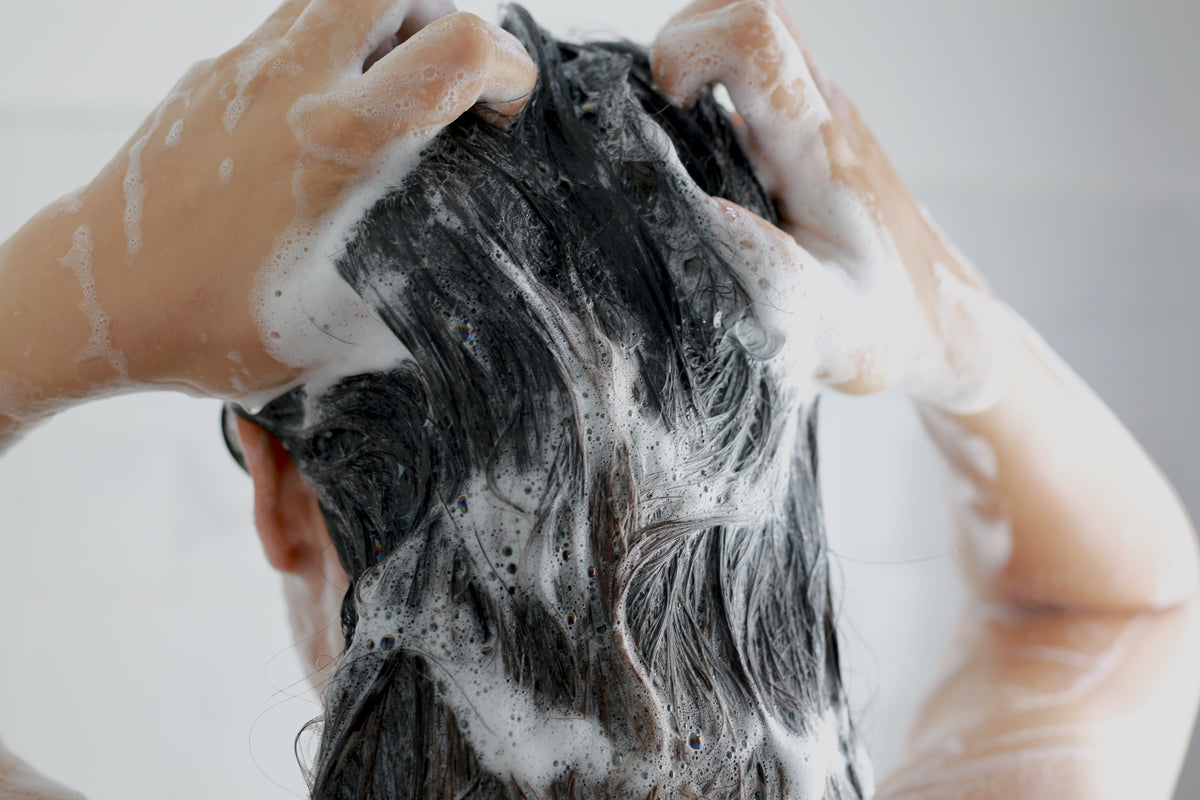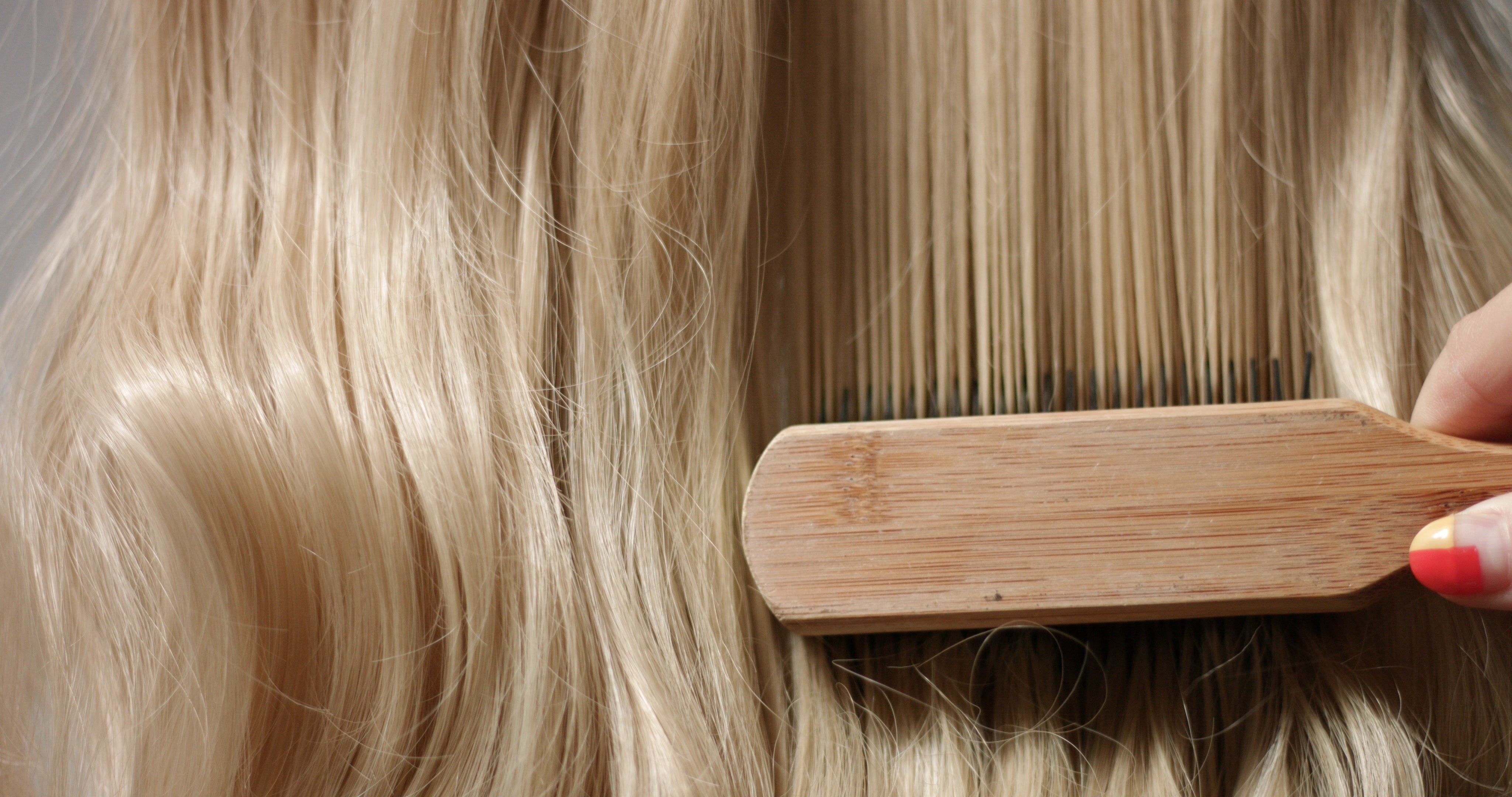

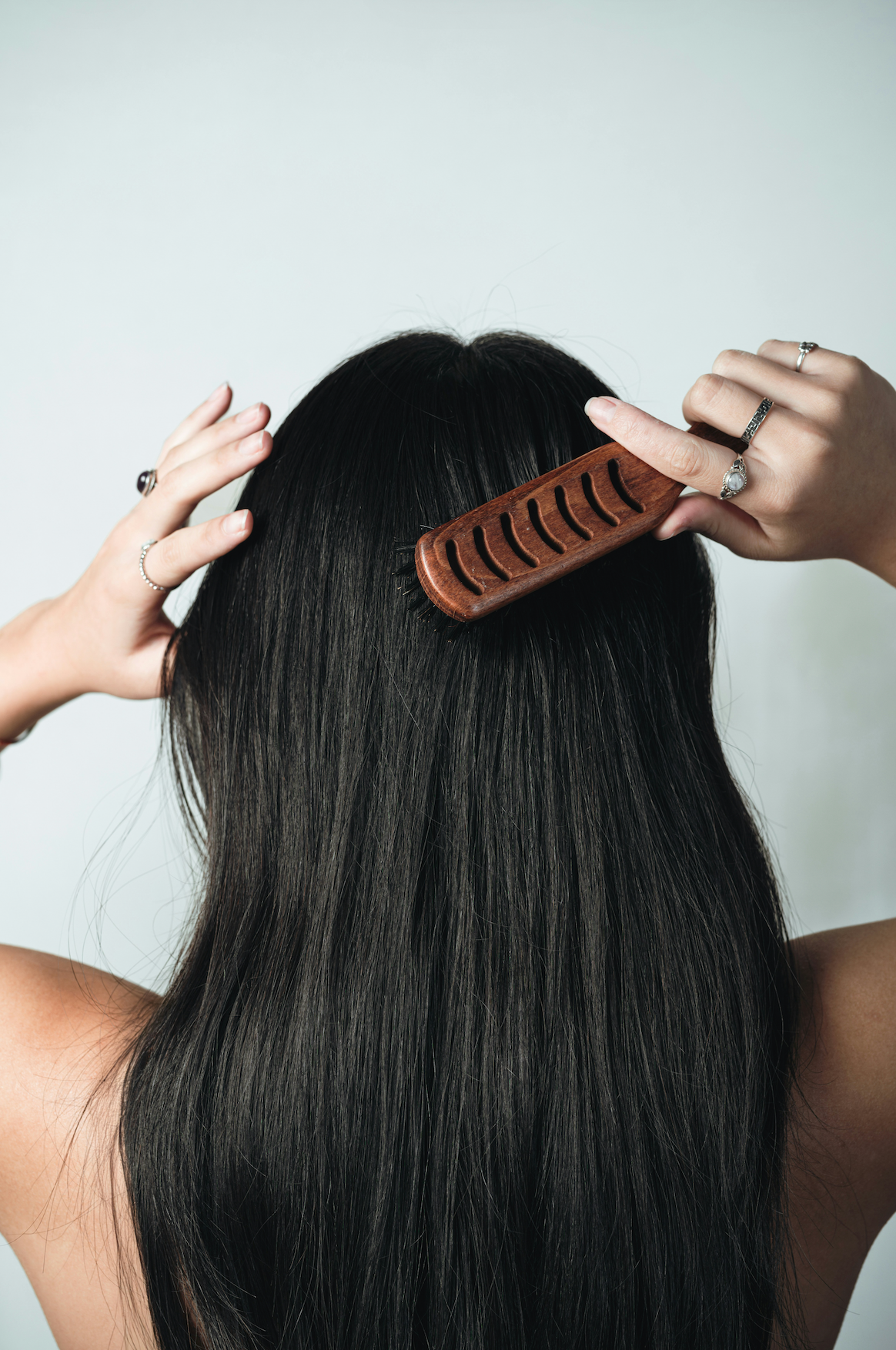

A leave-in conditioner softens, smooths, and detangles the outside of your hair, day to day. Bond repair has a different job: it's designed to work on the structure inside your hair, especially after bleach, colour or chemical straightening. Because they act on different parts of your hair, one can't stand in for the other. Below, we'll break down what each one does, how to tell which your hair needs, and how to use them together without weighing it down.
What does leave-in conditioner do?
A leave-in is a lighter conditioner you don't rinse out. It keeps your hair soft, smooth and easy to comb between washes.
It works a bit like a magnet. Hair that's been bleached, coloured, or worn down by brushing and heat carries a tiny negative electrical charge on its surface, similar to the static that makes hair cling to a jumper.
The softening ingredients in conditioner carry a positive charge, so they're pulled towards those damaged areas (Gavazzoni Dias, 2015). There, they settle over the cuticle (the outer layer of tiny overlapping scales on each strand) and help it lie flat, which means less frizz and fewer tangles.
That has a practical upside. Your ends are the oldest, most worn part of your hair, so they pull in the most conditioner and need it most. Your roots rarely do. If you have fine hair, put your leave-in where the wear is, on your mid-lengths and ends, and your roots will keep their lift.
What a leave-in can't do is rebuild anything inside the strand. It works on the surface.
What does bond repair do?
Your hair is mostly keratin, a protein that forms long chains inside each strand. Those chains are held together by bonds, tiny links that work a bit like the rungs of a ladder. Bleach, permanent colour, perms, and relaxers (chemical straighteners) can break some of the strongest ones, which is why chemically treated hair can feel stretchy or gummy when wet and snap more easily. Everyday wear adds up too. Brushing, heat, sun, and pollution can all take a toll over time, even if you’ve never coloured your hair.
Bond repair treatments are designed to get inside your hair and help reconnect or reinforce that structure. Research is still working out exactly how much happens inside the strand and how much at the surface, and we've gone through the evidence in our guide to hair bond repair.
Leave-in conditioner vs bond repair at a glance
|
Leave-in conditioner |
Bond repair |
|
|---|---|---|
|
Where it works |
On the surface of your hair |
Designed to work inside your hair |
|
Main job |
Softness, slip (that smooth, easy-to-comb feel), detangling, less frizz |
Strength and less breakage after chemical damage |
|
Best for |
Most hair types, especially extra dry, curly, or coily hair |
Chemically treated hair, and hair worn down by heat, sun, and everyday styling |
|
Rinse or leave on |
Leave on |
Depends on the product, so follow its directions |
|
How often |
Every wash day, or as needed |
Depends on the product, so follow its directions |
|
What it can't do |
Rebuild the structure inside your hair |
Replace your regular conditioner |
We couldn't find any study comparing the two head to head, which makes sense, as they're built for different jobs.
Which one does your hair need?
Because they do different jobs, most hair can benefit from both. Here’s how to weigh them up:
-
Bleached, coloured, permed, or relaxed: both. Bond repair for the damage inside, a leave-in to keep it soft and manageable. The damaged hair guide covers the bigger picture.
-
Not chemically treated: bond repair can still help. Everyday brushing, heat styling, sun, and pollution all wear your hair down over time, often before you can see it. The guide to sun damaged hair explains how UV adds up.
-
Extra dry, curly, or coily: this is where a leave-in really earns its place, helping with detangling, smoothing, and keeping your hair manageable between washes.
-
Fine and coloured: bond repair as directed, then a light leave-in on your ends only.
-
Breaking from heat or styling: a leave-in to cut down friction when you brush, plus a heat protectant, with bond repair to strengthen your hair. The hair breakage treatment guide goes further.
How to read a "bond repair leave-in" label
Products sold as a "bond repair leave-in" or "bond repair conditioner" are often conditioners with a bond-building ingredient added. The ingredients list can tell you roughly how much is in there.
In the UK, ingredients above one per cent have to be listed from the most to the least, and anything under one per cent can follow in any order (Regulation (EC) No 1223/2009). So:
-
Near the top: the ingredient makes up a bigger share of the formula.
-
Near the end, after fragrance (parfum) or preservatives: it's likely there in a small amount. Some ingredients do their job at low levels, so treat this as a clue rather than a verdict.
-
Names to look for: bis-aminopropyl diglycol dimaleate (a bond-building ingredient), hydrolysed proteins (proteins broken into smaller pieces so they can get into your hair) and anything ending in "peptide" (a short chain of protein building blocks).
How to use leave-in conditioner and bond repair together
-
Shampoo and condition as usual.
-
Squeeze, don't rub. Press water out with a towel, as wet hair stretches and snaps more easily.
-
Bond repair first, at the point in your routine its directions say.
-
Leave-in from the ends up. A few sprays, or a pea to almond-sized amount of cream warmed between your palms (a little more for long, thick or curly hair).
-
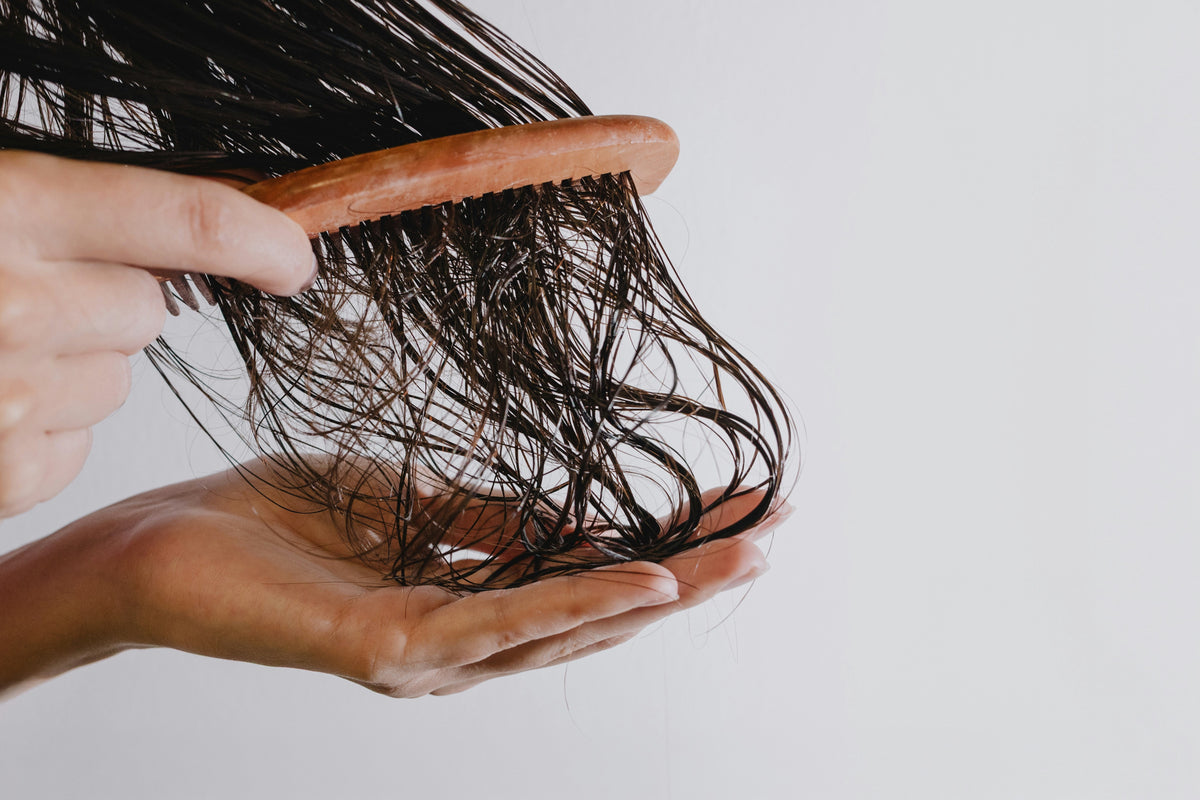
Detangle from the ends with a wide-tooth comb.
-
Oil last, if you use one, to seal everything in.
If your hair starts to feel coated, stiff or limp, use less.
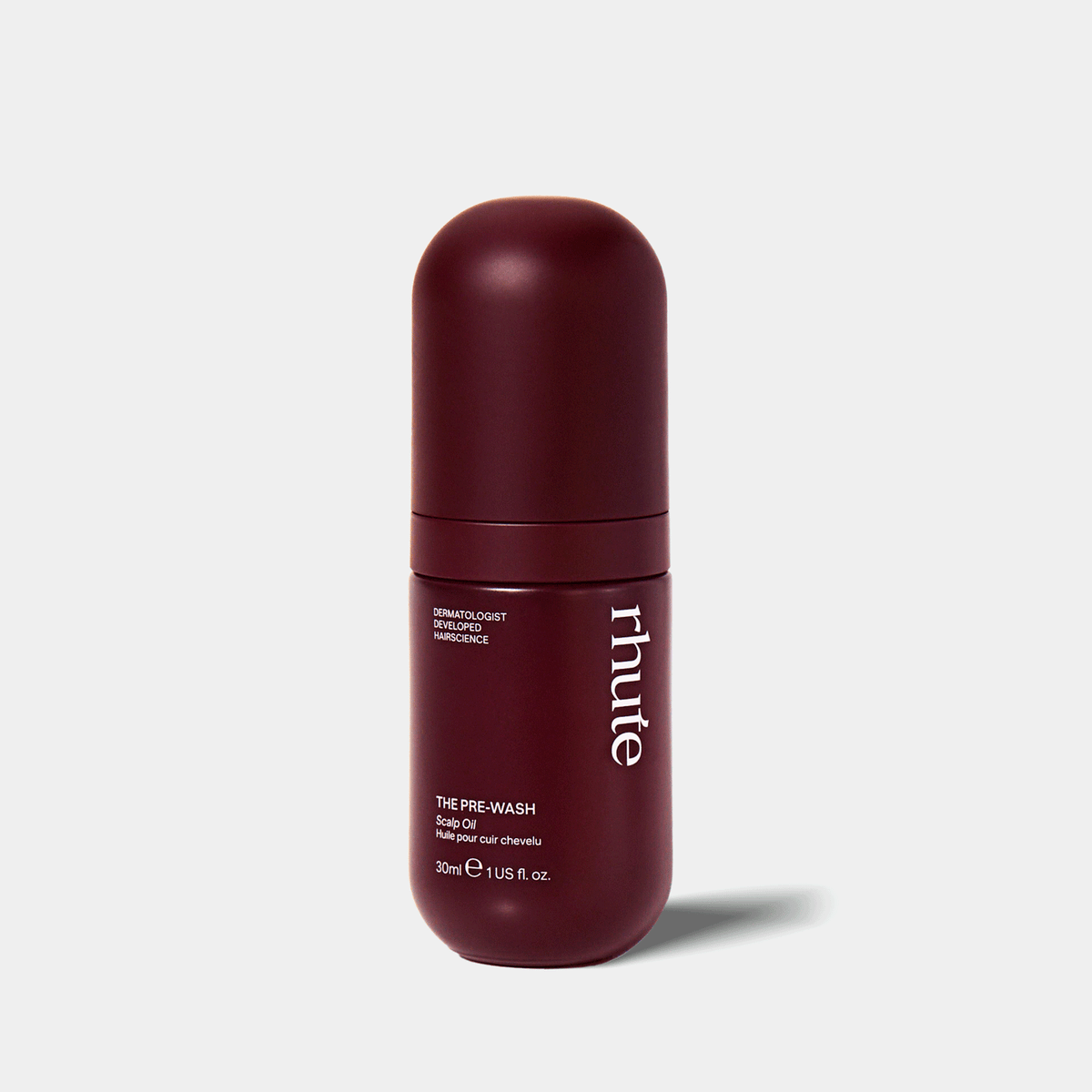
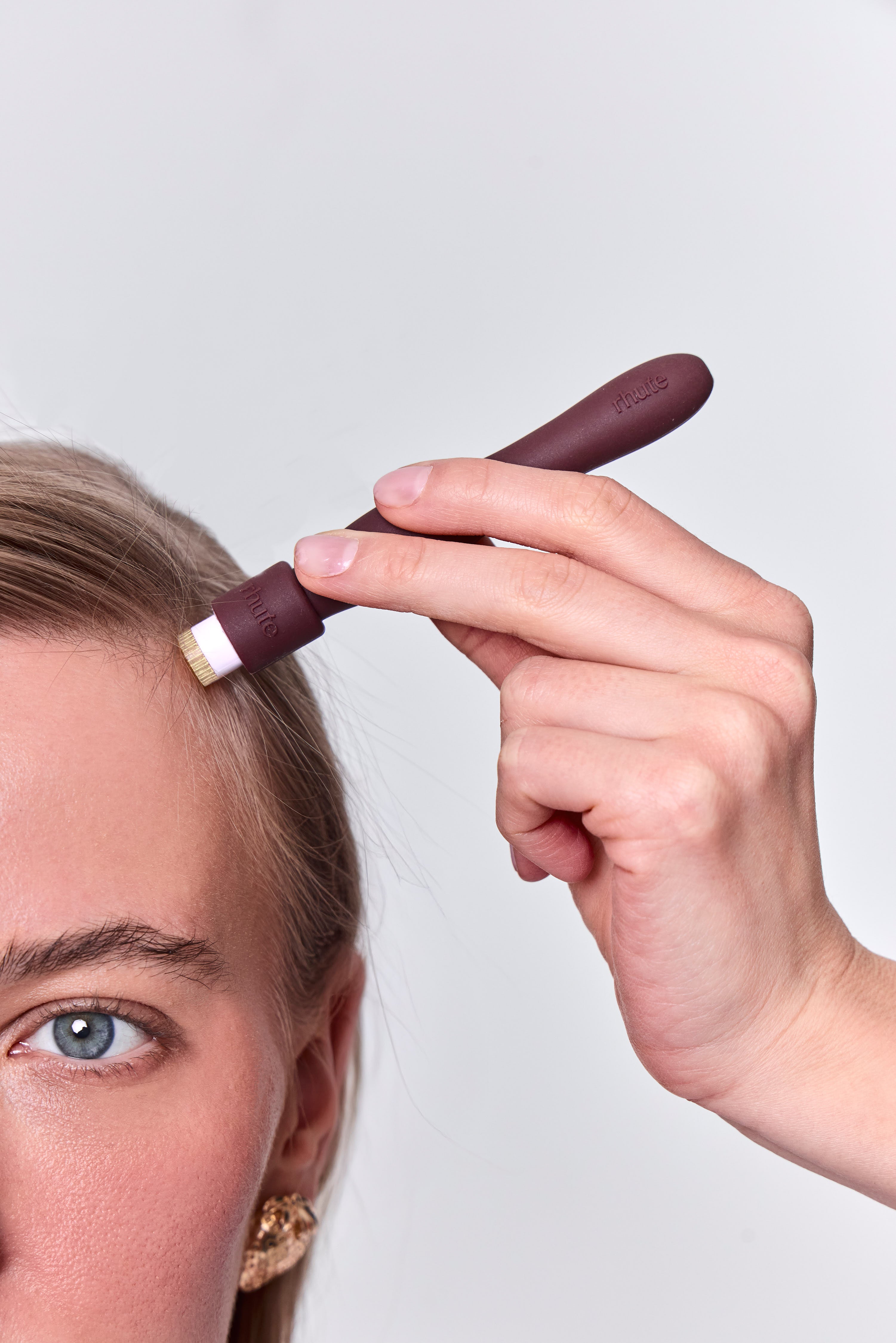
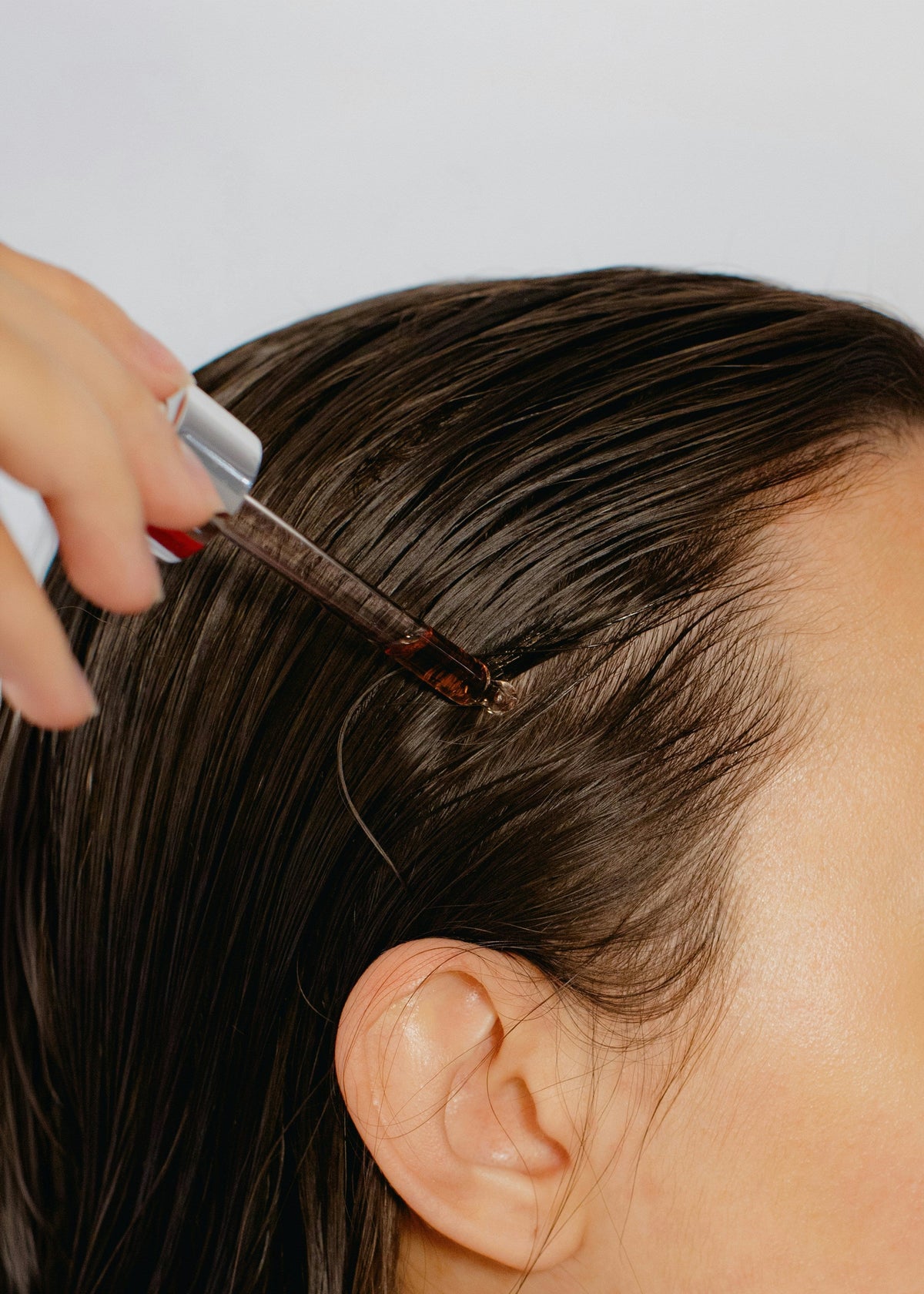
To give your scalp some care before wash day, our Triple Density Complex Pre-Wash Hair & Scalp Oil supports your scalp barrier (the outer layer of skin that keeps moisture in and irritants out) and leaves your lengths softer and smoother.
It does this with ceramides, fats your skin makes naturally to hold that barrier together, plus jojoba and pumpkin seed oil. Massage two to three droppers into your scalp and through your hair, leave it for 15 minutes or up to six hours, then wash as normal. Find it in our hair and scalp oils collection.
Leave-in conditioners: cream or spray?
-
Spray: mostly water, or water and alcohol, with a little conditioner (Gavazzoni Dias, 2015). Best for fine hair, oily roots, and quick detangling.
-
Cream: adds fatty alcohols and oils for more weight and slip. Best for thick, curly, coily, bleached or very dry hair.
-
Both: spray to detangle, then a little cream on your ends.
Don't let the word "alcohol" put you off. Fatty alcohols such as cetearyl alcohol are rich, waxy ingredients that soften hair. Alcohol denat (denatured alcohol) is the thin, fast-drying kind, and that's the one that can leave hair dry.
If you know your hair is low porosity or high porosity (how easily it soaks up and holds on to moisture), let that guide how rich you go. We've also covered glycerin and sodium PCA, which draw water into your hair, and silicones, which add slip and shine.
Keep your leave-in conditioner off your scalp
A leave-in sits on your skin for hours, and that changes things. Rinse-off conditioners rarely cause skin reactions because they're washed away quickly, but leave-on products are different. Fragrance, preservatives and softening ingredients can cause itching or redness, usually along your hairline, behind your ears or at the nape of your neck (Cebolla-Verdugo et al., 2024).
Rich oils and balms used near your hairline over a long time are also linked to breakouts across the forehead and temples (Davis & Callender, 2010).
-
Keep your leave-in on your mid-lengths and ends, ideally below ear level.
-
Go fragrance-free if your skin is sensitive.
-
Patch test anything new: try a little behind your ear and wait a day or two.
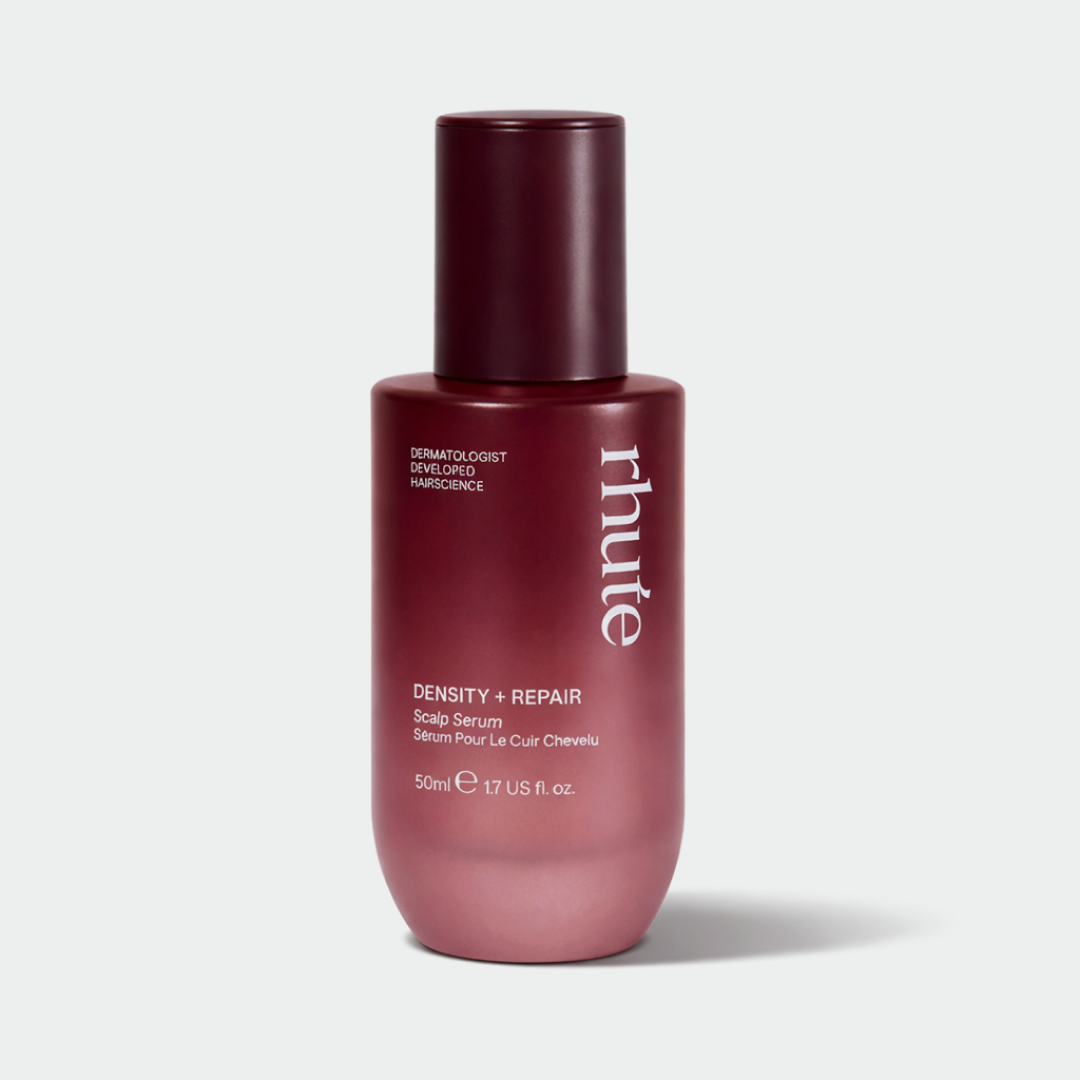
Your scalp is skin, so it's worth giving it a leave-on of its own. Our Density + Repair Scalp Serum is designed for less shedding, more growth and a stronger scalp barrier. It uses stem cell extracts and bioactive peptides to support growth, caffeine to stimulate your follicles (the tiny pockets each hair grows from) for fuller hair, and niacinamide, a form of vitamin B3, to help strengthen your scalp barrier.
It's ultra-lightweight, oil-free and fragrance-free, so it won't weigh your roots down. Find it in our hair growth serum collection.
FAQs
Can you put leave-in conditioner on dry hair?
Yes. A small amount smoothed over dry ends can tame frizz and flyaways between washes. It spreads less easily on dry hair, so use less than you would on damp hair and warm it between your palms first.
Can you use a leave-in conditioner every day?
You can, especially on dry ends. If your hair starts to look flat or feel coated, that's buildup, so skip a day or two and give your scalp a proper cleanse. Our guide to scalp detoxing explains how.
Does leave-in conditioner damage your hair?
We haven't found evidence that a leave-in damages the hair itself. The things to watch are buildup, which can leave hair limp, and skin reactions if it ends up on your scalp or hairline.
Can you use bond repair and a leave-in conditioner together?
Yes, and they make a good pair because they do different jobs. Use your bond treatment first, as its directions say, then your leave-in on damp lengths, and finish with oil if you use one. If your hair starts to feel stiff or coated, cut back one product at a time to see which one is the cause.
Can you leave a bond repair treatment in overnight?
Only if the product says you can. Some bond treatments are made to rinse out after a set time, while others are leave-in formulas. We haven't found evidence that leaving a rinse-out treatment on for longer works better, so stick to the time on the pack.
How long does bond repair take to work?
You may notice your hair feels smoother and easier to manage within the first few uses. Strength and less breakage build with regular use. The effects aren't permanent, so it works best as a steady part of your routine rather than a one-off. Our guide to hair bond repair explains why.
Can you use bond repair when you colour or bleach your hair?
Yes. Some salon bond builders are mixed into bleach or colour during your appointment, designed to help protect your hair while it's being processed. At-home treatments then keep things going between appointments. If you're booked in, ask your colourist whether they use one. There's more on how to fix bleach damaged hair.