

Let's get the annoying bit out of the way. A split end can’t be mended. The hair you can see is dead keratin, the protein your hair is built from, and it has no way of healing itself, so cutting is the only thing that removes a split. Anything sold as a repair is holding it together for a while, which is a lovely effect, just not a permanent one.
Now the useful part. Splits turn up at your ends because your ends are the oldest hair on your head. Once you see it that way, it stops being a mystery and becomes something you can get ahead of. Below is what a split actually is, whether it really travels, what a trim can and can’t do, and how to look after your hair from rhute to tip.
What are split ends, really?
A split end is what happens when the outside of your hair wears away and the inside gives up.
Your hair has a cuticle, a layer of flat overlapping scales, and a cortex underneath that carries its strength. Wear the cuticle down, and the exposed cortex separates lengthwise into two or more pieces. Dermatologists call it trichoptilosis and treat it as an ordinary sign of weathering rather than a disease (Kuntoji et al., 2018).
Two forms are recognised, and only one of them is the version you know:
-
Distal splitting is the classic Y or V at the tip, usually running 2 to 3 cm up from the end. Distal simply means the end furthest from your scalp.
-
Central trichoptilosis is a split partway along the strand with the tip still intact.
Both are described by Osório and Tosti (2011). Worth knowing, because a central split is easy to mistake for two hairs crossing over one another.
Why your ends split, and not the rest of your hair
Because your ends are old. Almost everything else follows from that.
Scalp hair grows at roughly 0.35 mm a day, about a centimetre a month (Hoover et al., 2023). Do that sum on your own hair. If your ends sit at your shoulders, that’s around 30 cm of growth, so your tips have been on your head for about two years, living through every wash, every brush, every straightener pass, and every colour appointment. The hair at your roots has been through minimal in comparison.
Marsh et al. (2015) put it plainly: the environment does daily damage to the hair shaft that can’t be repaired, and it’s more evident in the distal part of long hair.
So split ends are less a sign that something has gone wrong and more a sign that time has passed. Long hair gets them more than short hair for the same reason a ten-year-old jumper pills more than a new one. And Fernandes et al. (2023) explain why nothing you apply changes that: hair cannot renew itself biologically, so any improvement has to come from the outside.
Do split ends travel up the hair?
Yes, but how far depends almost entirely on the condition of your hair. There’s finally a study that shows this rather than asserting it.
Researchers at Trinity College Dublin built a machine to do what a comb does. They looped two hairs together like chain links, weighted one and moved the other up and down, recreating the friction of dragging a comb through a tangle (Taylor et al., 2024). Then they compared hair from someone who gets split ends with hair from someone who does not.
Both split. The difference was in how:
-
In the split-prone hair, splits started inside the strand, near the centre, and ran a long way. Most travelled more than 5 mm, and some ran the full 40 mm of the test length before the hair came apart into two curled, ribbon-like halves.
-
In the healthy hair, splits started at the surface, often as a lifted cuticle scale, and stayed short. Most were under 1 mm.
-
Bleaching the healthy hair made it behave like the split-prone hair, and the effect showed up after longer bleaching times rather than a short one.
The authors also read the direction of travel from the way the cuticle scales lifted, and deduced that splits mostly propagated up the hair, towards the root.
Two honest caveats. The hair came from two donors only, who were researchers on the study, so this is a mechanism demonstrated rather than a population measured, and a machine is not a hairbrush. It is still the first test that reliably produces splitting in a lab, which is why it changes the answer.
What causes split ends
Four things, roughly in the order that the evidence puts them.
-
Mechanical wear comes first. Splitting is driven by the friction and shear of strands rubbing against each other, which is exactly what happens when you comb through a tangle (Taylor et al., 2024). Tangles are where splits begin.
-
Chemical processing changes how your hair splits, not only how much. In the same study, bleaching turned splitting from a shallow surface problem into a deep internal one.
-
Heat from straighteners, tongs and dryers does measurable damage well below the setting most of us use. Detail in how to protect hair from heat damage.
-
Ordinary weathering from sun, water, wind and friction against clothes and pillows works slowly from root to tip (Marsh et al., 2015).
What is not on that list is anything you eat or are short of. A split is a mechanical failure in dead fibre, so it comes from what happens to your hair, not from inside your body. Diet affects the hair your follicles are still building. It cannot change the hair already on your head.
Split ends or breakage? Not the same thing
A split is the fibre separating lengthwise. Breakage is the fibre snapping across its width. Same underlying wear, different failure. The quickest way to tell is to look at the end of a short hair:
-
A split has a Y or a fork at the tip, and each half is thinner than the whole strand.
-
A broken hair has a blunt end at full shaft thickness, as though it had been cut.
There is a middle case worth knowing. In trichorrhexis nodosa, pale nodes form along the strand and the hair frays and snaps at them, described under the microscope as looking like two brooms pushed into each other (Burkhart, 2025). That same review classes ordinary split ends as distal trichorrhexis nodosa, so the two are points on one spectrum.
If your hair is snapping along its length rather than fraying at the tips, that is a different problem. Damaged hair covers it properly.
How to get rid of split ends
The best way to get rid of split ends is to cut them. Cut them. That is not a cop-out, it’s biology. Hair is a non-living structure, so damage to the shaft can’t be biologically repaired (Osório and Tosti, 2011), and there’s no repair machinery inside a strand to reconnect a split (Fernandes et al., 2023). Every credible source lands in the same place: haircuts are the only effective way to get rid of split ends (Akhgary, 2024).
After that, what genuinely helps is reducing the friction that starts the next one:
-
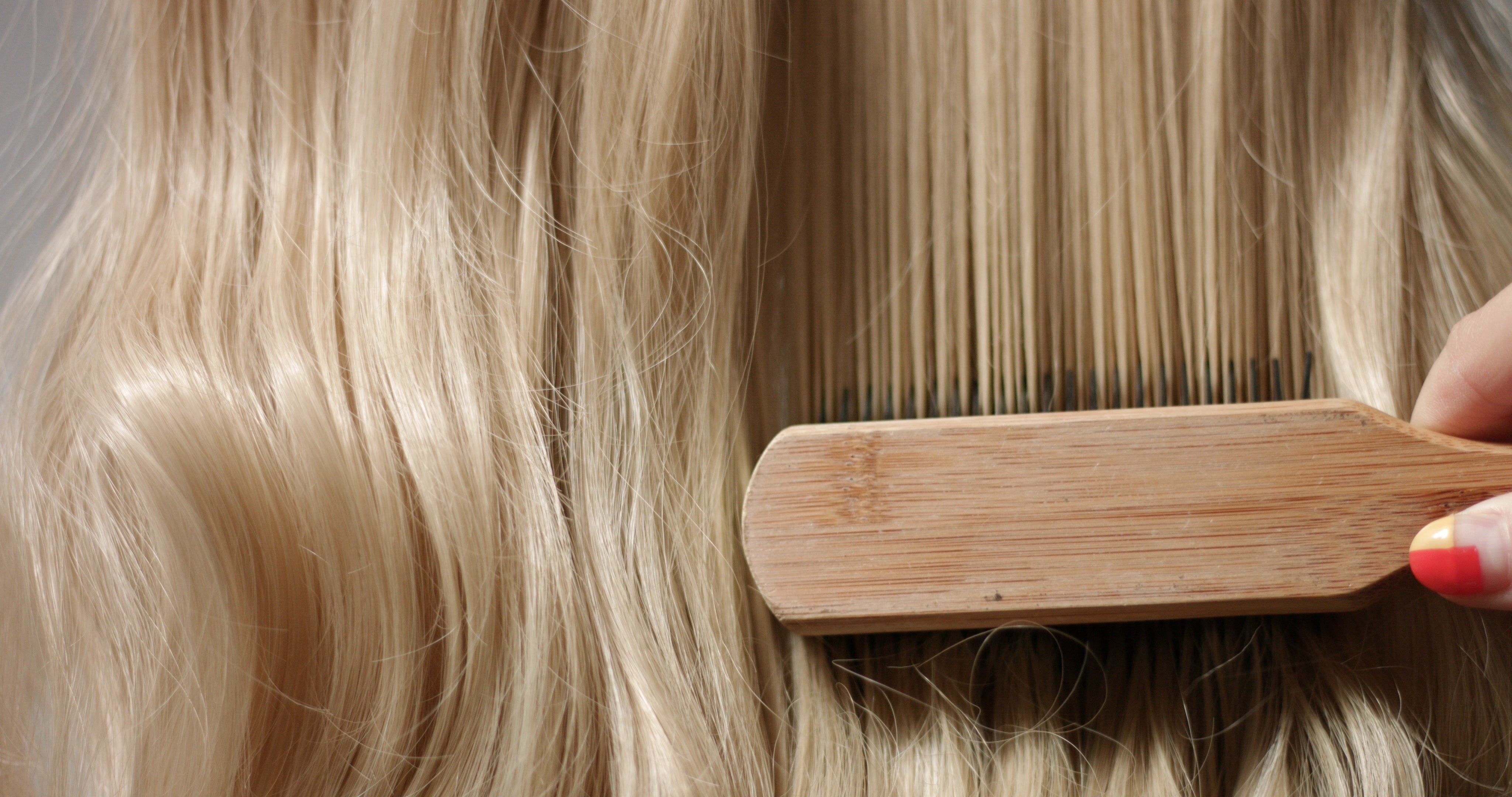
Detangle from the ends upward, in sections, with your fingers or a wide-tooth comb. Tangles are where splitting begins, so easing a knot loose from below beats dragging it down the strand.
-
Treat wet hair as the fragile state it is. Water weakens hair while it is in it, so it’s important to be gentle and apply sufficient conditioner. Learn more about damaged hair.
-
Stretch out your bleach and colour appointments, and ask for root-only or partial application where you can, which spares your ends entirely.
-
Turn the heat down. There’s no evidenced safe temperature, so lower than whatever you currently use is the useful instruction.
-
Strengthening treatments. Using a bond repair treatment can relink broken chemical bonds and help to reinforce the internal structure of the hair shaft, reducing the probability of breakage in the first place.
None of that reverses a split. All of it slows down the next one.
Do split end menders and sealers work?
They do, and the answer is more interesting than a flat no.
The category has been tested. Rigoletto et al. (2007) built a mender from two polymers that bind into a gel and infiltrate the damaged site, then tagged individual split ends to follow the fate of each one. The mend held, including after combing, which is the test that matters. A repair that survives a microscope but not a hairbrush is not a repair.
The same paper is equally clear about the limit: the complex does not build up on hair and rinses off with shampoo. So a mender is real, measurable, cosmetic and temporary. It is a hold, not a heal.
Two caveats. The authors worked for the company supplying that polymer chemistry, which is not a reason to dismiss the work but is a reason to read it as promising rather than settled. And they tested one specific complex, so another product making the same claim is not automatically doing the same thing.
If you like the finish a sealer gives, use it, and budget for the trim as well. Silicones do a similar job on the same temporary terms, covered in the truth about silicone in hair care.
How often should you trim your hair?
There’s no evidenced answer, which is worth saying out loud given how confidently the number usually gets quoted. Three things are known.
-
No specific interval has been tested. The dermatology guidance on weathering recommends regular haircuts and regular trimming of the tips, and stops there (Osório and Tosti, 2011). Six to eight weeks is a salon convention rather than a finding. Trim when you can see or feel splits, and sooner if your hair is bleached or heat-styled often.
-
Trimming does not make hair grow faster. Growth happens at the follicle, and your ends have no say in it. The evidence here is about shaving rather than trimming, so it’s an estimate, but a solid one: a BMJ review of medical myths summarises a controlled trial in which shaved hair grew back no faster, darker or thicker than unshaved hair (Vreeman and Carroll, 2007). A trim stops breakage taking length off the bottom faster than your follicles add it at the top.
-
How your hair is cut may matter as much as how often. Robbins and Kamath (2007) found that ends cut straight across at 90 degrees wrap around comb teeth and produce more tip breakage than tapered ends. That’s a genuine argument for asking your stylist for point cutting, where the scissors go into the ends at an angle instead of straight across.
Looking after the length you have
No product mends a split, so here’s the honest version of what one can do.
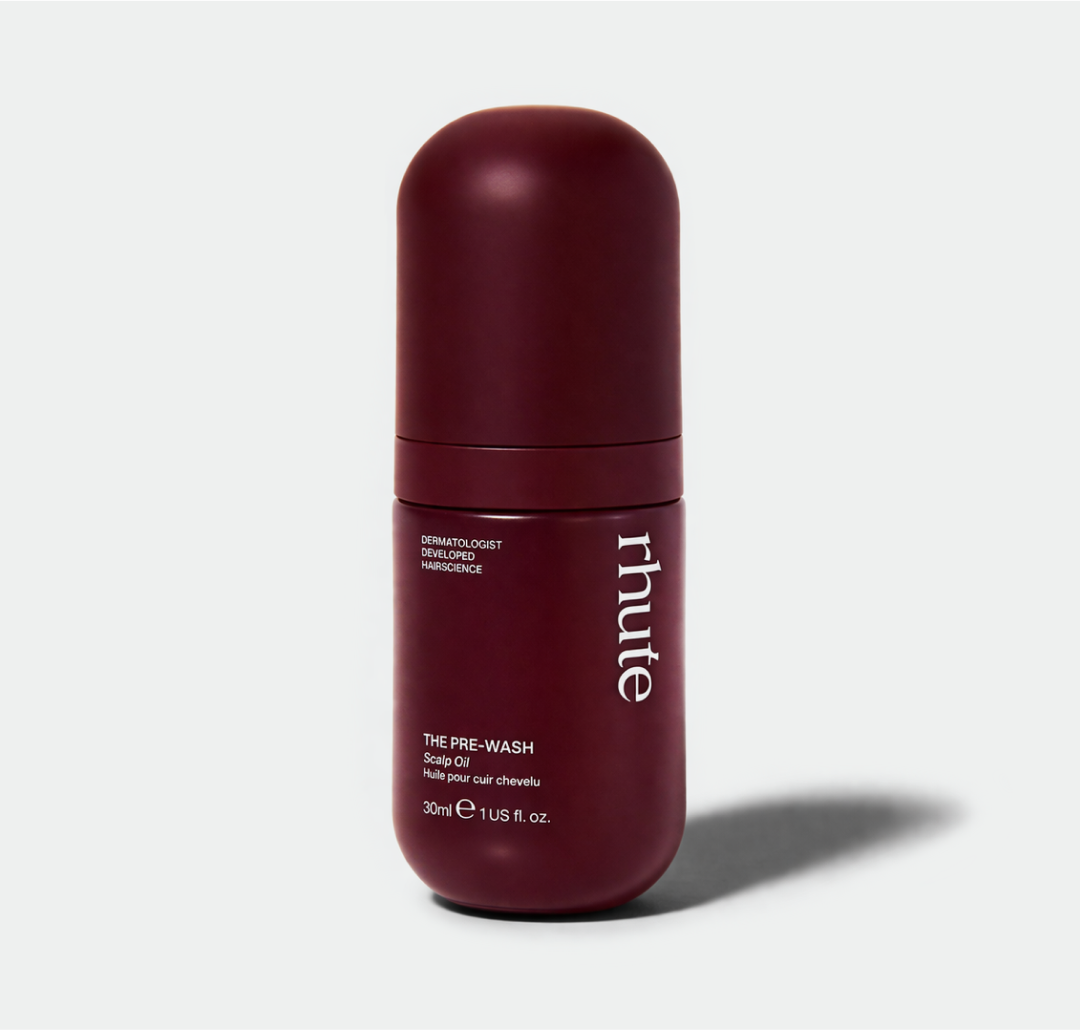
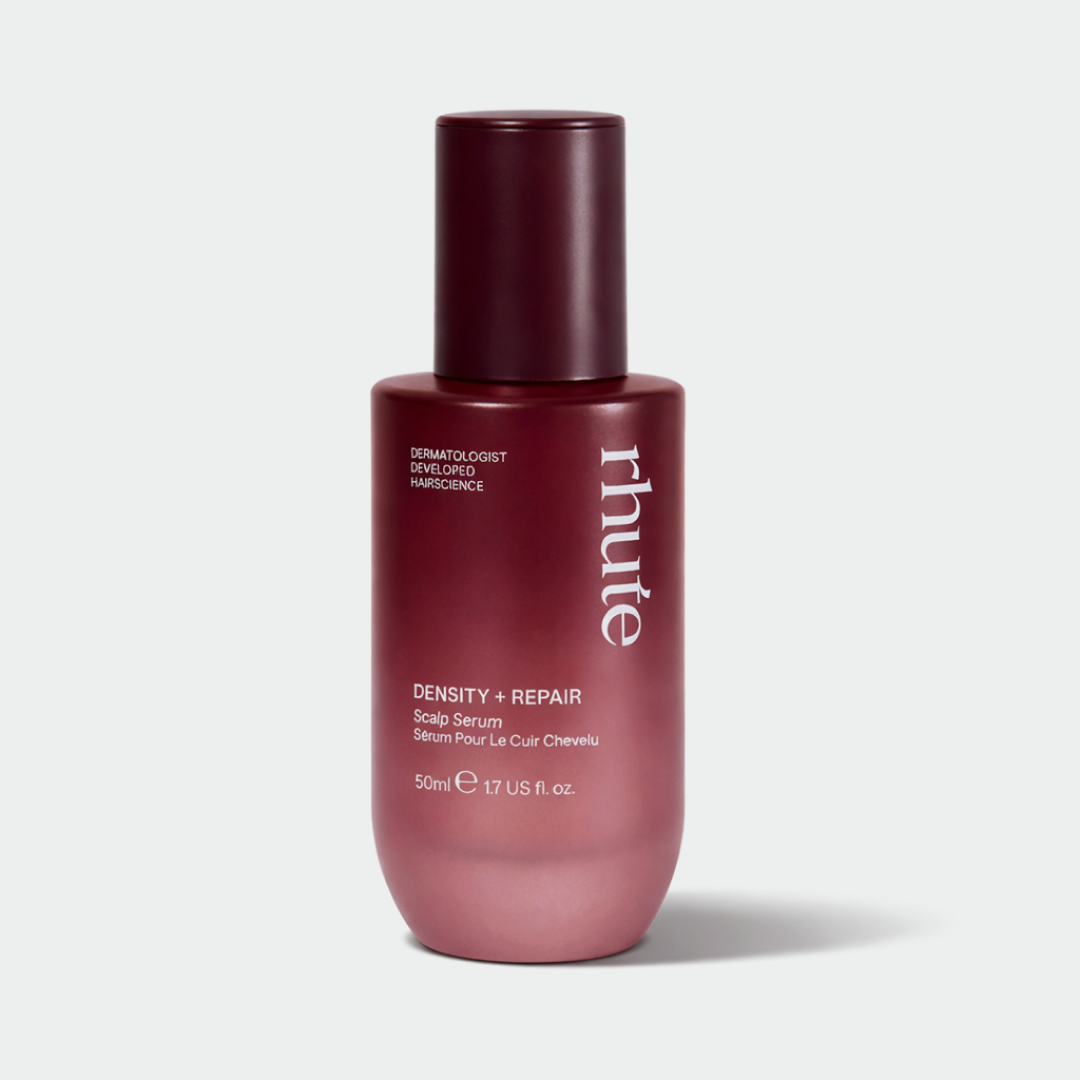
Splits start in tangles, so anything that reduces friction while you detangle is working on the cause rather than the symptom. Our Triple Density Complex is a pre-wash oil, applied to your scalp and through your lengths before you shampoo, when hair is at its most fragile. It makes detangling easier and helps reduce breakage, with pumpkin seed oil, saw palmetto, and beta-sitosterol on the scalp side. Ceramides support both the scalp and reinforce the lipid layer within the strand to reduce breakage, while black seed oil and jojoba condition the strand. For everyday care, use the Density + Repair hair growth serum daily on dry or wet hair. Learn more about how to use hair oil.
FAQs
How do I know if I have split ends?
Twist a section loosely and look at the hairs that pop out along the twist, in daylight if you can. Splits show as a Y at the tip or a frayed, unravelled-rope look. Run the section between your fingers too: where smooth turns rough is roughly where the wear starts.
Do split ends mean my hair is damaged?
Not necessarily in the way you are worrying about. Weathering is normal, so a few splits on two-year-old ends are expected. What is worth attention is a lot of them, or splits well above the tips, which suggests the wear is getting ahead of your trims.
What happens if I just leave them?
Nothing dramatic overnight. But in the Trinity College Dublin work, splits in split-prone hair ran more than 5 mm and sometimes much further, travelling towards the root (Taylor et al., 2024). You also lose length, because a fraying end keeps breaking off.
Can I cut split ends without losing length?
Yes, and that is what dusting is for. Taking a few millimetres off the very tips removes the splits and leaves your length where it was. It will not save an end that has already split several centimetres up. That part has to come off.
Do split end trimmer devices work?
They cut hair, which is the only thing that removes a split, so the idea is sound. We could not find published evidence comparing one against scissors for how much healthy length it takes, or how the cut end behaves afterwards. Given that a blunt 90 degree end breaks more than a tapered one (Robbins and Kamath, 2007), that is a real unknown.
Does Vaseline help split ends?
It makes ends look temporarily smoother and is very hard to wash out again. There’s no evidence it does anything structural. Petroleum jelly is a hydrocarbon, and when Rele and Mohile (2003) tested mineral oil, chemically its close relative, it did not reduce protein loss at all, while coconut oil did. Petroleum jelly itself has not been tested on splits, so that is reasoning from the nearest evidence rather than a result.
Do split ends stop hair growth?
No. Growth happens at the follicle, and nothing at the end of a strand reaches it. What splits cost you is length, because hair breaks off the bottom while it grows from the top, which is why it can seem stuck at one length for months. More on the timings in how long is the hair growth cycle.
Do split ends cause hair loss?
No. Split ends are a problem with the fibre, hair loss is a problem with the follicle. Losing bits of strand does not make you shed more, and it will not thin your parting. If shedding or density is your real concern, start with understanding hair loss.