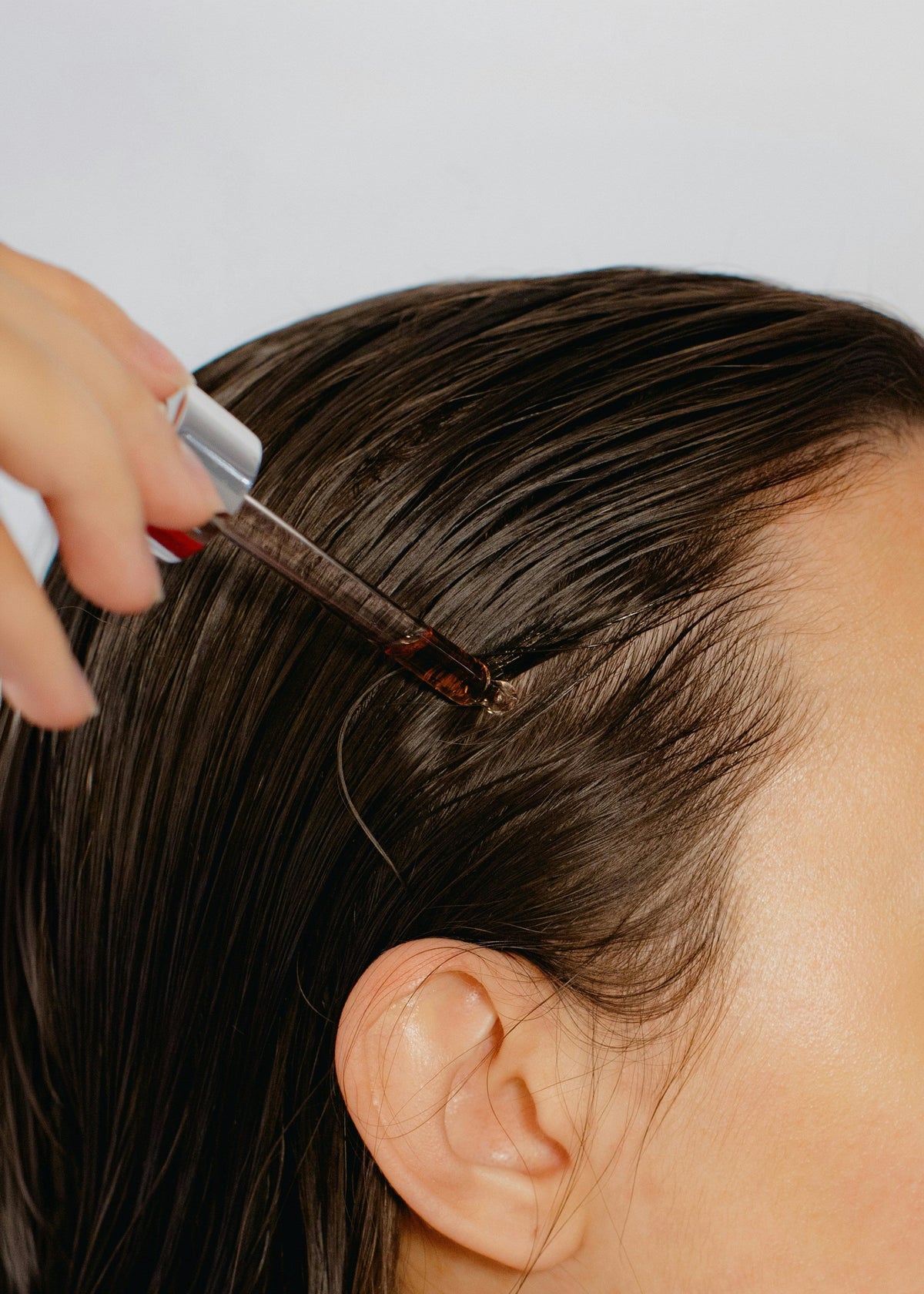


A good hair oiling routine is simple: oil your scalp and lengths before you wash, shampoo and condition, then treat your scalp once it's clean. Do it two to three times a week on your wash days, and give it a few months before you judge it (our guide to how often to oil your hair goes deeper on frequency).
-
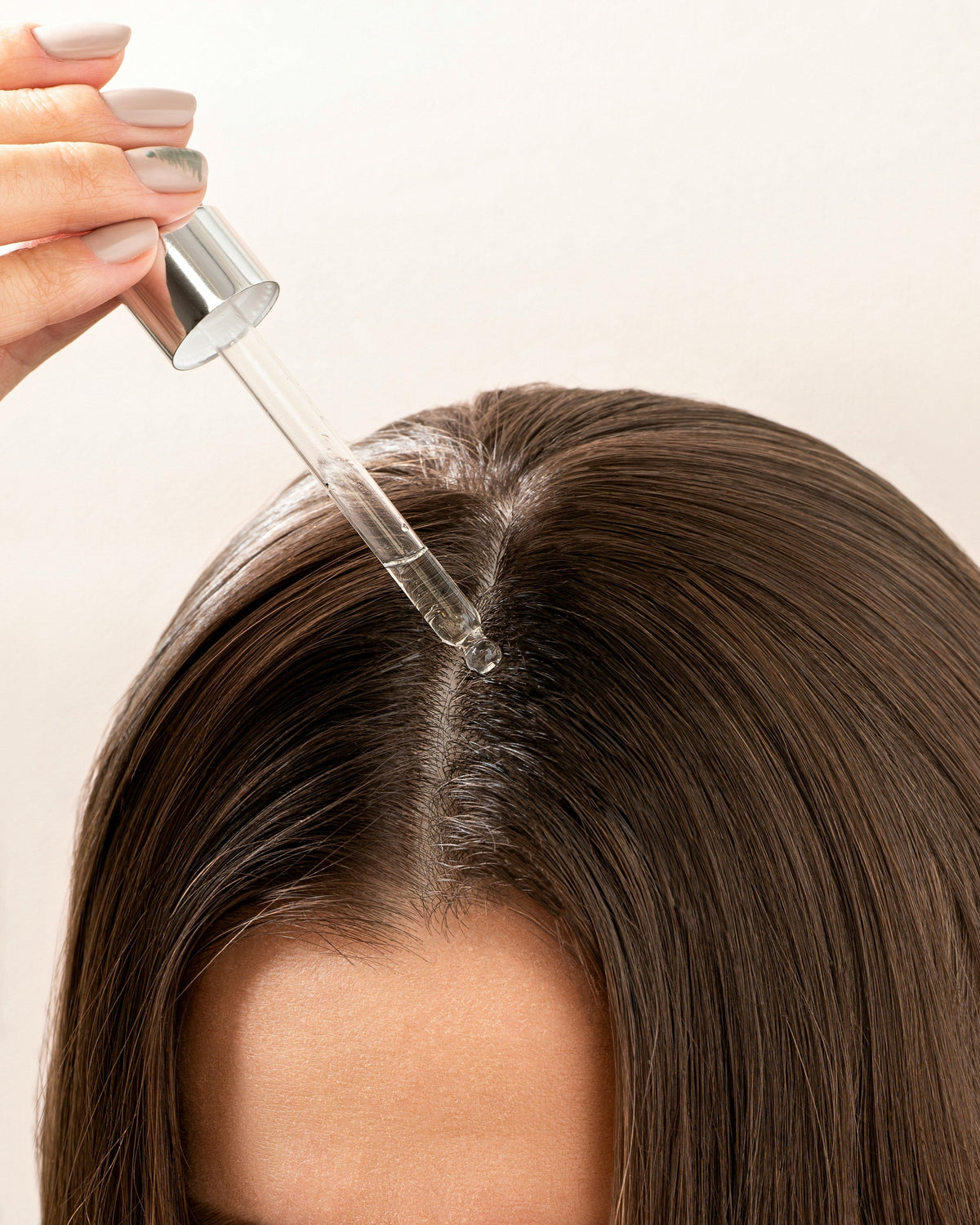
Before you wash: oil on your scalp and through your lengths
-
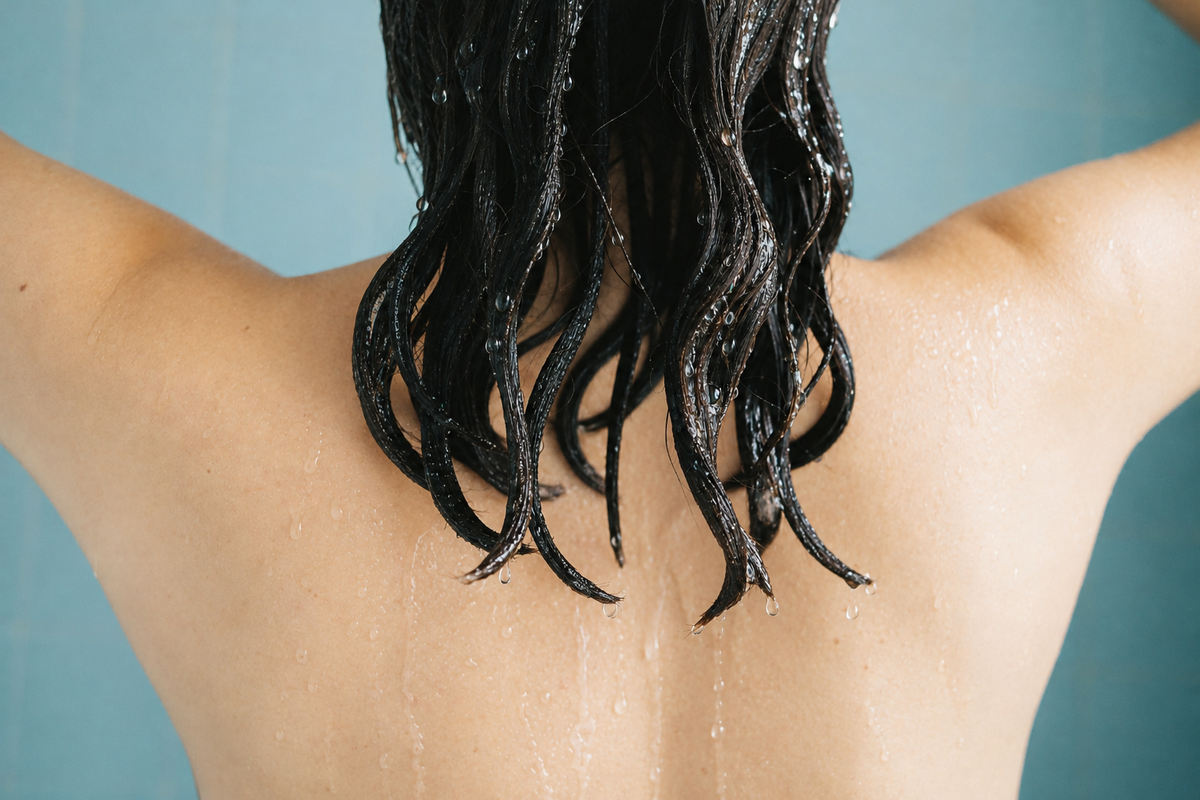
In the shower: shampoo, then conditioner
-
After the shower: leave-in conditioner and bond repair on your lengths, serum on your scalp
Below, we fill in where everything else slots in, how to shape the routine around what you want from it, a sample week, and how to tell if it's working. For the application technique itself, like sectioning and massaging, head to how to use hair oil.
Where oil goes in your routine (and why the order matters)
So, hair oil before or after the shower? Before, if it's a treatment oil. After, only as a drop on your ends to finish. Here's the full order on wash day:
-
Pre-wash oil on dry hair, scalp and lengths, left on for at least 15 minutes
-
Shampoo, focused on your scalp
-
Conditioner on your lengths, kept off your scalp
-
Leave-in on damp lengths
-
Scalp serum on your towel-dried scalp
-
A drop of finishing oil on your ends, if they want it
-
Heat protection and styling
Why this order works:
-
Oil protects during the wash. Washing, brushing, and combing all wear down the cuticle, the outer layer that protects the strand, a little at a time. This is normal, but oil before washing can help. In a lab study, coconut oil applied before washing reduced that protein loss in both healthy and damaged hair (Rele & Mohile, 2003). Sunflower and mineral oil didn't, so it isn't a rule for every oil. But it shows the job of pre-wash oil: protecting the cuticle so less of it wears away.
-
Conditioner clings to clean hair. Washed hair carries a slight negative charge, and bleached or damaged hair even more so. Conditioning ingredients are positively charged, so they stick where they're needed, smoothing the cuticle (the overlapping outer layer that protects each strand) and cutting friction (Gavazzoni Dias, 2015). The same review recommends keeping conditioner on your lengths and off your scalp.
-
Water-based goes before oil. Leave-ins and serums are mostly water, so they go on first and oil goes last to help seal them in.
-
The wash keeps oil and serum apart. Oil goes on before, serum goes on after, so they never compete for your scalp. Our guide to the best scalp oil for hair growth explains how the two differ.
If you like to leave oil on your lengths overnight, our overnight hair oil guide covers when that works. Not sure which leave-in suits you? See leave-in conditioner vs bond repair. For serum technique, read how to use hair serum.
Match your routine to your goal
The order stays the same. What changes is where you put your effort.
-
Shedding or thinning: make it scalp-led, with pre-wash oil on your scalp, Density + Repair every day and dermastamping one to two times a week. Our guide to hair loss in women covers the common causes.
-
Dry or flaky scalp: oil your scalp lightly, cleanse gently and put your effort into what goes on after the wash. Flakes can be dandruff rather than dryness, and extra oil may not help with that. More on how to improve scalp health.
-
Damaged or bleached lengths: oil your lengths before every wash and follow with a leave-in. Our damaged hair guide has the full picture.
-
Curls and coils: water first, then leave-in, then oil, so moisture goes in before oil holds it there.
-
Fine hair: keep oil to your scalp before washing, where it rinses out, and use a single drop on your ends afterwards.
-
Extensions or tight styles: go gently at your roots, keep oil away from bonds and tapes, and give your hairline regular breaks from tension. Our traction alopecia guide explains why.
Whatever your hair type, age or stage, you're not doing it wrong if your routine looks different from someone else's. Pick the goal that matters most right now and build from there.
A sample week
Here's how a hair growth routine can look if you wash on Monday, Thursday and Saturday:
|
Day |
Wash day? |
Pre-wash oil |
Derma stamp |
Density + Repair |
|---|---|---|---|---|
|
Monday |
Yes |
Before washing |
On your clean, dry scalp |
Straight after stamping |
|
Tuesday |
Yes |
|||
|
Wednesday |
Yes |
|||
|
Thursday |
Yes |
Before washing |
After washing |
|
|
Friday |
Yes |
|||
|
Saturday |
Yes |
Before washing |
On your clean, dry scalp |
Straight after stamping |
|
Sunday |
Yes |
Oil and stamping can share a day. Oil first, wash it out, stamp your clean dry scalp, then apply serum straight away so it can get to work. Wash less often? Oil on the wash days you have.
-
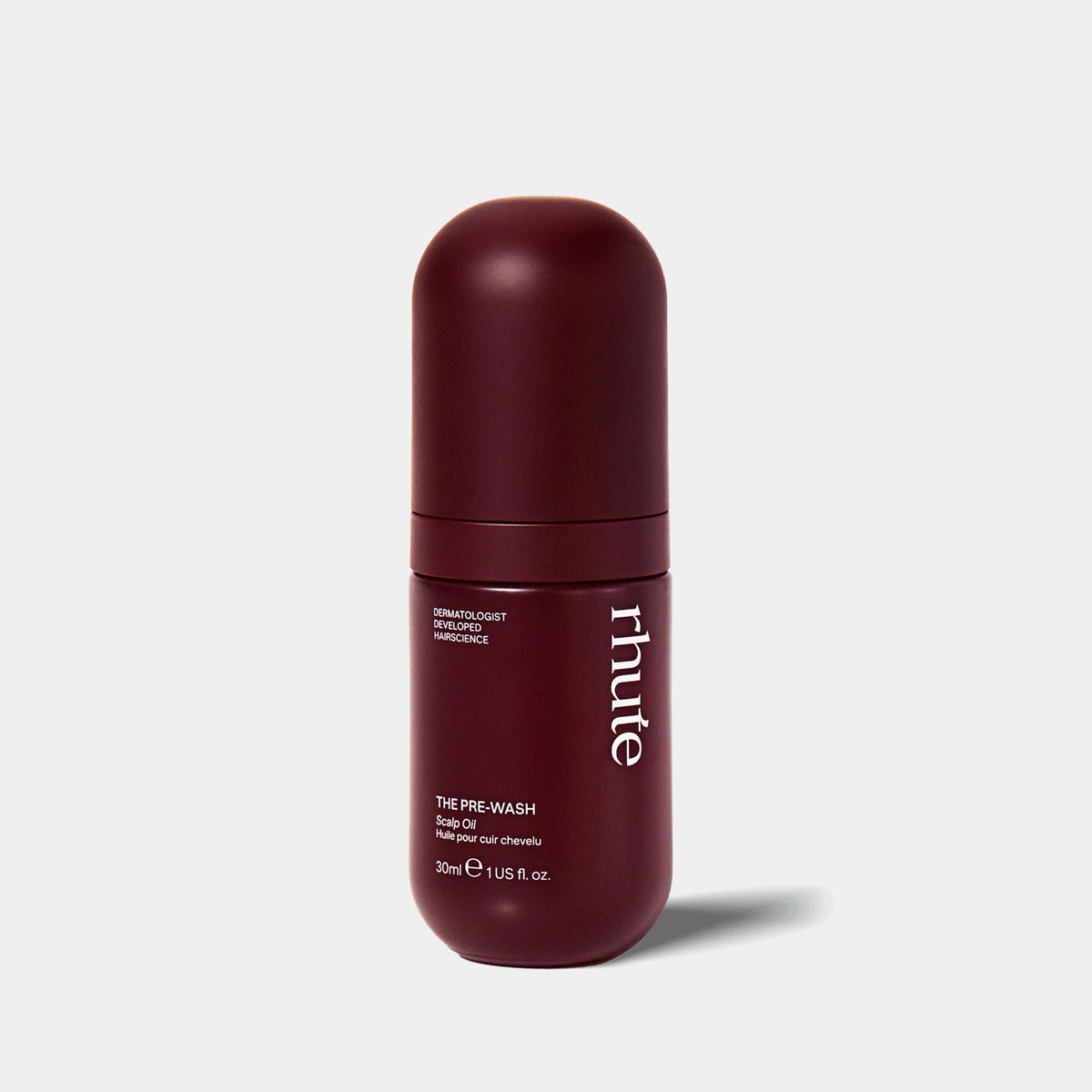
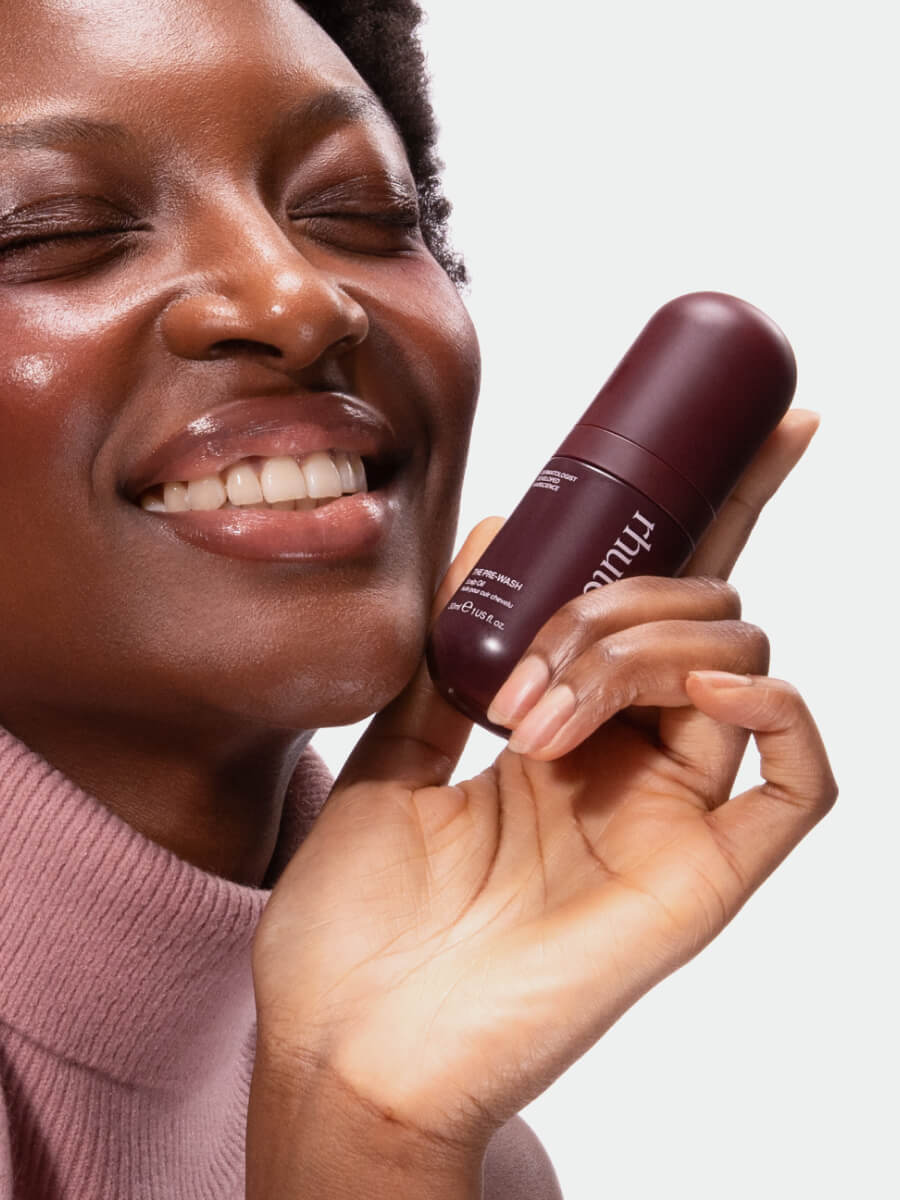
Triple Density Complex Pre-Wash Hair Oil: helps support your scalp barrier and leaves lengths softer and smoother. It's made with pumpkin seed oil and saw palmetto, botanicals studied for their potential to help modulate DHT (a hormone linked to hair thinning), plus ceramides, fats that help hold your skin barrier together. Use two to three droppers, leave it on for 15 minutes to six hours, two to three times a week.
-
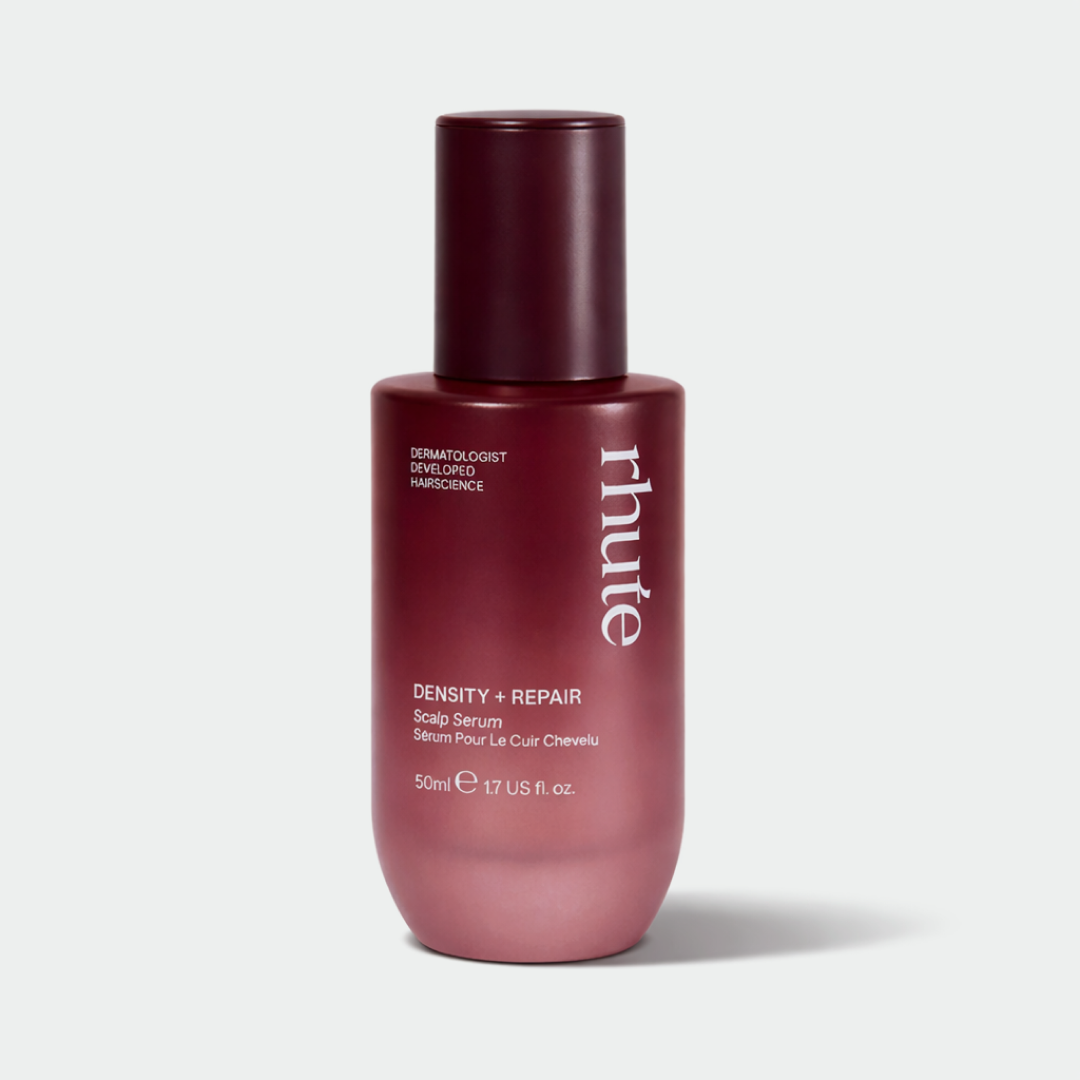
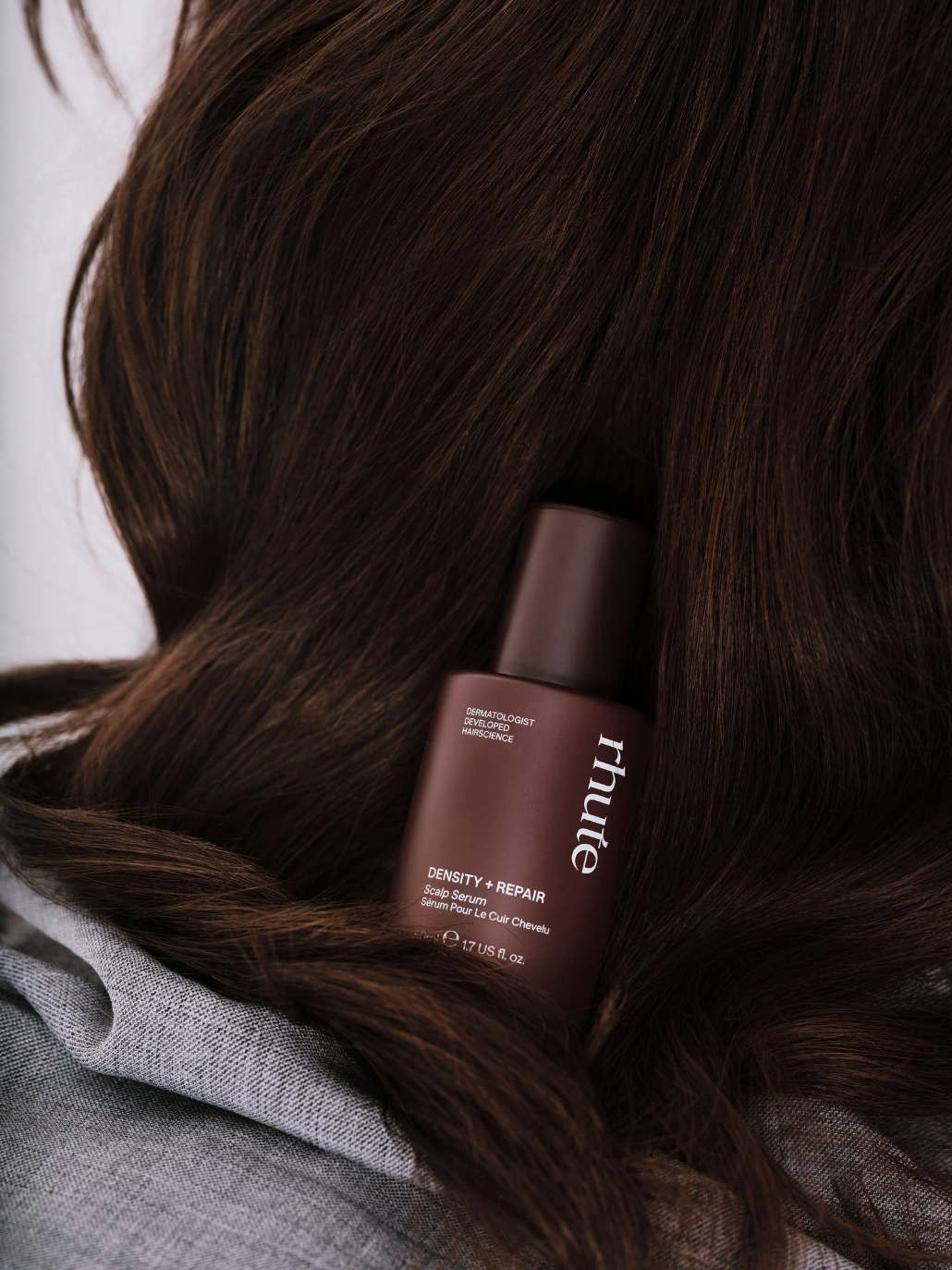
Density + Repair Scalp Serum: less shedding, more growth. Caffeine helps stimulate follicles for fuller hair, niacinamide (a form of vitamin B3) supports your scalp barrier, and stem cell extracts and bioactive peptides round it out. Use it daily on a dry or damp scalp.
-
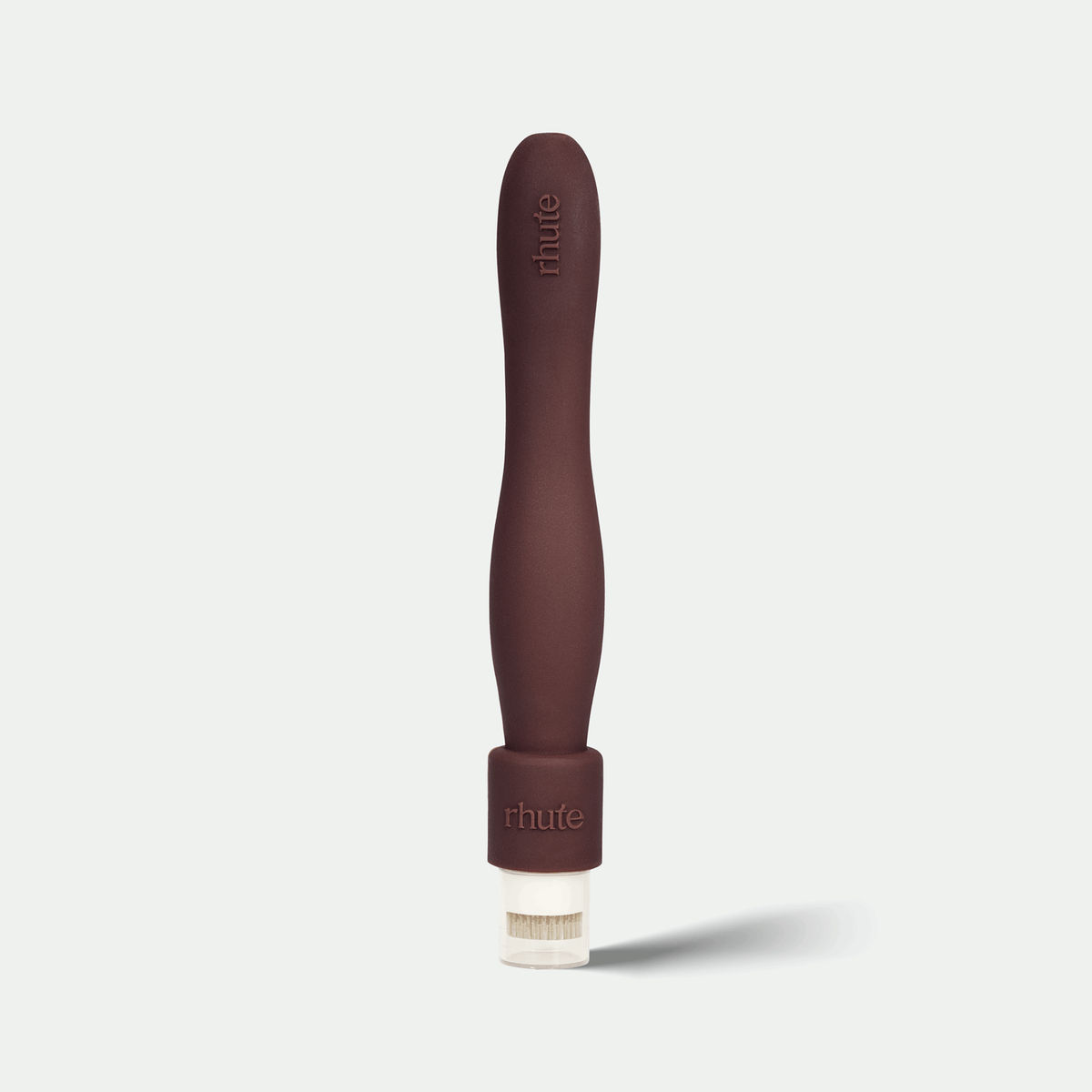
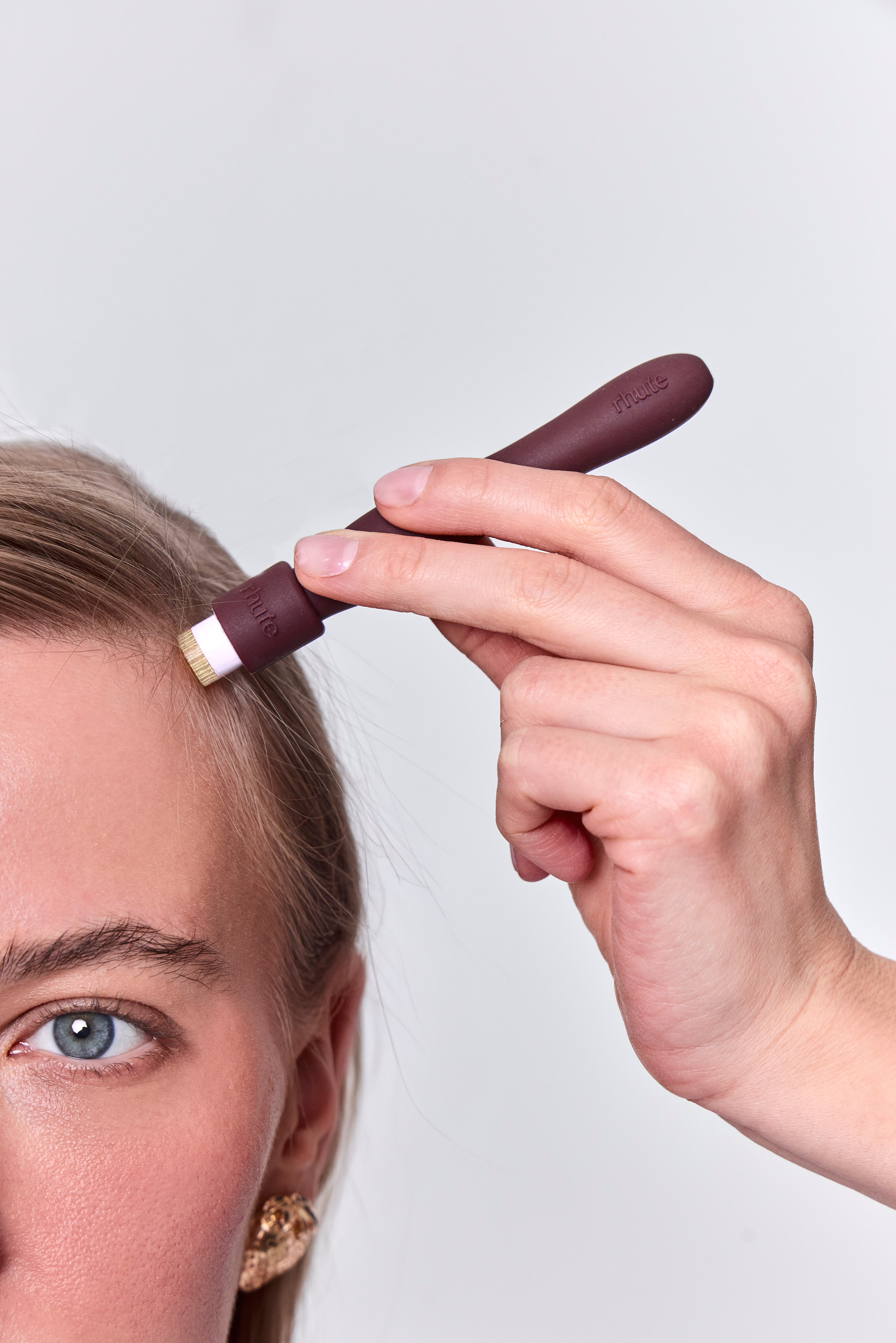
Precision Dermastamp: its 0.3mm needles are the sweet spot, deep enough to reach the dermis (the skin layer below the surface) and stimulate follicles, shallow enough to keep things gentle. Use it one to two times a week. To clean it, pour cleansing alcohol into the lid, pop the stamp back in and spin for one to two minutes, before and after every use. Our guide to how to use a derma stamp has the full technique.
All three come together in the Density Rhutine, and you can browse more in our hair and scalp oils collection.
How to make your routine stick
Every hair routine comes down to consistency, so it helps to know how habits actually form. In a study that followed people building a new daily habit, the time it took to feel automatic ranged from a few weeks to the best part of a year, and missing a single day didn't set anyone back (Lally et al., 2010). That study looked at daily habits, so a two-or-three-times-a-week ritual may take a little longer to settle in. Be patient with yourself.
-
Anchor it. People in the study repeated their habit in the same situation each time. Tie oiling to something you already do, like your Sunday reset or the evening before a wash.
-
Keep it in sight. Oil on the bathroom shelf gets used. Oil in a drawer gets forgotten.
-
Start small. One oiled wash a week, then build to two or three.
-
Don't restart from zero. Missed a week? Pick it up on your next wash day.
Rinse, rhute, repeat.
How to tell if your routine is working
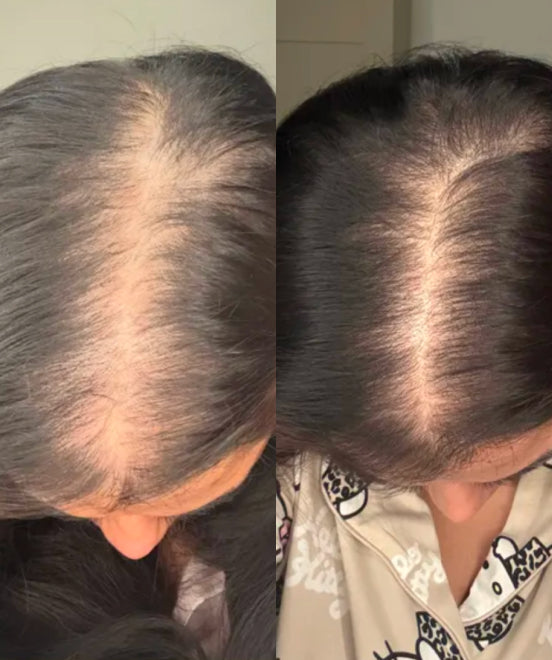
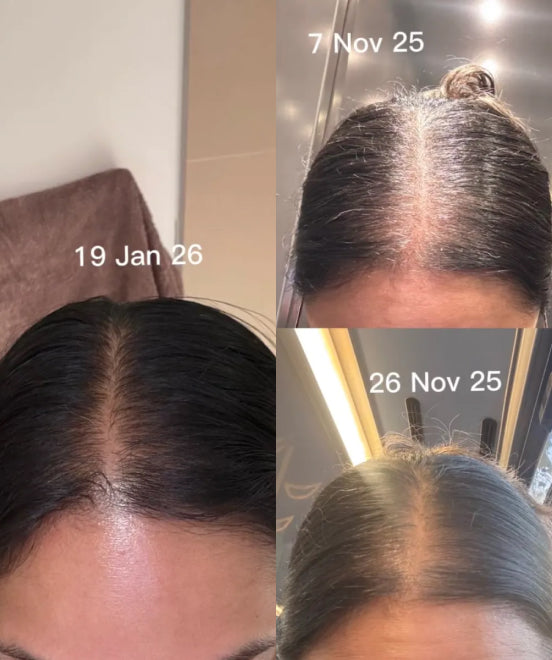
Most hair oiling before and after photos are taken weeks apart in different light, which makes any change look bigger or smaller than it is. Set your expectations by what you're tracking:
-
Within a few washes: your lengths may feel softer and smoother, and detangle more easily.
-
Over months: your hair should feel stronger, softer, and easier to manage. If you’re using an oil made for thinning or shedding, this is also when changes in density start to show, because hair grows in cycles and new hairs take time to come through. Our guides to how long the hair growth cycle is and how long hair growth treatments take to work explain the timings.
For an honest before and after:
-
Same light: stand at the same window, at the same time of day
-
Same angles: your hairline, your parting from above, and your crown
-
Same parting: so you're comparing like with like
-
Dry, unstyled hair: no product, no blow-dry
-
Once a month: compare month three with month one, not week to week
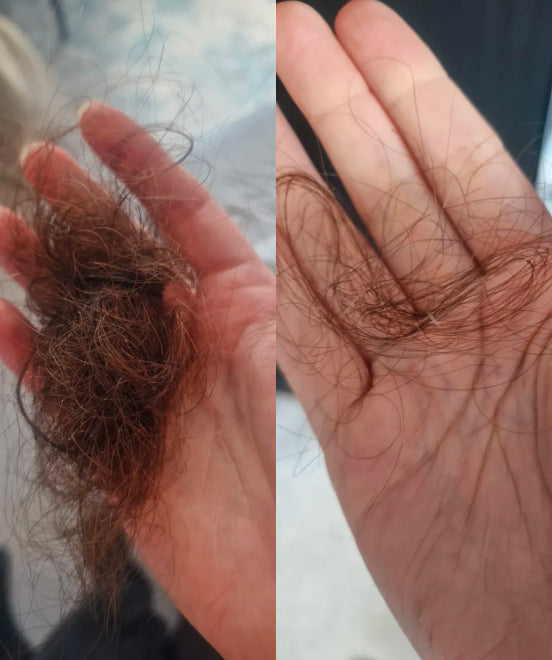
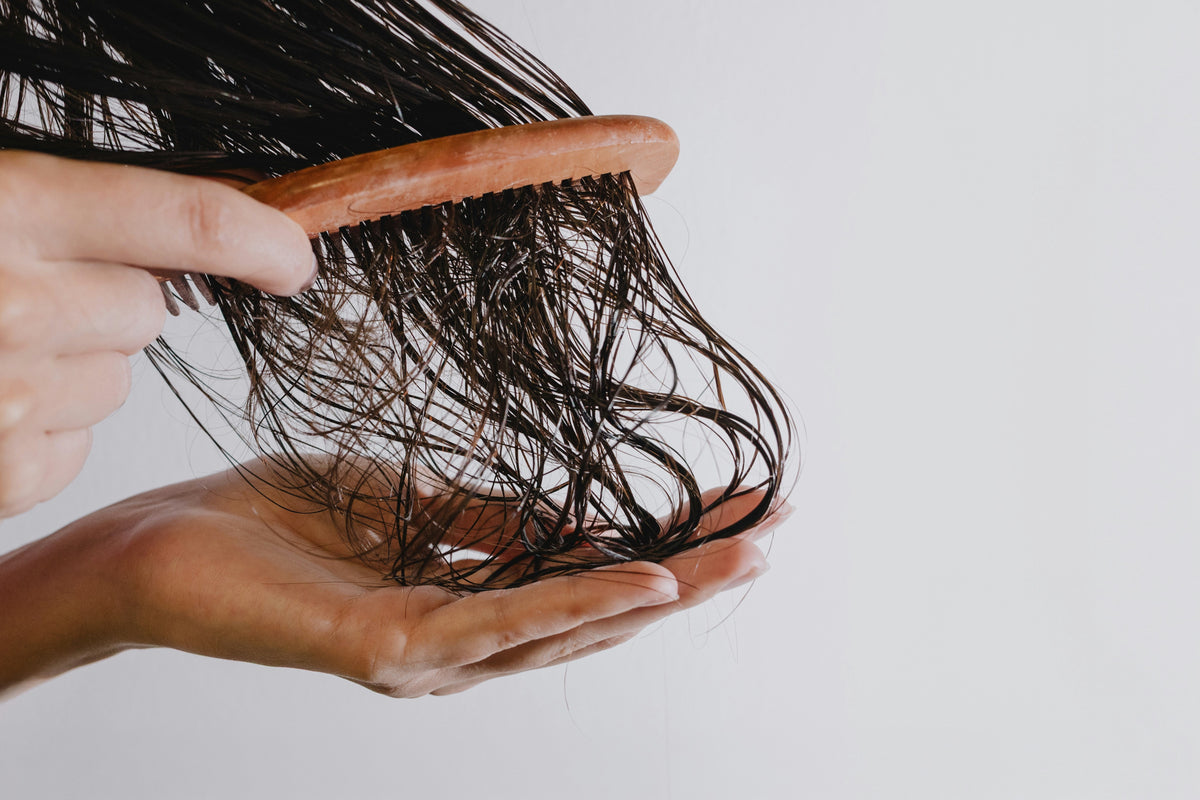
Counting hairs in the drain can mislead you, because the longer you go between washes, the more comes out at once. Our telogen effluvium guide explains what normal shedding looks like.
The takeaway
Oil before you wash, condition after, treat your scalp once it's clean, and keep going for months rather than weeks. Your routine will look a little different depending on your goal, and that's how it should be. Healthy hair starts here. Get growing.
FAQs
Can you follow a hair oiling routine with extensions?
Yes, with care. Oil and conditioning products can loosen tape and keratin bonds, so keep oil away from where your extensions attach. Work it into your scalp between rows with your fingertips, focus on your own lengths and ends, and check with your extension stylist which products suit your bond type.
Can you use more than one oil in your routine?
You can, but layering several oils mostly adds weight rather than benefit. We haven't found research showing that stacking oils works better than one. A blend made for the job is simpler. Our guide to does hair oiling work covers the evidence behind individual oils.
What should you avoid in a hair oiling routine?
-
Putting essential oils on your scalp undiluted
-
Oiling on top of several days of product buildup
-
Scraping oiled hair into a tight bun while it soaks in
-
Starting several new products at once, so you can't tell what's working
-
Expecting changes in shedding within weeks
Is a hair oiling routine different for men?
The order is exactly the same. Short hair needs much less oil, so the routine leans towards your scalp rather than your lengths. If thinning is your main concern, a scalp-led routine with oil, serum and stamping is the place to start.