

You've worked out your hair is low porosity, and suddenly a lot makes sense: products that sit on top, hair that takes ages to get wet and even longer to dry. So which oil should you use? We went to research for the answer.
What's the best oil for low porosity hair?
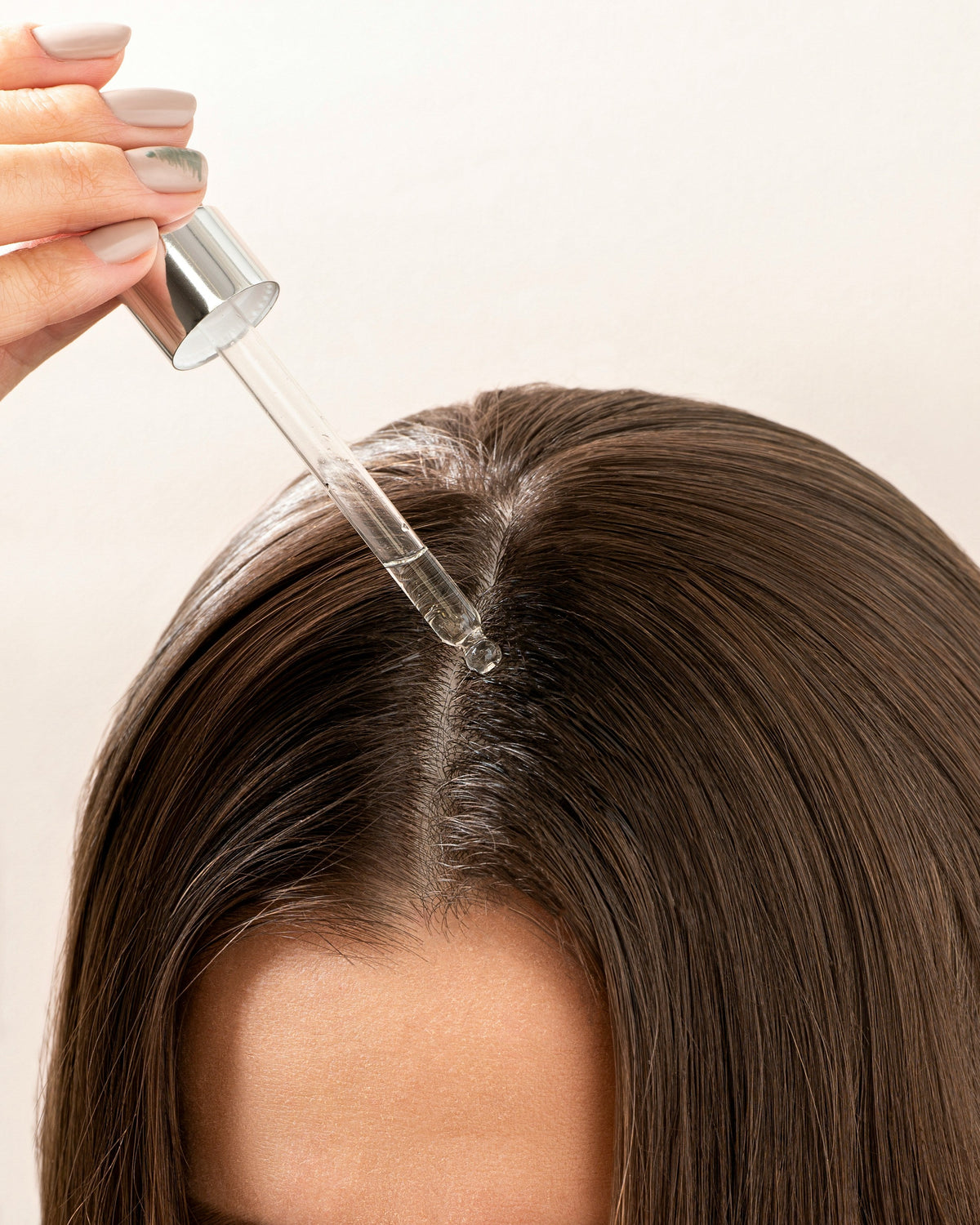
The best oil for low porosity hair is a small amount of an oil that can get into your strands, like coconut oil or a blend that includes medium-chain oils (MCTs) like babassu oil, used before you wash with a little gentle warmth. If you want a finish afterwards, a few drops of a light oil such as argan, jojoba or sweet almond on damp ends is plenty.
Low porosity means your cuticle (the overlapping scales on the outside of each strand) sits tightly closed, so water and products are slow to get in. Not sure which type you have? Our guide to what low porosity hair is covers the signs and causes, and if your hair soaks things up fast and loses them just as quickly, high porosity hair is more your thing.
The quick version:
-
Before washing: coconut oil, or an oil blend made to rinse out
-
To finish: argan, jojoba, sweet almond or grapeseed, a few drops at a time
-
Go easy on: castor oil, and layering lots of oils at once
Why "lightweight" and "small molecules" aren't the same thing
The usual advice is to pick "lightweight" oils because they have small molecules that can slip under a tight cuticle. Grapeseed often tops the list. It does feel light, but how an oil feels between your fingers and how easily it gets into your hair are two different things.
Oils are mostly made of fatty acids, the building blocks that give each oil its texture and character. Each fatty acid is a chain of carbon atoms, and "chain length" just means how long that chain is. Shorter chain, smaller building block.
Grapeseed oil is mostly linoleic acid, which has 18 carbons (Garavaglia et al., 2016). That makes it a long-chain oil. Coconut oil's main fatty acid, lauric acid, has 12. So the oil that feels heavier is built from shorter chains than the one that feels light.
Does that make a difference? In one lab study, medium-chain fatty acids (eight to 12 carbons) got into hair more readily than long-chain ones, with the very shortest getting in most, while long-chain ones tended to stay on the surface (Kim & Ahn, 2023). Two caveats: the hair had been bleached, and lauric acid on its own didn't outperform every long-chain fatty acid. It's a pattern, not a rule.
What it does tell you is that "lightweight" describes texture and spread. That matters a lot for an oil you leave in, but it isn't a reliable guide to what gets inside.
You might also see oils ranked by pH, with "low pH" oils said to open your cuticle. pH only really applies when water is present, and a pure oil contains almost none, so there isn't a meaningful pH to rank.
Is coconut oil good for low porosity hair?
Coconut oil is usually the first thing low porosity hair is told to avoid. The research is kinder to it.
-
The case for it. In a well-known study comparing coconut, sunflower and mineral oil, coconut was the only one that reduced protein loss in both undamaged and damaged hair, whether used before or after washing (Rele & Mohile, 2003). Your hair is made of protein, so losing less of it means less wear and tear. The researchers put this down to lauric acid's attraction to hair protein and its small, straight shape. So the "small molecule" idea has something to it. It just points towards coconut, not away from it.
-
A myth worth dropping. Coconut oil is a fat, not a protein, so the idea that it "acts like protein" and tips your hair into protein overload doesn't hold up.
-
The honest trade-off. In a 2024 lab study, coconut and avocado oils made undamaged strands slightly stiffer, while argan oil made them more flexible but also a little weaker (Lourenço et al., 2024). The hair sat in oil for a full day, and the tests were done on strands in a lab, not on people’s heads, so it's a clue rather than proof. Still, if coconut leaves your hair feeling crunchy, that's a real effect, not you doing it wrong.
Our take: try coconut as a pre-wash treatment rather than a leave-in, rinse it out properly, and if your hair still feels stiff, switch to a blend or argan. For coconut's wider evidence, see does hair oiling work?
Pre-wash or finishing: two jobs, two kinds of oil
Buildup is the biggest frustration with low porosity hair, because whatever doesn't get in stays on the surface. That's why it helps to split oils by job.
-
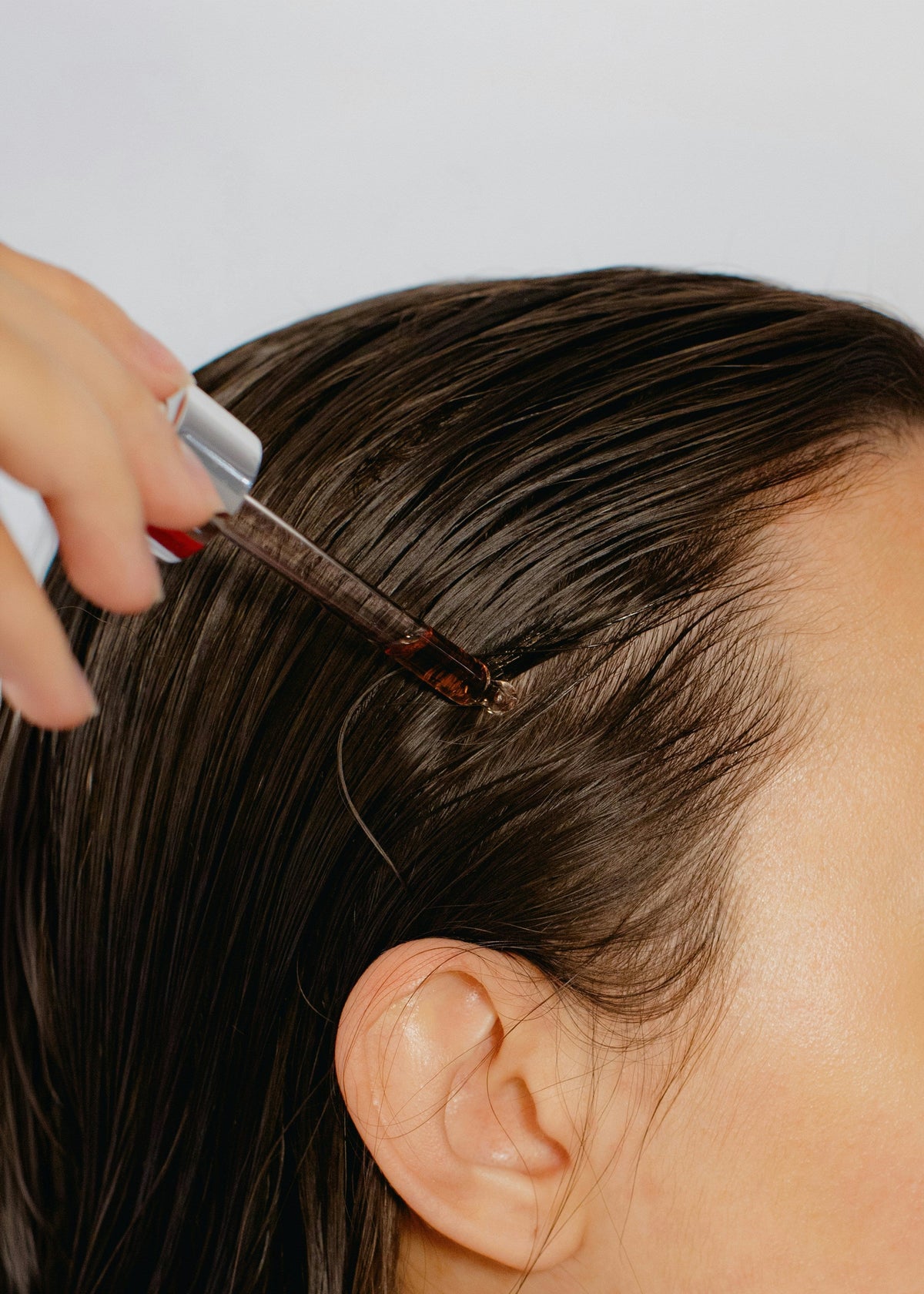
Pre-wash oils go on before you shampoo and get rinsed away. Because they don't stay in your hair, they can be richer. This is where a penetrating oil like coconut, or a well-made blend, earns its place.
-
Finishing oils stay in. Here, light texture and tiny amounts matter, because anything extra just sits on top. One or two drops on damp ends is usually enough.
If your hair starts to feel coated or seems to repel water, that's usually buildup rather than your porosity getting worse. Our guides to silicones and scalp detox explain how to clear it.
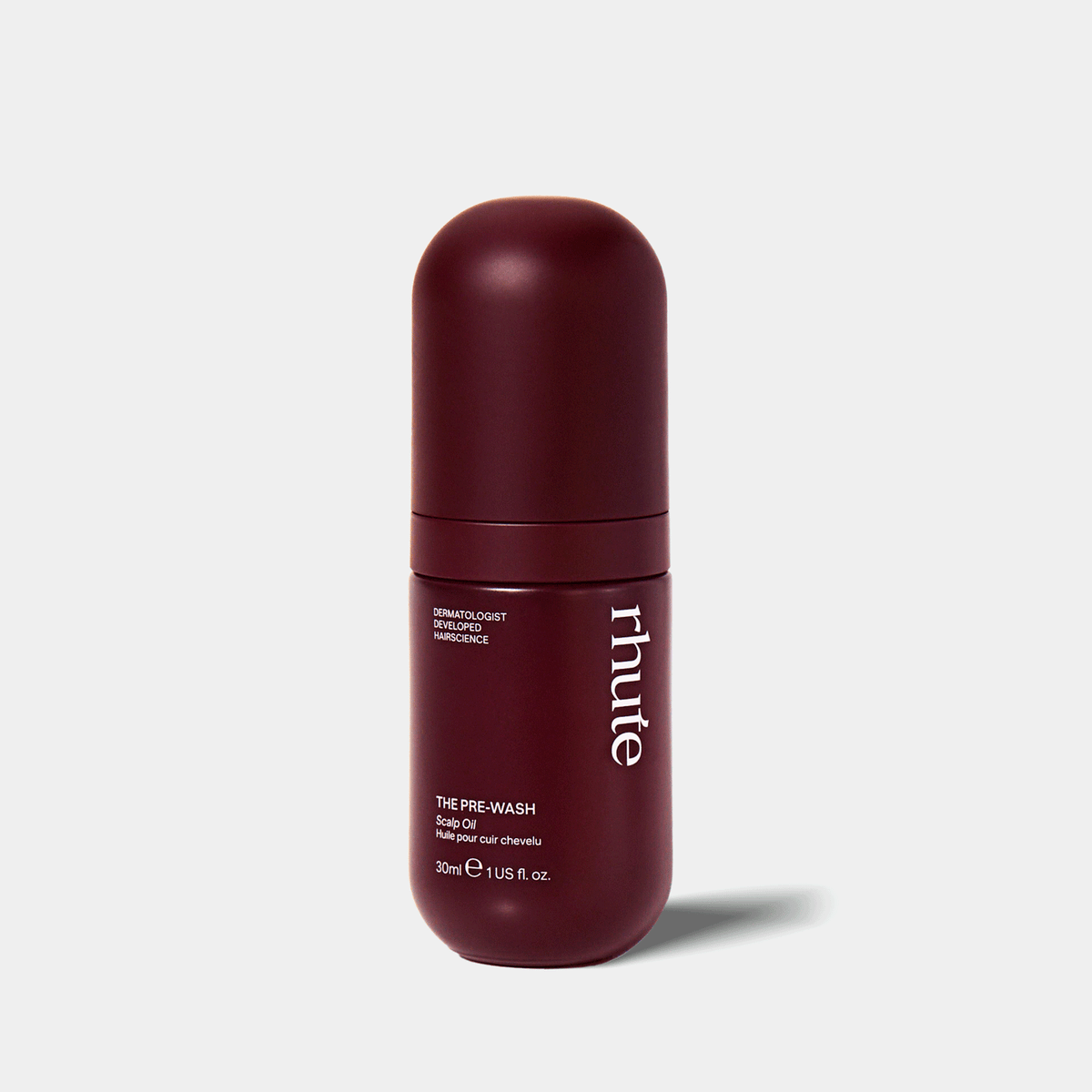
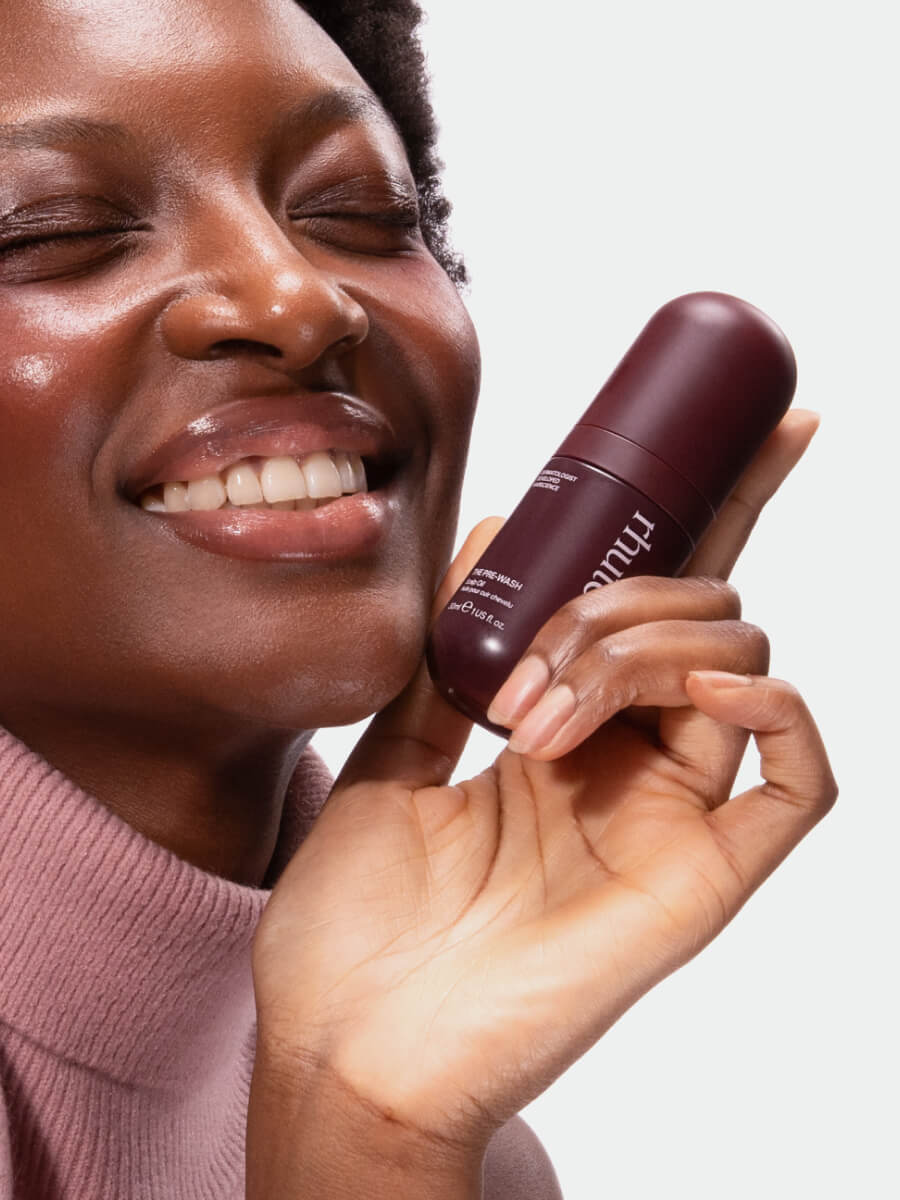
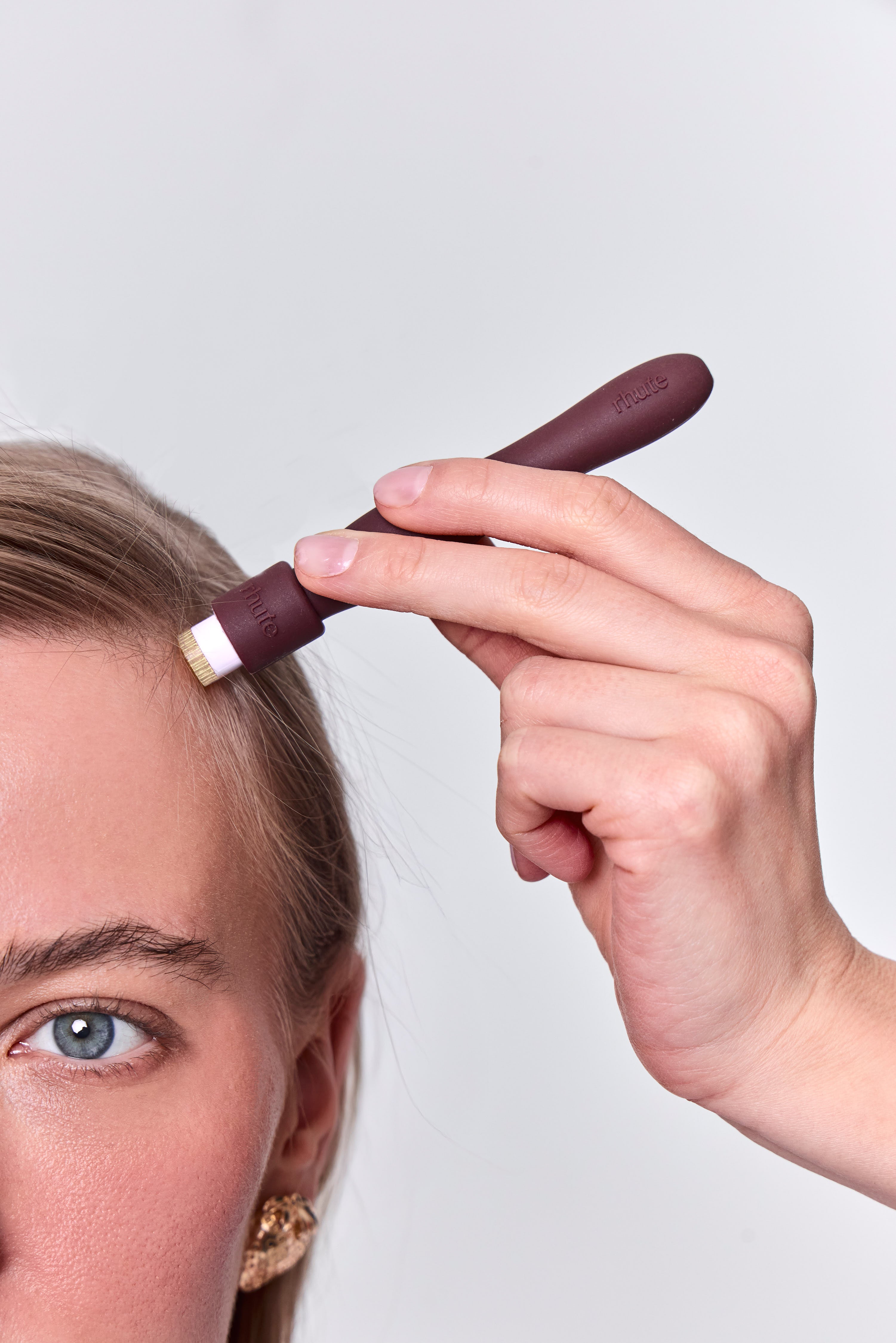
For the pre-wash step, our Triple Density Complex Pre-Wash Hair Oil looks after you from rhute to tip. It's designed to leave your scalp calm and comfortable and your lengths softer and smoother, then rinse clean with your usual shampoo. Pumpkin seed oil and saw palmetto help support your scalp by targeting DHT (a hormone linked to shedding), ceramides help support your scalp barrier, and jojoba, sweet almond and argan condition your lengths. It also contains caprylic/capric triglyceride, an ingredient made from medium-chain fatty acids. Work two to three droppers through your scalp and hair, leave it for at least one hour or up to six hours (if you have time), then wash as normal.
How to get oil to work on low porosity hair
Our guide on how to use hair oil covers the full method. These are the tweaks that matter most for low porosity hair:
-
Add warmth while it sits. Pop on a shower cap or wrap a warm towel around your head. Heat makes liquids runnier and speeds up how quickly things move into the hair fibre (Li & Qin, 2023). Warm, not hot.
-
Use less than you think. Your hair takes in less, so extra oil simply stays on top. Start small and build up.
-
Work in sections. Smaller sections give a thin, even layer instead of one heavy patch at the back of your head.
-
Rinse properly. After shampooing, feel your lengths. If they still feel coated, wash again.
-
Clarify now and then. If water starts beading on your hair instead of soaking in, it's time for a clarifying wash.
Oils for low porosity hair, by job
|
Oil |
Best job |
Worth knowing |
|---|---|---|
|
Coconut |
Pre-wash |
Good evidence for reducing protein loss, but can leave undamaged hair feeling stiffer |
|
Argan |
Finishing |
Kept strands more flexible in lab testing, and a few drops go a long way |
|
Jojoba |
Finishing |
Technically a liquid wax rather than a true oil, which gives it a silky, light feel. Can also be massaged into the scalp before washing. It contains some vitamin E, which is an antioxidant. |
|
Sweet almond |
Finishing |
Soft and easy to spread through damp ends. Also works as a pre-wash scalp oil, and naturally contains vitamin E. |
|
Grapeseed |
Finishing |
Feels very light, though it's mostly long-chain fatty acids |
|
Castor |
Sparingly, or blended |
Very thick and sticky on its own. See is castor oil good for hair? |
|
Olive |
Lengths only |
Rich, so keep it off your scalp if you're prone to flaking |
Start with one pre-wash oil and one finishing oil, give it a few weeks, and adjust from there. Your hair will tell you quickly if something is sitting on top.
FAQs
How often should you oil low porosity hair?
Before most wash days at most. For a pre-wash oil, that usually means two or three times a week, or less if you wash less often. A drop or two of finishing oil can go on whenever you style. If your hair starts to feel limp or coated, cut back.
Should you oil your scalp if you have low porosity hair?
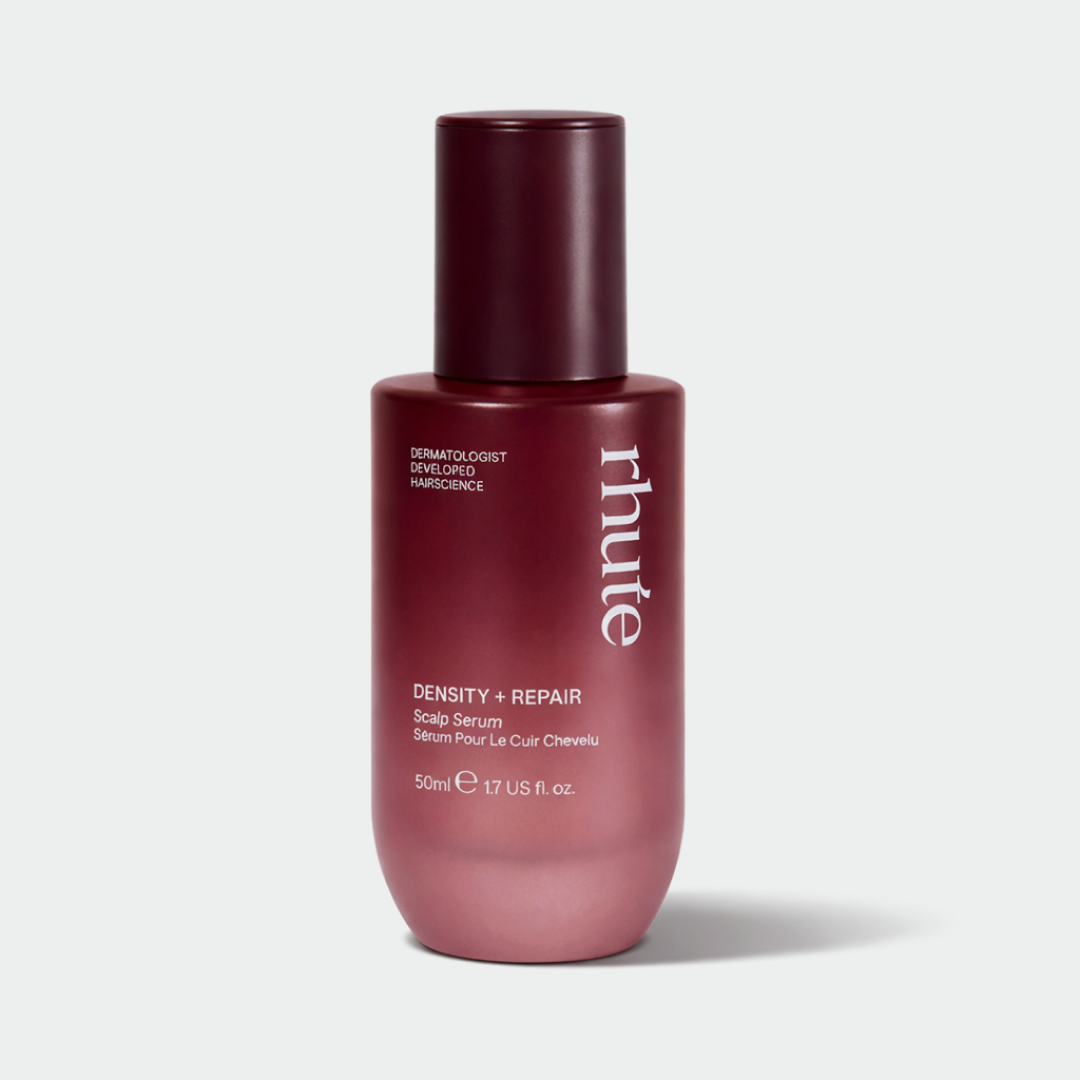
Porosity describes your strands, not your scalp. Your scalp is skin with its own needs, so choose scalp care based on how it behaves (dry, oily, flaky or shedding) rather than on your hair's porosity. If you want a daily scalp step that won't add weight, our oil-free Density + Repair serum helps support your scalp's barrier for less shedding, with niacinamide to soothe and caffeine to stimulate follicles for fuller-looking hair. There's more in our guide on how to improve scalp health.
Is rosemary oil good for low porosity hair?
Rosemary isn't really a porosity question. It's studied as a scalp ingredient for hair growth, not as something that softens or moisturises your strands, so your porosity doesn't change whether it's worth trying. Rosemary essential oil also needs diluting in a carrier oil before it goes on your scalp. Our guide to rosemary oil for hair covers what the research shows.
Is batana oil good for low porosity hair?
Batana oil comes from the nut of the American oil palm, and it's had a lot of attention online. We couldn't find any published studies testing it on hair. Its main fatty acids, oleic and linoleic Redhot1379
acid, are both long-chain, so it's a rich oil. If you want to try it, use it as a pre-wash treatment or in tiny amounts on your ends.
Does the LOC method work for low porosity hair?
LOC stands for liquid, oil, cream: a water-based leave-in, then oil, then cream. It can work with a few tweaks, such as keeping the oil step to a few drops and only adding cream if your hair really needs it. Many people with low porosity hair get on better with LCO (cream before oil) or simply fewer layers, because every layer is one more thing that can sit on top. Our guide on how to use hair oil explains both.