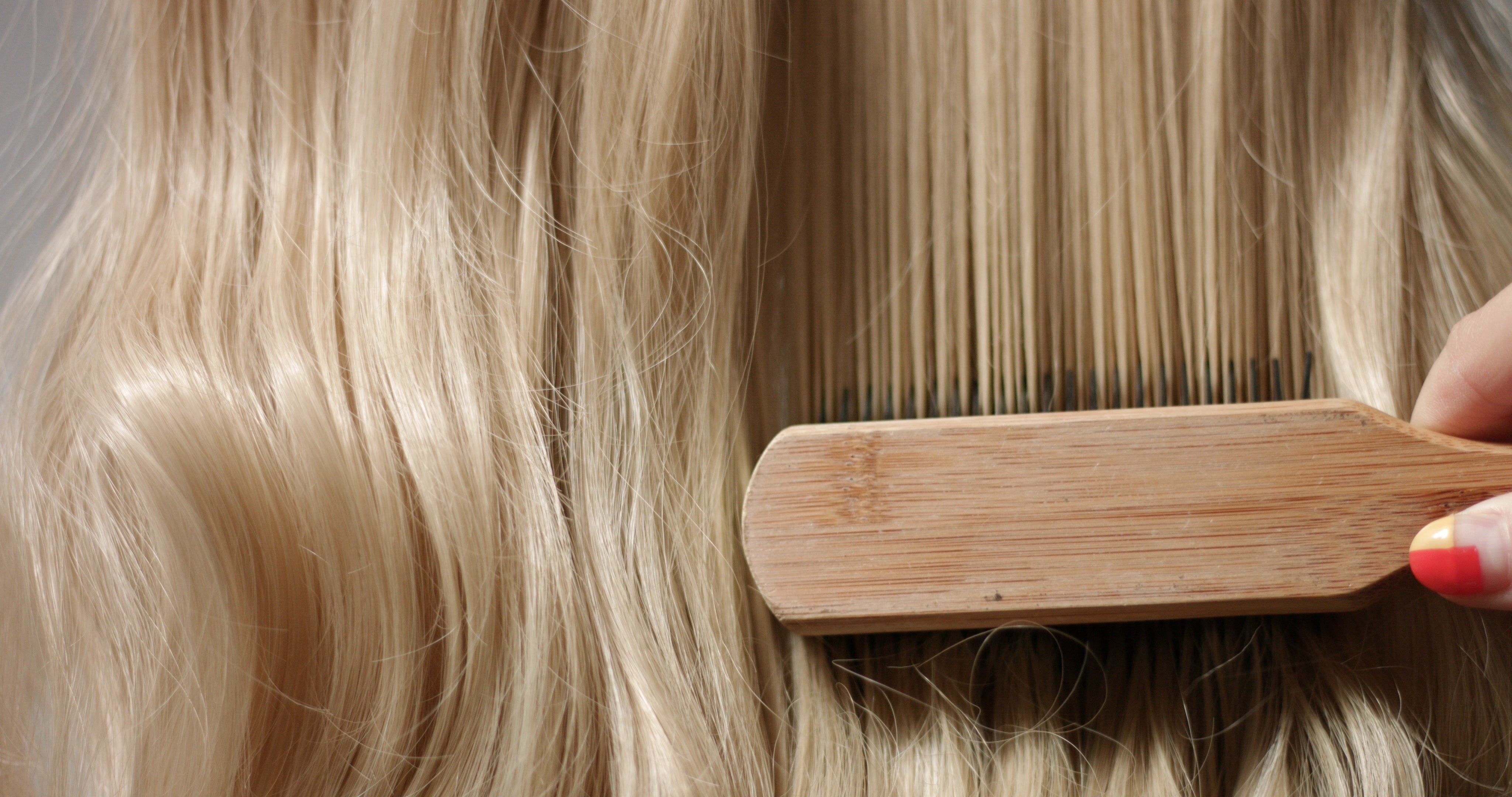


Heat damaged hair has a pattern you can learn to spot. Curl that has gone slack through your mid-lengths, a rough band across the section your straighteners pass most often, and strands that snap while you are still styling rather than hours later.
The honest part first, because it saves you money and disappointment. Once a strand has left your follicle it is no longer living tissue, so a damaged strand can’t repair itself on its own.
What you can do is stop the cause, help the damaged length look and behave better while it grows out, and look after the hair that has not been styled yet. Here's how to tell heat apart from everything else, and what genuinely helps.
What does heat damaged hair look like?
Dryness, dullness, and split ends turn up whatever the cause, which is why the usual list of signs never quite answers your question. Heat leaves a pattern, and the pattern is the giveaway.
Here’s what to look out for:
-
A curl or wave that has gone limp through your mid-lengths and stays limp when wet
-
A rough band across the section your straighteners pass most often, with smoother hair above and below it
-
Ends that look pale and bleached-out even though you’ve never coloured your hair
-
A straw-like texture that conditioner softens for an afternoon and no longer
-
Strands that snap while you’re styling, not later in the day
-
Hair that tangles in the same few places every single wash
-
Dryness and hair that struggles to retain moisture
So can heat damaged hair be repaired? Not in the way any of us would like. Once heat has changed the structure of a strand there is no putting it back, so the real work is managing the damaged length while it grows out. That is far less bleak than it sounds, and the rest of this article is what it looks like in practice.
If the signs above do not match where your damage sits, you may be dealing with general wear rather than heat. Our guide to damaged hair has it covered.
Bubble hair: the one sign only heat causes
Nearly every sign of damage could have several explanations. Bubble hair could only ever have been heat.
When a hot tool meets water still sitting inside your hair, that water turns to steam faster than it can escape. The steam blows air-filled cavities into the middle of the strand, and the hair then snaps at those weak points.
Under a microscope it looks like a row of bubbles running through the fibre, which is where the name comes from. Dermatologists file it under hair shaft abnormalities, meaning a structural fault in the strand itself rather than anything going on at your follicle.
Savitha et al. (2011) reported a 22-year-old woman who came in with dry, brittle hair that had developed over about two weeks. She had used a hot iron on wet hair twice. Microscopy showed the air-filled spaces immediately, and that was enough to confirm it.
Twice, and two weeks.
Detwiler et al. (1994) went further. They traced one case to a hair dryer that had started overheating, then applied heat to hair taken from 16 volunteers. Not one person's hair resisted it. Everyone developed the same cavities once the heat was high enough, and the team confirmed the spaces were filled with gas rather than liquid.
Two things are worth carrying away from that. Styling hair that is wet, or even a little damp, is the single riskiest habit in this whole article, and it is also the easiest one to change. And if you want your suspicion confirmed properly, this is exactly what a hairdresser or dermatologist is looking for under magnification.
Is it heat, or is it something else?
Most people arrive at this question after a year of doing several things at once, so here is how each culprit tends to announce itself.
-
Heat concentrates where the tool passes. You get a band of rough, slackened texture through your mid-lengths, with healthier hair near your roots where the plates rarely reach.
-
Bleach and colour affect the whole processed length fairly evenly, and the difference is loudest when your hair is wet, where it can feel gummy or stretchy. Our guide to how to fix bleach damaged hair goes into that properly.
-
Mechanical damage from brushing, tight styles and friction gathers at your ends and anywhere there is tension, so think hairlines, nape and ponytail placement. That is the territory of our hair breakage piece.
A quick way to check at home is to look at your hair in daylight and compare the few centimetres nearest your roots with your mid-lengths. Root hair is the newest and has been through the least, so it gives you a fair picture of what your hair looks like before your routine gets to it. If the roots look healthy and the trouble starts where your tools reach, heat is a strong suspect.
Honestly? Most people have a combination, and that is completely normal rather than a sign you have done something wrong. The useful question is not which one caused it, but which one you are still doing, because that is the one worth changing first.
Why the same setting damages your hair more than someone else's
You and a friend can use the same straighteners at the same 180°C and walk away with very different hair. It is not luck, and it is not that your hair is weak.
Lima et al. (2025) heated hair while measuring what was happening inside it, and found the lipids start reorganising long before you reach a normal styling temperature. Lipids are the fats and oils that glue your hair's structure together and keep water where it belongs, and one of their key signals had already vanished by around 110°C.
The finding that matters most, though, is about chemically treated hair. Hair that had been through acid straightening began breaking down at roughly 175°C, while untreated hair held on until about 200°C, so the treated hair started degrading around 25°C earlier. Hair that had been both bleached and straightened fared worst of all. Keratin, the structural protein your hair is mostly built from, simply gives way sooner once it has already been chemically processed.
Which means the number on the dial is not the same exposure for everyone. If you colour, bleach or chemically straighten, your hair is measurably less heat tolerant than your friend's, and the same setting is costing you more.
The consequence shows up when you brush. Zhou et al. (2011) found that thermally stressed hair broke significantly more during combing than hair that had not been heated.
For where your own settings should sit, our guide to how to protect hair from heat damage handles that in full.
Heat damaged curly hair, and whether the curl comes back
Heat damaged curly hair deserves its own answer, because the thing you notice first is not roughness, it is your pattern going quiet.
Your curl shape is held partly by hydrogen bonds, which are weak temporary links that break when your hair is heated or wet and reform as it dries. That is the entire mechanism behind a blow-dry, and it is also why a straightened style drops the moment the weather turns humid. Nothing is damaged in that version of events.
It is also why wet hair behaves so differently under stress, since Yu et al. (2017) found hair's strength depends heavily on how humid it is and how fast it is pulled.
Push the temperature high enough, or often enough, and you move past the temporary bonds into the structure of the fibre itself. That deformation is permanent, and a section in that state will not curl again wet or dry.
The test is refreshingly simple. Wet a small section and watch what it does. Natural variation in your curl pattern still curls when wet, even if it behaves differently from the rest of your head. Heat-slackened hair stays limp.
One thing we will not do is give you a number. No study has measured how much heat permanently costs a given curl pattern, so anyone promising you a percentage or a timeline is guessing. What we can say is that the wet test tells you what you are working with today, and that the sections still curling are worth protecting.
How to fix heat damaged hair
Your hair is not living tissue, so it can’t biologically repair itself. Treating heat damaged hair means reducing what happens next while the damaged length grows out, and these are ordered by how much evidence sits behind them.
-
Trim to just above where the texture turns rough. You do not have to take it all at once, and a stylist can stagger it.
-
Stop styling on wet or damp hair. This is the bubble hair problem, and it is the single highest-value change on the list.
-
Condition properly and consistently. Robbins and Kamath (2007) found a conditioner reduced both short and long segment breakage in chemically damaged hair during combing.
-
Use a heat protectant whenever heat is involved. Zhou et al. (2011) measured significantly less breakage after thermal stress when hair had been pretreated with film-forming polymers.
-
Detangle from your ends upwards, gently, wet or dry.
-
Space out chemical services, since each one lowers the temperature your hair can tolerate.
Protein and bond treatments sit slightly further down for a reason. They can genuinely improve how damaged length feels and handles for a while, which makes the grow-out much more liveable, but they work at the level of reinforcement rather than restoration. If you want the detail, we have written about the role of peptides in hair care and what hair bond repair can and cannot do.
Can you fix heat damaged hair without cutting it?
You can make damaged length look and behave considerably better. You cannot make it undamaged. So the real choice is whether you manage it while it grows out or remove it now, and both are reasonable answers depending on your hair and your life.
Managing it means conditioning consistently, handling your hair gently, keeping heat away from it, and accepting that it will still be the fragile part of your head for a while.
There's one practical thing worth knowing before you decide. Damaged ends carry on fraying and splitting upwards over time, so waiting often costs you more length in the end than a trim would have done. Plenty of people still choose to wait, and that is a perfectly valid call to make. It just helps to make it with that in mind rather than discovering it six months later.
How long does heat damaged hair take to recover?
There are two different timelines here, and mixing them up is why people give up.
The first one is shorter than you think. Damage stops the day you stop the cause, so there is no recovery period to sit through on that side. Your hair is not getting worse while you wait.
The second is arithmetic rather than healing. Replacing the damaged length takes as long as it takes to grow, at roughly a centimetre a month, and we have done the full calculation in our damaged hair guide rather than repeat it here.
Worth saying plainly: no study measures grow-out time for heat damage specifically, so any confident "six weeks to recovery" figure is a guess.
Looking after the hair you have not styled yet
Since the damaged length is leaving either way, the hair genuinely worth investing in is the hair still being built at your follicle. Trüeb et al. (2018) make the case that your scalp acts as the environment where each fibre forms, and that its condition affects the quality of that hair before it ever emerges.
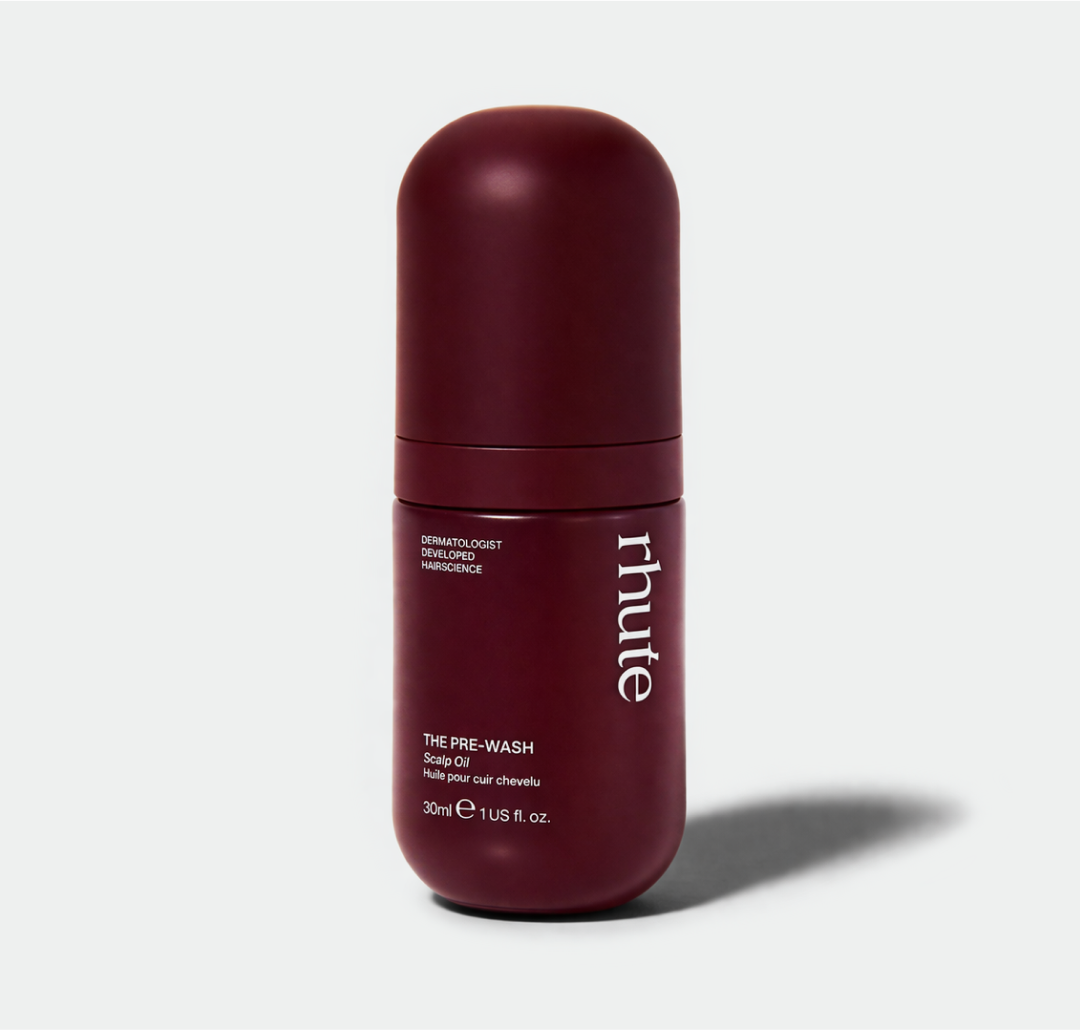
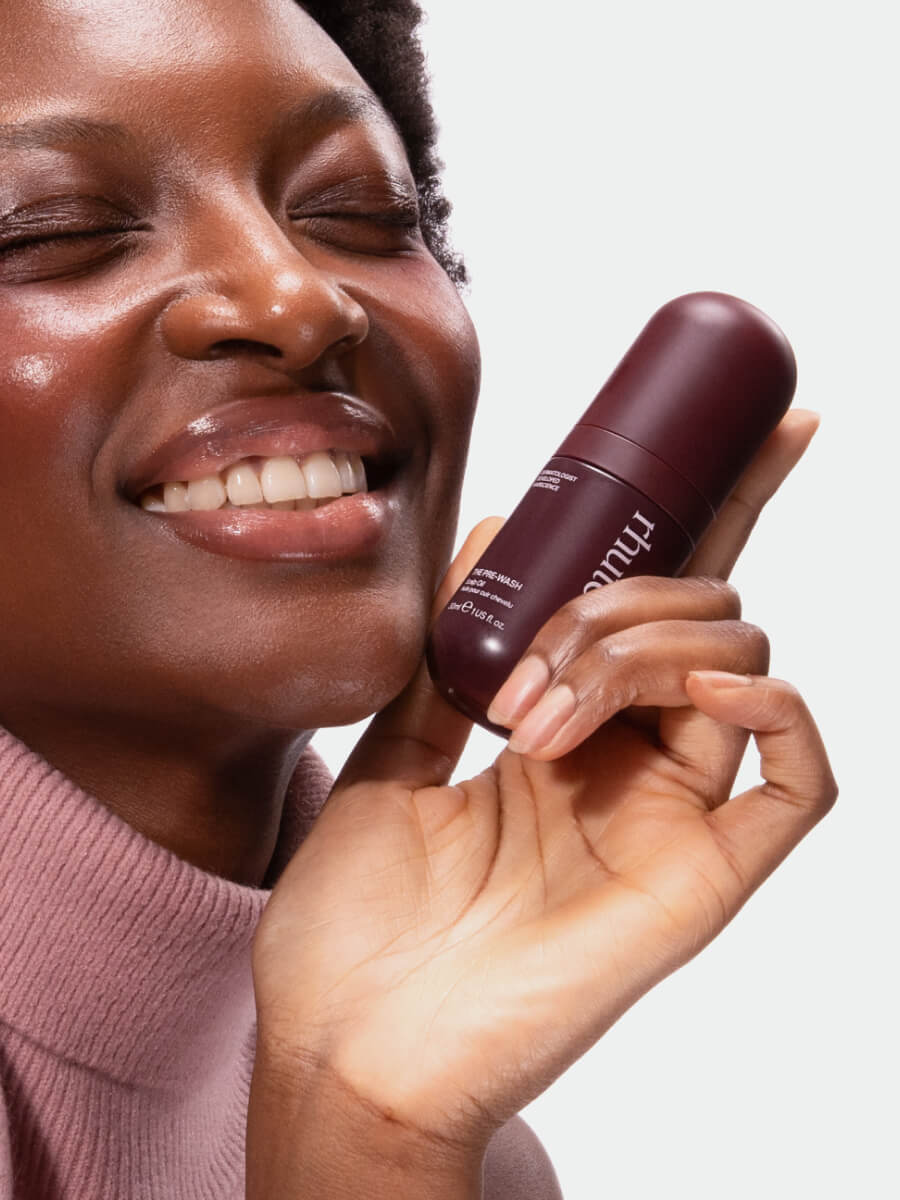
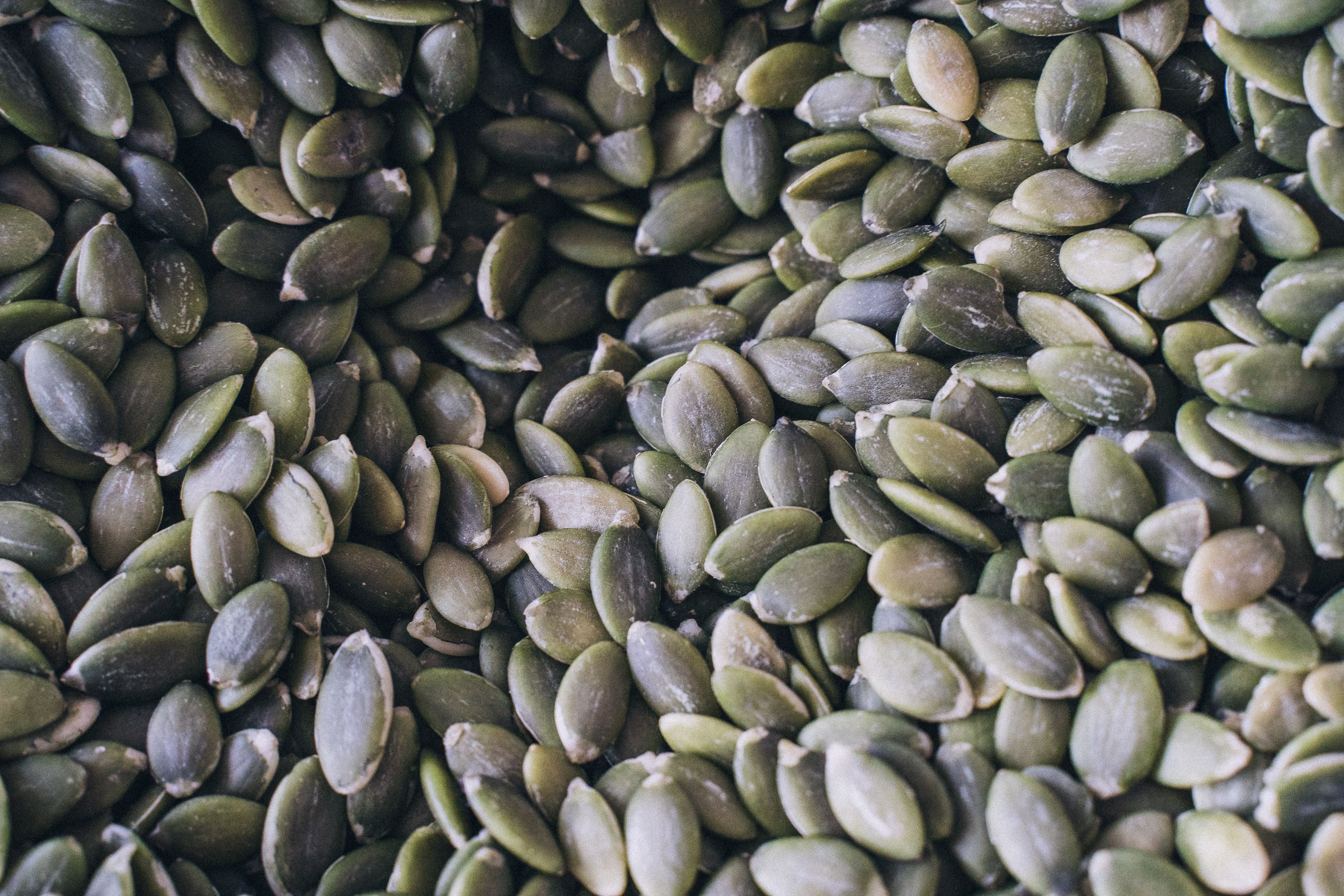
Our Triple Density Complex Pre-Wash Hair Oil makes detangling easier and helps reduce breakage during washing, when your hair is at its most fragile. It uses pumpkin seed oil and saw palmetto to support density, with ceramides to support your scalp barrier.
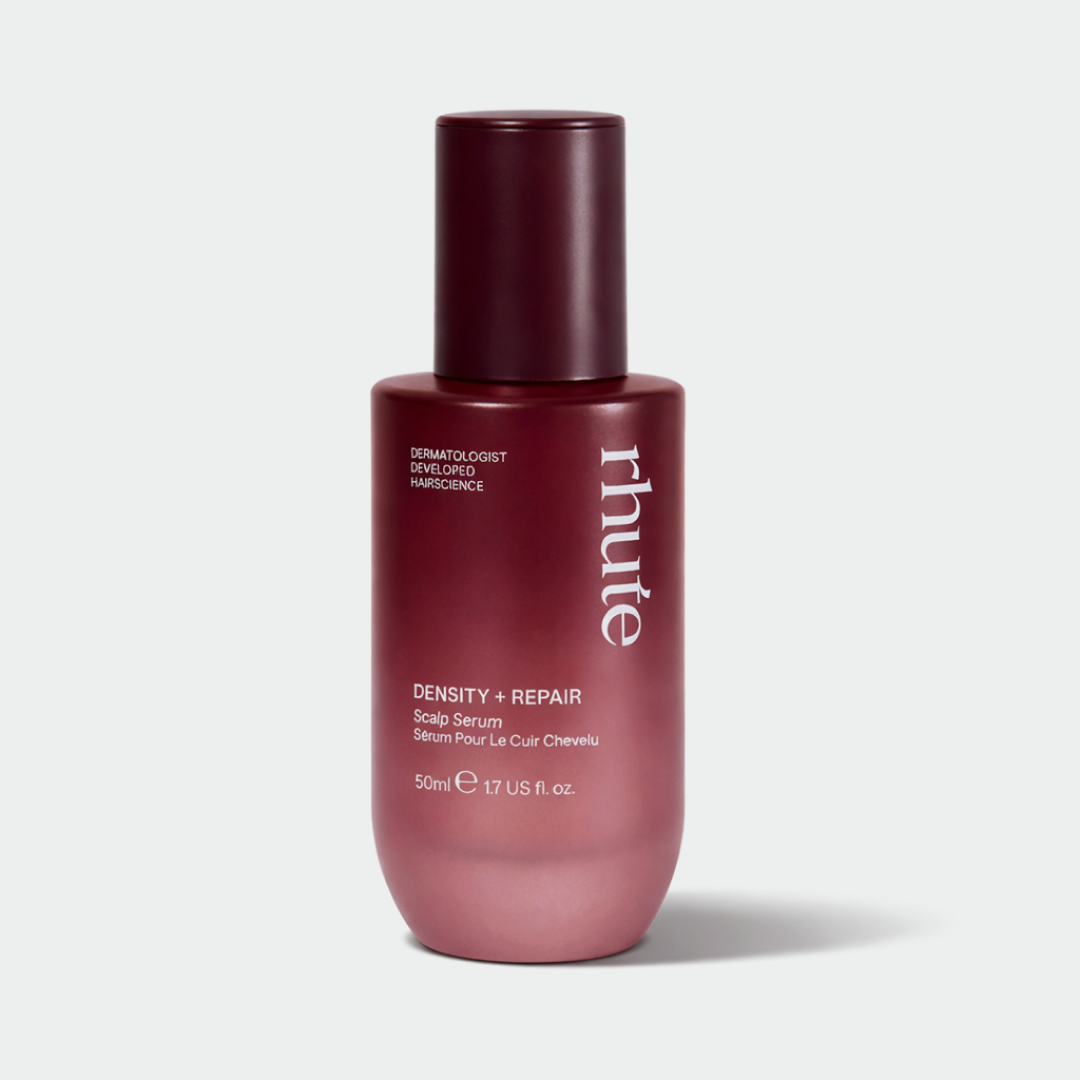
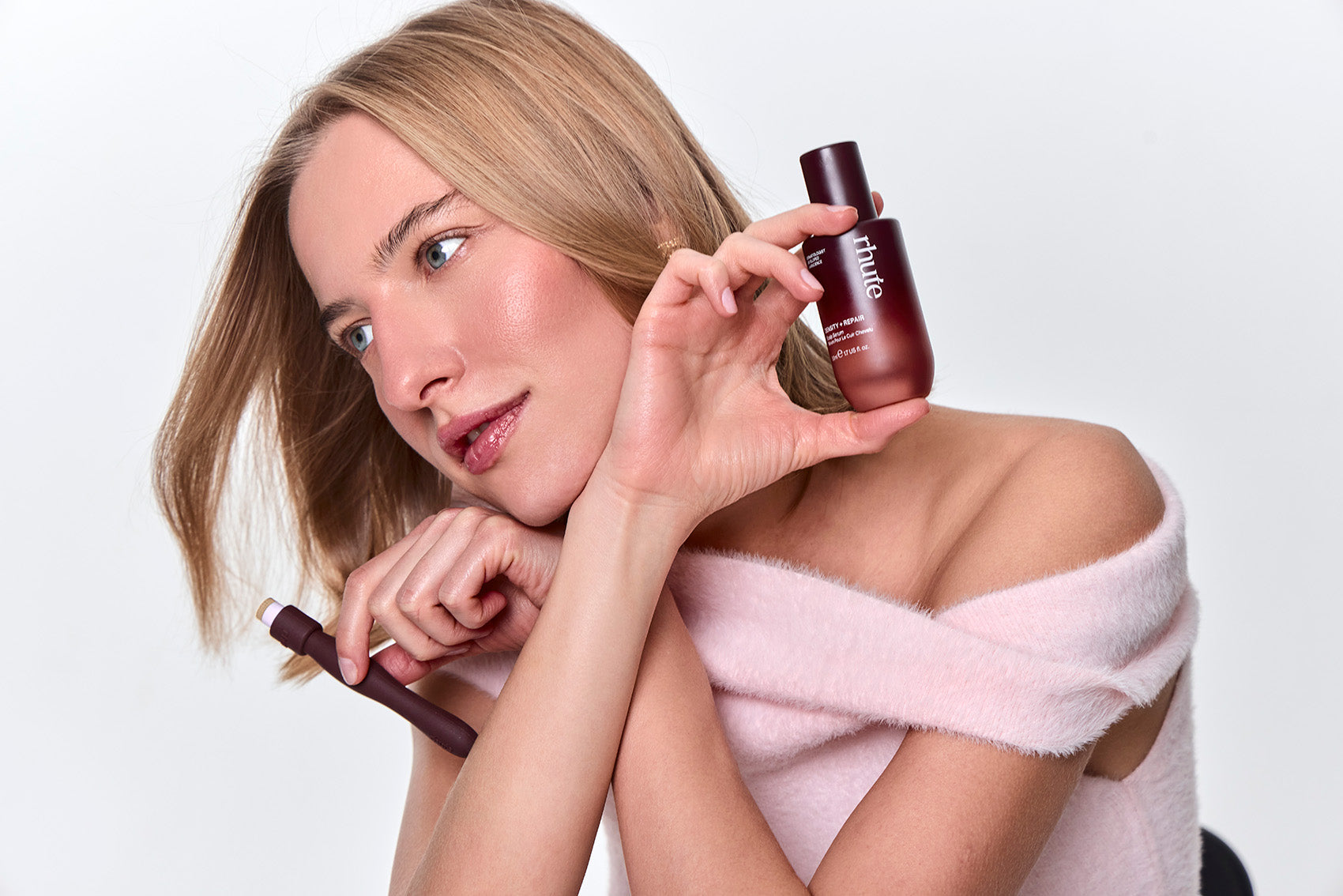
Density + Repair hair serum works afterwards on your scalp itself, using niacinamide to support your skin barrier and bioactive peptides to help reduce shedding.
Neither of them repairs a strand that is already damaged, and we would rather tell you that than let you find out.
If you want to give your scalp the best possible conditions, start with how to improve scalp health. And when you are ready to make sure this does not happen again, how to protect hair from heat damage is the piece you want.
FAQs
Is a hair dryer as damaging as straighteners?
Not usually, because a dryer moves warm air across your hair while straighteners press heat directly into it, and contact heat concentrates far more energy in one spot. A dryer is not harmless though. Detwiler et al. (1994) traced a case of bubble hair to a domestic dryer that had begun overheating, so a faulty or very hot dryer held close to your hair for long enough can cause structural damage.
Does heat damage cause hair loss or thinning?
No, although it can look convincingly like it. Heat damages the strand, while hair loss happens at your follicle, which heat styling does not reach. What you are seeing is damaged hair snapping partway along its length, which reduces volume and leaves shorter broken pieces around your hairline. Our hair breakage guide covers that, and if you suspect genuine loss, start with understanding hair loss.
Does heat damaged hair grow more slowly?
No. Growth happens at your follicle, which sits below your scalp and is unaffected by anything your straighteners do to the strand. Heat damaged hair only appears to grow more slowly because the fragile ends keep breaking off at roughly the same rate new length arrives at the top, so your overall length stalls even though your hair is growing normally.
Can you heat style hair that is already heat damaged?
You can, and nobody is going to tell you off for it. Just know the maths has changed. Damaged and chemically treated hair has a lower thermal tolerance, with Lima et al. (2025) showing treated hair degrading around 25°C earlier than untreated hair. The same setting you used last year now costs you more, so the damaged sections are where a protectant and a lower setting matter most.
Is the cool shot on a dryer actually worth using?
It has a real mechanism behind it. Your style is held by hydrogen bonds that form as your hair cools and dries, so finishing with cool air lets those bonds set while your hair is in the shape you want. It helps the style hold rather than repairing anything. We have not found a study measuring how much difference it makes in practice, so treat it as a sensible habit rather than a proven one.
How do I fix extremely heat damaged wavy hair?
The approach is the same as for curls, but wavy patterns tend to slacken first because looser waves rely more heavily on those temporary hydrogen bonds. Wet a section to see what still forms a wave. Anything that stays flat when wet has been permanently altered and will need growing out, while the sections still waving respond well to gentle handling, consistent conditioning and a break from heat.
Do heat protectants actually work?
Yes, with the caveat that they reduce damage rather than prevent it. Zhou et al. (2011) found hair pretreated with film-forming polymers broke significantly less during combing after thermal stress than untreated hair. A protectant will not make 220°C safe, but it meaningfully changes what a normal styling session costs you. Our guide to protecting hair from heat damage covers how to use one well.