

Yes, the sun damages your hair, and it does two separate things rather than one. It weakens the protein your hair is built from, and it breaks down the pigment that gives your hair its colour. Those are different processes, which is why sun damage can show up in such different ways.
Here’s what it usually looks like:
-
Colour that has lifted over a summer, or gone brassy if you’re blonde or bleached
-
A rough, dry band through your mid-lengths and ends while your roots still feel fine
-
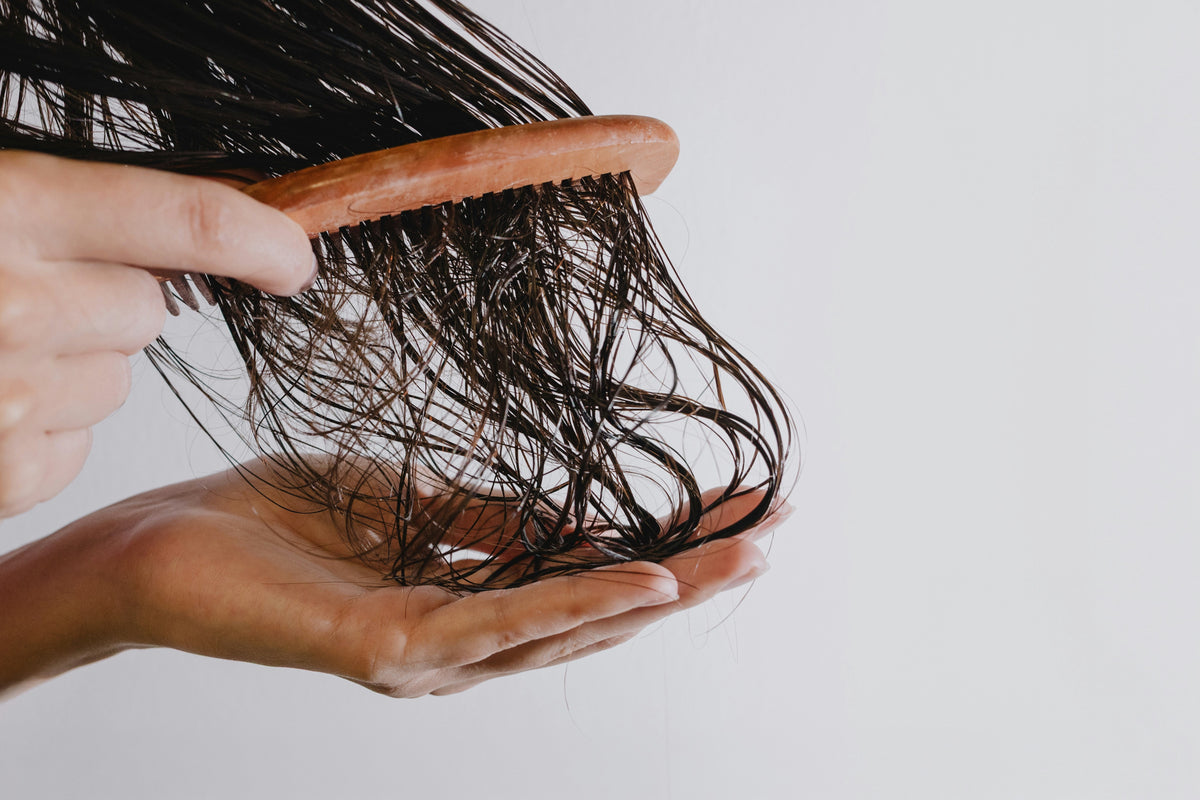
Ends that tangle and snap more than they did before your holiday
-
A scalp that feels tender, or starts flaking and peeling a few days later
If you’ve ever come back from a week away with noticeably lighter hair, that was not a trick of the light. It was your pigment being broken down, which is worth sitting with for a second, because the look a lot of us have chased is the damage itself.
Which brings us to the lemon juice thing. Squeezing lemon on your hair and sitting in the sun does lighten it, and it also does two unhelpful things at once. The acidity roughs up your cuticle, the shingled outer layer of each strand, and citrus contains furocoumarins, natural compounds that react with UVA light and can cause a genuine chemical burn where the juice runs onto skin. Dermatologists call it phytophotodermatitis (Ellis & Elston, 2021).
Sun damage also stacks on whatever else your hair has been through, so bleach plus heat plus a fortnight away is a different story from sun alone. Our guide to damaged hair covers the signs more broadly.
UVB and UVA do two different jobs
UV is not one thing, and the split explains why two people can describe completely different problems.
UVB is the protein one. It is absorbed by the light-sensitive amino acids in keratin, the structural protein your hair is made of, and that absorption sets off free radicals that degrade the protein from the inside. This is what produces the yellowing that shows up in bleached and grey hair.
UVA is the colour one. It reaches further into the fibre and degrades melanin, your natural pigment, which is what lifts your colour over a summer (Sebetić et al., 2008).
So structural damage and colour change are two processes running side by side, not one. That’s why your hair can fade without feeling wrecked, and can feel wrecked without fading much at all.
Researchers agree the sun damages hair, but there is still no firm consensus on exactly how much each slice of the solar spectrum contributes, partly because studies use wildly different lab conditions (Dario et al., 2015). The UVB and UVA split is the working model, not a closed case.
If your bleached hair has gone brassy after a holiday, that is this mechanism doing its thing rather than your toner failing. The bleach damaged hair guide covers this in detail.
Your hair colour changes how much damage you take
You’ll have read that light hair is more vulnerable. True, but the reason is more interesting than "less pigment to shield it."
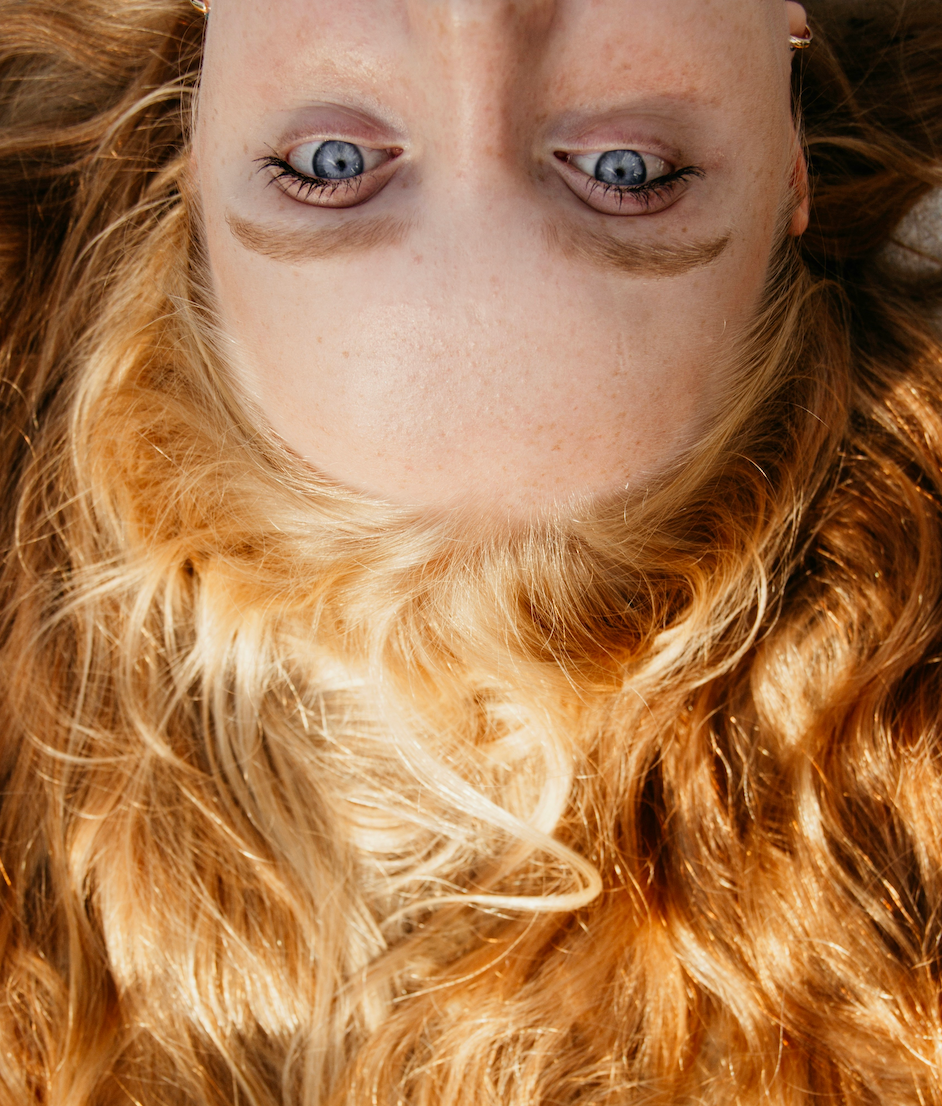
Your hair contains two kinds of melanin, and they behave almost oppositely under UV. Eumelanin, the brown and black pigment, is photoprotective: it absorbs UV and disperses the energy harmlessly. Pheomelanin, the red and yellow pigment, is phototoxic. Under UV it generates reactive oxygen species, unstable molecules that damage whatever is nearby (Ito et al., 2018).
So red and strawberry blonde hair is not simply less shielded. Its own pigment contributes to the damage. That is a genuinely different situation from being blonde.
What this means in practice:
-
Dark hair is meaningfully better protected, and not just cosmetically
-
Red and light hair needs more deliberate care in strong sun
-
Bleached hair has had much of its pigment stripped out, so it has lost the protection that came with it
-
Grey and white hair is in a similar position, because the melanin doing part of the work has gone
How much sun protection does your hair already give you?
More than you might think, and there is a number for it.
A team at the University of Málaga were the first to actually measure how much UV your hair blocks, and they gave it a name: the hair ultraviolet protection factor, or HUPF. Think of it as SPF, but for the shade your own hair casts over your scalp (de Gálvez et al., 2015).
What they found is that hair is a real barrier against both UVB and UVA, and the protection it gives you rises significantly with three things: how dense your hair is, how thick each individual strand is, and how much melanin is present. Density and pigment are doing measurable work.
Two things follow from that.
The first is that thinning is not only a cosmetic change. As density drops, so does the amount of UV your hair is blocking, over the one bit of you that rarely gets sunscreen. If you are noticing more scalp showing through, that is a sun protection question as well as a hair one. Our guide to spotting early signs of hair loss and thinning is the place to start if that is where you are.
The second is that going grey lowers your protection even at the same density, because the melanin contributing to the barrier has gone. Greying and thinning often arrive around the same time, which means the protection can drop from both directions at once.
None of this is a reason to panic. It's a reason to put a hat on.
Scalp sunburn, and why your scalp is worth taking seriously
Scalp burns land in predictable places: your parting, your crown and your hairline. Those are the spots where hair is thinnest and the sun sits most directly, which is exactly what the HUPF work would predict.
In the short term you get tenderness, then flaking and peeling a few days later. Plenty of people mistake peeling for dandruff and reach for an anti-dandruff shampoo, which will not help if the cause was a burn.
The longer view is why this section exists. A Spanish study comparing melanomas found on the scalp with melanomas found elsewhere on the head and neck reported that scalp lesions tended to be caught at a more advanced stage, recurred more often, and carried a worse outlook (Palacios-Diaz et al., 2023). The researchers' own conclusion was straightforward: examine the scalp routinely, especially in people with chronic sun damage. The most likely explanation for the difference is equally simple. Hair hides your scalp, so things get found late.
So the practical takeaway is not a product. It’s to look, and to ask someone else to look, because you can’t see your own crown. Anything new, changing, bleeding, or not healing on your scalp is worth a GP or dermatologist appointment.
What about pollution?
You’ve probably seen the headline that air pollution causes hair loss. That claim came from research presented at a dermatology conference in 2019 rather than from a peer-reviewed paper, which is worth knowing before you act on it.
What has held up better is the work that followed. Laboratory research has shown that particulate matter, the microscopic soot and dust particles in polluted air, triggers cell death in the keratinocytes (cells found in your skin) that make up your hair follicles (Jun et al., 2020). More recently, a nationwide cohort study linked long-term particulate matter exposure to a higher risk of androgenetic alopecia, the pattern hair loss most people mean when they say hereditary thinning (Park et al., 2026). A link is not the same as a cause though, and research like this can show the two travel together without proving one leads to the other.
What does that mean for you day to day? Honestly, not much you can act on beyond washing the day off your scalp, which you were probably doing anyway.
Protecting your hair and scalp from the sun
The NHS advises using at least SPF 30 with four-star UVA protection, staying out of direct sun between 11am and 3pm from March to October, and applying sunscreen to your head if your hair is thinning, while noting that a wide-brimmed hat is better (NHS, 2026).
Alongside a proper product:
-
A hat covers your parting and crown, which is exactly where burns land
-
Move your parting every so often so the same strip is not always the exposed one
-
Rinse your hair with fresh water after swimming, because salt and chlorine leave the fibre more vulnerable
-
Do not rely on your hair alone if it is fine, light, grey or thinning, for all the reasons above
Sun and styling stack, so if your summer involves a hot tool as well as a beach, our guide to protecting hair from heat damage covers the other half.
One thing we won’t do is tell you to use oil as sun protection. There’s no good evidence for it, and implying otherwise would be doing you a disservice.
If the damage has already happened
The honest position is that faded, weathered length can’t be restored. Your hair isn’t living tissue, so what’s damaged stays damaged and grows out at roughly a centimetre a month. Conditioning treatments improve how it looks and behaves in the meantime, which is a real benefit, just not the same as repair.
For where to go from here: damaged hair for the bigger picture, hair breakage treatment if yours is snapping, and the role of peptides in hair care for what protein treatments can and can’t do.
Looking after your scalp underneath
Everything above has been about your scalp, so this is where it lands naturally. Scalp condition shapes the quality of a hair fibre before it even emerges, and oxidative stress at scalp level is part of that picture (Trüeb et al., 2018). There is also early laboratory work on UV and the follicle itself: in one study on excised scalp tissue, UV radiation caused hair follicle damage, and applying caffeine topically reduced it (Gherardini et al., 2019). That was tissue in a dish rather than people in the sun, so treat it as a promising direction and nothing more.
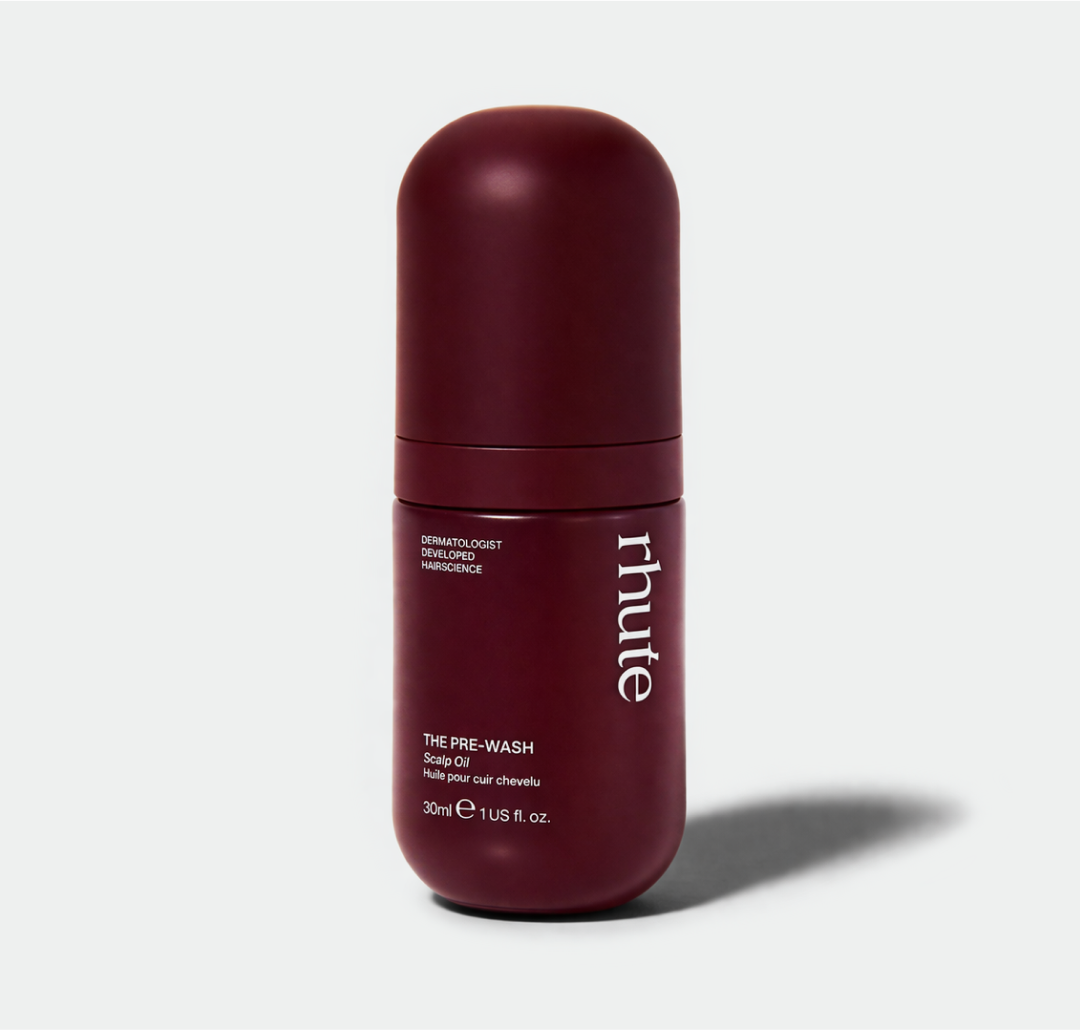
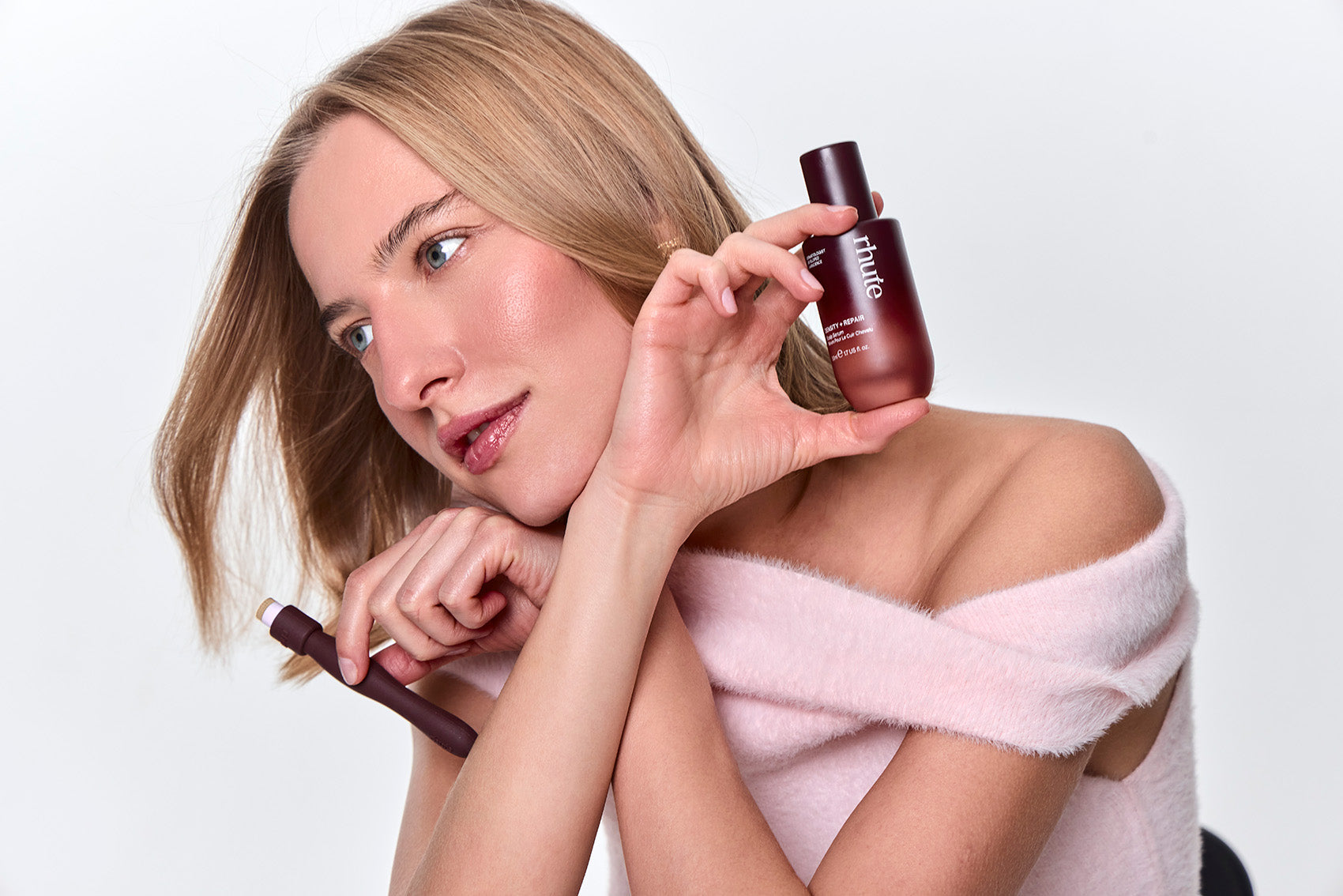
If you want to support your scalp barrier through the summer, Density + Repair scalp serum is designed to strengthen your scalp barrier and help reduce shedding, using niacinamide, bioactive peptides, and caffeine. The Triple Density Complex Pre-Wash Scalp Oil conditions your scalp and makes detangling easier before you wash, with pumpkin seed oil, saw palmetto and ceramides.
Neither is sun protection, and we’d rather say that plainly than let you assume otherwise. For the broader routine, start with how to improve scalp health. Healthy hair starts here, from rhute to tip.
FAQs
Can you put face or body sunscreen on your scalp?
You can, and if your hair is thinning or you have a wide parting, it is sensible. The practical problem is texture: most body sunscreens are heavy enough to leave hair looking greasy, which is why people give up after one go. Sprays and powders exist to solve exactly this, and a mineral powder SPF brushed along a parting is the option most people actually stick with. If you use a lotion, work it into your parting and hairline with your fingertips rather than trying to cover everything.
Does sunscreen on your scalp clog follicles or cause hair loss?
There’s no evidence linking sunscreen use to hair loss, and it is a worry we hear a lot. Sunscreen does sit on your scalp alongside oil and product, which can leave things feeling congested, so washing it out properly at the end of the day is the sensible step. If your scalp is prone to spots or flaking, look for a formula labelled non-comedogenic, meaning it is formulated not to block pores.
Does a hat actually protect your scalp properly?
It depends entirely on the hat. A tightly woven fabric with a wide brim gives real, consistent cover. A loose straw hat with visible gaps lets UV through those gaps, and a baseball cap leaves your ears, neck and the back of your head fully exposed. If you can see daylight through it when you hold it up, so can UV.
Does the sun lighten your hair, and does that count as damage?
Yes to both, and the second half surprises people. The lightening is UVA degrading the melanin in your hair, so the sun-kissed effect is not a side effect of the damage, it is a visible sign of it happening. It also cannot be reversed, because pigment that has been broken down is gone until new hair grows through.
Do you need scalp SPF in the UK?
More often than the weather suggests. UV strength tracks the UV index, not the temperature, and in the UK those two come apart constantly. A bright, cool April afternoon can carry more UV than a muggy, overcast day in July. The NHS guidance is to protect yourself between 11am and 3pm from March to October, and checking the UV index in your weather app is a better habit than going by how warm it feels.
Can you get sunburnt through your hair?
Yes, and the HUPF research explains why. Your hair is a barrier rather than a blackout blind, and how much it blocks depends on density, strand thickness and pigment. Fine, sparse, grey or bleached hair blocks less, which is why a parting is usually the first place to burn even when the rest of your head feels fine.
Does hair grow faster in summer?
There is reasonable evidence that hair behaves differently across the seasons, though it has more to do with shedding patterns than a growth spurt. We have covered what the research actually shows in our piece on seasonal hair shedding.
Does the sun fade hair colour faster than washing does?
That depends on you. Hair type, colour treatments, and how often you wash all change the answer. The more useful thing to know is that they fade colour differently. Washing slowly rinses dye molecules out of the outer layers of the fibre, while UVA penetrates further and breaks pigment down directly, both your natural melanin and any deposited colour. Most summer fading is a bit of both.