

If your ponytail feels thinner than it used to, or your parting looks a little wider in the bathroom mirror, you've probably wondered whether the right oil could help.
Here's the short answer. No oil regrows hair on its own, but a small number of oil-soluble ingredients have genuine human trials behind them for supporting hair density. The strongest evidence sits with pumpkin seed oil, rosemary, and saw palmetto. Most other popular oils, including coconut, argan, and castor, are better at caring for the hair you have than growing more of it.
The quick answer:
-
Best evidence for growth: pumpkin seed oil, rosemary, and saw palmetto
-
Best for strength and shine, not growth: coconut, argan, and jojoba
-
Popular but unproven for growth: castor, batana, and peppermint
The rest of this guide explains what the research actually shows, why it matters whether a study used capsules or an oil, and how to choose a scalp oil that's worth your time.
Do hair growth oils actually work?
Some do, a little, for some people. That's not the most exciting answer, but it's the honest one.
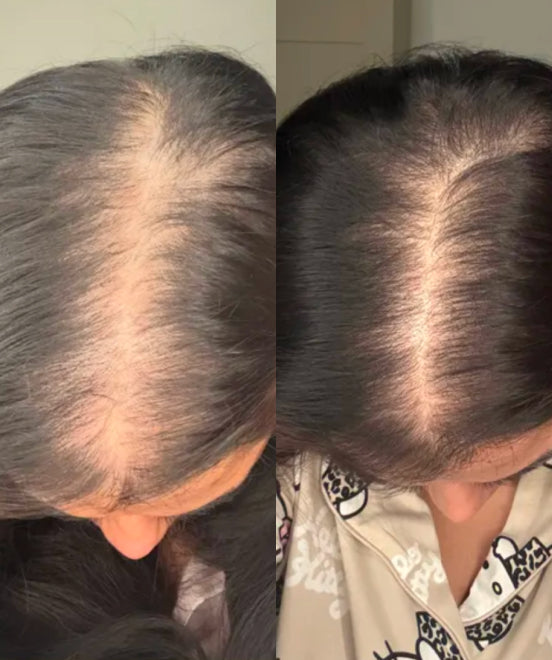
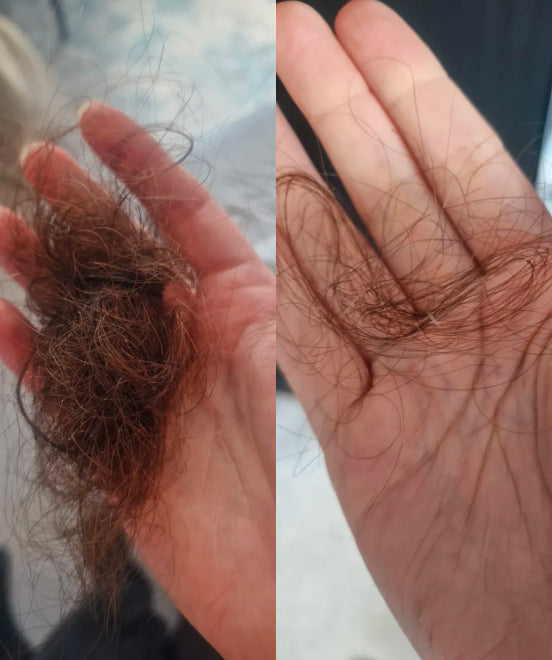
It helps to be clear about what "growth" means. A hair growth oil can't make your hair grow faster than your natural rate. What the better-studied ingredients may do is support more hairs staying in their growth phase, encourage thicker strands, and help reduce shedding over time. That's the kind of change that adds up to fuller-looking hair after a few months.
"The ingredient is what matters, not the format," says Dr. Aamna Adel, consultant dermatologist and founder of rhute. "An oil is simply a way of getting oil-soluble actives onto your scalp. If those actives don't have research behind them, the oil is caring for your hair, not growing it."
It's also worth knowing what oils can't do. They won't reverse advanced pattern hair loss, and they won't fix shedding that has a medical cause. If your hair loss came on suddenly, you're shedding more than usual after a stressful event, an illness or a baby, or you've been feeling run down, it's worth reading about telogen effluvium (TE) and iron deficiency hair loss first. For cases like TE and iron deficiency anaemia, it’s key to address the underlying cause. Scalp treatments can help support the scalp barrier and hair cycle during this time, but there’s a ceiling until the underlying cause is addressed.
If you're curious about hair oiling more broadly, including what it does for shine, frizz, and breakage, our guide to whether hair oiling works covers that side.
Hair oil vs scalp oil: what each one actually reaches
Walk down any beauty aisle and you'll see shelf after shelf of hair oils. Most of them are lovely products, and most of them are made for your lengths, not your scalp.
A conditioning hair oil works on the outside of the strand. It smooths the cuticle (the overlapping scales that form the outer layer of each hair), reduces friction and makes hair look glossier. Some oils, like coconut, can also get partway into the strand and help reduce protein loss when you wash. That's a real benefit, but it's about protecting hair that has already grown.
Hair growth happens somewhere else entirely. Each hair is made inside a follicle in your scalp, driven by a tiny structure called the dermal papilla (the cluster of cells at the base of the follicle that signals when to grow). A scalp oil aimed at growth needs to carry ingredients that support that environment. Your scalp is skin, so the oil should treat it like skin.
How hair growth works at the follicle level
A little biology makes it much easier to spot which ingredients are worth paying for.
Every hair on your head moves through a cycle, and each follicle does this independently. The growth phase, called anagen, lasts for years, and most of your hair is in this phase at any one time. A short transition phase, catagen, follows, then a resting phase, telogen, which lasts a few months before the hair sheds and the follicle starts again. Our guide to how long the hair growth cycle lasts goes into each stage in more detail.
In pattern hair loss, that cycle gradually shifts. Follicles spend less time growing, and each new hair comes through a little finer and shorter than the last. This is called follicle miniaturisation, and it's what shows up as a widening parting or thinner hair around the crown and temples.
One of the main drivers is DHT (dihydrotestosterone), a hormone your body makes from testosterone using an enzyme called 5-alpha reductase. Some follicles are more sensitive to DHT than others, which is why thinning often follows a pattern. Ingredients that help modulate DHT activity at the scalp are the ones with the most interesting research for hair growth, which brings us to the oils themselves.
The best oils for hair growth, compared
This is where the evidence lives. We've graded each oil by the type of research behind it, because a lab result, a capsule trial and a scalp trial are not the same thing.
|
Oil |
What the research shows |
How it was used |
Evidence |
Best for |
|---|---|---|---|---|
|
Pumpkin seed oil |
Trials in men and women with pattern hair loss |
Capsules (men) and on the scalp (women) |
Moderate |
Growth support |
|
Rosemary oil |
One trial in people with pattern hair loss |
On the scalp |
Moderate, single study |
Growth support |
|
Saw palmetto oil |
One placebo-controlled trial |
Capsules and on the scalp |
Moderate, single study |
Growth support |
|
Castor oil |
No human trials for growth that we could find |
On hair and scalp |
Low |
Conditioning lengths |
|
Coconut, argan, jojoba |
Research on strand protection, not growth |
On hair |
Low for growth |
Shine, strength, less breakage |
|
Black seed oil |
Early research only |
Mixed |
Low but emerging |
Supporting role in stimulating hair growth pathways |
|
Batana oil |
No published human trials for hair loss |
On hair and scalp |
Very low |
Conditioning lengths |
|
Peppermint oil |
Early, mostly animal research |
On the scalp |
Very low |
Not enough evidence yet |
Pumpkin seed oil
Pumpkin seed oil has the most rounded research of any oil on this list, and it's the hero ingredient in our pre-wash oil for that reason. In a placebo-controlled trial, men with pattern hair loss who took pumpkin seed oil capsules for 24 weeks saw meaningfully more improvement in hair count than those taking a placebo (Cho et al., 2014). In a separate trial in women with female pattern hair loss, pumpkin seed oil applied to the scalp for three months showed results comparable to a standard topical treatment (Ibrahim et al., 2021). It's thought to work partly by helping modulate DHT activity, thanks to plant compounds called phytosterols. For more detail, see our full guide to pumpkin seed oil for hair.
Rosemary oil
Rosemary is the oil everyone's heard of, and there is real research behind it, though less than social media might suggest. In a six-month randomised trial, people with pattern hair loss who used rosemary oil on their scalp saw improvements in hair count comparable to those using a 2% minoxidil solution (Panahi et al., 2015). It's one study, so it's encouraging rather than conclusive. Rosemary is an essential oil, which means it always needs to be diluted in a carrier oil. Our guide to rosemary oil for hair covers how to use it safely.
Saw palmetto oil
Saw palmetto is a plant extract best known for its DHT-modulating properties. A 16-week placebo-controlled trial found that a standardised saw palmetto oil, taken by mouth and applied to the scalp, helped reduce hair fall and improve hair growth in people with pattern hair loss (Sudeep et al., 2023). Again, it's a single trial, so we'd like to see more. Read more in our guide to saw palmetto for hair, or explore the wider picture in natural DHT blockers.
Castor oil
Castor oil is one of the most searched hair oils, but we couldn't find any clinical trials showing it helps hair grow. It's thick, it coats the hair well and it can make lengths look glossier, which may be why it has such a loyal following. We've covered the evidence in detail in is castor oil good for hair.
Coconut, argan and jojoba oil
These are brilliant for your lengths. Coconut oil in particular can help reduce protein loss when it's applied before washing. None of them has meaningful evidence for growing hair, so think of them as care for the hair you have.
Black seed, batana, and peppermint oil
Black seed oil contains a compound called thymoquinone, which is being studied for its antioxidant effect on skin and some evidence for stimulating hair growth pathways. But the research on hair is still early. Batana oil has become hugely popular, but we couldn't find any published human trials looking at it for hair loss. Peppermint oil has shown interesting results in animal research, but that doesn't yet tell us much about people.
Capsules or scalp oil: why the form matters
Here's something worth knowing before you buy any "hair growth oil": some of the most quoted results come from trials where people swallowed the ingredient as a capsule, not rubbed it into their scalp.
That doesn't make the research less valuable, but it does change what it tells you. A capsule works through your whole body. A scalp oil works where you apply it, and only if the active ingredients can reach the skin in a meaningful amount. When you see a headline about an oil and hair growth, it's worth checking which form the study used.
Pumpkin seed oil is one of the few ingredients with research in both forms, which is part of why it stands out (Cho et al., 2014; Ibrahim et al., 2021). For most other oils, the topical evidence is thinner, and more trials are needed.
Why oiling before shampooing helps growth ingredients work
When you apply a scalp oil matters almost as much as what's in it.
A finishing oil goes on after you wash and mostly sits on your lengths. A pre-wash oil goes onto a dry scalp before you shampoo, which gives the ingredients time to work before they're rinsed away. You can leave it on for one hour or up to six hours. Wondering whether a full night does more? Our guide to overnight hair oil explains why longer isn’t necessarily better, especially for your scalp.
Applying oil before washing has a protective benefit too. Pre-wash coconut oil has been shown to help reduce protein loss from hair during washing (Rele & Mohile, 2003). Shampoo is designed to lift oil, so giving your scalp and lengths a layer of support before you cleanse means you can wash thoroughly without feeling stripped.
There's a practical reason growth ingredients suit an oil, too. Pumpkin seed oil and saw palmetto are naturally oil-based, so an oil is a sensible way to carry them to your scalp. If you’re working out where oil fits alongside your shampoo, serum, and styling products, the hair oiling routine guide puts every step in order.
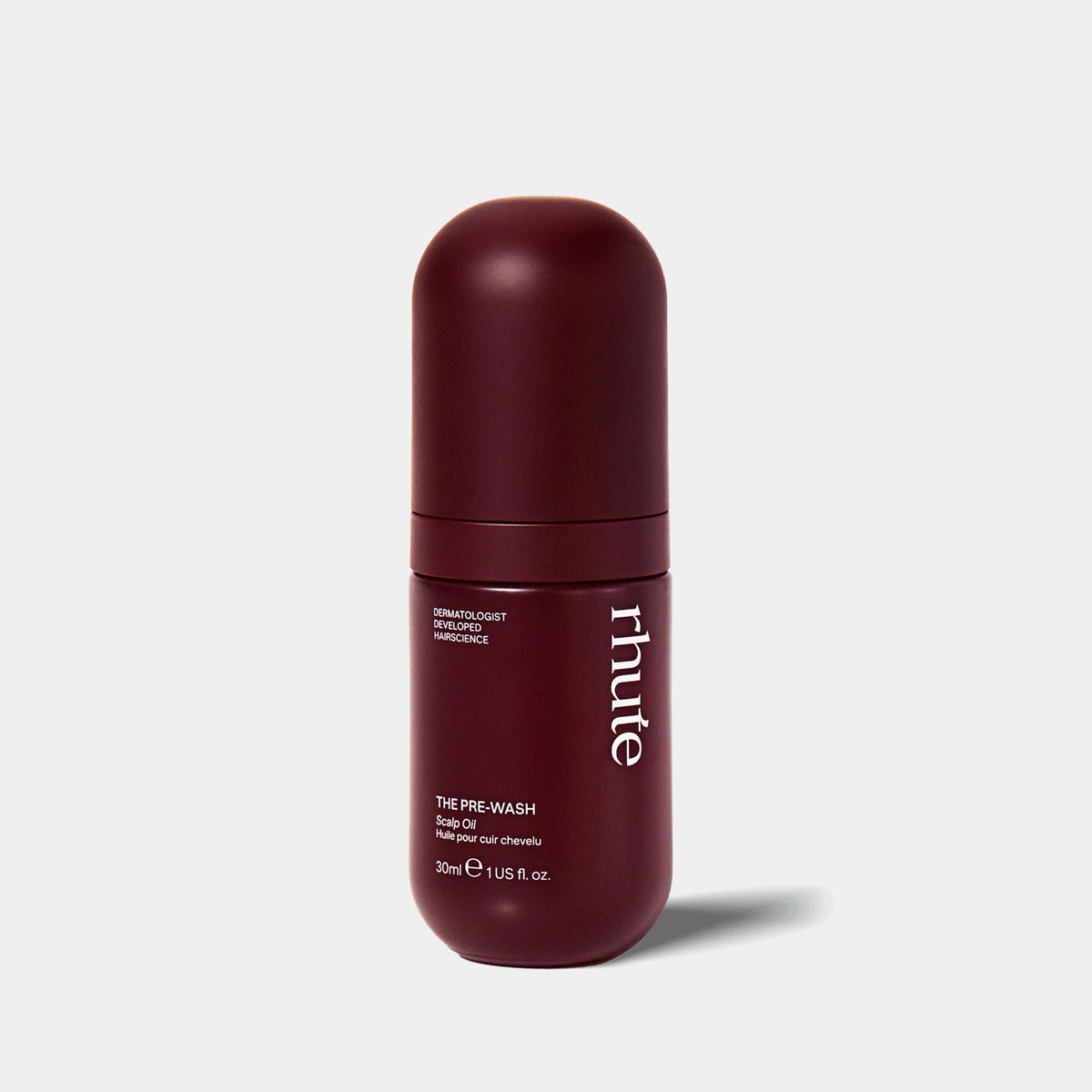
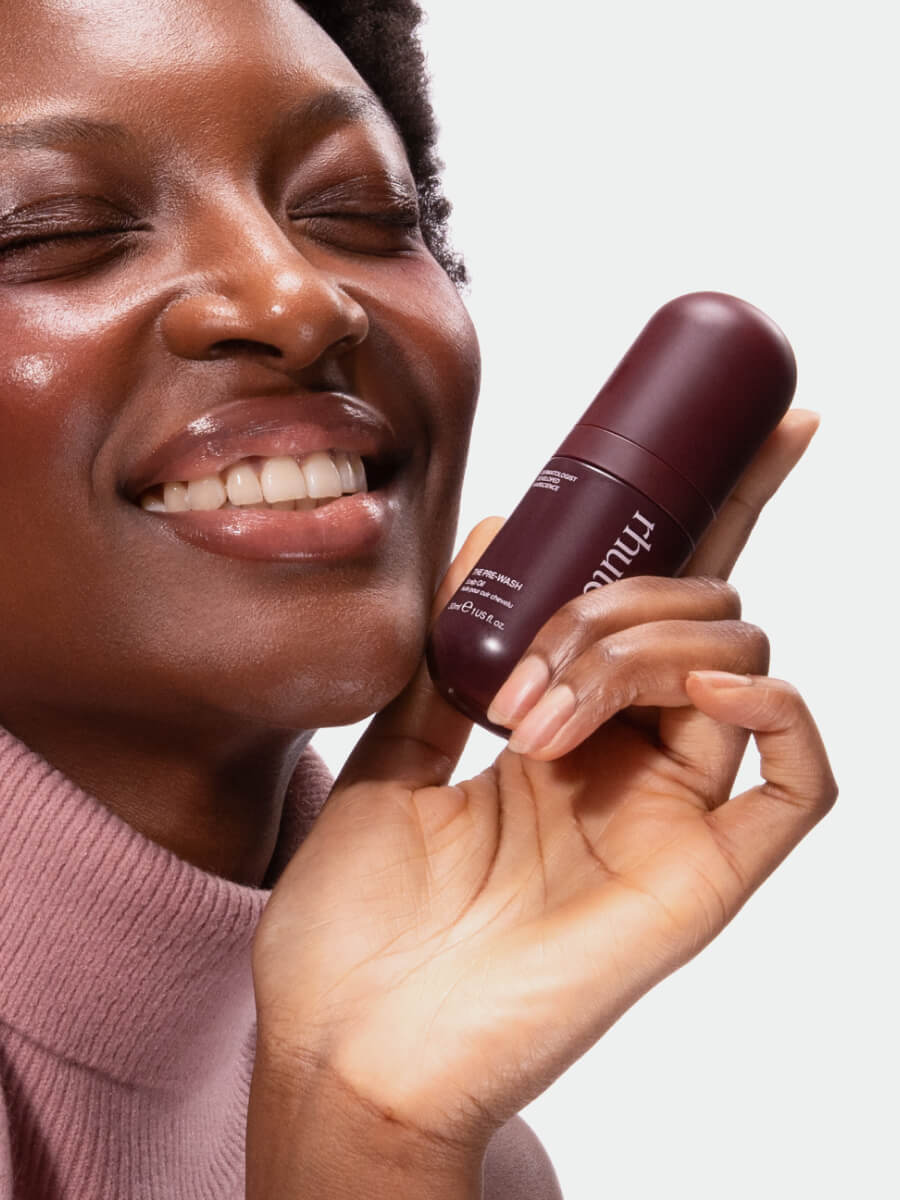
The rhute Triple Density Complex Pre-Wash Scalp & Hair Oil: a growth-focused formula
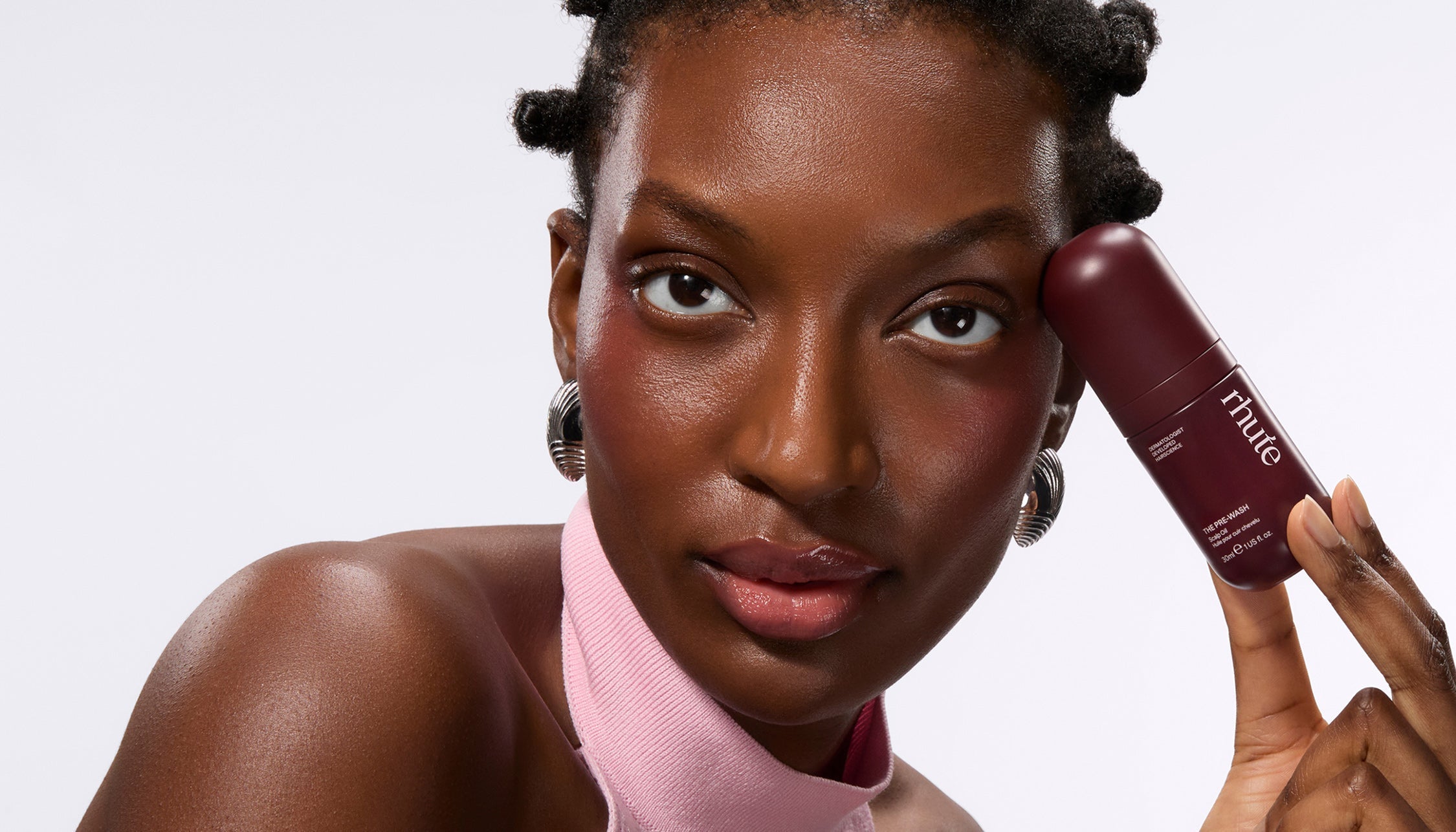
Everything above is what we built our pre-wash oil around. The Triple Density Complex Pre-Wash Hair Oil isn't a styling oil or a strand-coating treatment. It's a pre-wash scalp treatment designed to support density at the scalp, with conditioning benefits for your lengths as a bonus.
It may help support fuller-looking hair by modulating DHT activity at the scalp, with pumpkin seed oil, saw palmetto and beta-sitosterol (a plant compound that helps modulate the enzyme that converts testosterone into DHT). Rosemary extract supports the scalp environment alongside them.
It also helps keep your scalp comfortable and balanced, with ceramides (the fats that help hold your skin barrier together) and bisabolol (a calming compound originally found in chamomile).
For your lengths, a blend of jojoba, sweet almond, black seed and Amazonian oils leaves hair softer and easier to detangle. It's lightweight and rinses out cleanly with your usual shampoo.
Hair oiling, redesigned. You can find it in our hair and scalp oils collection.
Scalp oil vs scalp serum: do you need both?
Oils and serums do different jobs, so they work well together.
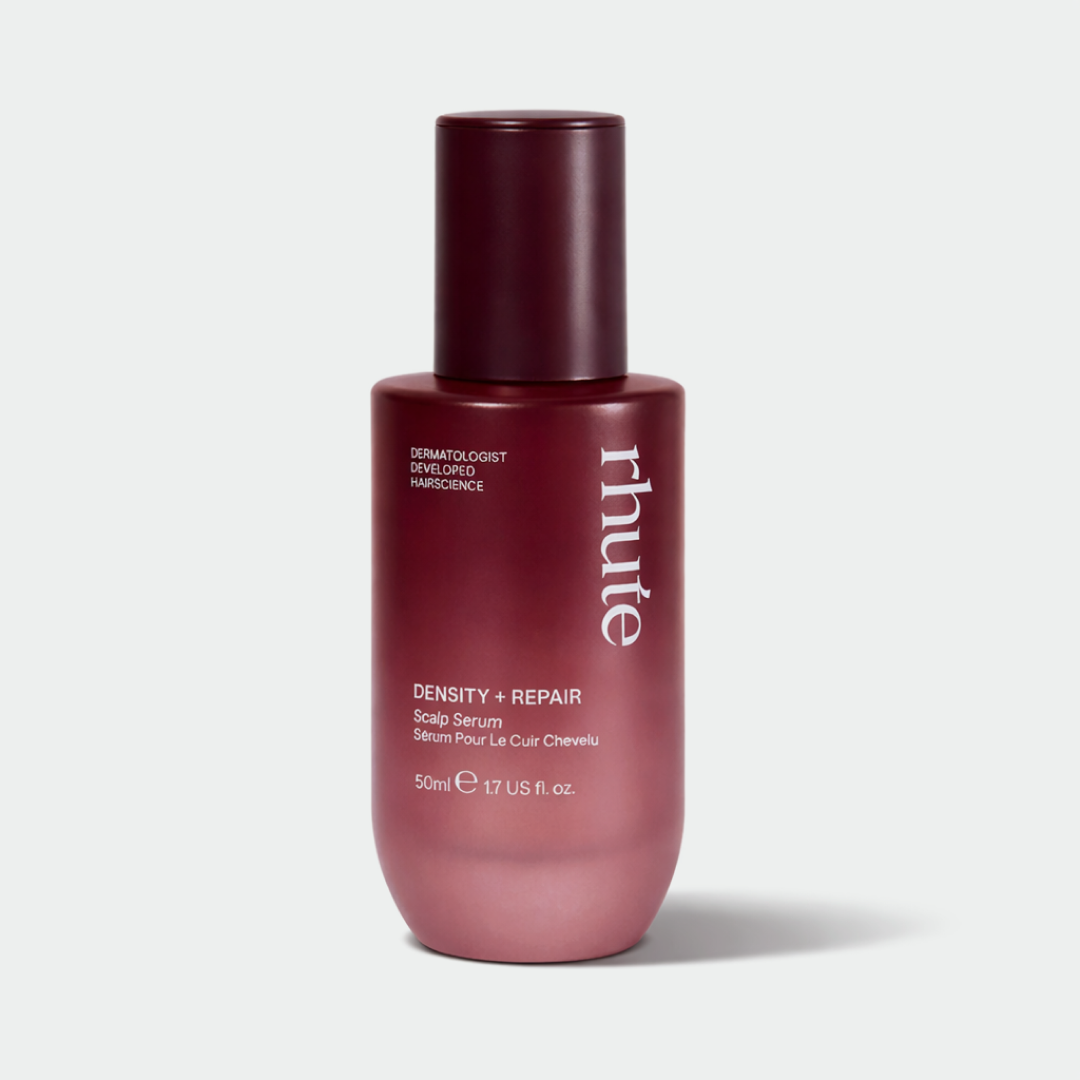
A scalp oil carries oil-soluble ingredients like pumpkin seed oil and saw palmetto, and it's designed to go on before you wash. A scalp serum is water-based and carries a different set of ingredients, such as peptides, caffeine and niacinamide. It goes onto a clean scalp after washing and stays on.
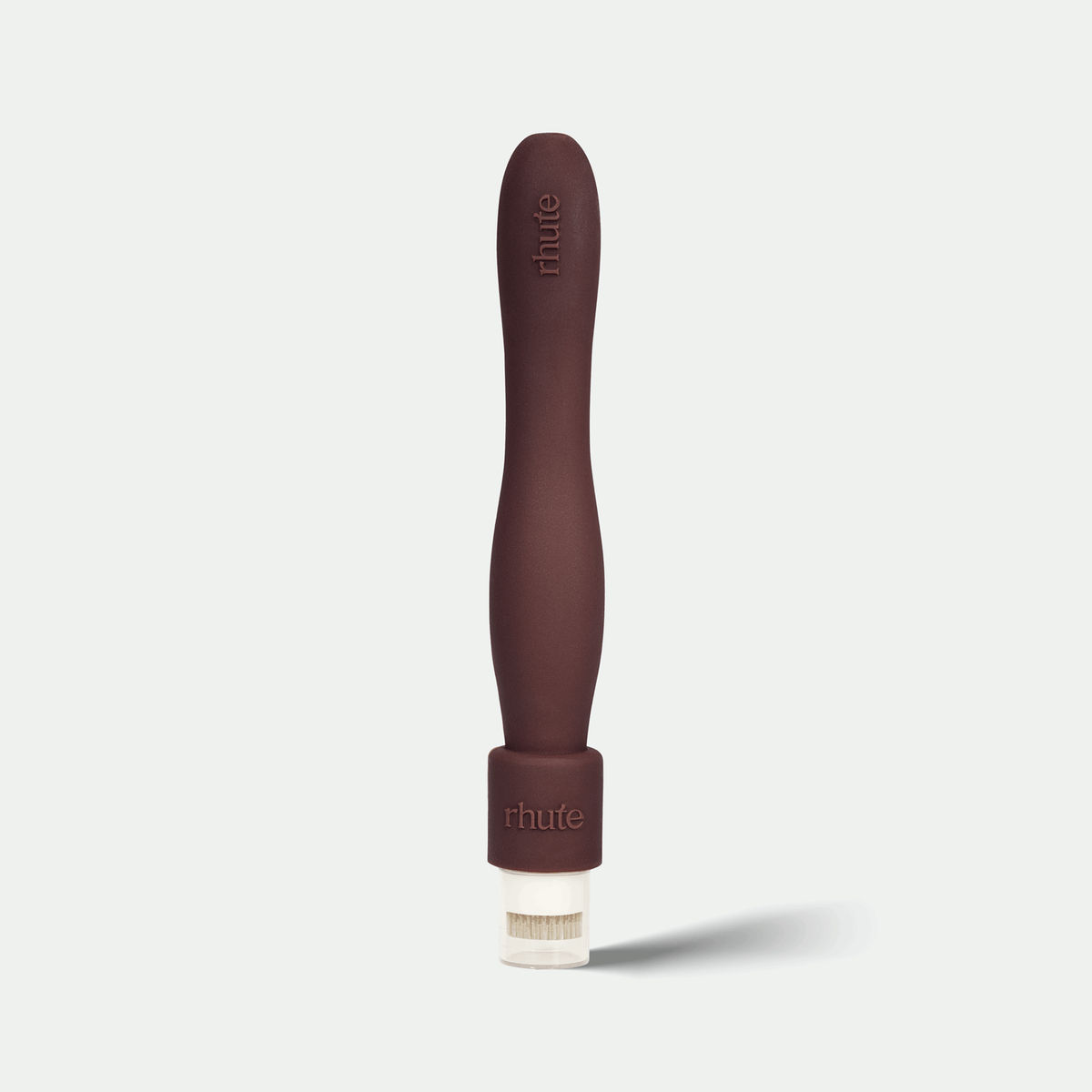
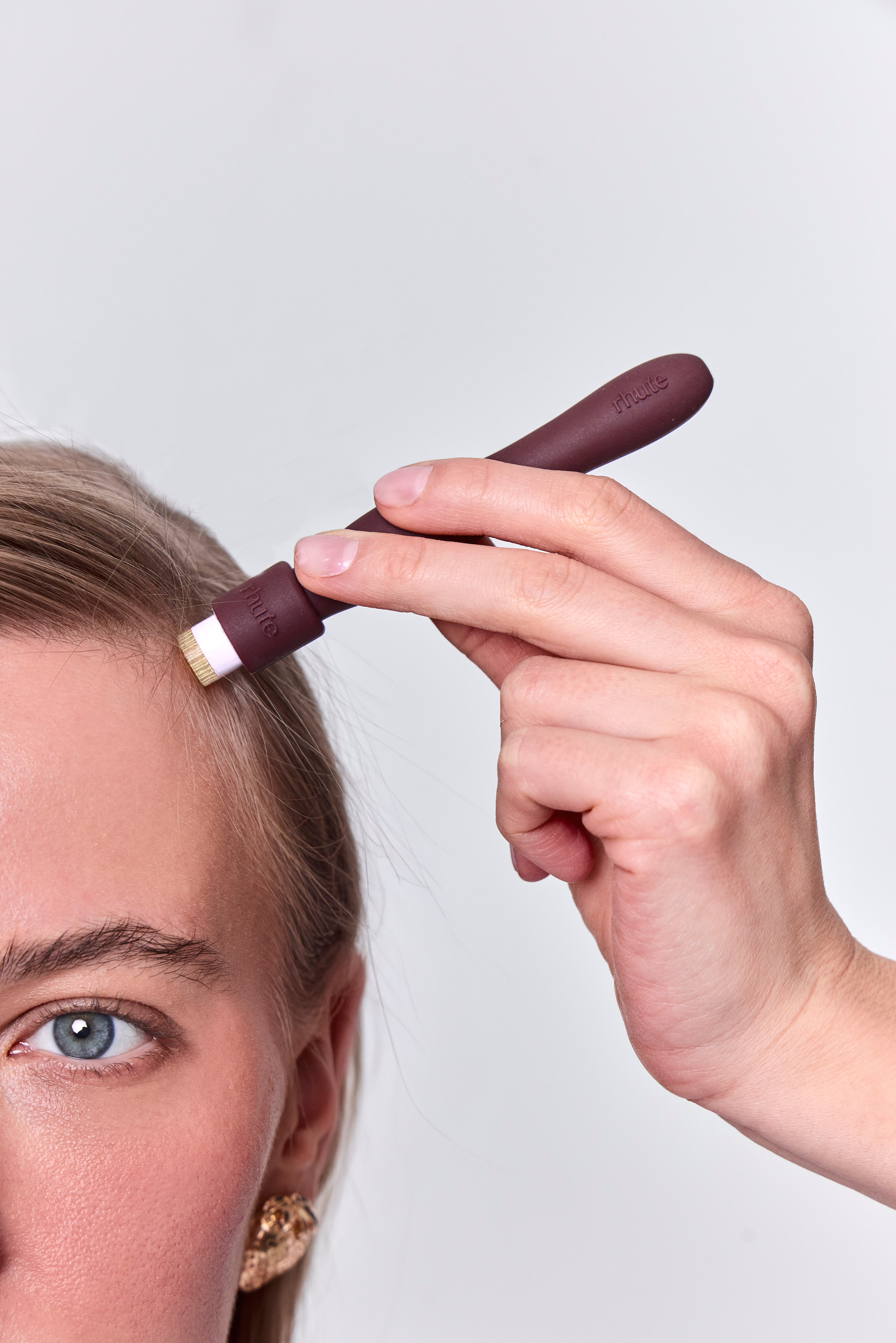
Our Density + Repair hair growth serum is designed for less shedding and more growth, using peptides and caffeine to stimulate follicles, alongside niacinamide for scalp barrier support. If you also use our 0.3mm Precision Dermastamp once or twice a week, Density + Repair goes on straight afterwards. All three come together in The Density Rhutine, with each product covering a different part of how hair grows.
How to use a scalp oil for best results
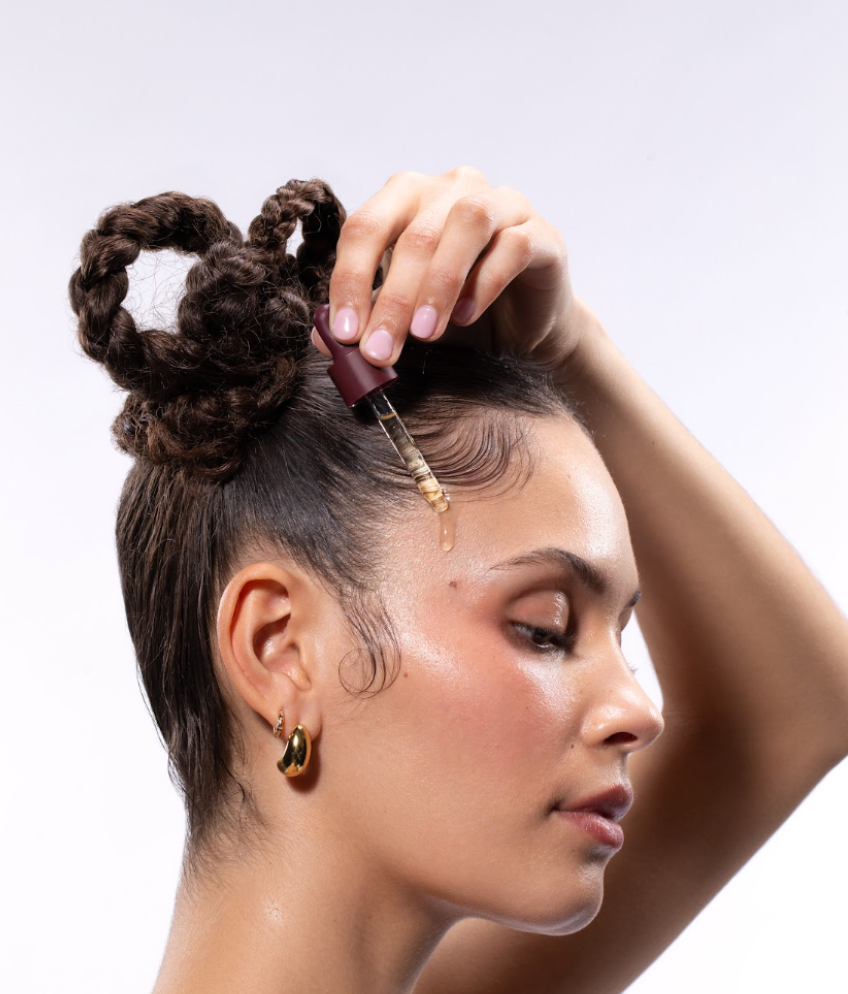
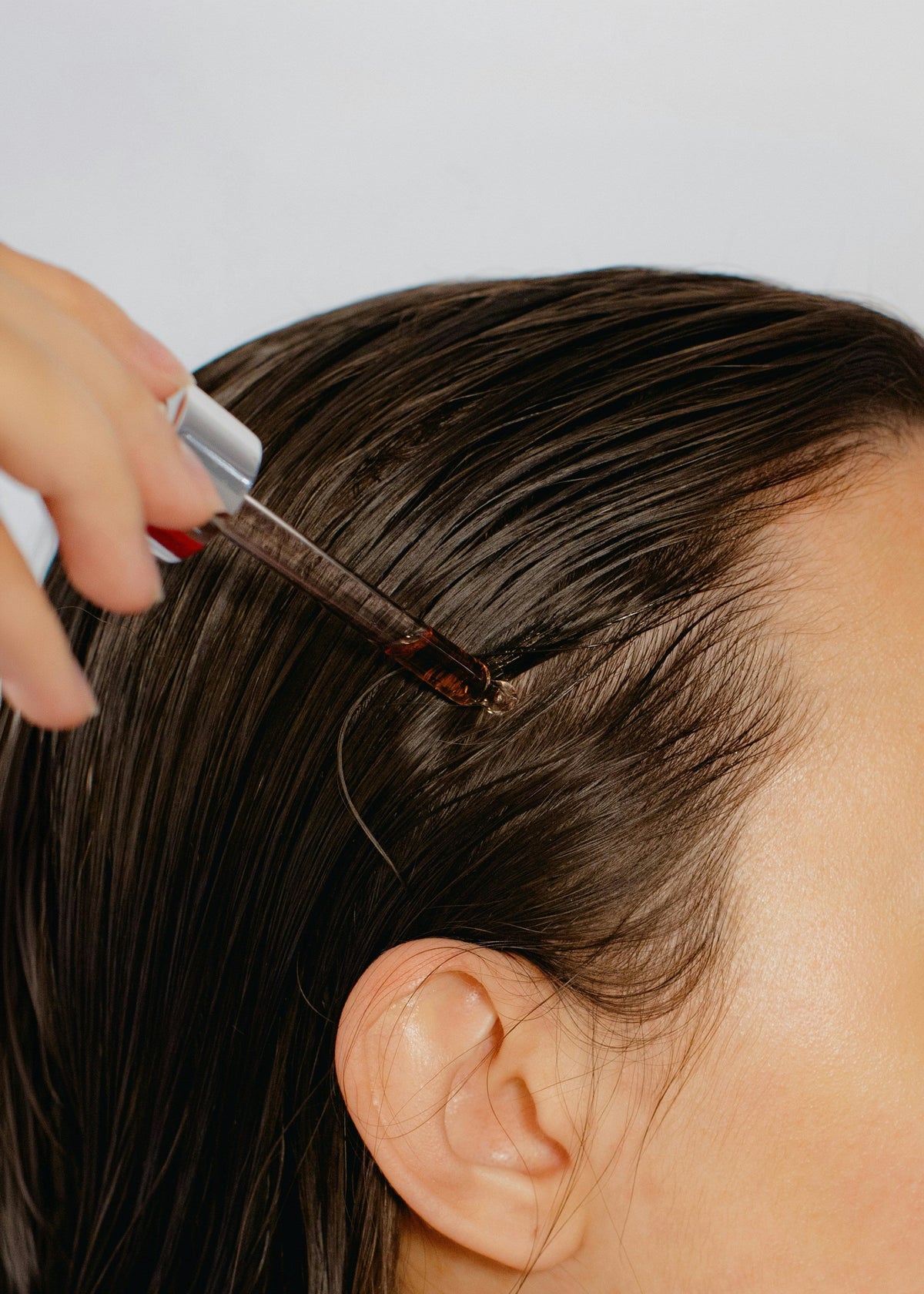
Section your hair and apply two to three droppers directly onto your scalp, focusing on your parting, temples or crown. Massage gently with your fingertips for a minute or two, then leave it on for at least one hour, or up to six hours, before shampooing as normal.
Two to three times a week, on wash days, suits most people. For a full step-by-step method, see our guide to how to use hair oil.
How long before you see results?
Patience matters more than anything else here. The trials above ran for between three and six months, and that's a realistic window to judge whether an oil is working for you.
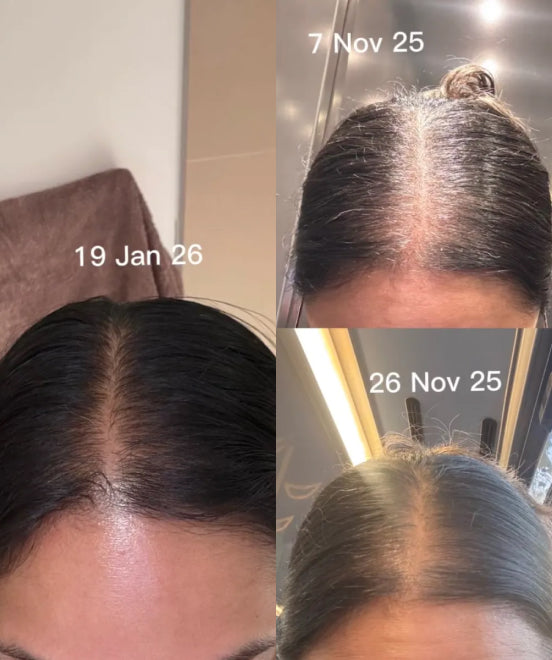
In the first few weeks, you're more likely to notice your scalp feeling more comfortable and your lengths feeling softer. Changes in shedding and density take longer, because new hair needs time to grow through. Take a photo of your parting and areas of concern in the same light once a month, and give it at least three months before you decide. Our guide to how long hair growth treatments take to work explains why.
What to avoid in a scalp oil
Heavy oils used neat are the first thing to watch. Pure castor, coconut or olive oil applied generously to your scalp can sit on the surface and leave it feeling congested, and some oils can make flaking worse if your scalp is prone to dandruff. If you’re not sure whether it’s dandruff or dryness, our guide to hair oil for a dry scalp helps you tell the difference and shows which oils to go easy on. In a well-balanced blend, these oils work well. Your hair type matters too. If products tend to sit on top of your hair rather than sinking in, the best oil for low porosity hair guide explains why the lightest-feeling oil isn’t always the one that gets in.
Fragrance-heavy formulas are the next. Strong synthetic fragrances and essential oil blends can irritate your scalp, especially with regular use.
Essential oils without a carrier are a third. Rosemary may support hair growth, but applied undiluted it can irritate your skin and cause sensitivity over time.
Finally, be wary of DIY blends. Getting the concentration, balance and stability right is harder than it looks, and a poorly balanced blend can irritate rather than help.
FAQs
Which oil is best for thinning hair?
Look for a scalp oil built around ingredients with human research, such as pumpkin seed oil, rosemary and saw palmetto, rather than a single conditioning oil. A blend that combines DHT-modulating ingredients with scalp barrier support covers more than one part of the picture. That's the thinking behind our Triple Density Complex Pre-Wash Scalp & Hair Oil.
What is the best oil for fast hair growth?
No oil can make your hair grow faster than its natural rate. What the better-researched oils may do is help more hairs stay in their growth phase and come through thicker, which looks like more hair over time. Be cautious of any product promising fast results.
What is the best carrier oil for hair growth?
A carrier oil is a base oil, like jojoba or sweet almond, used to dilute and deliver active ingredients such as rosemary. Carrier oils mainly condition your hair, while the actives do the growth-focused work. Pumpkin seed oil is unusual because it's both a carrier oil and an active ingredient with research behind it.
Is there hair growth oil for women?
Most hair growth oils work the same way regardless of gender, but it's helpful to know that pumpkin seed oil has been studied specifically in women with female pattern hair loss (Ibrahim et al., 2021). Hormonal shifts during pregnancy, after a baby, and around perimenopause and menopause can all affect your hair. Our guide to hormonal hair loss explains what's happening and what helps.
Does rosemary oil really work for hair growth?
There's encouraging research. In one six-month trial, rosemary oil applied to the scalp gave improvements in hair count comparable to a 2% minoxidil solution (Panahi et al., 2015). It's a single study, so the evidence isn't conclusive yet. Always dilute rosemary oil, or choose a blend where it's already balanced with other ingredients.
Does batana oil grow hair?
We couldn't find any published human trials looking at batana oil for hair loss. It may leave your lengths feeling soft and conditioned, but there isn't evidence yet that it helps hair grow.
How often should you oil your scalp?
Two to three times a week, before washing, suits most people. Consistency matters more than frequency, so a routine you can stick to for months will do more than daily oiling for a fortnight. The how often to oil your hair guide explains how to plan oiling around your wash days, and why your scalp and your lengths need different schedules.