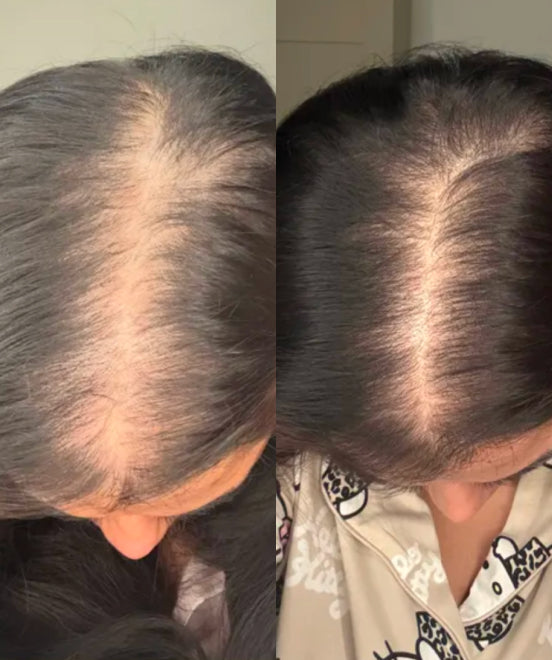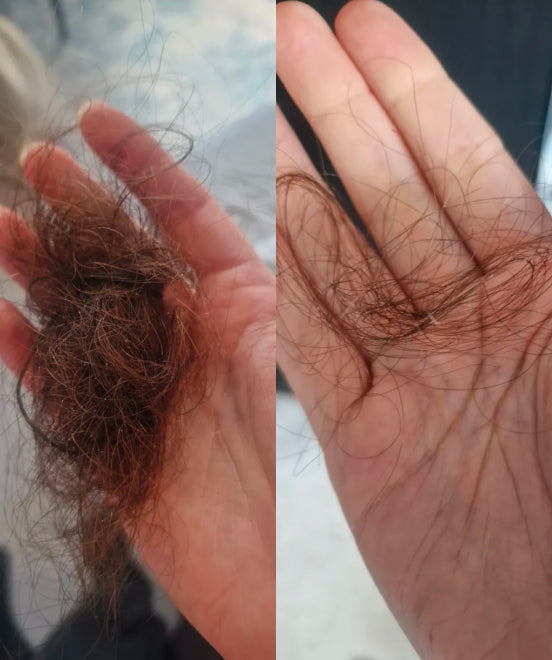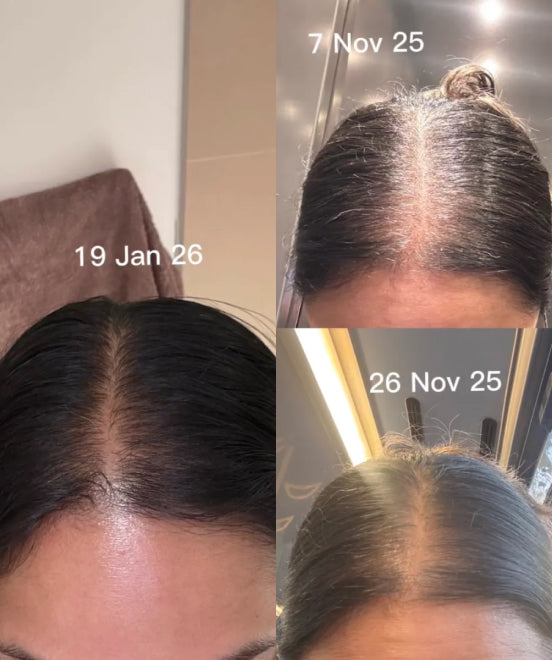


If your hair is coming out in handfuls and nothing about your life feels different enough to explain it, telogen effluvium is the most likely answer. It’s the most common cause of sudden, all-over shedding, it’s temporary, and it doesn’t cause baldness.
Below you’ll find a published method for measuring your own shed at home, the specific signs that tell you it’s ending, and the reason you probably cannot pinpoint what set it off.
What is telogen effluvium?
Telogen effluvium is a temporary shed that happens when far more hair follicles than usual drop into their resting phase at the same time, then release together a few months later. The shedding is the delayed echo of something that happened to your body months ago.
Your follicles work on a rolling cycle. Anagen is the growing phase, telogen is the resting phase at the end of which the hair releases, and normally about 85% of your follicles are growing while around 15% rest (Hughes et al., 2024). In telogen effluvium that resting share climbs to 30% or more (British Association of Dermatologists, 2025). If you want the full picture of how the cycle works, we go deeper in our guide to the hair growth cycle.
There are two forms. Acute telogen effluvium comes on suddenly, peaks, and settles within six months. Chronic telogen effluvium runs beyond six months and tends to come in waves (British Association of Dermatologists, 2025).
Is it telogen effluvium, or something else?
Before you go further, it is worth checking that this is the right condition. Four signals point towards telogen effluvium rather than pattern hair loss:
-
It is diffuse. Density drops across your whole scalp, not in patches and not just at the temples or crown.
-
It came on fast. Weeks, not the slow years of pattern loss.
-
Your strands are still their normal thickness. Your ponytail feels thinner because there are fewer hairs, not finer ones.
-
Shed hairs have a small white club at the root. That white bulb is a completed telogen hair, which is a good sign. It means the hair finished its cycle and released, rather than snapping off.
A sore, tender or tingling scalp often comes along with it. This is called trichodynia, and it is reported in roughly 20 to 35% of people with hair loss depending on the study (Souza et al., 2023). Worth knowing, because at least one major medical site tells readers that scalp pain is not part of telogen effluvium, which sends people looking for a condition they do not have. The British Association of Dermatologists names trichodynia in its own leaflet.
For contrast: pattern hair loss widens your parting and thins your strands gradually, which we cover in hair loss in women. Alopecia areata makes smooth, defined bald patches. And thinning concentrated at the hairline or wherever your hair is pulled tightest is more likely traction alopecia.
How much hair are you actually losing?
Almost everywhere you look will tell you it is normal to lose up to 100 hairs a day (DermNet). The UK's own dermatology body puts the range much wider. The British Association of Dermatologists states that most people lose between 30 and 150 hairs a day (British Association of Dermatologists, 2025). So if you counted 120 and panicked, that may well be your normal.
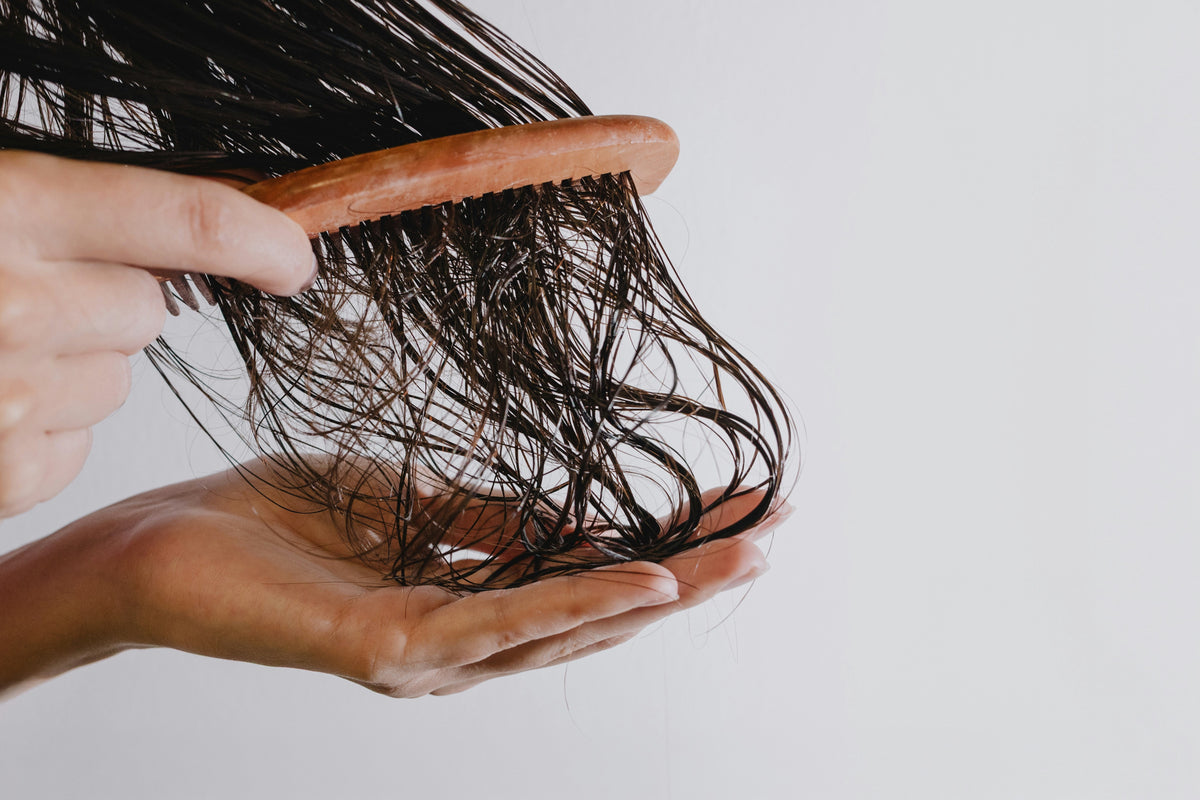
Counting daily is a poor measure anyway, because your count swings wildly with how often you wash. There is a better option you can do at home, called the modified wash test (Rebora, 2019):
-
Do not shampoo for five days.
-
Wash your hair over a basin with a filter or fine sieve over the plughole.
-
Collect every hair lost during shampooing and rinsing, and ignore anything that comes out later while drying.
-
Count the total.
-
Separate out the hairs shorter than 3cm and count those too.
Anything over 100 hairs across those five days is on the high side and fits with telogen effluvium, though in a heavy shed the number is often nearer 300. The short hairs are worth separating out because they tell a different part of the story. A lot of very short hairs can suggest something else is going on alongside the shed, rather than the shed alone.
The test isn’t a diagnosis. Pop the hairs into a clean envelope or a small bag and take them with you to your GP or dermatologist. They can examine what you have collected properly, including the root ends and how thick the strands are, and read it alongside your history and your scalp. Your count is a useful clue.
What triggers telogen effluvium
Telogen effluvium is a response, so something sets it off. The usual culprits fall into four groups, and rather than repeat ourselves we have covered each properly elsewhere.
Physical events such as illness with a high fever, surgery, or a general anaesthetic. Hormonal shifts including postpartum, menopause, thyroid disease and stopping or starting birth control. Nutritional causes, most commonly low iron and vitamin D, or rapid weight loss on a GLP-1 medication. And medications, where a new prescription in the months before the shed is always worth reviewing. Seasonal shedding is a mild version of the same process.
For one in three people diagnosed with telogen effluvium, no cause is ever found (British Association of Dermatologists, 2025). If you have turned your life inside out looking for a reason, that is worth hearing. Not finding one is common, and it does not change the outcome.
Stress your follicles feel, not just stress you feel
Most people hear "stress-related hair loss" and think of a hard year at work or a breakup. That is one version, but your follicles read stress far more broadly than that.
Growing hair is expensive and your body treats it as optional. When resources are short, your follicles are not on the priority list ahead of your heart, brain and immune system. So very low iron, low vitamin D, a sharp drop in calories or not eating enough protein all register as a systemic emergency and trigger the same shutdown, through the same mechanism, as an emotional shock does.
That is why a nutritional trigger and a psychological one produce identical shedding. It is also why chronically raised cortisol and a crash diet can land you in exactly the same place.
Why you cannot work out what caused it
The shed shows up around three months after the trigger, with a range of one to six months (Hughes et al., 2024). By the time you notice hair in the shower, the thing that caused it has usually resolved and dropped out of your mind entirely.
So you search your current life for a reason and find nothing, because you are looking in the wrong month. Cast back to what was happening 12 to 16 weeks ago instead.
How long does telogen effluvium last?
The shedding phase itself lasts roughly three to six months (British Association of Dermatologists, 2025). Regrowth does not wait for shedding to finish. New hairs start pushing through underneath while you are still losing, which is why the two phases overlap.
Full density typically returns over nine to 12 months from the point the shed began, and it may take longer.
The hard part is the middle. Regrowth is invisible for months, because new hairs are short, fine and often stick up rather than lying flat. Your parting can even look worse for a while as those baby hairs come through. This is the stage most people give up at, right when it is working.
Past six months of continuous shedding, it is classed as chronic (British Association of Dermatologists, 2025).
Signs telogen effluvium is ending
Recovery is gradual, so the signs are subtle. These are the ones worth watching for:
-
A fringe of short new hairs along your hairline and either side of your parting, a couple of centimetres long and often wiry.
-
Shed counts falling week on week rather than stopping overnight. The drain gets less alarming before it gets normal.
-
Density lagging behind. Shedding stops months before your hair looks full again, because those new hairs still have to grow to length.
-
Beau's lines on your nails. These horizontal grooves form when nail growth briefly pauses during illness or physiological stress. Since fingernails grow at roughly 3mm a month, the distance from your cuticle roughly dates the event (Lipner & Scher, 2016). A useful corroboration that something systemic happened, and when.
How to stop telogen effluvium
The honest answer first: once the shed has started, nothing stops it. Those follicles have already committed to their resting phase and they will release on schedule. Telogen effluvium is self-limiting, and any product that appears to halt it is usually just being credited for the recovery that was arriving anyway.
That is worth keeping in mind with "how I cured my telogen effluvium" content. In a condition that resolves on its own in three to six months, whatever someone happened to start taking around month four gets the credit. It is not dishonesty, just bad timing.
What genuinely changes your outcome:
-
Find and correct the trigger. This is the whole job. An untreated thyroid problem or ongoing iron deficiency means the shed keeps being re-triggered.
-
Test before you supplement. Correcting a confirmed deficiency helps. Taking supplements you do not need does not, and some are harmful in excess.
-
Eat enough, including protein. Do not diet through a shed.
-
Handle your hair gently. Loose styles, wide-tooth comb, less heat, less tension.
-
Reduce the load where you can. Sleep and stress management will not regrow hair by themselves, but they stop you re-triggering.
What to ask your GP, and how to prepare
Two things make an appointment far more useful.
First, timing. Your GP may do a hair pull test, gently pulling a small bundle of hairs to see how many releases. The British Association of Dermatologists advises that washing your hair within 48 hours beforehand can make this falsely negative (British Association of Dermatologists, 2025). If you have washed your hair before your appointment, just let your physician know.
Second, the blood tests. Ferritin and full iron studies, thyroid function, a full blood count, and vitamin D are the usual starting points. There is one caveat nobody tells patients, and it matters.
Ferritin is an acute-phase protein, meaning it rises when there is inflammation or infection anywhere in your body. So a ferritin result that looks normal can sit on top of genuinely empty iron stores. UK laboratory guidance recommends transferrin saturation where there is doubt, with a result under 16% indicating iron deficiency (Royal United Hospitals Bath NHS Foundation Trust). So rather than accepting "your iron is fine", it is reasonable to ask what the actual ferritin number was and whether transferrin saturation is worth checking.
Ask for a dermatology referral if shedding continues past six months, if your parting is visibly widening, or if you have patches, scaling or scarring.
Chronic telogen effluvium, and when the shed is hiding something else
Chronic telogen effluvium runs beyond six months and typically fluctuates, with bad months and quieter ones. It can go on for years. It is exhausting and it is frightening, but it does not cause baldness, and hair density is generally maintained.
There is a more useful explanation for "my hair never really came back", though. A heavy shed can strip away enough density to reveal pattern hair loss that was already progressing quietly underneath. The shed ends, but what it uncovered stays.
This is more common than most people realise. In a study of 200 women with postpartum shedding, only 9.5% had telogen effluvium alone. Another 56% also had androgenetic alopecia, and a further 28% had both that and traction alopecia (Galal et al., 2024).
The tell is what your hair looks like once shedding settles. If your strands have come back at their old thickness and only density is lagging, that is normal recovery. If your parting is wider than it was and your strands are genuinely finer, there is likely a second thing going on, and it is worth reading our guide to spotting the early signs of thinning and raising it with your doctor. Pattern hair loss responds to treatment, but it responds far better early.
Looking after your scalp while your hair grows back
No scalp product stops telogen effluvium, and we are not going to suggest otherwise. What you can do is keep the ground in good condition so the regrowth coming through has an easy time of it.
Keep your scalp calm rather than busy. Handle wet hair carefully, since new growth is fine and snaps easily, and give tight styles a rest.
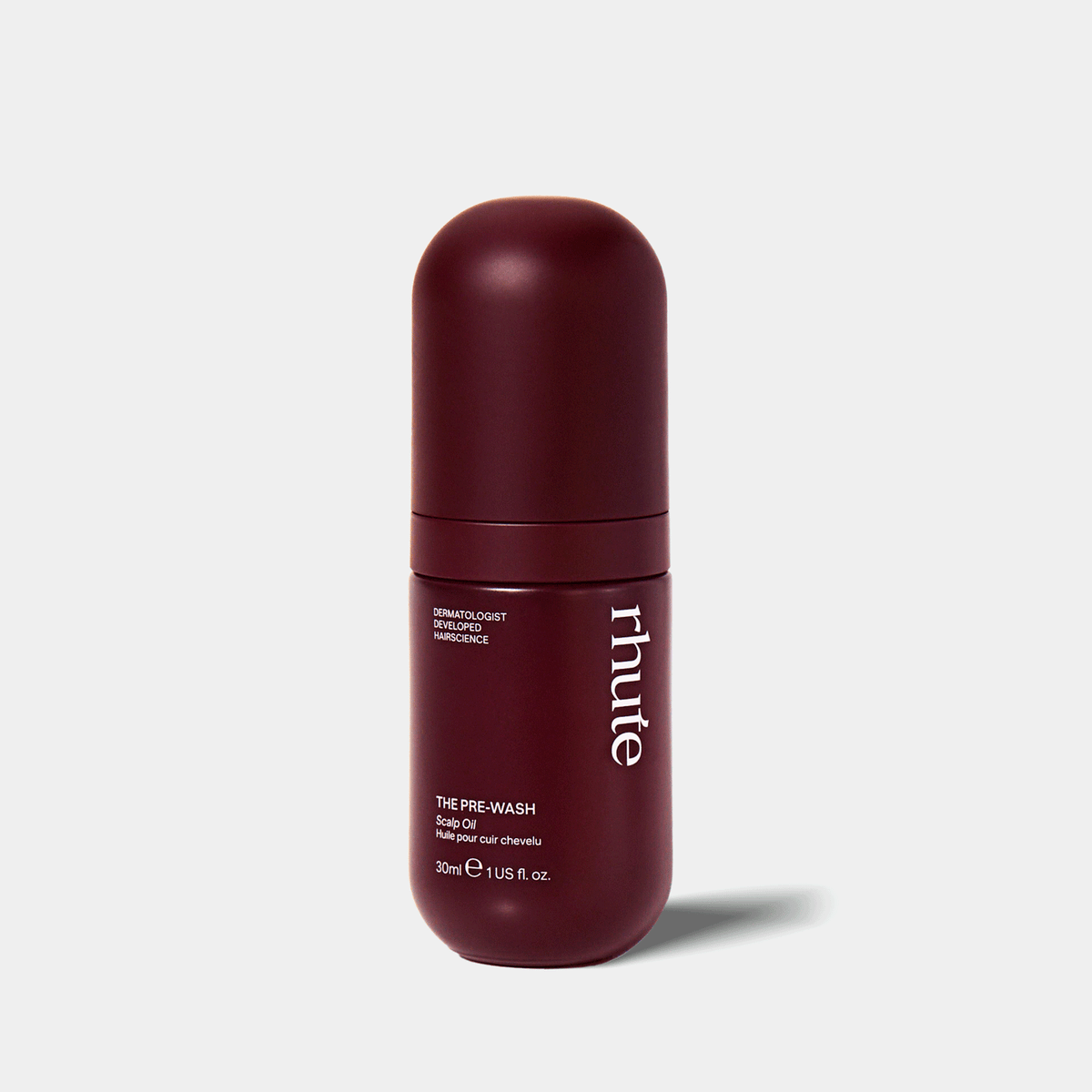
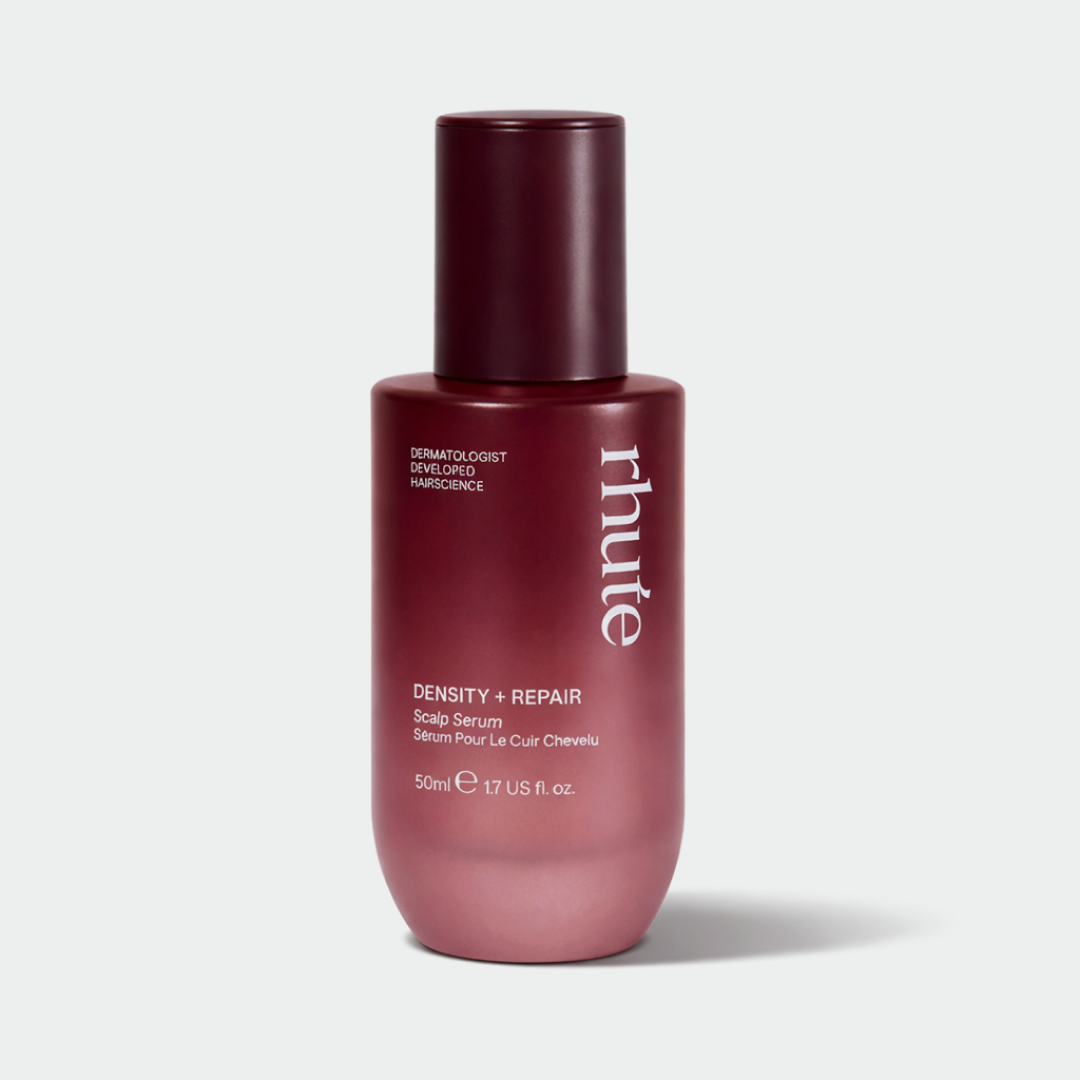
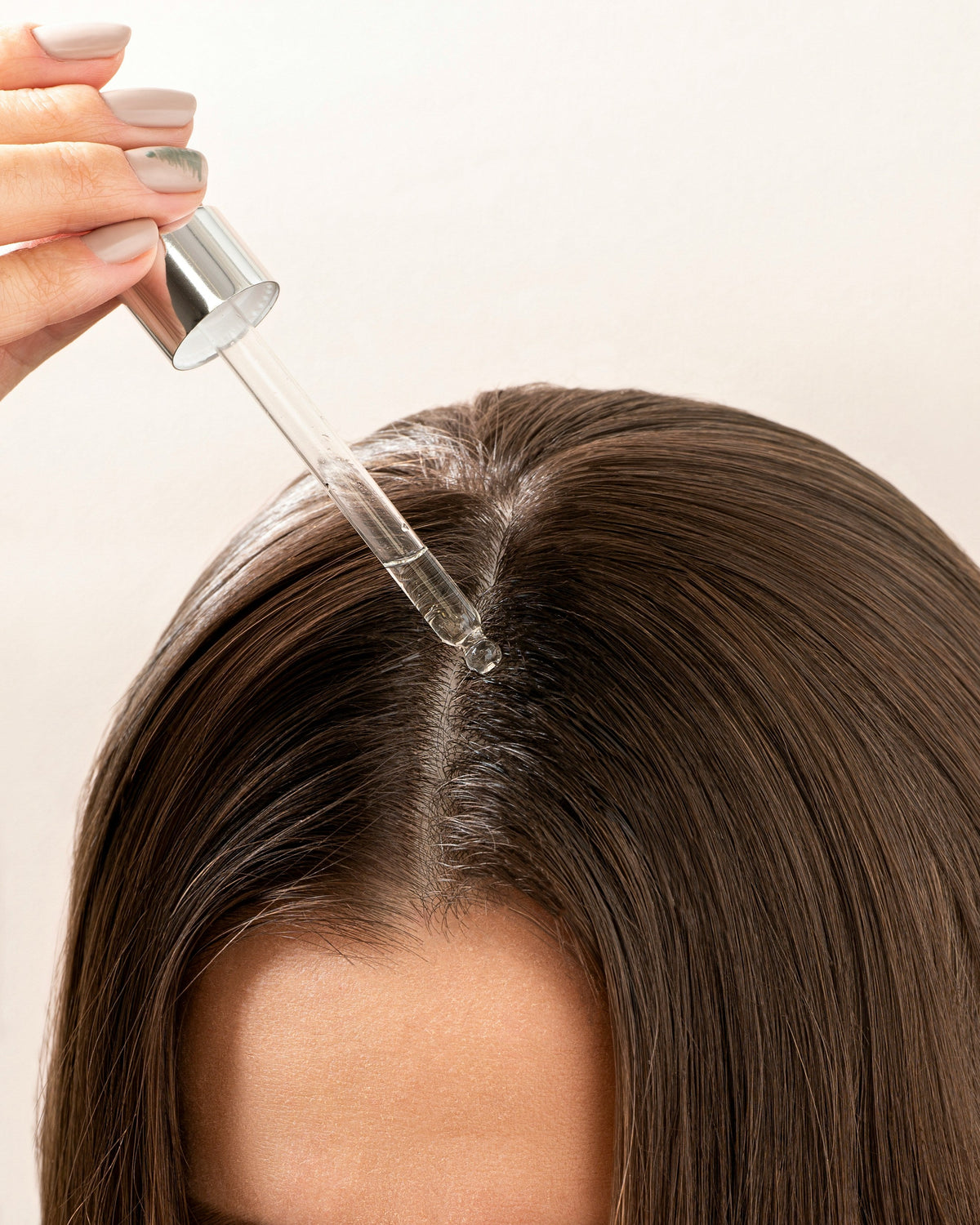
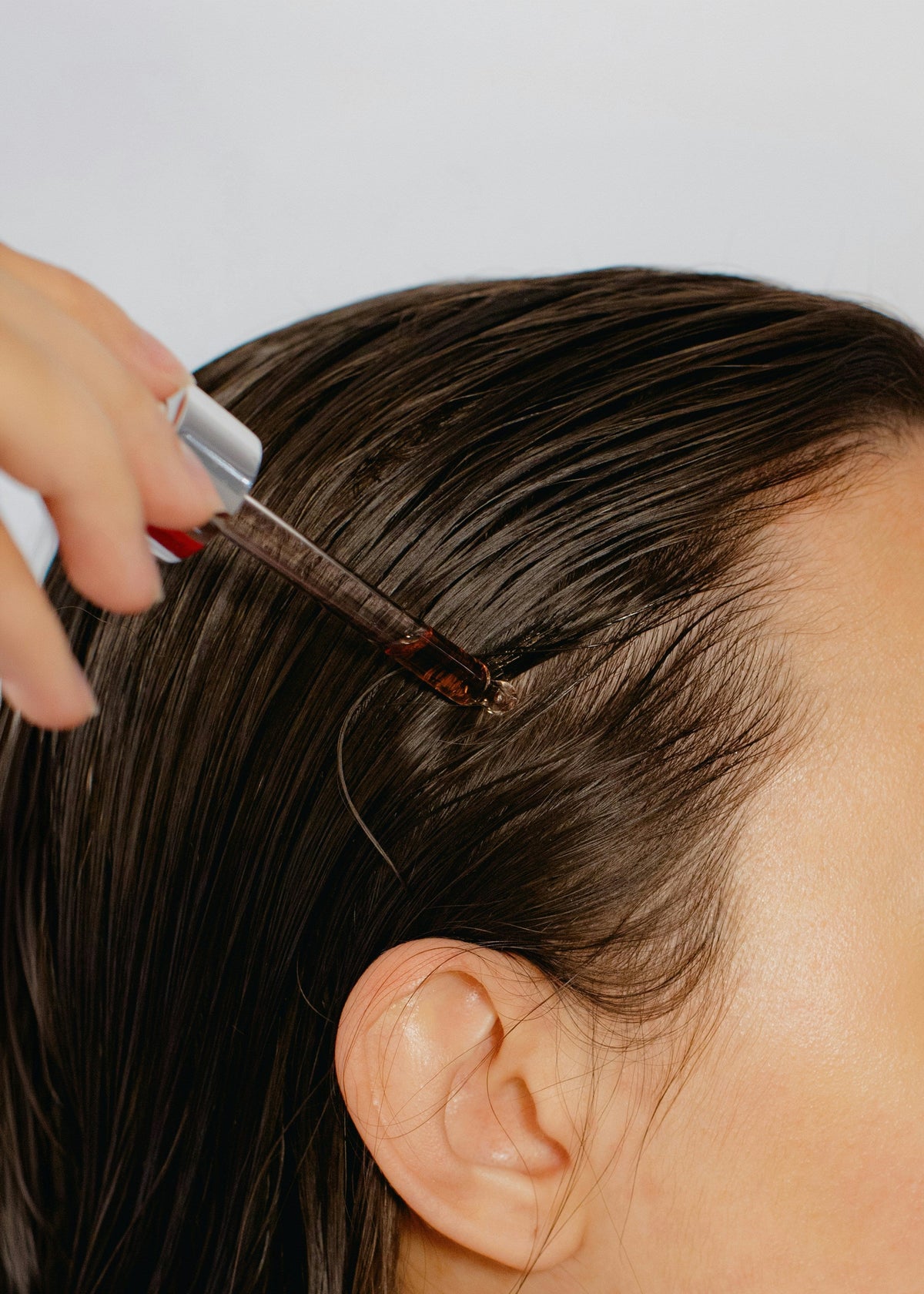
If you want support during the growing-out phase, our Density + Repair hair growth and scalp serum is designed to repair the scalp's skin barrier and support growth, using niacinamide and panthenol to soothe and strengthen alongside caffeine and bioactive peptides. For comfort while your hair is fragile, the Triple Density Complex Pre-Wash Hair Oil makes detangling easier and calms a tender scalp, with pumpkin seed oil and rosemary for scalp support and ceramides for barrier repair. There is more on how to choose in our guide to scalp serums, or you can browse the full scalp serum collection.
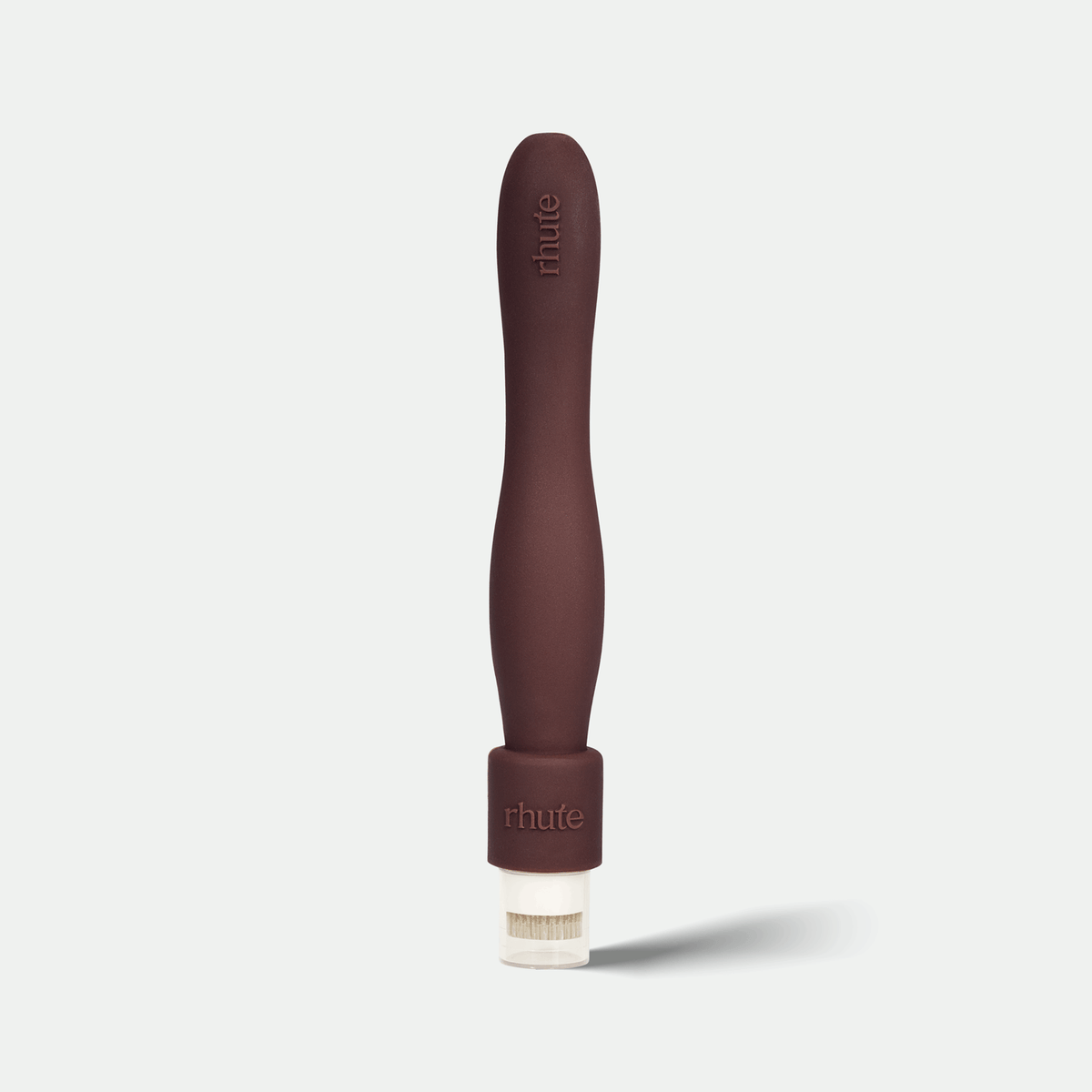
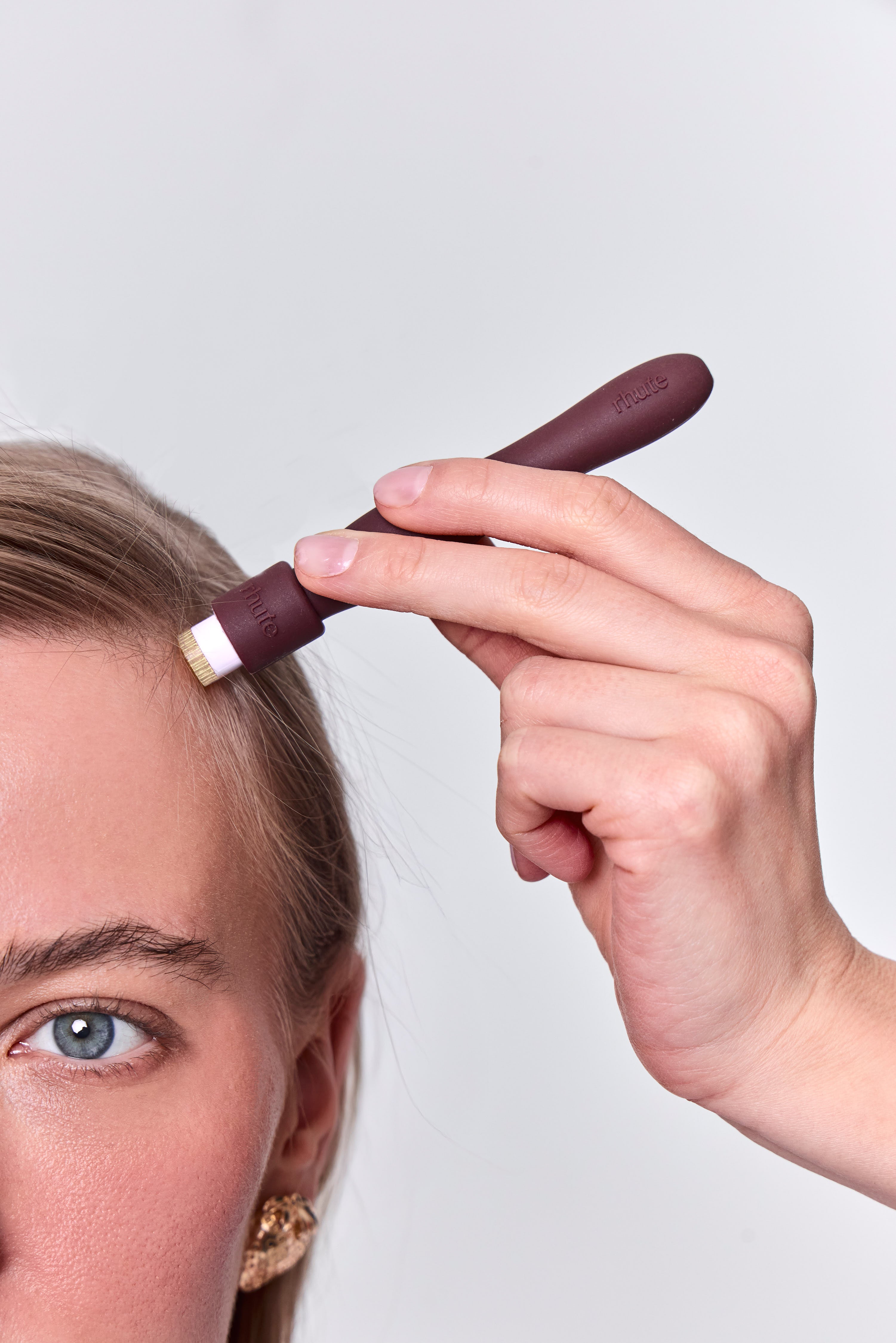
One to be led by feel: microneedling. Dermastamping is fine during a shed, and shorter needle lengths like 0.3mm can help encourage your follicles without much trauma to the skin. If your scalp is tender or sore, though, which is common in telogen effluvium and sometimes called trichodynia, go gently or wait until it settles.
FAQs
How do you pronounce telogen effluvium?
TEEL-oh-jen ef-LOO-vee-um. Now you can say it out loud at your GP appointment without hesitating, which is a small win on a day that probably needs one.
What should you avoid with telogen effluvium?
Avoid starting several things at once, because if your hair improves you will have no idea what helped. Avoid dieting or cutting protein on top of an existing shed, as that is another trigger stacked on the first. Avoid buying supplements before you have been tested. And avoid aggressive brushing, tight ponytails and braids while everything is fragile.
How often should I wash my hair with telogen effluvium?
As often as you normally would, which for most people is two to three times a week. Washing does not cause shedding. It releases hairs that had already detached and were sitting in place waiting to come out, so it looks dramatic without being the cause. Washing less does not save those hairs, it just piles them into the next wash and makes it more frightening.
What vitamin deficiency causes telogen effluvium?
Iron is the most common, and it is a mineral rather than a vitamin. Vitamin D, zinc and vitamin B12 are all associated with shedding when genuinely low. The important part is "genuinely low". Supplementing without testing does not help, and zinc and vitamin D are both harmful in excess.
Does telogen effluvium cause a receding hairline?
No. Telogen effluvium is diffuse, so it thins everywhere at once rather than reshaping your hairline. A receding or M-shaped hairline points to pattern hair loss instead. This is one of the quickest ways to tell the two apart at home.
Can telogen effluvium come back?
Yes, particularly if whatever caused it was never identified or corrected. Recurring episodes are common in people with untreated thyroid disease, persistent iron deficiency, ongoing crash dieting, or repeated illness. Some people also get a mild version every autumn.
Why is my hair not growing back?
Usually because it is, and you cannot see it yet. New hairs are short and fine for months before they add any visible density, so there is a long stretch where the shed has stopped and nothing looks better. If it has been over a year, your strands are finer than they used to be and your parting is wider, that suggests pattern hair loss was uncovered by the shed rather than the shed failing to recover, and it is worth seeing a doctor.
Can a GP diagnose telogen effluvium?
Yes. Telogen effluvium is diagnosed on history and examination, so a GP can usually recognise it from your timeline plus a look at your scalp, and can order the relevant bloods. What they generally will not do is offer treatment, because there is not one, and they cannot prescribe on the NHS for cosmetic hair loss. Go in with your timeline and your questions about which tests, and ask for a dermatology referral if it continues past six months.