

Bond repair is designed to act on the bond network inside your hair rather than sitting on the surface of it. The idea is to reach the damage itself instead of smoothing over the top of it, which is what a conditioner does.
Bond repair works on the chemical bonds inside your hair, the links holding together keratin, the protein your hair is built from. Those bonds are what give a strand its strength, and damage breaks them.
A bond repair treatment is designed to rebuild those links at a molecular level, inside the strand. That is what separates it from a conditioner or a mask, which coats the outside and makes hair feel smoother straight away. One works on the surface, the other works on the structure.
The bonds inside your hair, and which ones actually break
Your hair's shape and strength comes from a network of bonds holding keratin chains in position, including:
-
Disulfide bonds. Each one links two sulphur atoms on neighbouring protein chains, which is why you’ll see them written as S-S bonds. They’re the strongest links in your hair, and the target of most bond repair products. Water will not touch them. Only chemistry does: bleach, permanent colour, perms, and relaxers.
-
Hydrogen bonds are weak and temporary. Water breaks them every time you wash your hair and they reform as it dries, which is why wet hair can be shaped and why the shape drops in humidity. That swelling and drying cycle may take its toll over time (hygral fatigue), and it’s partly why leaving hair wet for hours isn’t doing it any favours. Your hair is at its most vulnerable while those bonds are open.
-
Ionic bonds, often called salt bonds, are the links between charged groups on the protein chains. They hold best when your hair sits at its natural pH, and they loosen when something shifts it. Bleach is a good example, because it’s strongly alkaline, around pH 10.5 (Lima et al., 2023), and your hair's natural point is far more acidic at about 3.67. That gap is why bleaching disrupts salt bonds alongside everything else it does. Swimming in chlorinated water also affects your hair’s natural pH level. Wash your hair with clean water before swimming to reduce chlorine penetration.
All of these matter, but they don’t behave the same way. Hydrogen and salt bonds break and reform constantly as a normal part of your hair getting wet, drying, and meeting different pH levels, so a product can support them and improve how your hair holds its shape, but it’s not repairing damage in the permanent sense. Disulphide bonds are different. When those break they stay broken, which is why they’re where most repair chemistry is aimed. Ideally, targeting all three bonds will have the best impact on damage repair.
Although hydrogen bonds are weaker, there’s approximately nine hydrogen bonds to one S-S bond (Breakspear et al., 2024). S-S bonds form the structural backbone, but hydrogen bonds also contribute heavily to hair stiffness, elasticity, how it bends and shapes. In wet hair, this function is essentially switched off which is again why it's not recommended to leave hair wet for a long period of time, as mentioned above.
What bleach actually does, and why some damage has no route back
Bleaching works by chemically breaking down the bonds that hold your hair together and dissolves the natural pigment in the deep layer of your hair shaft.
A disulphide bond is two sulphur atoms holding onto each other, inside an amino acid called cystine. Bleach breaks that grip, and it does not stop there. It keeps pushing the sulphur through a series of changes until it reaches something called cysteic acid (Di Foggia et al., 2024).
Cysteic acid is the end of the line. Picture a plug snapped off inside the socket rather than simply pulled out. There is no loose end left to plug back in.
That matters, because bond repair works by finding loose sulphur ends and joining them back up. It needs something to hold onto. And here is the part that surprises people. It seems obvious that badly damaged hair would be full of loose ends waiting to be reconnected, but Di Foggia et al. found the opposite in bleached hair. Bleaching uses up those loose ends, while hair damaged by perming holds on to far more of them. So the kind of damage your hair has been through decides how much a bond treatment has to work with.
Bleached hair can absolutely be improved, and consistent use builds on itself rather than starting over each time. Taking hair back to how it was before is the part no treatment has managed yet. Learn more about damaged hair in our dermatologist-reviewed guide.
What does bond repair do for hair?
Bond repair is not one piece of chemistry. Maleate-based actives are the best known, and the idea is that they act as a bridge, reacting with the free sulphur ends left when a disulphide bond breaks and linking them back up. Hydrolysed peptides work differently. They are protein broken into pieces small enough to get inside the fibre and reinforce it from within. Plenty of formulas use both.
When researchers tested the maleate chemistry directly on damaged hair, the result was not what the category name suggests. Di Foggia et al. (2021) treated damaged hair keratin with these actives and found clear improvements to the cuticle, your hair's outer surface, but no increase in disulphide bond content in the cortex, the inner core where strength lives. Reviewing the same work, Aral (2025) summarised it as cuticle improvements without the cortex disulphide repair.
Then the other side, because there is one. Martins et al. (2024) tested finished commercial products on bleached hair rather than isolated actives, and reported that a water-based treatment formed a visible inner layer, filled empty spaces and improved the disulphide network, with an increased number of disulphide bonds. A second, oil-based product in the same study formed a layer on the outside of the fibre instead.
Two credible studies, two different answers. Our reading is that the difference probably comes down to testing an active in isolation versus a whole formulation, and to how the measurement is done, but nobody has settled it.
So what does bond repair do? Consistently and measurably, it improves your hair's surface and inner structure, reduces breakage and makes hair feel and behave better. How far it gets seems to depend on the formula rather than the category. In the Martins comparison, the water-based treatment reached into the cortex and improved the disulphide network, while the oil-based one stayed largely on the outside. Two products on the same shelf, behaving differently.
So it’s less a question of whether bond repair works, and more a question of which formula you have picked. Nobody has done that comparison at scale yet, which is a gap in the evidence rather than a criticism of any product.
Bond repair vs protein treatment
The usual version of this comparison is that bond builders rebuild bonds while protein treatments coat and fill. The literature does not split them that neatly.
Cornwell and Marsh put proteins and peptides inside the bond builder category rather than opposite it, because their definition is about penetrating your hair and improving its internal structure, and proteins can do that. What actually decides the outcome is size:
-
Low and mid-weight keratin peptides penetrate deep into the cortex. Malinauskyte et al. (2021) found mid-weight peptides increased stiffness and reduced breakage at both low and high humidity.
-
High-weight proteins stay on the surface, adsorbing onto the outside of the fibre with little penetration. Still useful for feel and shine, but they are working from the outside.
So the honest guidance is less about picking a side. Worth saying that this is not a bleached-hair-only conversation. Heat styling breaks disulphide bonds, and so does UV. The everyday pull of brushing and styling modifies them too, with no chemistry involved at all (Plowman et al., 2025; Harland et al., 2022). Pollution adds oxidative damage on top (Cavagnino et al., 2022). And because your hair shaft is dead keratin, none of it repairs itself. It just accumulates (Fernandes et al., 2023).
So if your hair has been bleached or chemically processed and is snapping, a bond treatment is the targeted choice. If it feels soft, limp and over-conditioned, a protein treatment gives it more backbone. And if you have never coloured your hair but you use heat, spend time in the sun and live in a city, you are not outside this conversation either. Both wash out and need repeating, and neither is permanent.
Our piece on peptides in hair care goes further on how the smaller molecules work.
Does bond repair help hair growth?
No, and the reason is worth understanding rather than just accepting.
Growth happens at the follicle, in living tissue below your scalp. Everything a bond treatment touches is dead keratin that left the follicle months or years ago (Hoover et al., 2023). There is no route from the strand back to the cells producing it.
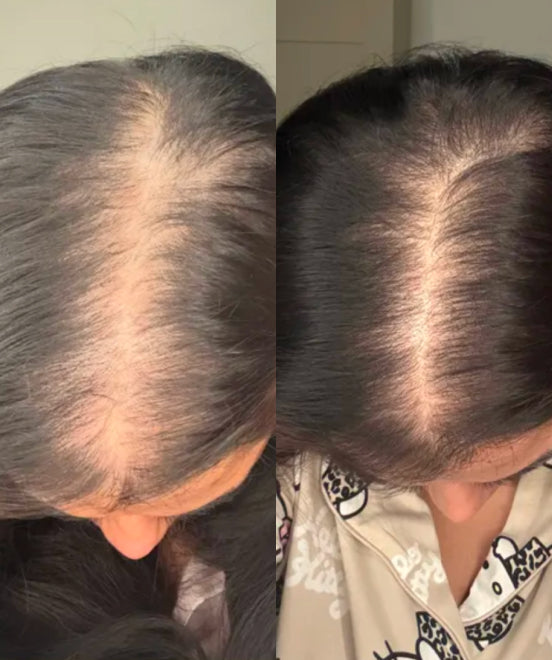
But there is a version of this that is true, and it explains why people feel bond repair grew their hair. Your hair grows at roughly a centimetre a month whatever you put on it. The length you actually keep is growth minus breakage. If you were losing 2 cm a month at the ends and you cut that in half, your hair gets longer without growing any faster. Reduced breakage reads as faster growth, and the visible result is real even though the mechanism is not the one people assume.
If it's the growth side you care about, learn more in the hair growth cycle guide.
Where bond repair fits, and where it doesn't
Bond repair works on hair that already exists. It is the right tool for hair you have already damaged, and it has no influence on the hair still being built at your follicle.
That second half is where scalp condition comes in. Trüeb et al. (2018) describe your scalp as an incubatory environment for the hair fibre before it emerges, with oxidative stress there affecting the quality of what gets built. The two approaches are complementary rather than competing.
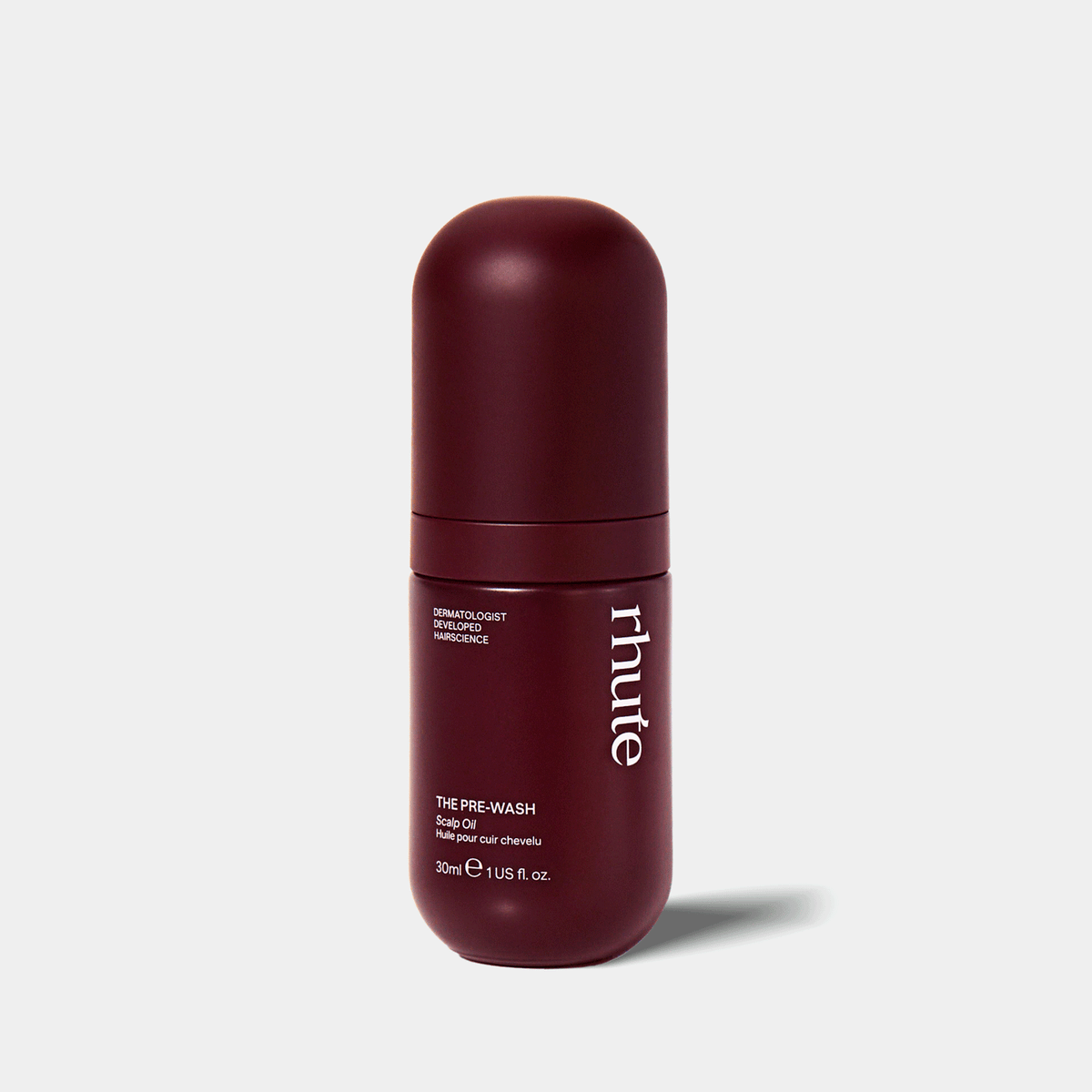
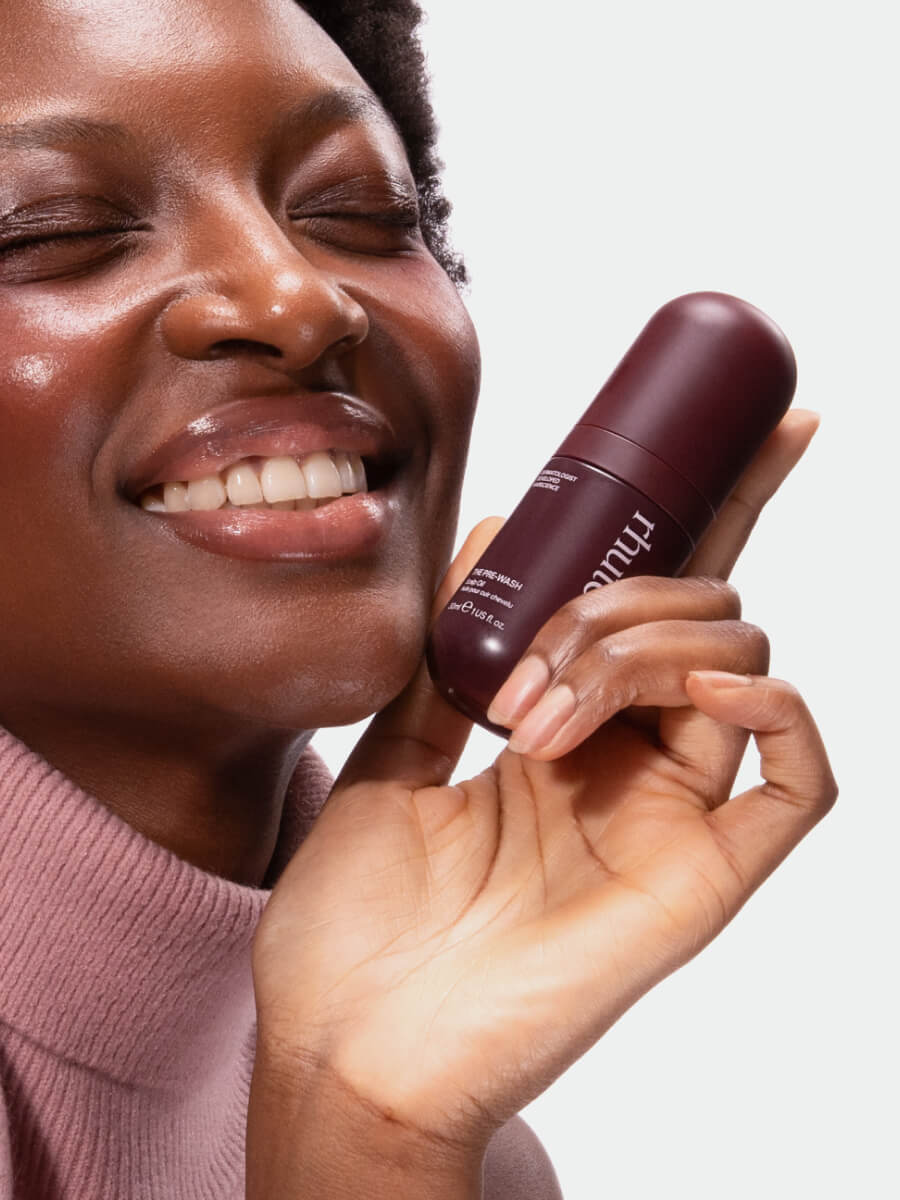
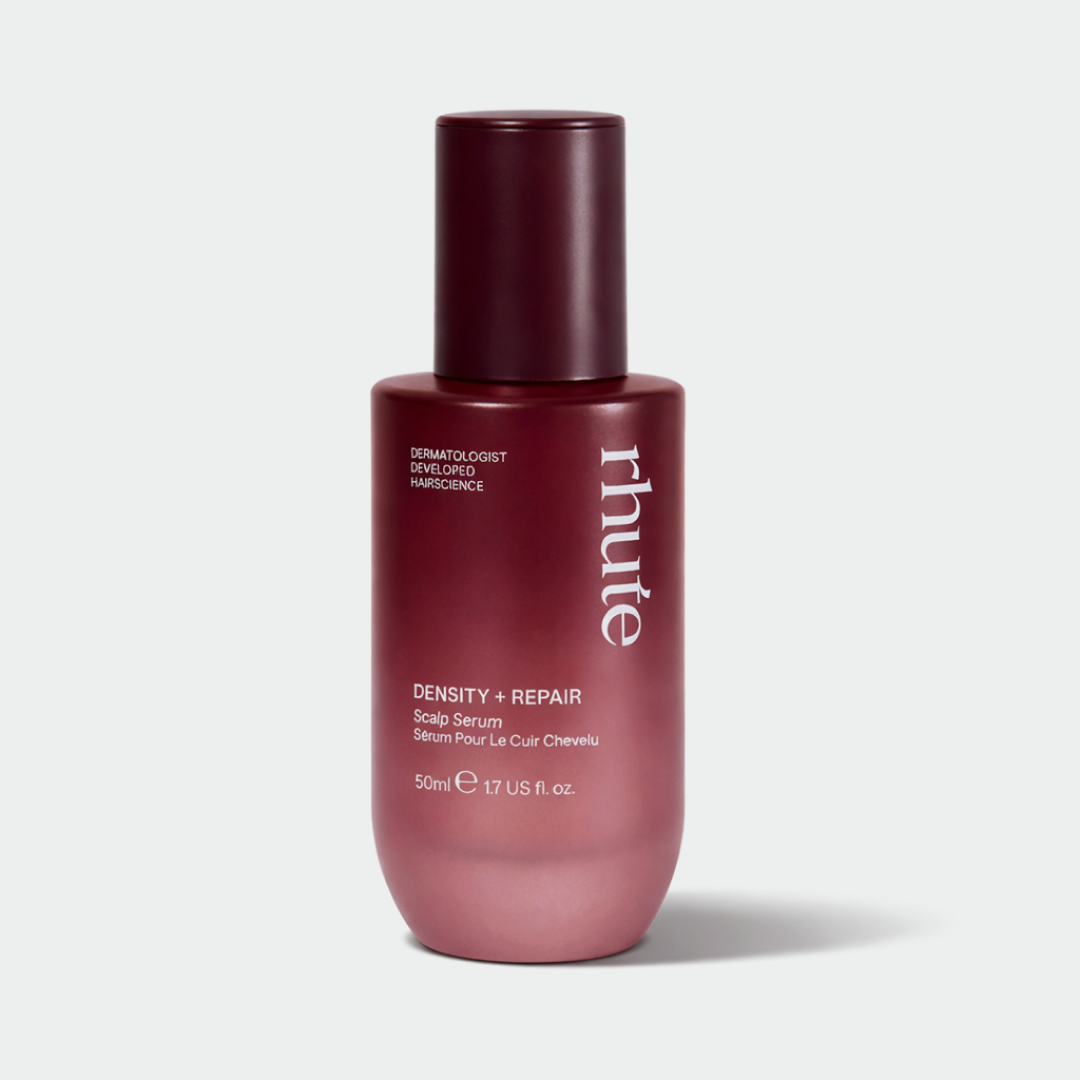
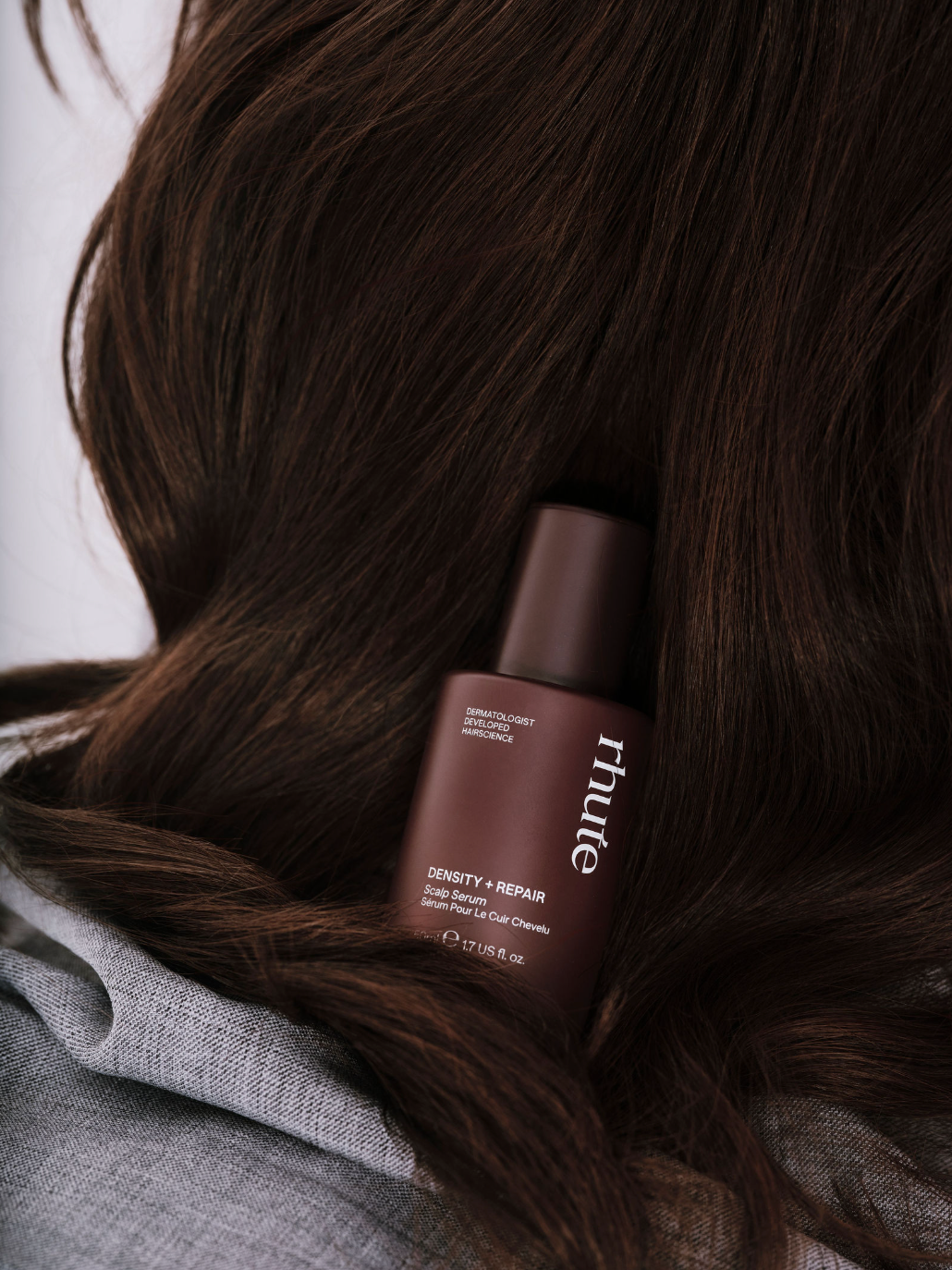
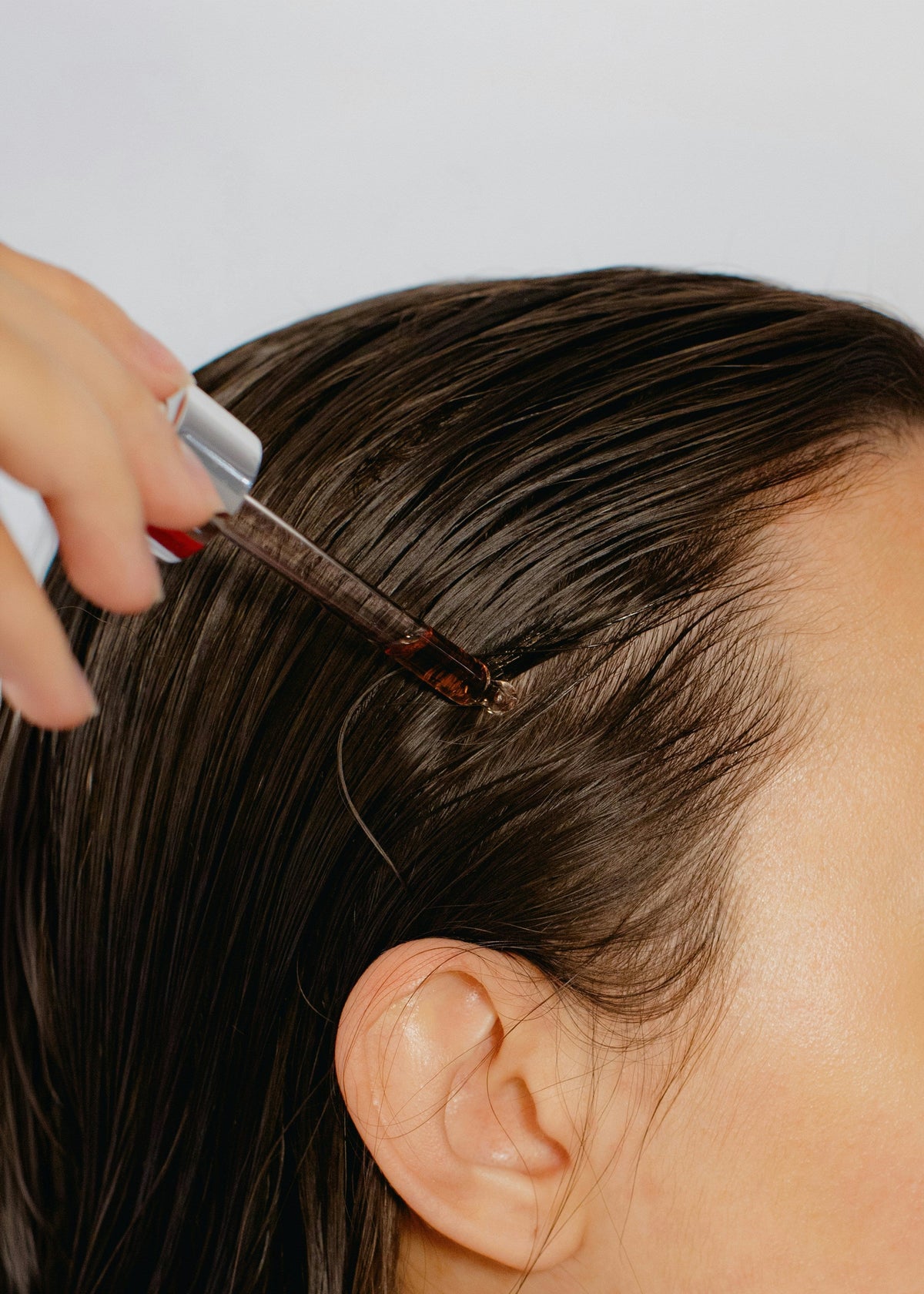
If that is the gap in your routine, our Density + Repair hair growth and scalp serum supports your scalp barrier and reduces shedding, using niacinamide and bioactive peptides to strengthen the environment your hair is built in. And the Triple Density Complex pre-wash hair oil reduces breakage and makes detangling easier, applied to your scalp and through your hair before you wash, when hair is at its most fragile. It sits in our hair and scalp oils collection.
FAQs
Can bond repair damage your hair?
There is no published evidence of harm from regular or frequent use, which is not the same thing as proof of safety. Nobody has run the overuse study. The stiffness and brittleness some people report after building up several bond products is worth taking seriously, and the practical answer is to strip back to one product at a time and reintroduce slowly rather than assume it is in your head.
Do you need bond repair if your hair is virgin?
You could benefit here as chemical treatment damage isn’t the only damage hair fibres experience. Mechanical, UV pollution, and heat damage are all common examples of damage that can build up on the hair.
Does bond repair fix split ends?
No. A split is a physical separation of the fibre, not a broken chemical bond, so there is nothing for the chemistry to reconnect. Products can hold a split together temporarily and it washes off. Cutting is the only thing that removes one. This is inference from how splits form rather than a directly tested claim, so treat it as reasoning rather than a result.
Does bond repair contain protein?
Often, and the ingredients list will tell you. Look for hydrolysed keratin, hydrolysed wheat or soy protein, or anything ending in "peptide". The maleate actives appear under names like bis-aminopropyl diglycol dimaleate. Plenty of products contain both, which is another reason the bond versus protein framing does not hold up well on a real label.
Does bond repair thicken hair?
It can make your hair feel and look thicker without adding any fibre diameter. Peptides that penetrate increase stiffness, and stiffer hair holds itself away from the head, which reads as more volume. Surface deposits add a little apparent width. What none of it does is change the diameter of the hair your follicle produces, which is what genuine thickness means.
Can bond repair cause hair loss?
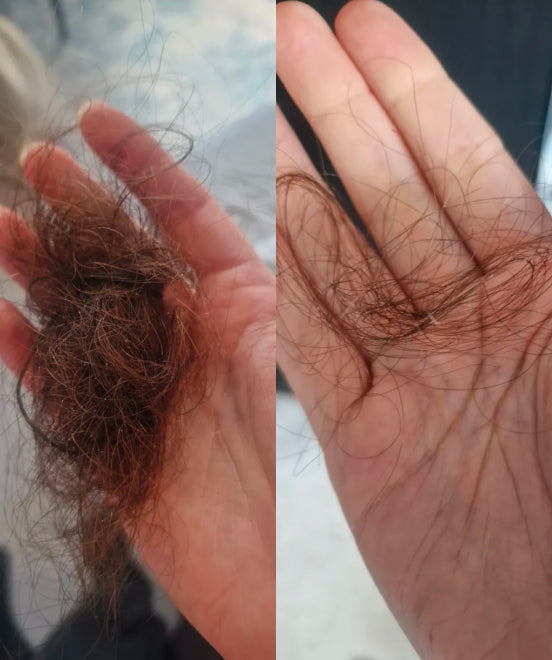
No peer-reviewed evidence links these products to hair loss. The confusion is usually about which thing is happening: damaged hair breaks, leaving short broken pieces, while shedding releases full-length hairs with a small bulb at the end. If you are finding whole hairs, that is shedding, and the causes of hair loss is the more relevant read.