
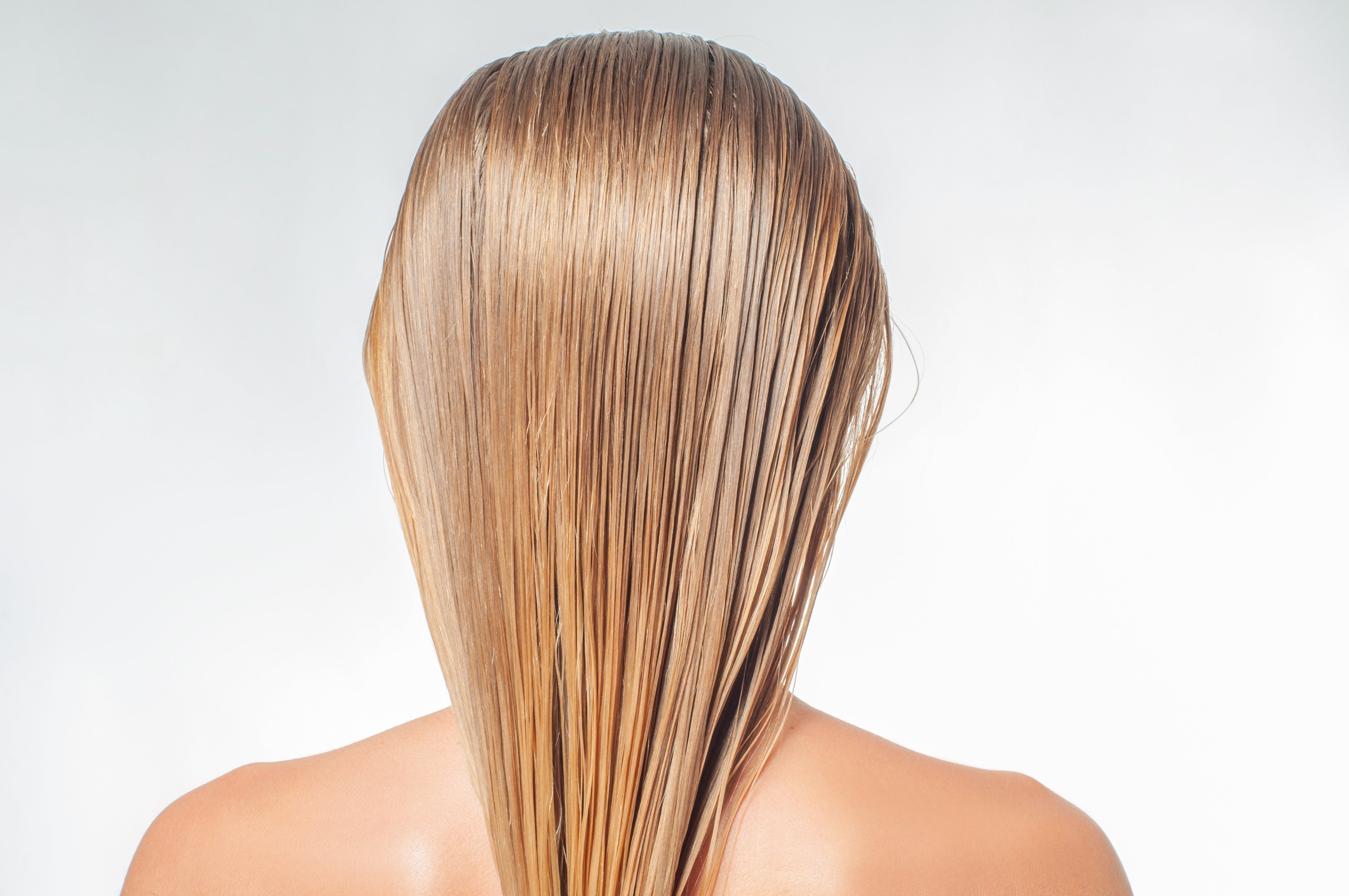

If your ends feel like straw and your hair snaps halfway down instead of growing, you’re not imagining it. Damage is a real structural change to the strand, not a feeling.
And here is the thing that changes how you approach it: the hair you can see is dead tissue with no way of mending itself, so anything that improves it has to come from outside. Below is what damage actually is, how to tell it apart from dryness, what a treatment can genuinely do, and how long the damaged part of your hair will be on your head.
What does damaged hair look like?
Damaged hair looks dull, feels rough and breaks before it reaches its full length. The clearest sign is a change along a single strand: smooth and shiny near your scalp, faded and frayed towards the ends. If your hair looks like two different textures on the same head, that is damage.
Six things to look for:
-
Texture that feels rough, dry or straw-like when you run a strand between your fingers
-
Dullness, because a worn surface scatters light instead of reflecting it evenly
-
Tangling that has got noticeably worse, particularly through the mid-lengths
-
Hair that snaps somewhere along its length rather than coming away from the root
-
Split or frayed ends
-
Hair that soaks up water fast, then dries out just as fast
Damage is also not spread evenly. The hair closest to your scalp is newest and least worn, while your mid-lengths and ends have lived through every wash, every straightener pass and every colour appointment. That’s why hair can genuinely feel thick at the root and thin at the ends, and why anything sold as bond repair is aimed at that older section rather than at your roots.
Is your hair damaged, or is it just dry?
Dryness and damage feel similar and are not the same thing. Dryness is a moisture state, so it reverses. Condition your hair and dry hair softens. Damage is structural, and conditioning makes damaged hair behave better without putting the structure back.
A quick way to tell: take one shed strand and stretch it gently. Healthy hair has give and springs back, dry hair feels stiff and returns to shape, and damaged hair either stretches a long way and stays stretched or snaps almost immediately. Try a few strands from different parts of your head, because your ends will not behave like your roots.
One popular test to skip is floating a strand in a glass of water to judge porosity. Whether a hair floats depends heavily on product residue and surface tension, so it tells you very little. If porosity is what you’re trying to work out, we’ve covered it in our high porosity hair and low porosity hair guides.
A simple rule: if a mask sorts it out until your next wash, dryness is a big part of it. If nothing you apply changes how your hair behaves, the structure is doing most of the work.
What is actually happening inside a damaged strand
A hair strand has two layers that matter here.
The cuticle is the outside, made of flat overlapping scales a bit like roof tiles. It shields the inside of the strand, controls how much water moves in and out, and it is the reason healthy hair reflects light and feels smooth.
The cortex sits underneath and does the heavy lifting. It holds your hair's strength and elasticity, it carries the pigment cells that give your hair its colour, and it is packed with keratin, the protein that decides how much force a hair takes before it breaks. Keratin chains are held in position by three kinds of bond, and they’re not equally tough. Disulphide bonds, between sulphur atoms, are by far the strongest, and only chemistry breaks them. Salt bonds sit in the middle, weaker than disulphide but stronger than hydrogen, and they are disrupted by shifts in pH, including during bleaching. Hydrogen bonds are the weakest and the most temporary, broken by water every time you wash your hair and reforming as it dries.
All three matter, because all three breaking can produce the symptoms in the list above. Even the hydrogen bonds take a toll through sheer repetition. Your hair swells as it takes on water and shrinks again as it dries, and that constant expanding and contracting disrupts the structure and weakens it over time. It has a name, hygral fatigue (Gavazzoni Dias, 2015), and it’s part of why damaged hair stops holding its shape. It’s also the reasoning behind oiling before you wash, which slows how much water gets in. And once the cuticle wears away, the cortex is exposed and far more vulnerable than it should be.
Two things rarely make it into a guide like this.
The first is 18-MEA, a lipid (a fatty molecule) bonded to the surface of your cuticle. It is what makes healthy hair water-repellent and slippery, and losing it is a large part of why damaged hair feels rough and tangles. Usefully, Tokunaga et al. (2019) found bleaching alone was not enough to remove that water-repellent quality completely. It took bleaching plus repeated washing, a good reminder that damage builds up rather than arriving in one appointment.
The second is the cell membrane complex, the glue between hair cells: a thin sandwich of lipid and protein layers binding your cuticle and cortex cells together (Robbins, 2009). When it degrades the strand loses cohesion, which is how one hair ends up splitting into two.
For the deeper dive on how hair holds on to water, Discover our hair hydration guide.
What causes damaged hair
Chemical damage comes from bleach and permanent colour, which work by opening your cuticle and oxidising what is underneath. That breaks disulphide bonds, and some of the change cannot be undone. Bleaching converts cysteine into cysteic acid, and there’s no route back from that (Cornwell and Marsh, 2023).
Heat damage comes from straighteners, tongs, and dryers, and it starts at lower temperatures than most people assume. We have a full guide to protecting hair from heat damage, so the short version here is that lower is better and already-processed hair tolerates less.
Mechanical damage comes from brushing, towel-drying, tight ponytails and extensions (which all increase friction), and it mostly shows up as breakage along the length. Where tension is the real issue and you are seeing thinning at your hairline rather than snapped ends, that is traction alopecia and a different problem with a different fix.
Weathering is the one most people have never heard of, and it explains the most. This includes pollution and UV damage. Both can damage the cortex structure, causing oxidative damage. For UV damage, this also includes damage to the pigment containing cells which can cause colour fading. Sinclair (2007) describes it as the progressive breakdown of the cuticle, and later the cortex, from ordinary everyday wear, working from root to tip. He makes the point plainly: the tip of a long hair may have been through more than 700 washes. Nothing dramatic has to happen for your hair to become damaged. It only has to get old.
So can damaged hair actually be repaired?
The hair you can see is dead, keratinised tissue with no blood supply and no repair machinery, so it cannot mend itself. Fernandes et al. (2023) put it directly, noting that hair cannot be biologically renovated and that the only way to restore its properties is to repair it physically.
So repair is possible. It just has to be done to your hair rather than by your hair, and there are two very different kinds:
-
Surface repair is what most products do. Conditioners, oils and silicones fill the gaps in a worn cuticle, smooth the surface and cut friction, which genuinely reduces further breakage. It works, and it washes out.
-
Structural repair means reaching the cortex and doing something to the keratin bonds themselves. That is a much harder job, and it is what bond building sets out to do.
Two honest limits. Split ends can only be cut: a product holds a split together for a while, but the effect washes off at your next shampoo, and a trim is the only thing that deals with them properly (Akhgary, 2024). And some chemical changes are effectively permanent. Madnani and Khan (2013) describe the 18-MEA lost during chemical straightening as permanently gone, although the work above suggests it can be partly replaced cosmetically rather than restored.
Which is why it pays to be careful with the idea, repeated on some well-known pages, that most hair damage is temporary. Dryness is temporary. A worn cuticle is not.
Do bond builders work?
Bond builders are the one category making a genuinely structural claim, so they deserve a straight answer.
The chemistry is sound in principle. Bleaching breaks disulphide bonds and leaves reactive sulphur groups behind, and bond builders are designed to react with those groups and bridge them, re-linking what came apart.
First, a distinction that often gets lost. A conditioner and a bond builder are not competing versions of the same product:
-
A conditioner coats and smooths the outside of the strand. It improves feel, shine and combing, and it does not repair the chemical bonds inside your hair. It washes out.
-
A bond builder is formulated to get into the cortex and act on a molecular level directly on the chemical bonds.
Then the honest part. Cornwell and Marsh (2023), two industry scientists writing in a trade journal, note that the amount of high-quality published information on bond builders is limited and that most studies have not been successfully reproduced by multiple investigators. That is a comment on the evidence rather than a criticism of any product. They also point out the ceiling: bleaching produces cysteic acid, and no bond builder reverses that.
In practice, a bond builder is a sensible thing to use on chemically processed hair, and it is fair to expect better feel and less breakage rather than hair returned to its original state. For more on the chemistry, our piece on peptides in hair care goes further.
The best treatment for damaged hair is the one you do least of
The biggest wins on damaged hair are subtractive, which is not what most of the internet will tell you.
-
Cut the split ends. Nothing else works on them, and a split left in place keeps fraying and then the damage travels upwards.
-
Stretch out your chemical appointments. Fewer bleach services means fewer broken bonds, and root-only or partial application spares your ends entirely.
-
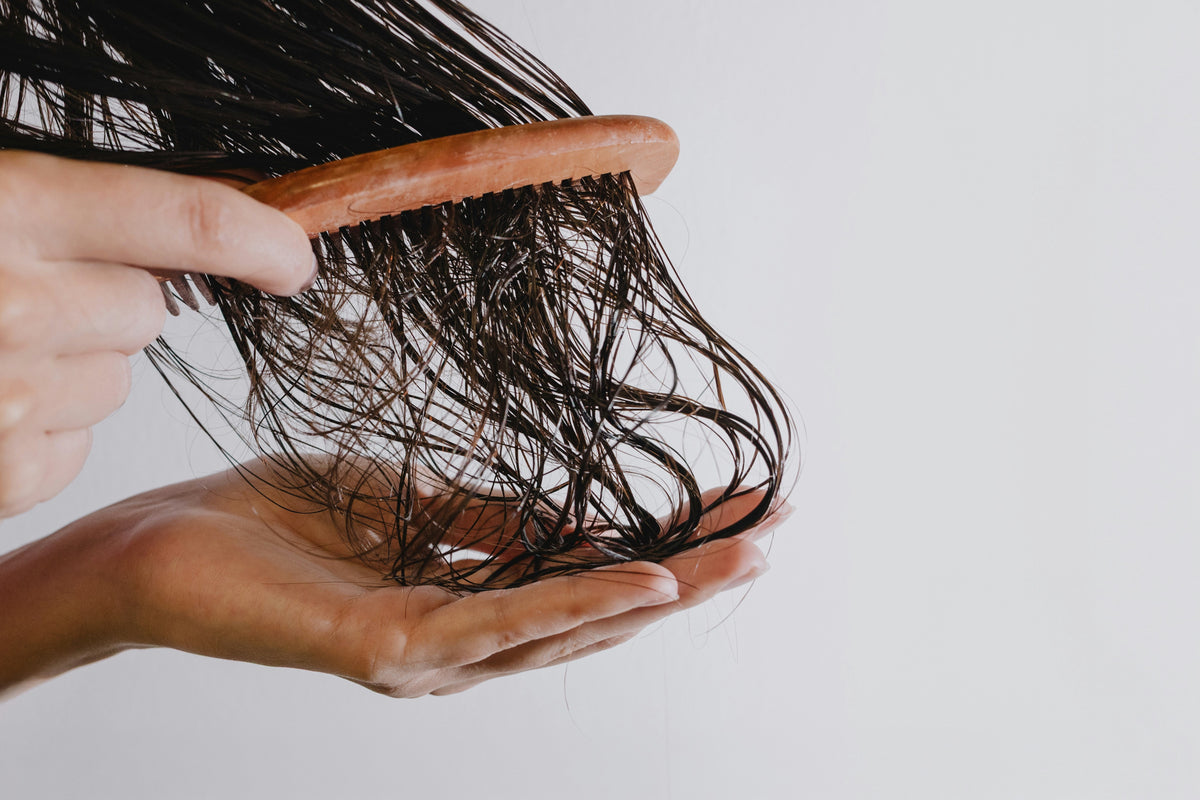
Wet hair is in ints most fragile, vulnerable state. Robbins and Kamath (2007) found something more nuanced than the usual advice, though: wet combing does not simply cause more breakage, it changes the kind, reducing small breaks at the ends while increasing breaks along the length. So wet hair is not automatically worse to handle, but it breaks in a way you notice more. Detangle with your fingers or a wide-tooth comb, from the ends up.
-
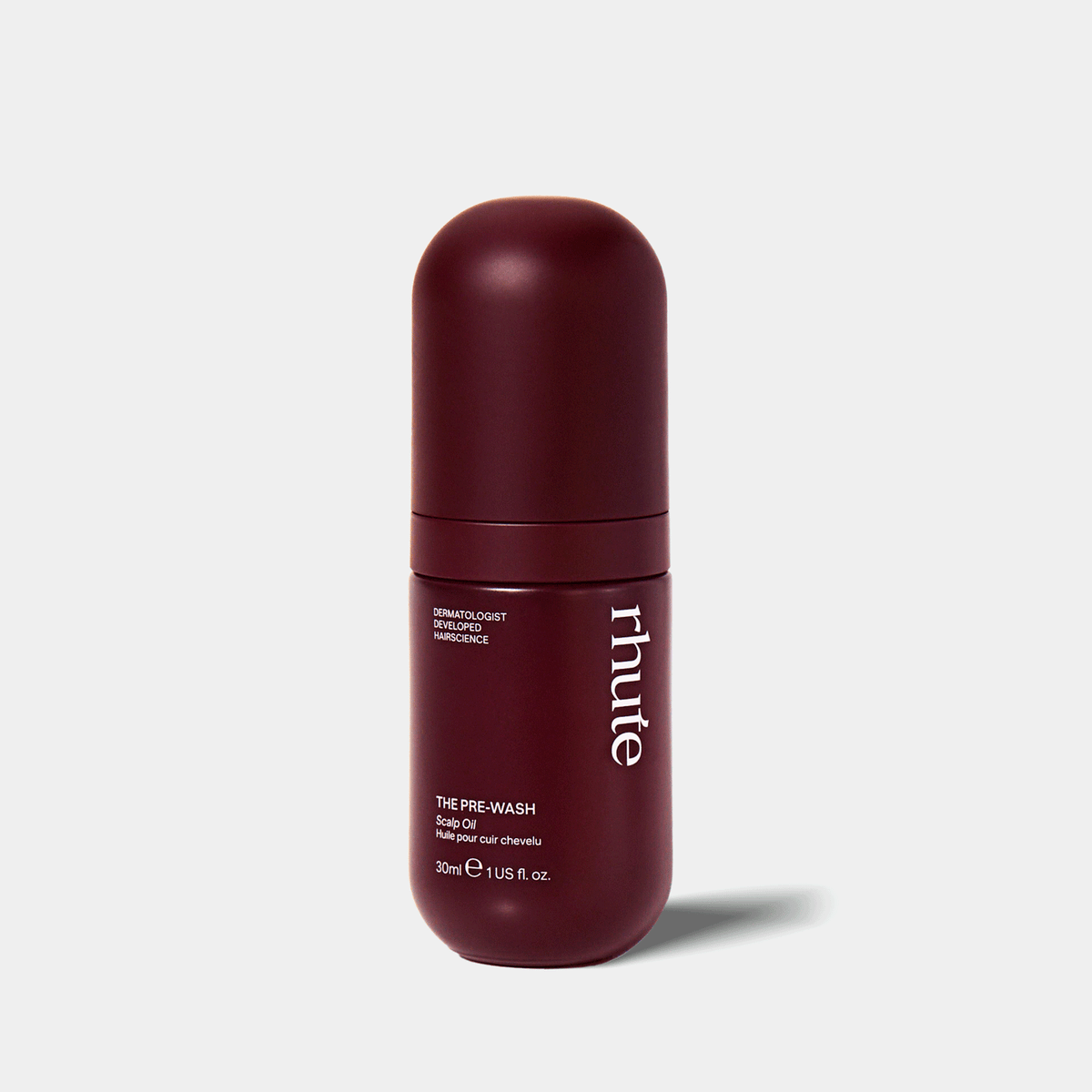
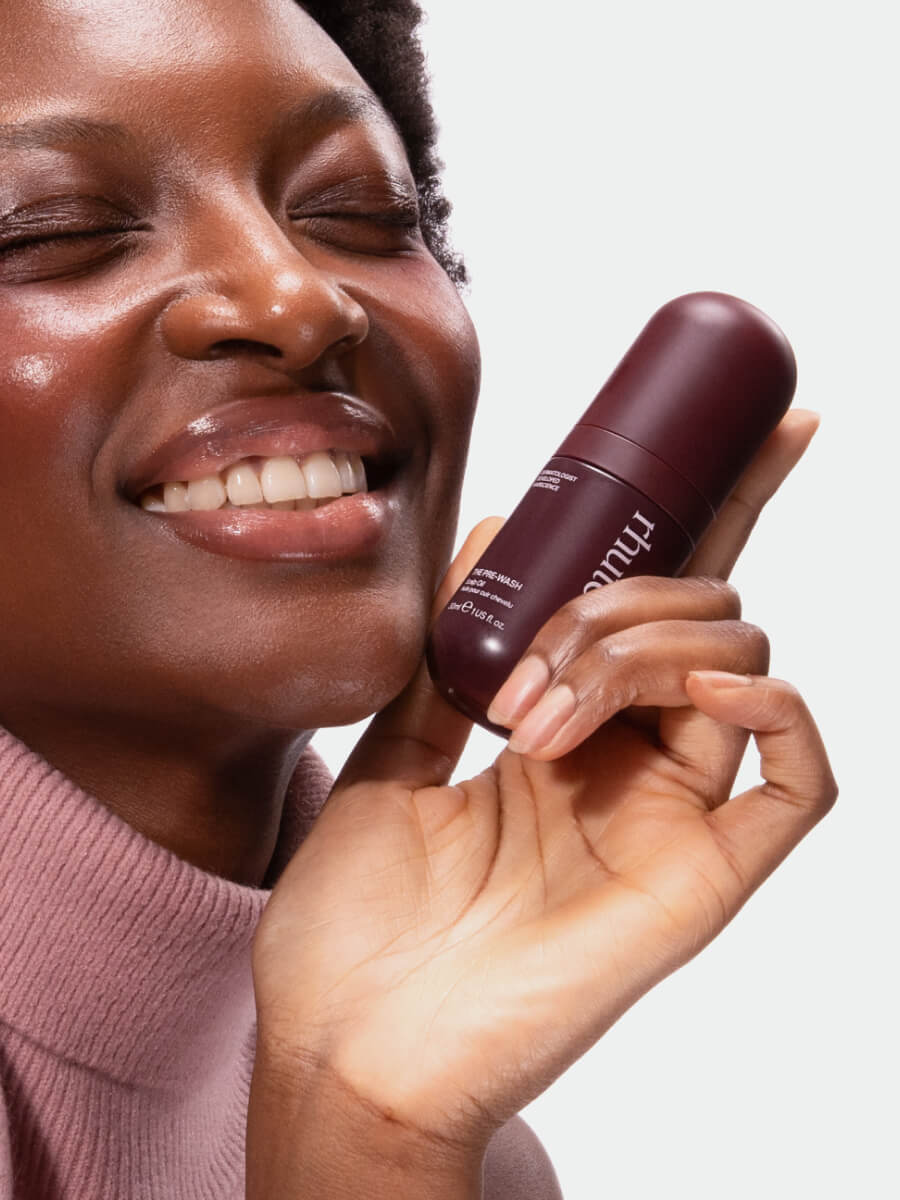
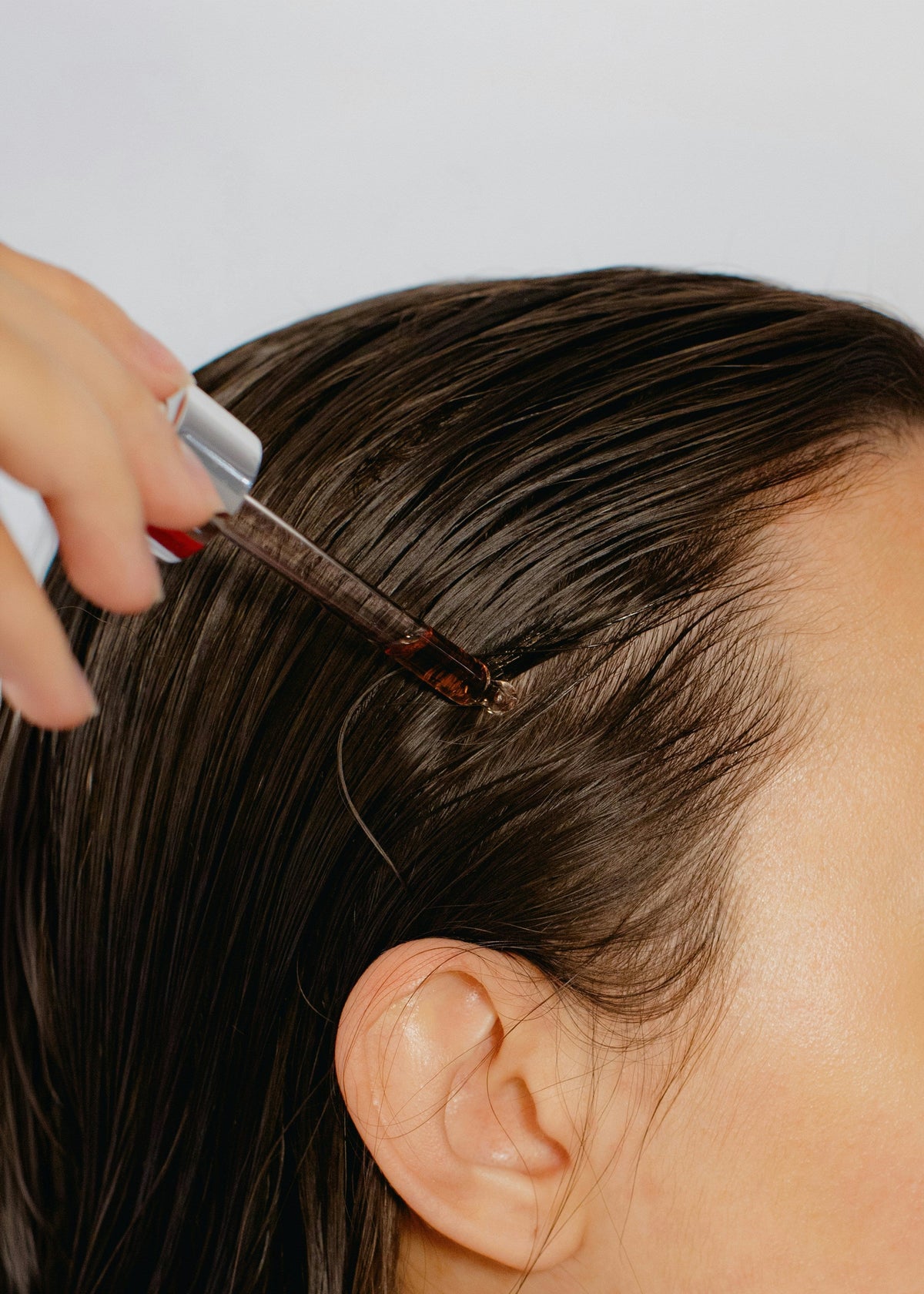
Oil before you wash, not only after. Rele and Mohile (2003) compared coconut, sunflower, and mineral oil and found coconut oil reduced protein loss in undamaged, bleached and chemically treated hair, applied either before or after washing. Worth flagging that the authors worked for an oil manufacturer, so treat it as promising rather than settled. The Triple Density Complex Pre-Wash Hair Oil contains ingredients like ceramides that help to reinforce the cell membrane complex for stronger and smoother hair.
-
Use less heat. If heat is a part of your hair styling routine, try to reduce the temperature on your tools and always use a heat protectant spray.
Learn more about whether hair oiling works and how to use hair oil.
How long does damaged hair take to grow out?
Roughly one centimetre a month, and that number changes what you should expect.
Scalp hair grows at around 0.35 mm a day, about a centimetre a month, or 15 cm a year (Hoover et al., 2023). Do the arithmetic on your own hair. If your ends sit at your shoulders, that is somewhere around 30 to 40 cm of growth, which makes the oldest part of your hair roughly two to three years old. The bleach you had 12 months ago is still physically on your head, about halfway down, and it stays there until it is cut off.
Which reframes the goal. You are not rescuing the damaged section, you are managing it until it goes and protecting the hair that has not grown yet. For the full picture on growth phases, read the hair growth cycle guide.
Where your scalp comes into this
To be clear about it: no scalp product repairs a strand that is already damaged, and we’re not going to suggest otherwise.
Here’s why your scalp still matters. New growth is the only hair anyone can genuinely influence, and new growth is assembled at the follicle, inside your scalp. Trüeb et al. (2018) make the case that your scalp acts as an incubatory environment for the hair fibre before it emerges, and that oxidative stress there affects the quality of the hair being built. So scalp care is not damage repair. It is the one thing that changes the hair you have not grown yet.
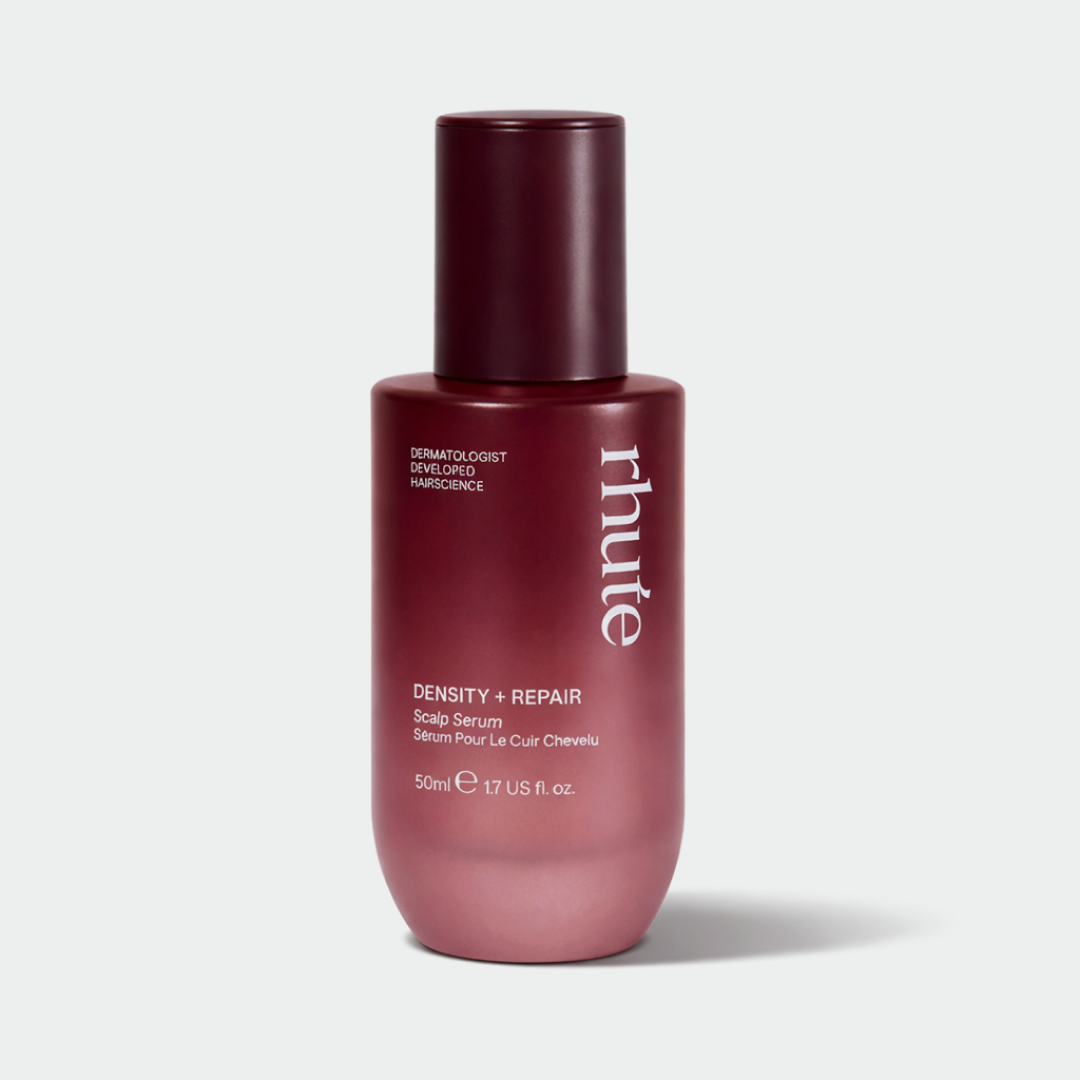
Two of ours are relevant if that is where you want to put your effort. Our Density + Repair hair growth and scalp serum supports your scalp barrier and reduces shedding, using niacinamide and bioactive peptides to strengthen the environment your hair is built in, plus caffeine to support density at the follicle. The Triple Density Complex pre-wash hair oil handles the other half of the problem, making detangling easier and reducing breakage while your hair is at its most fragile. You apply it to your scalp and through your hair before you wash, so it is working during the part of your routine that does the most mechanical damage. It sits in our hair and scalp oils collection.
There is more in the how to improve scalp health guide.
FAQs
Do split ends travel up the hair shaft?
The weathering that split the tip keeps acting along the whole length, so new splits appear higher up over time. Either way, trim before they multiply.
Do I have to cut it all off?
Almost never. Run your fingers down a section and feel for the point where your hair turns rough. That is roughly where the damage starts, and cutting to just above it takes out the worst. At a centimetre a month you will replace the length sooner than you expect.
What temperature should my straighteners be on?
Lower than it is now. There is no evidenced safe threshold, and Lima et al. (2025) recorded measurable changes to the hair's internal lipid structure from around 110 to 130°C, well below a typical 180°C setting. They also found that chemically treated hair broke down at lower temperatures than virgin hair, so if you colour your hair the same number does more harm.
Is protein overload a real thing?
Not as a diagnosis. The symptoms people describe, stiff straw-like hair that snaps, are real enough, but the usual explanations are product buildup, damage that was already there, or not enough conditioning. Clarify, condition properly, then see what changes.
Does hard water damage your hair?
Partly settled, partly not. Hard water minerals react with your shampoo and conditioner to leave a soap scum on your scalp and hair, and that buildup, dullness and rough feel is not in dispute. Whether hard water weakens the fibre itself is contested: Srinivasan et al. (2013) found no significant effect on tensile strength, while Luqman et al. (2018) found a reduction, in the same journal. If your water is hard, the buildup is the part worth managing.
Is my hair damaged, or is it just curly?
Curl pattern varies naturally on the same head, so uneven curl is not proof of damage. Damaged curls look different: a section that has lost its pattern and does not get it back when wet, usually through the mid-lengths where the iron passed most often. Wet a small section and watch. Natural variation still curls. Damage stays limp.
Can damaged hair still grow, and does it fall out?
It still grows, because growth happens at the follicle and damage is to the strand. Damaged hair breaks rather than sheds, so you find short broken pieces rather than full-length hairs with a small bulb at the end. If you are losing full-length hairs, that is shedding, and hair loss in women is the more useful read.
Can you repair damaged hair overnight?
You can improve how your hair looks and feels overnight with a mask or an oil, and that is worth doing before an event. You cannot change the structure in one night. Anything promising that is selling you a cosmetic result and calling it repair.