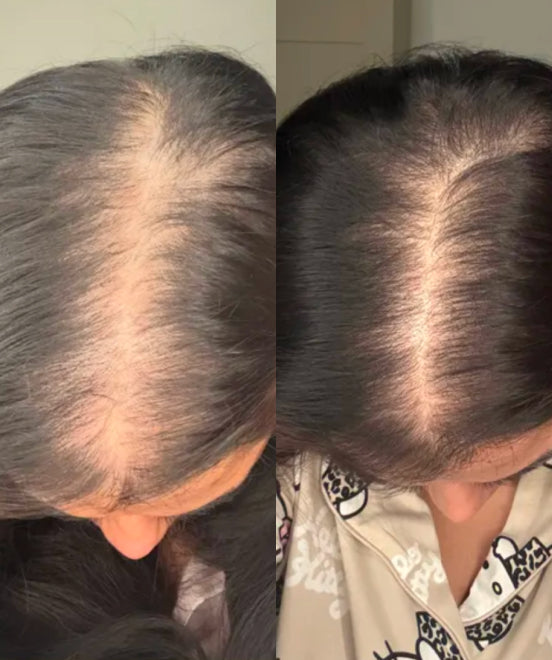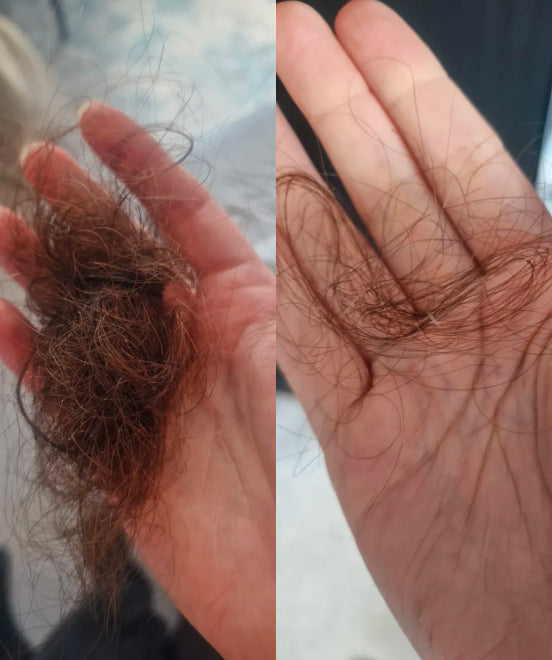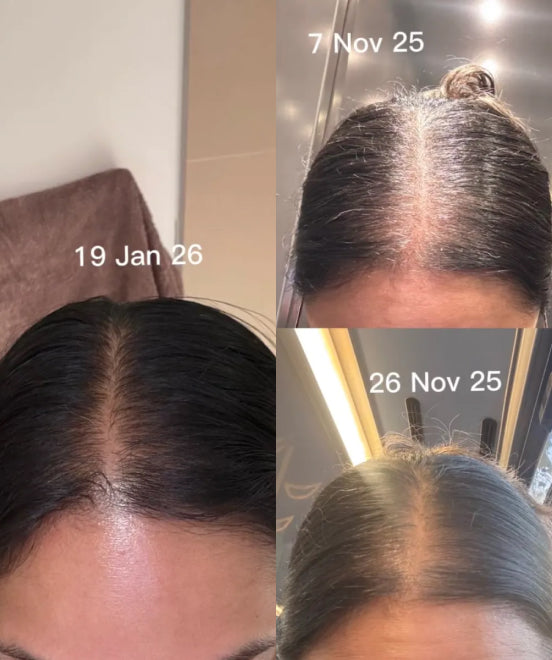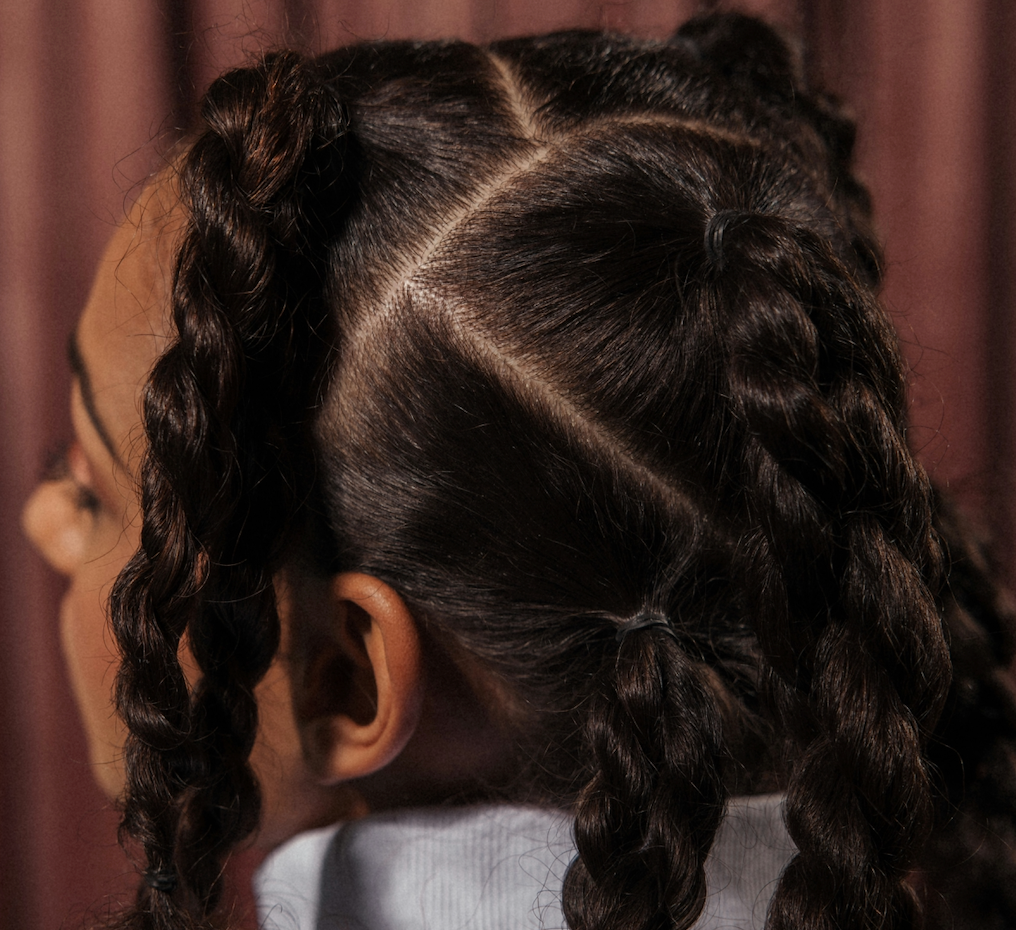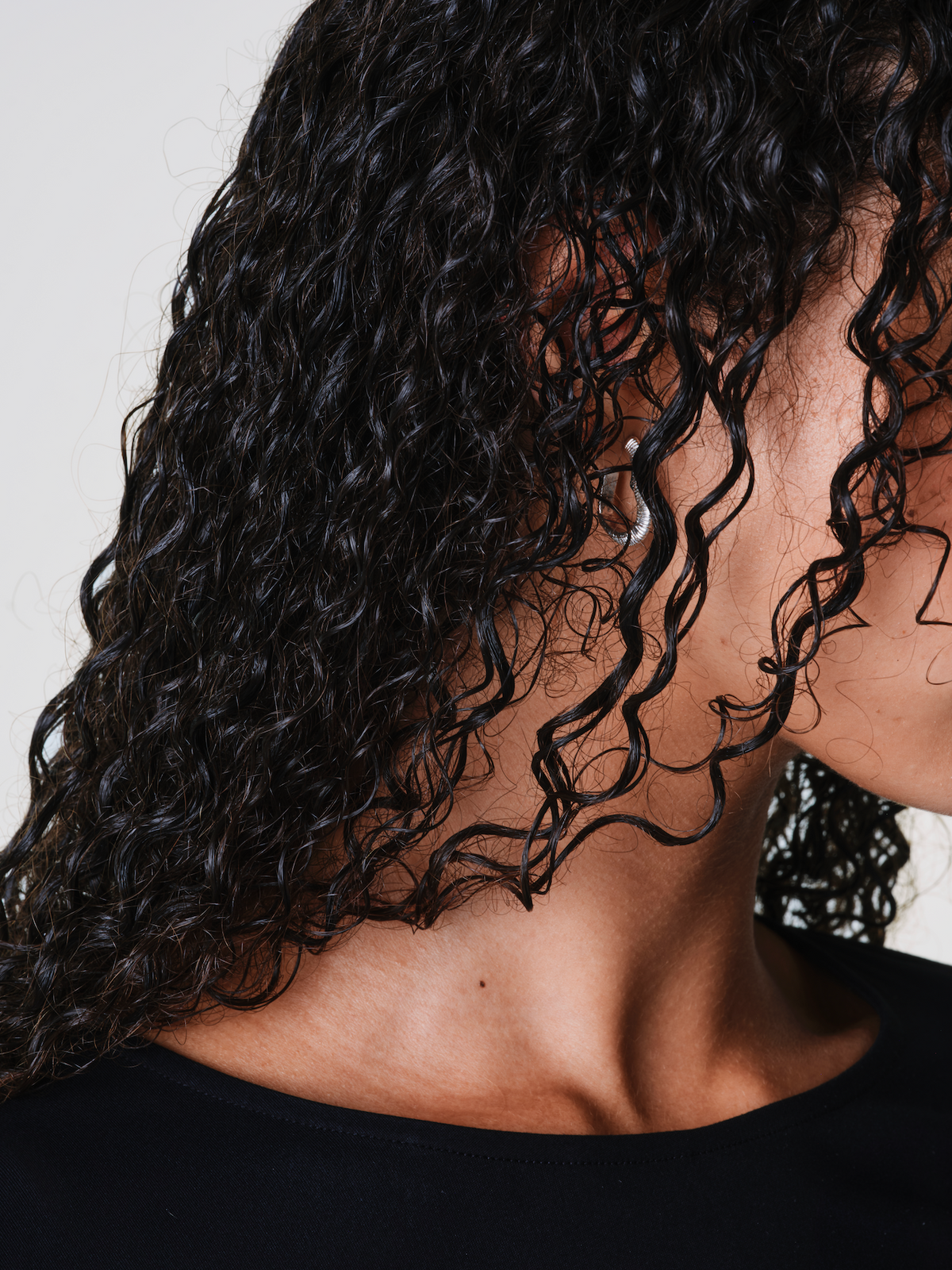


Heavy periods, tired however early you go to bed, and more hair in your brush than there used to be. If that sounds familiar, TikTok's "ferritin face" trend has probably landed on your feed, and your hair belongs in that conversation too.
The quick answers:
-
Is ferritin face real? Partly. Low iron can make your skin look paler than usual (NHS, 2024b), but a mirror can't confirm it.
-
What is "ferritin hair"? Our name for the hair side of the trend: extra shedding from all over your scalp. Hair loss when brushing or washing is on the same NHS symptom list.
-
What should you do? Ask your GP for a blood test before you take any iron.
What is ferritin face?
Ferritin is the protein your body uses to store iron, so a ferritin blood test shows how much you have in reserve. "Ferritin face" is the name social media gave, in autumn 2026, to the pale skin and dark under-eye circles some people put down to low stores. It's a trend, not a diagnosis.
-
Paler skin has some evidence behind it. Your body needs iron to make haemoglobin, the red pigment in your blood, and paler than usual skin is a recognised symptom of iron deficiency anaemia (NHS, 2024b).
-
Dark circles have many other causes. In one dermatology clinic study, the most common type was constitutional, meaning it's part of your natural colouring, and short sleep was common too (Sheth et al., 2014).
So what is "ferritin hair"?
It's our shorthand for how low iron can show up on your head instead of your face. You might notice (British Association of Dermatologists, 2025):
-
more hair than usual in your brush, in the shower drain or on your pillow
-
thinning that's even across your whole scalp, with no patches
-
less volume, so your ponytail feels slimmer
Some changes point somewhere else:
-
A parting that widens slowly over years is more typical of pattern hair loss, which can look similar and sometimes sits alongside shedding (British Association of Dermatologists, 2025). Our guide to the early signs of hair thinning shows what to look for.
-
Short, snapped hairs with rough ends suggest breakage. Here's how to tell breakage from shedding.
Why low iron shows up in your hair
Ferritin hair isn't a condition of its own. It sits under the umbrella of telogen effluvium, a sudden, all-over shed that shows up two to three months after something knocks your body off balance (British Association of Dermatologists, 2025). Low iron is one of the recognised triggers (DermNet, 2023).
The trigger matters for timing. A shed set off by a one-off event, like an illness, tends to settle by itself. Low iron can carry on quietly in the background, and if it isn't corrected, the shed can drag on or come back (British Association of Dermatologists, 2025).
The research is mixed, since women with hair loss tend to have lower ferritin (Treister-Goltzman et al., 2022) but low iron isn't behind every shed. Our guide to iron deficiency hair loss covers the science, the blood tests, and what recovery looks like.
Why so many women run low: periods and diet
Iron leaves your body with blood, which is why heavy periods are one of the most common reasons women run low. Periods can also get heavier after pregnancy and in the run-up to menopause (NHS, 2024).
Diet is the other half. You're more likely to run low if you eat little or no meat, and caffeine in tea, coffee, or your daily matcha can reduce how much iron you absorb (Al-Naseem et al., 2021). None of this is a failing. It's more iron going out than coming in.
The signs that tend to show up together
One sign alone doesn't tell you much. Tiredness has plenty of causes, lots of people are naturally pale, and hair sheds for all sorts of reasons. The combination is what's worth acting on:
-
Tiredness that sleep doesn't fix. Tiredness and low energy top the NHS symptom list (NHS, 2024b).
-
Paleness, and it isn't always in your cheeks. It can show in the creases of your palms and inside your lower eyelids (DermNet, 2023). On brown and black skin, palm creases are a more useful place to look (Mukwende et al., 2020).
-
Shedding from all over your scalp that carries on for weeks.
If two or three of these sound like you, especially alongside heavy periods, that's your prompt to get your iron checked.
Why your hair lags behind your face
Your face and your hair don't report on the same moment.
-
Your skin reflects your blood now. Skin colour follows the haemoglobin in your blood today.
-
Your hair reflects a few months ago. Shedding usually appears around two to three months after whatever set it off (British Association of Dermatologists, 2025).
So you can look washed out with no shedding yet. Or you can be shedding now because of a dip earlier in the year, while your skin looks completely fine.
Paleness also tends to arrive late. Iron stores can run low well before haemoglobin drops (Al-Naseem et al., 2021), so a rosy face doesn't rule low ferritin out.
Getting your iron checked
-
Ask your GP for a full blood count and ferritin. The blood count looks at your red blood cells (NHS, 2024b) and ferritin shows your stores. Your stores can be low while your blood count looks normal (Al-Naseem et al., 2021), so ask for ferritin by name.
-
Mention your periods and your hair. Both help your GP get to the rhute of it, and heavy periods can be treated too (NHS, 2024).
-
Wait for your results before taking iron. The right treatment and dose depend on what your bloods show.
How long until your hair catches up?
Recovery tends to run in an order, and your hair comes last.
-
Colour first. Haemoglobin recovers before your stores do, so your skin can brighten early in treatment.
-
Stores next. Iron is usually continued for around three months after haemoglobin is back to normal, to refill your reserves (DermNet, 2023).
-
Hair last. The shedding phase usually lasts three to six months (British Association of Dermatologists, 2025). Regrowth is slower. Realistically, it can be around 12 months or more before your hair feels as full as it used to. If your iron stays low, that clock can keep resetting, which is why sorting the iron deficiency behind your hair loss comes first.
It's why "ferritin face before and after" photos can show brighter skin long before any change in hair. If your hair hasn't caught up with your face yet, nothing has gone wrong. It's running on its own growth cycle.
Looking after your scalp in the meantime
No serum or oil can raise your ferritin. That comes from treating the low iron itself. What scalp care can do is look after your scalp while your hair cycle resets.
-
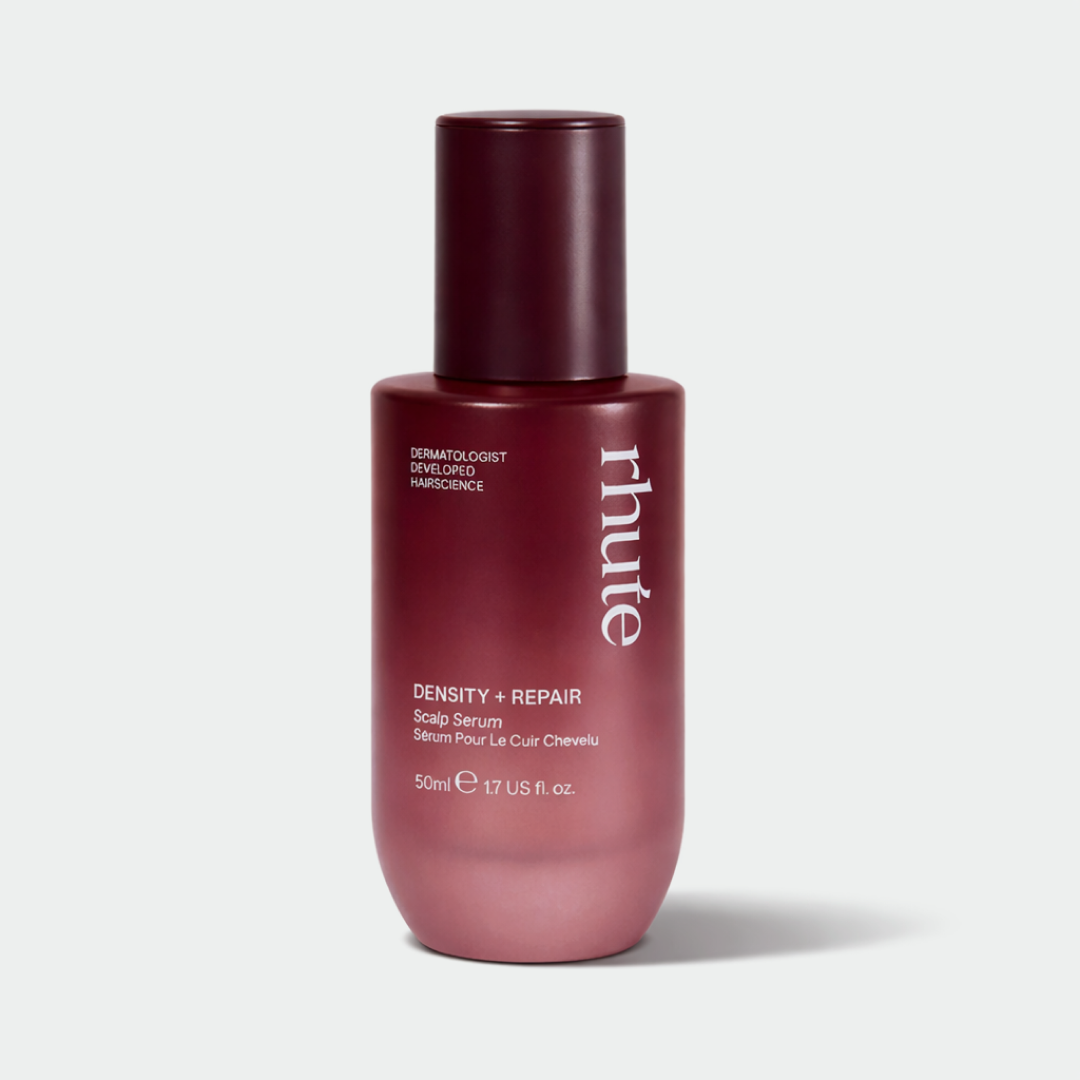
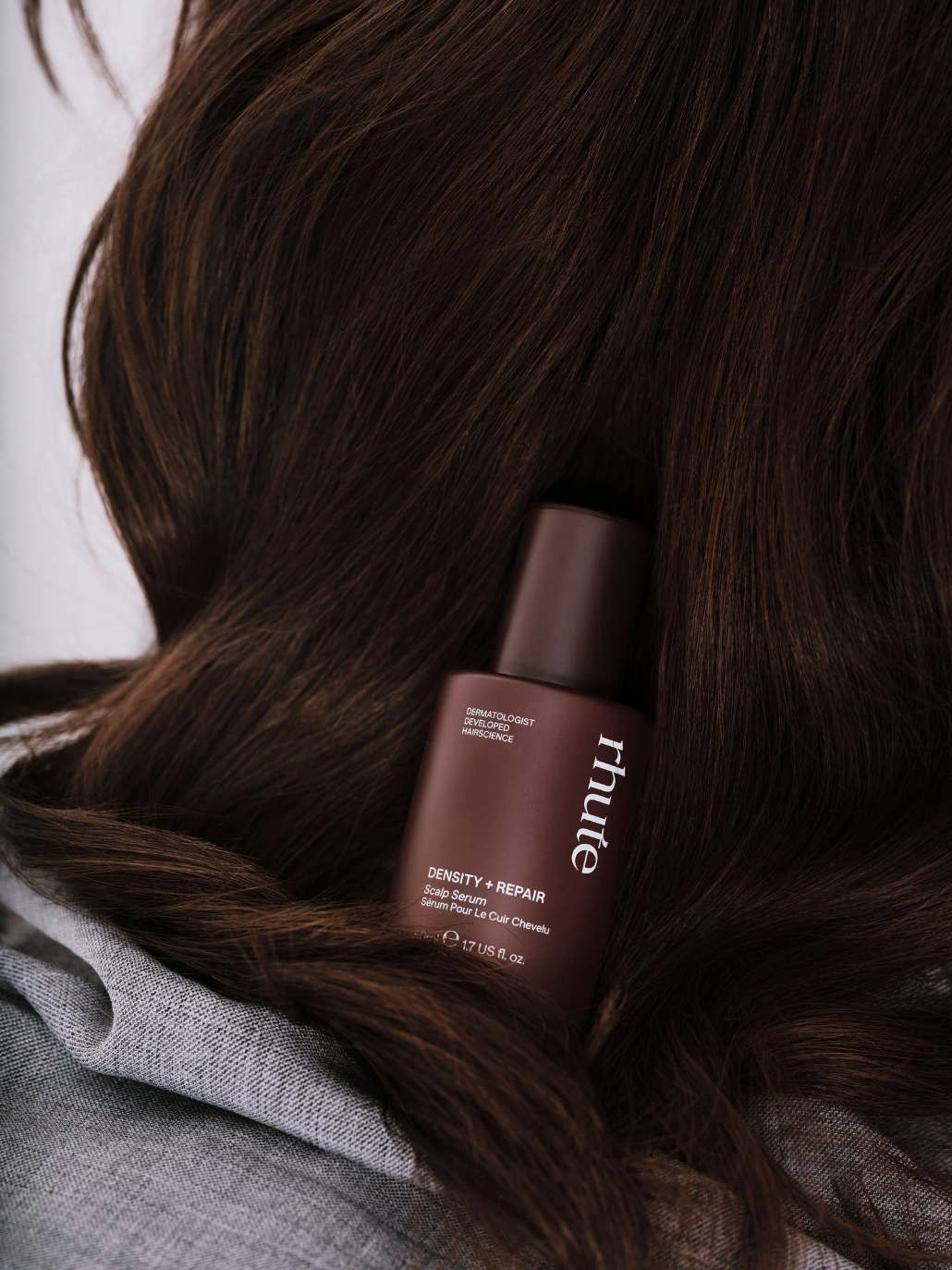
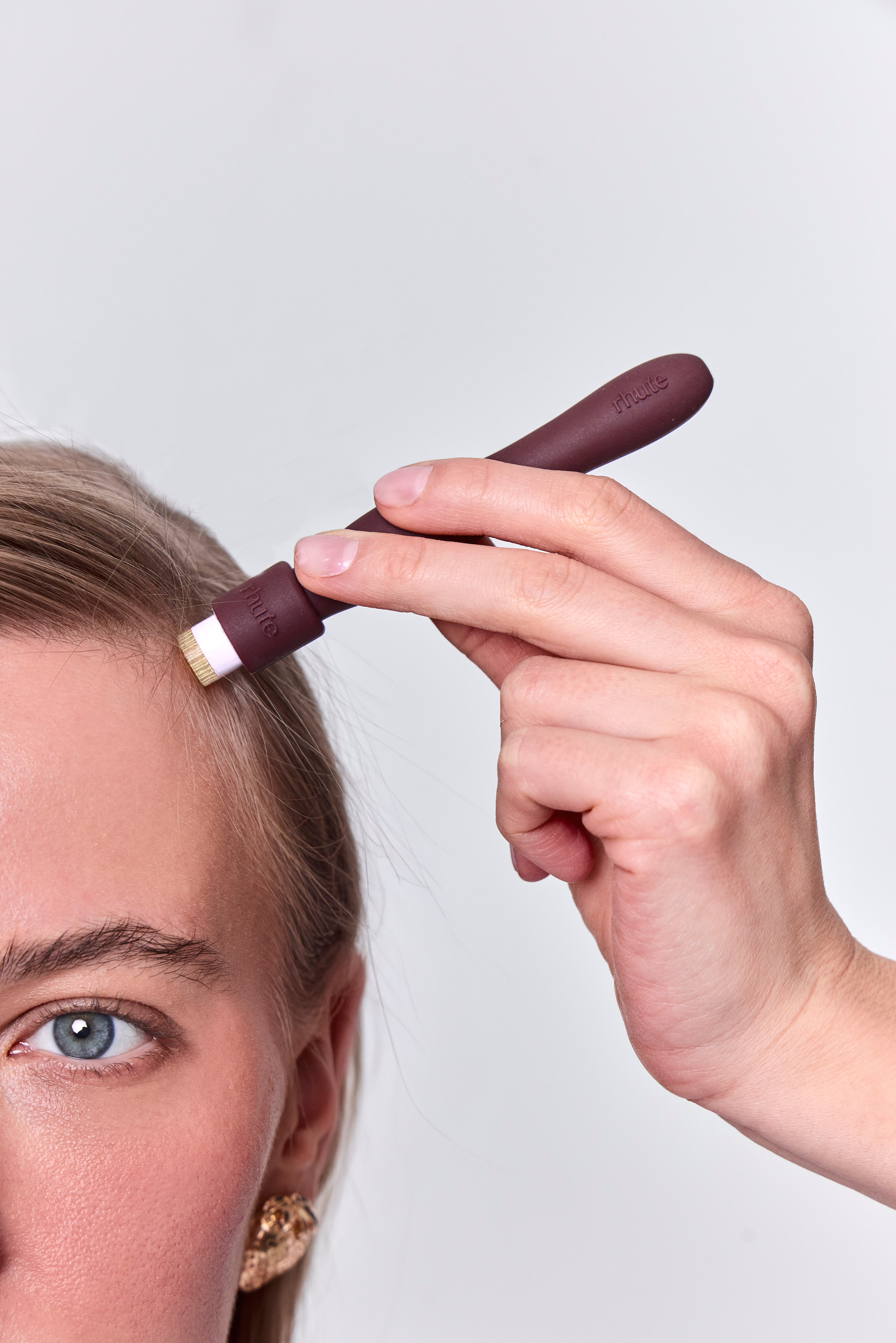
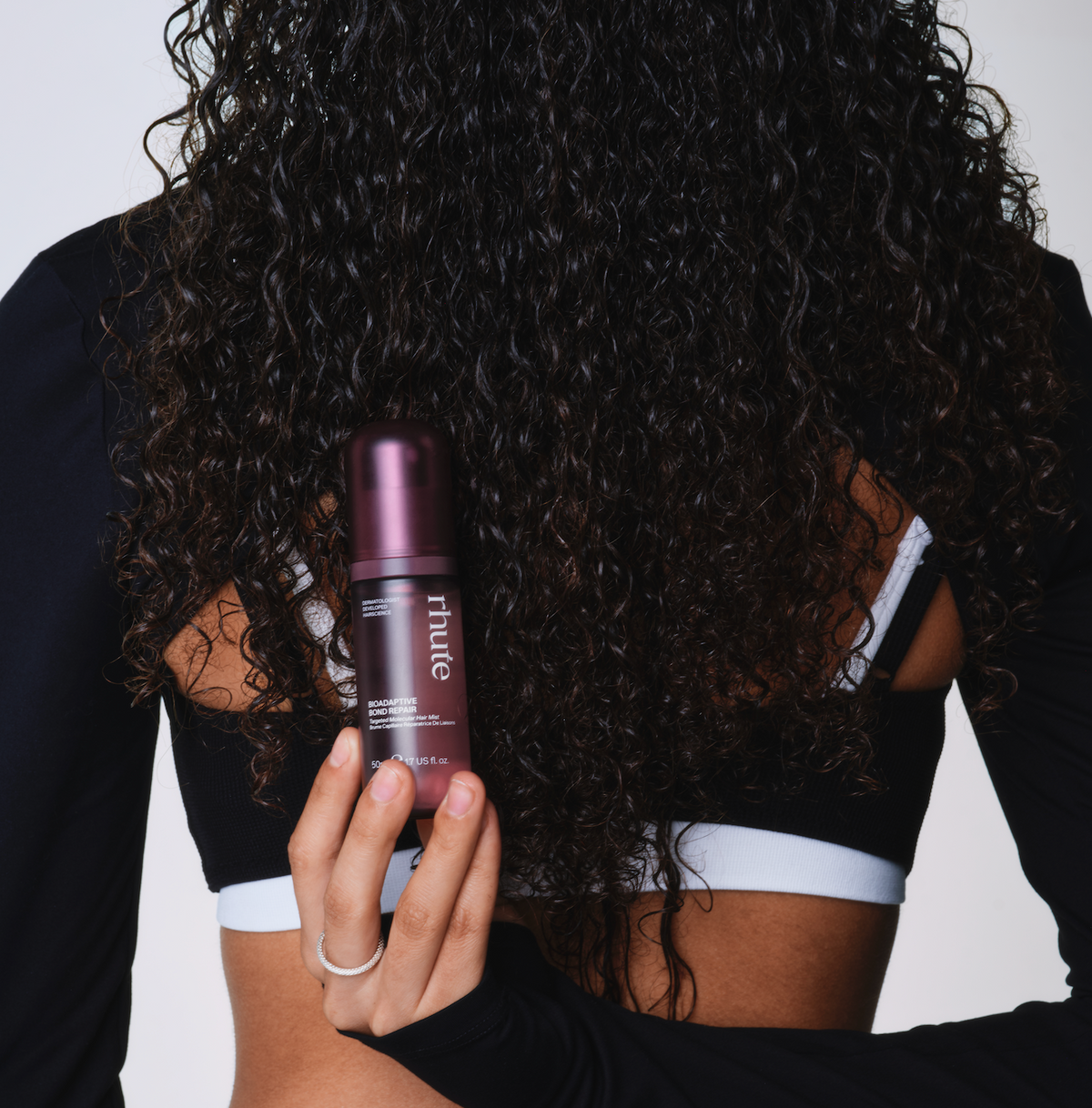
Density + Repair Hair Growth Scalp Serum: our minoxidil-free serum, made for less shedding and more growth, with caffeine to stimulate follicles for fuller hair and niacinamide to soothe and strengthen your scalp barrier. You'll find it with our hair loss serums.
-
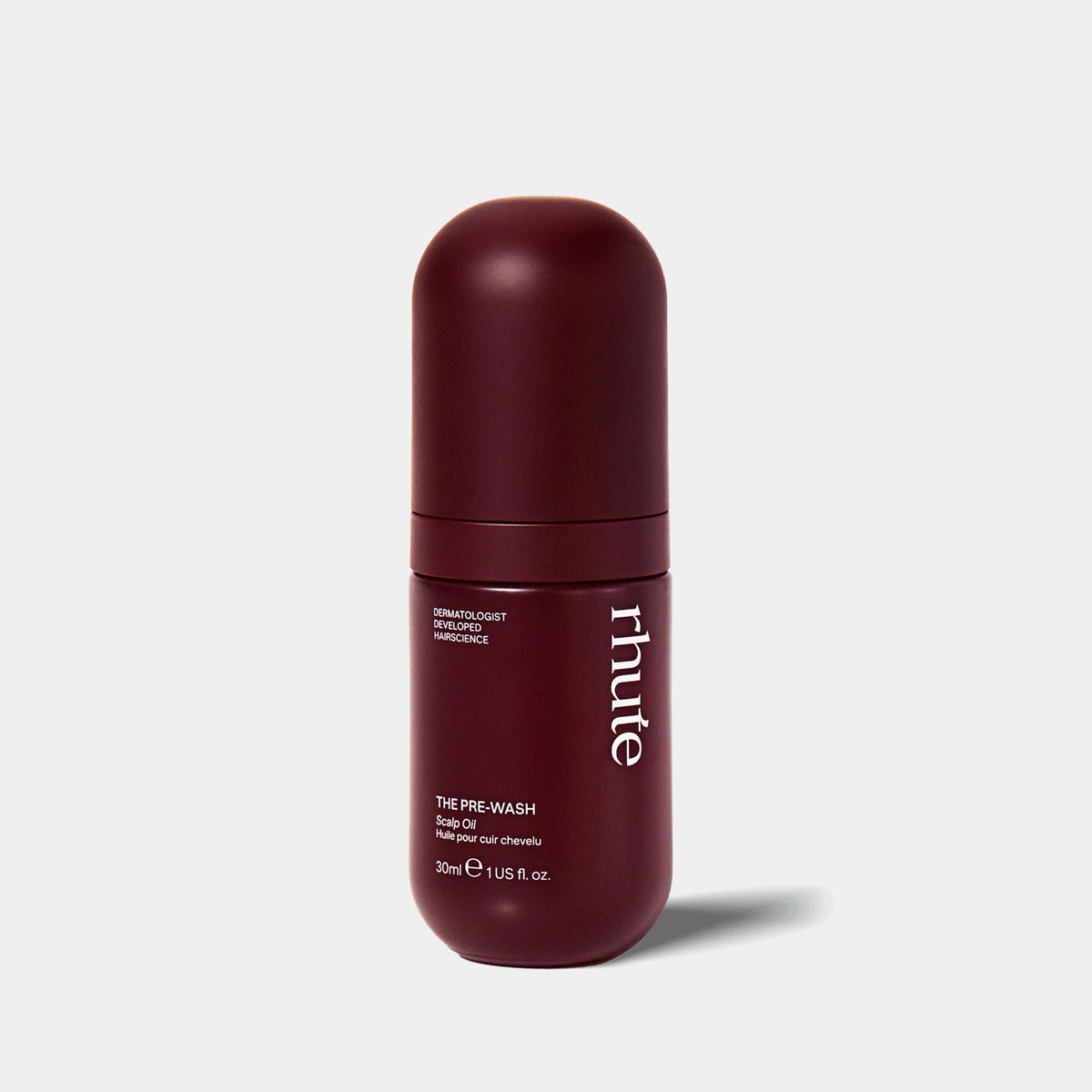
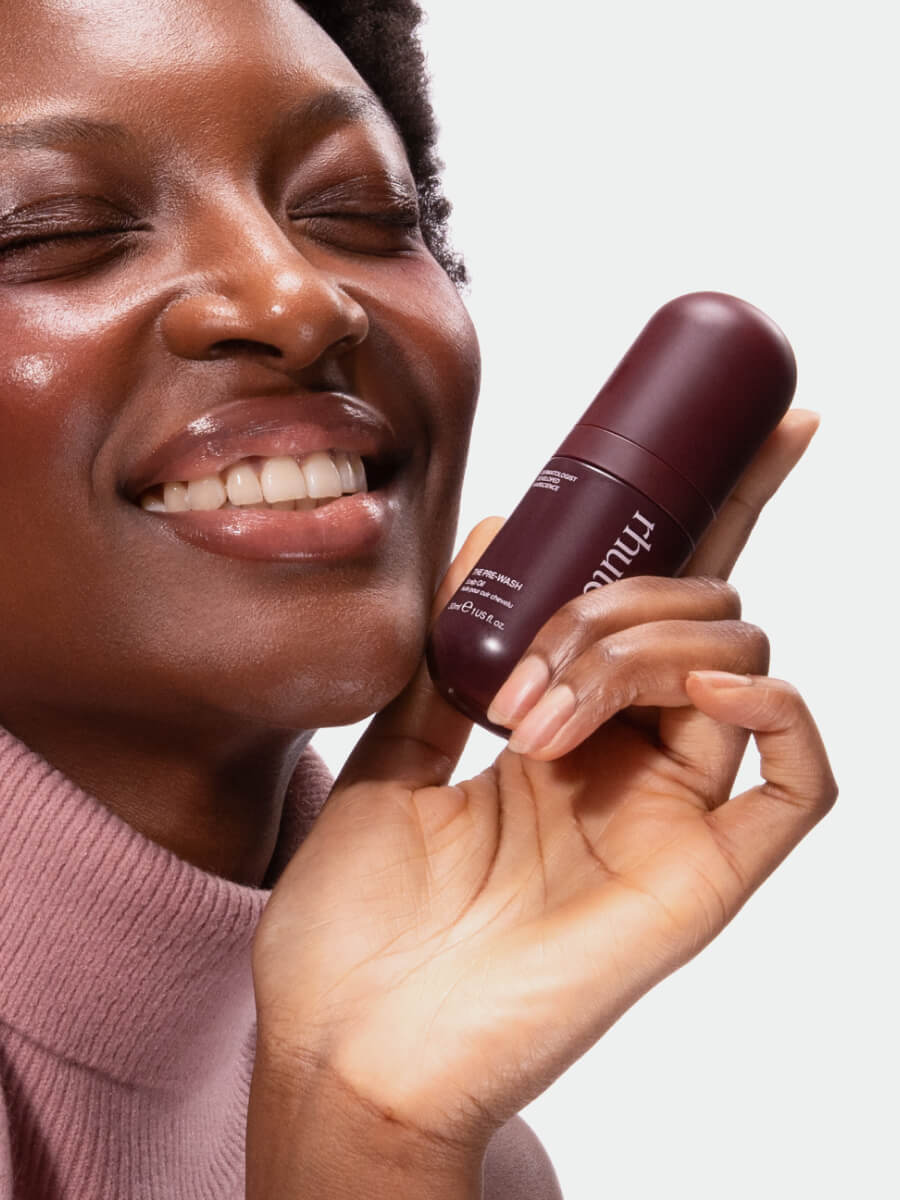
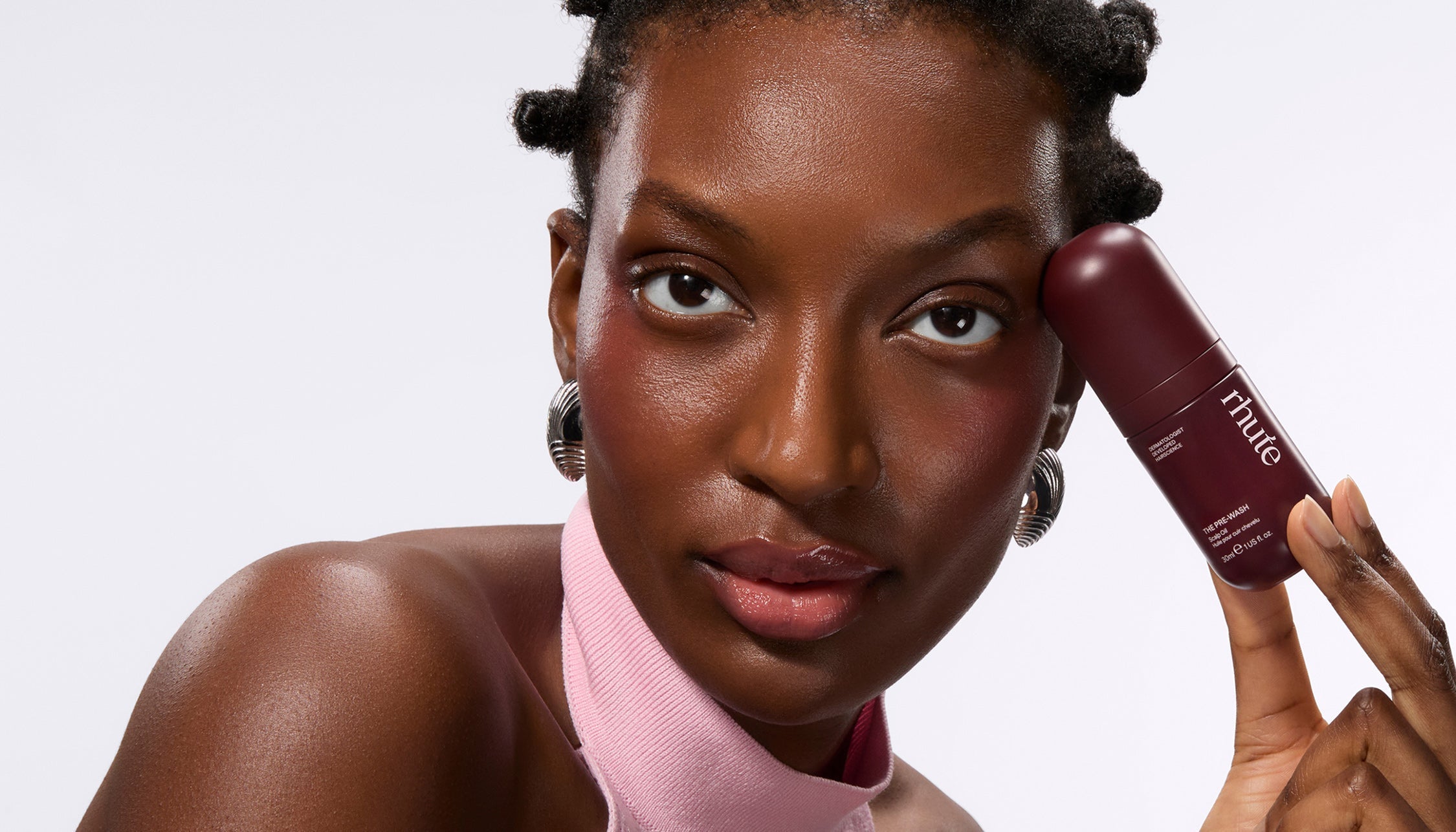
Triple Density Complex Pre-Wash Hair Oil: a dermatologist-developed pre-wash treatment with ceramides and bisabolol to help support and soothe your scalp barrier. Use it on your scalp and through your hair before washing, two to three times a week. It lives in our hair and scalp oils.
They do different jobs in the same rhutine, and they work alongside treatment, never in place of it.
FAQs
What do you crave when your iron is low?
Ice, most often. Craving ice is considered quite specific to low iron (DermNet, 2023), and some people crave things that aren't food at all, such as paper, which is called pica (NHS, 2024b). If you're getting through ice trays at speed, mention it to your GP.
What ferritin level causes hair loss?
There isn't one agreed number. In clinical practice, ferritin below 30 micrograms per litre is generally taken to mean iron deficiency (Al-Naseem et al., 2021). Pooled research suggests women with hair loss may benefit from higher ferritin (Treister-Goltzman et al., 2022), but it doesn't set a target for hair, so your GP will read your result alongside your symptoms.
What vitamin am I lacking if my hair is falling out?
It may not be a vitamin at all. Iron is a mineral, and it's one of the nutrients most often linked to shedding. A full blood count can also pick up anaemia caused by low vitamin B12 or folate (NHS, 2024b). We cover the others in vitamin B12 and hair loss, vitamin D and hair loss and vitamins for hair growth.
Does low ferritin make your hair dry or brittle?
It can. Dry, brittle hair is listed among the signs of iron deficiency anaemia, alongside shedding (DermNet, 2023). It's far from the only cause, though. If your hair is mostly rough or snapping at the ends, heat, colour and styling are worth a look first, and our guide to damaged hair can help.
How can I raise my ferritin for my hair?
Start with the cause. If heavy periods are behind it, treating them matters as much as topping up your iron (NHS, 2024a). If your GP prescribes iron tablets, they're usually taken for about six months, with repeat blood tests to check they're working. Dark leafy greens, pulses, meat and fortified cereals all help, while large amounts of tea, coffee or milk can get in the way (NHS, 2024b).