

You leave the house with a smooth, swishy blow-dry, and by the bus stop it's doubled in size. Frizz is what you see when your strands stop lying in the same direction. So what causes frizzy hair? Usually it's moisture swelling the hair, static, a worn outer layer, your natural curl, or lots of short new hairs growing through.
Each one looks a little different. By the end of this guide you'll know which kind you've got, because that changes what helps.
What frizz actually is
Glossy hair comes down to two things working together. First, your cuticle, the overlapping scales on the outside of each strand, lies flat like roof tiles, so light bounces off it evenly and your hair feels silky to the touch. Second, neighbouring strands line up, so all that light reflects the same way.
Frizz is what happens when either one goes rogue. A lifted, rough or frayed cuticle scatters light and feels coarse under your fingers, and strands that have broken ranks scatter it even more. The result? Hair that looks fuzzy rather than shiny.
Then replace the paragraph straight after it with this version, which drops the repeated cuticle definition:
Frizz isn’t automatically damage, and perfectly healthy curls can frizz. It helps to think of two families. Strand frizz is when the hair itself swells, bends, or catches. Halo frizz is when short hairs stand up on top of otherwise smooth lengths. A lot of it comes back to that cuticle, and the damaged hair guide covers the full anatomy.
Read your frizz: where and when it shows up
Look at where your frizz sits and when it's at its worst, then match it to a cause below.
-
Worse on damp or rainy days, all over your lengths: humidity
-
Flyaway, clings to your jumper, worse in winter or with the heating on: static
-
Mostly on your mid-lengths and ends, which feel rough: a worn cuticle
-
All over, and your curls or waves won't clump: your curl pattern, moisture loss
-
New, and you're in your 40s or 50s, or something else has changed: ageing, hormones or your thyroid
-
Comes with flaking, itching or an oily, irritated scalp: your scalp health
-
Short, upright hairs along your parting or hairline: new growth or breakage
Ticking more than one box is normal, and it's often why a single anti-frizz product only half works.
Humidity: your hair is drinking the air
Hair soaks up water from the air and swells, mostly in width rather than length, so strands bend and stop lying flat. Water also temporarily breaks your hydrogen bonds, the weak, easily reset links that hold your hair's shape. That's why a drizzly morning can undo a blow-dry in minutes.
Bleached, coloured or heat-styled hair takes on water faster, so it's usually first to frizz. If your high porosity hair puffs up at the first hint of rain, check your leave-ins for glycerin, which can pull in extra water on humid days.
Dry air and static: why frizz can peak in winter
If your frizz is at its worst in January rather than August, static is the likely culprit. In dry air, hair behaves like an insulator. Rubbing it against a jumper, hat, scarf, brush or pillowcase builds up a charge (triboelectric charging, meaning the charge created when two materials rub together) that has nowhere to go, so your strands push away from each other.
Research found that at low humidity a lot of that charge stays trapped on your strands, while the kind of conditioning ingredients used in many conditioners helped it escape much faster (Jachowicz et al., 1985). In the UK, cold air outside and central heating inside can leave your indoor air surprisingly dry all winter, so a conditioner or leave-in that suits your hair is one of your best defences.
A worn cuticle: heat, colour, friction and time
When your cuticle is smooth, strands slide past each other. When it's raised or chipped, they catch on their neighbours and let water in faster, which is why this cause often stacks with humidity. The usual sources of wear are:
-
Heat styling (see heat damaged hair)
-
Bleach and colour (see bleach damaged hair)
-
Rough towel drying and brushing
-
Sun (see sun damaged hair)
-
Length itself. Your ends are the oldest hair you own, so they've had the most wear (see split ends)
You love your colour and your straighteners, and you don't have to give them up. It just helps to know that frizzy mid-lengths and ends are often worn showing through.
For those lengths, Bioadaptive Bond Repair is a lightweight leave-in mist for damp hair. Its peptides seek out damaged areas of the strand, a hyaluronic acid complex helps hold moisture in, and it adds heat protection up to 230°C. Torn between that and a leave-in conditioner? Our comparison guide helps you choose.
Your curl pattern
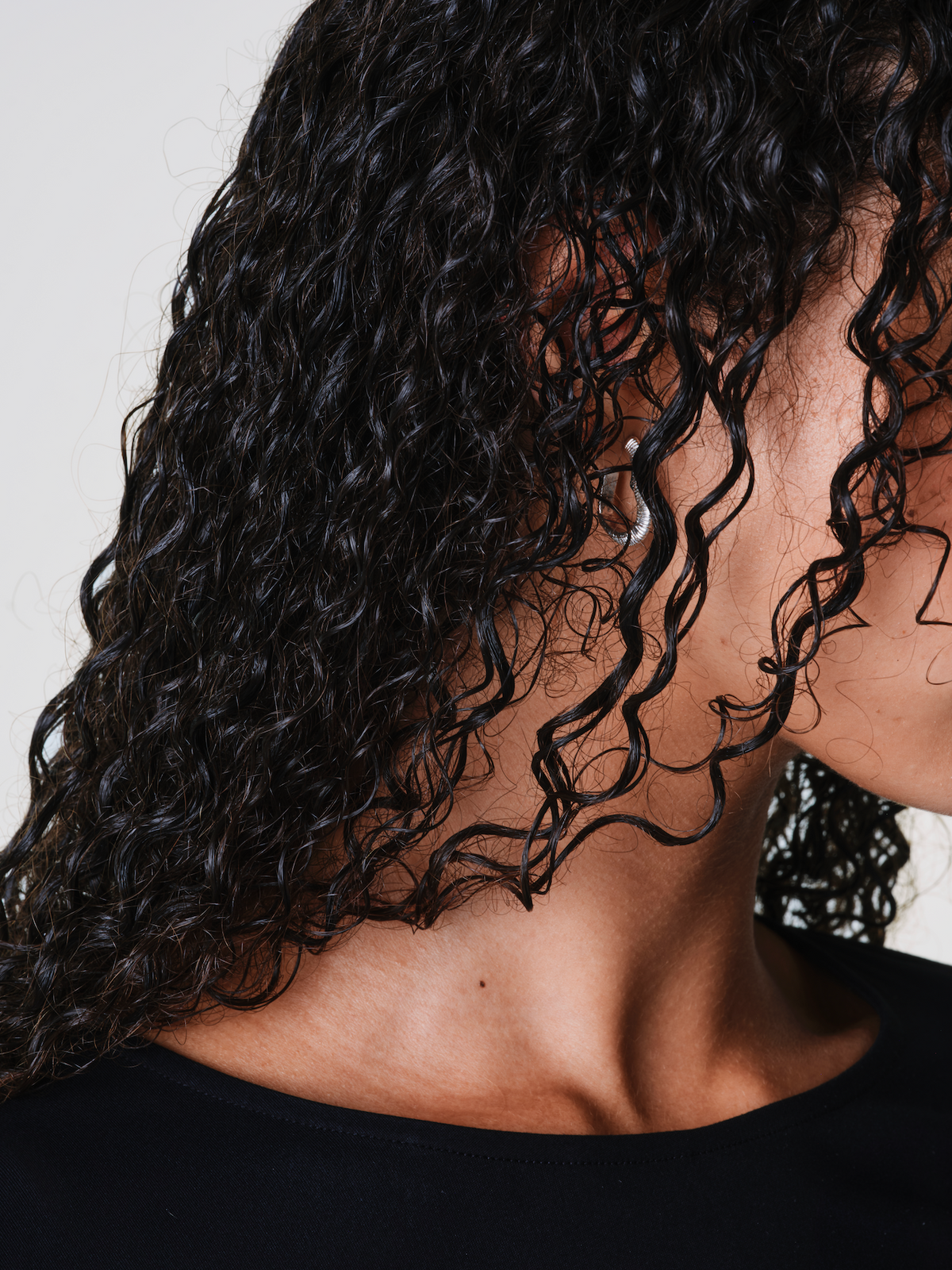
If your hair is wavy, curly or coily, some frizz comes with the territory, and that's not a flaw. Every bend in a curl is a spot where a strand can break away from its group, and your scalp's natural oils travel less easily down a coiled strand, so your lengths run drier.
The goal is curls that clump, with strands moving together in defined groups. Not sure where your texture sits? The hair types guide walks you through it.
Ageing, hormones and your thyroid
Wondering why your hair is getting frizzy as you get older? You're not imagining it. A study of women across a wide age range found that hair curvature becomes more irregular with age. Those uneven bends stop strands lining up and dull their shine, and the researchers linked this to the look of ageing hair (Nagase et al., 2009).
It's one reason many people notice new wiriness in perimenopause and menopause, alongside other hormonal changes. Hormones change, healthy hair remains, but your rhutine might need to change with them.
If frizz arrives all of a sudden, alongside dry skin, tiredness, feeling cold or extra shedding, mention it to your GP. The NHS lists dry hair among the symptoms of an underactive thyroid (NHS), and our thyroid hair loss guide explains the link.
Your scalp: frizz can start before your hair even grows
Every strand takes shape beneath your skin before you see it. A 2018 review found that hair growing from an unhealthy scalp (think dandruff, psoriasis or dermatitis) most often comes through with a rougher, pitted cuticle and sometimes less shine. The authors point to oxidative stress, meaning damage from unstable molecules, as the likely link (Trüeb et al., 2018).
A strand that starts life rougher catches and tangles more easily, so it's primed to frizz. Scalpcare is skincare, after all, and our guide to improving scalp health is a good starting point.
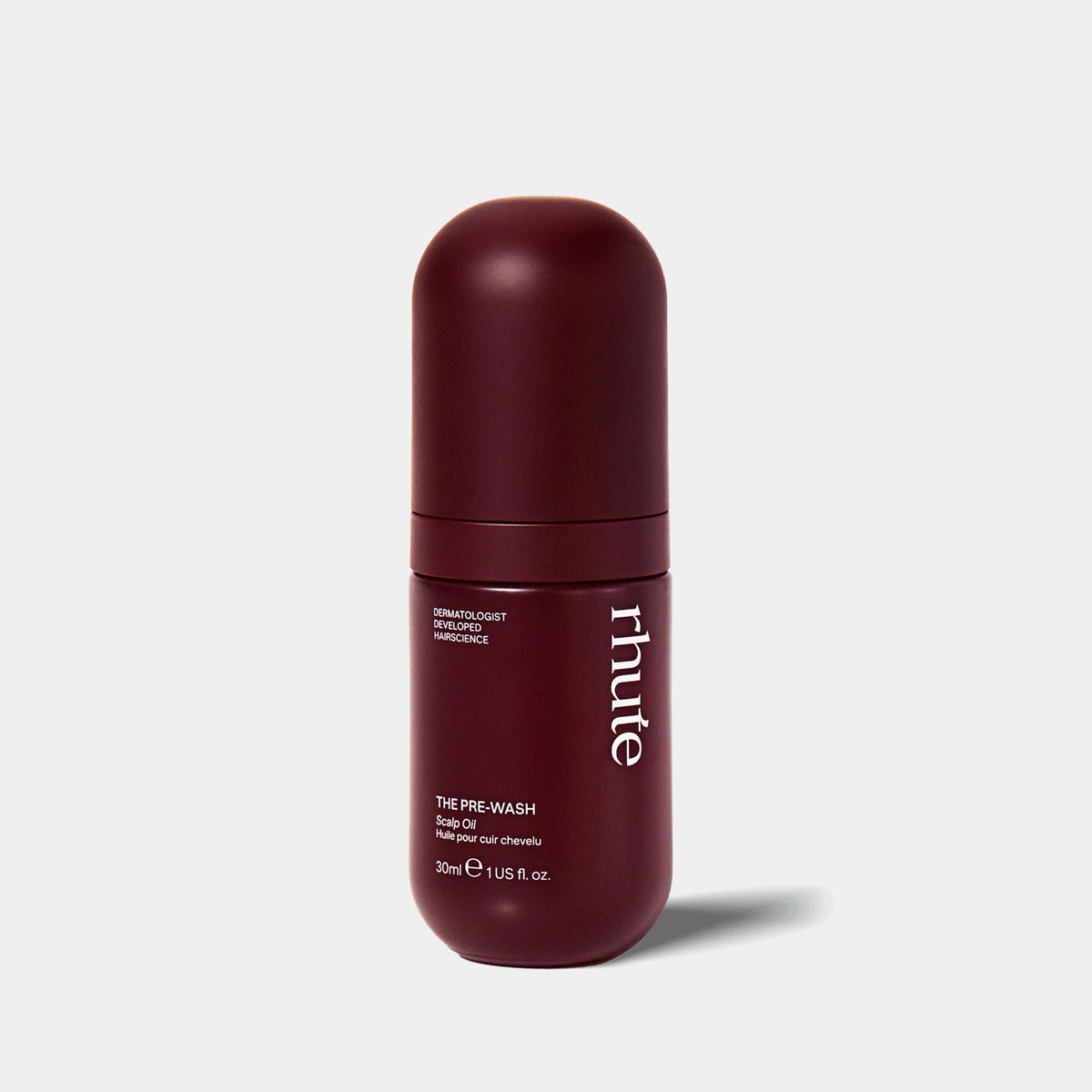
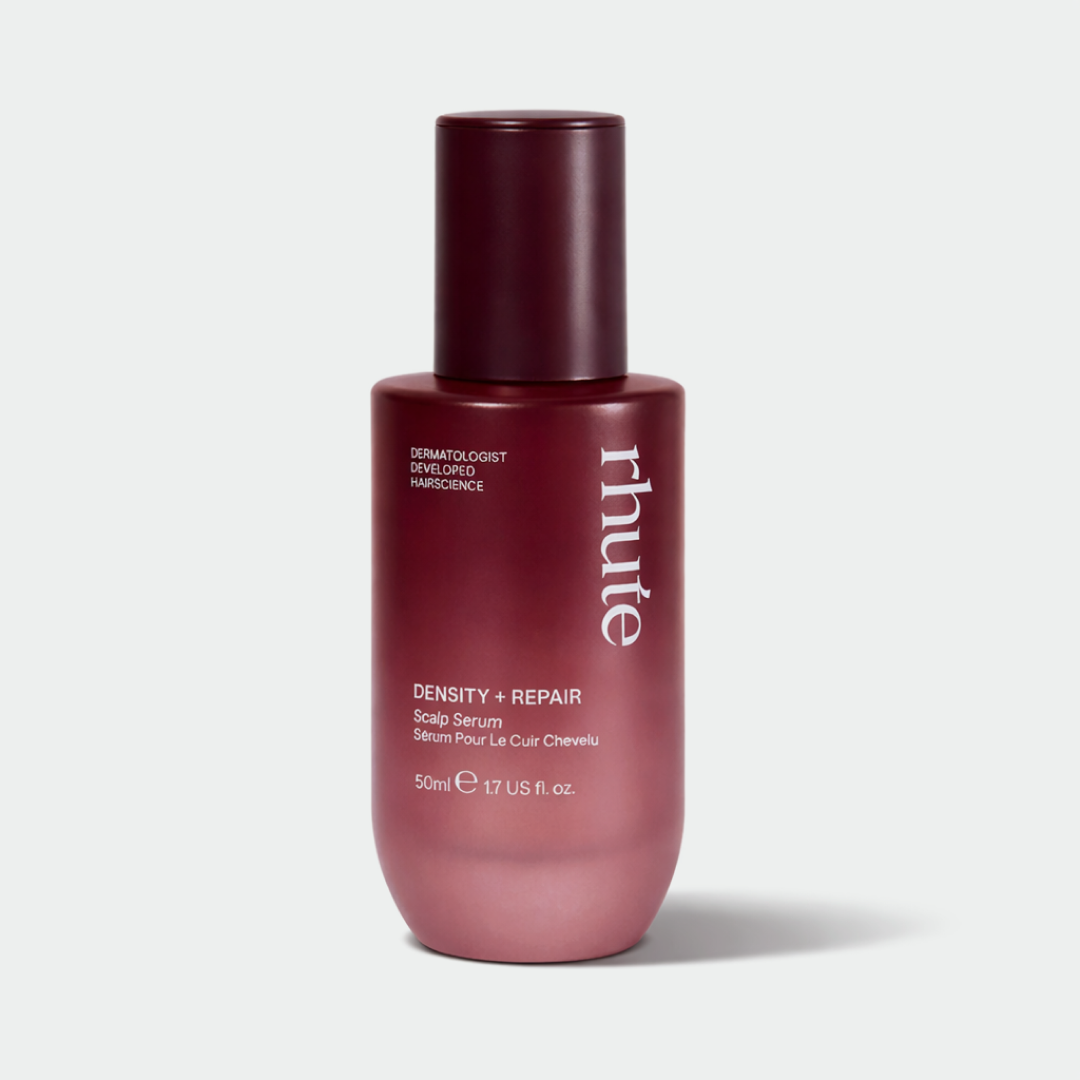
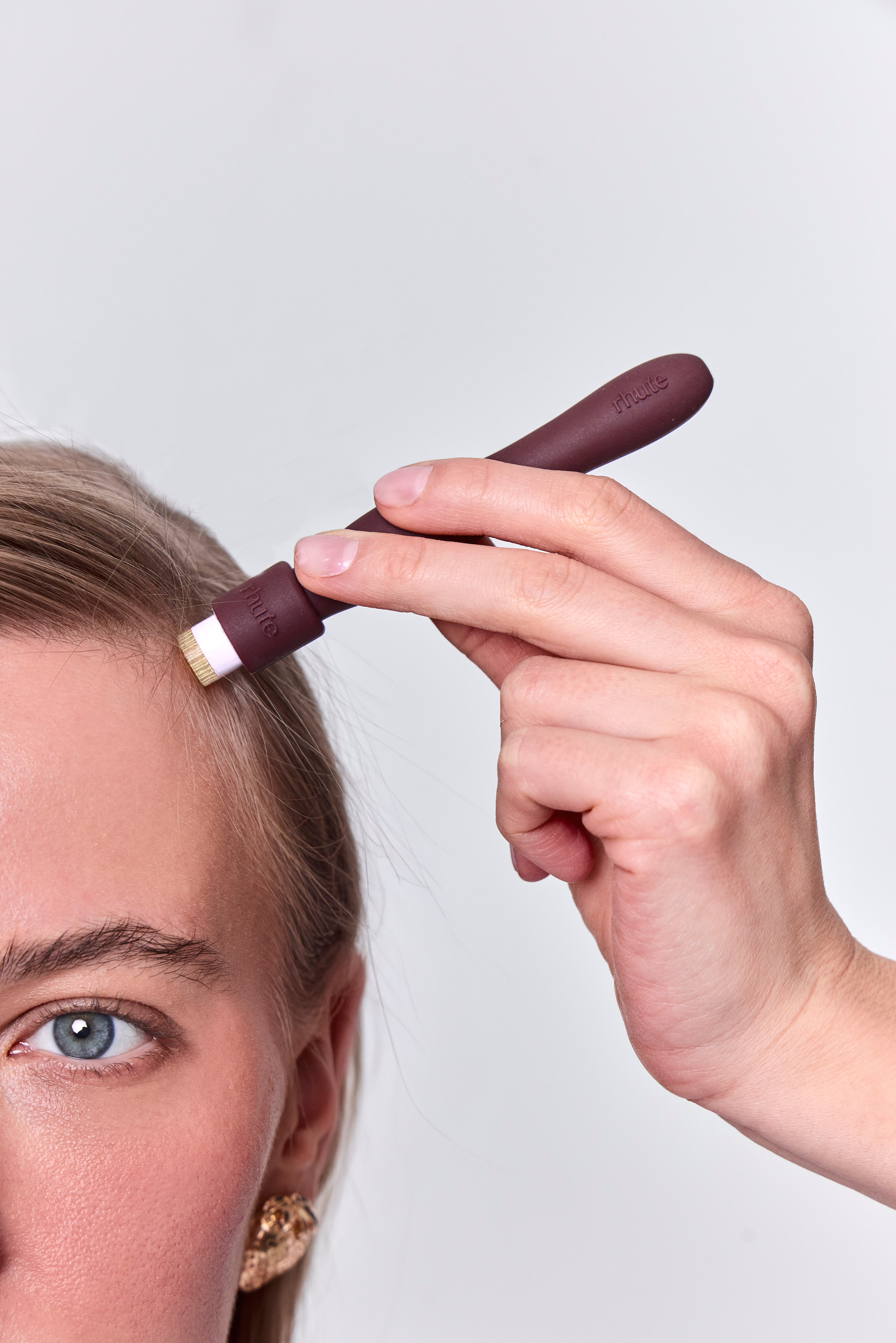
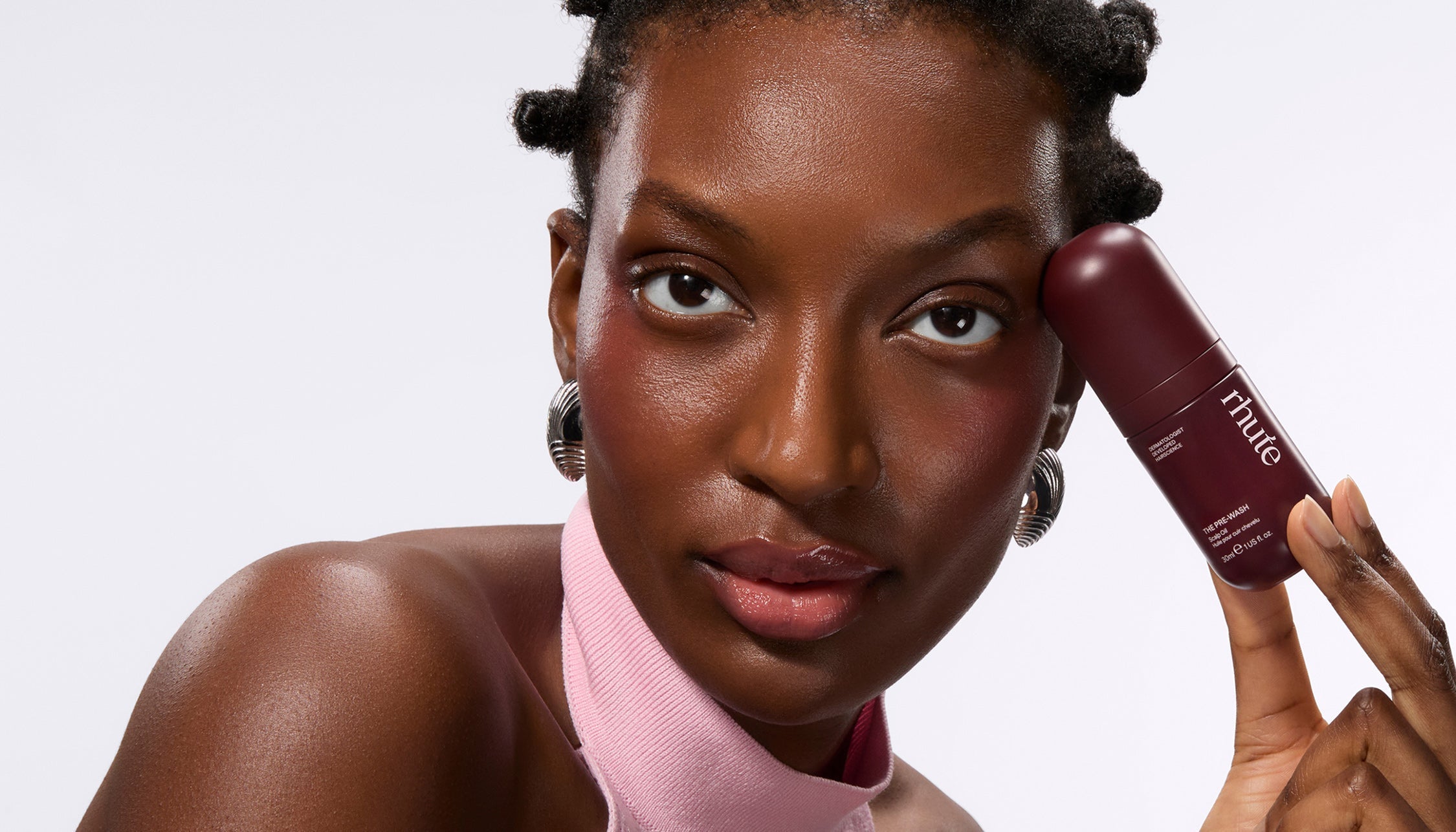
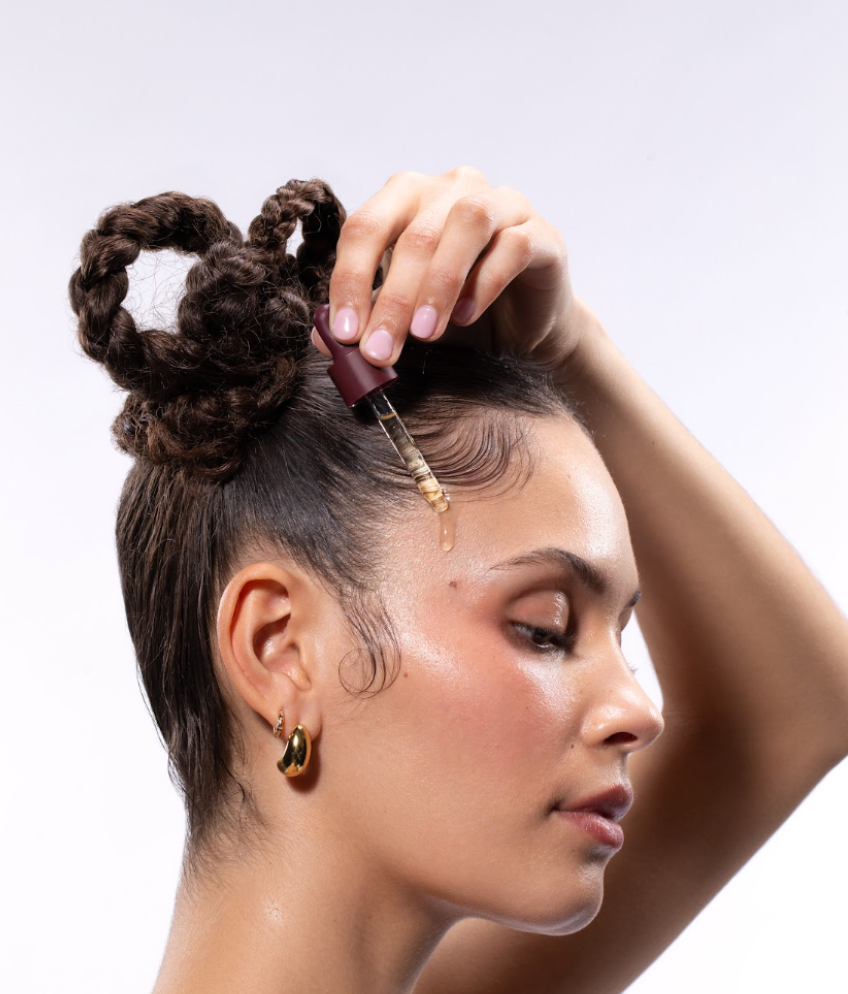
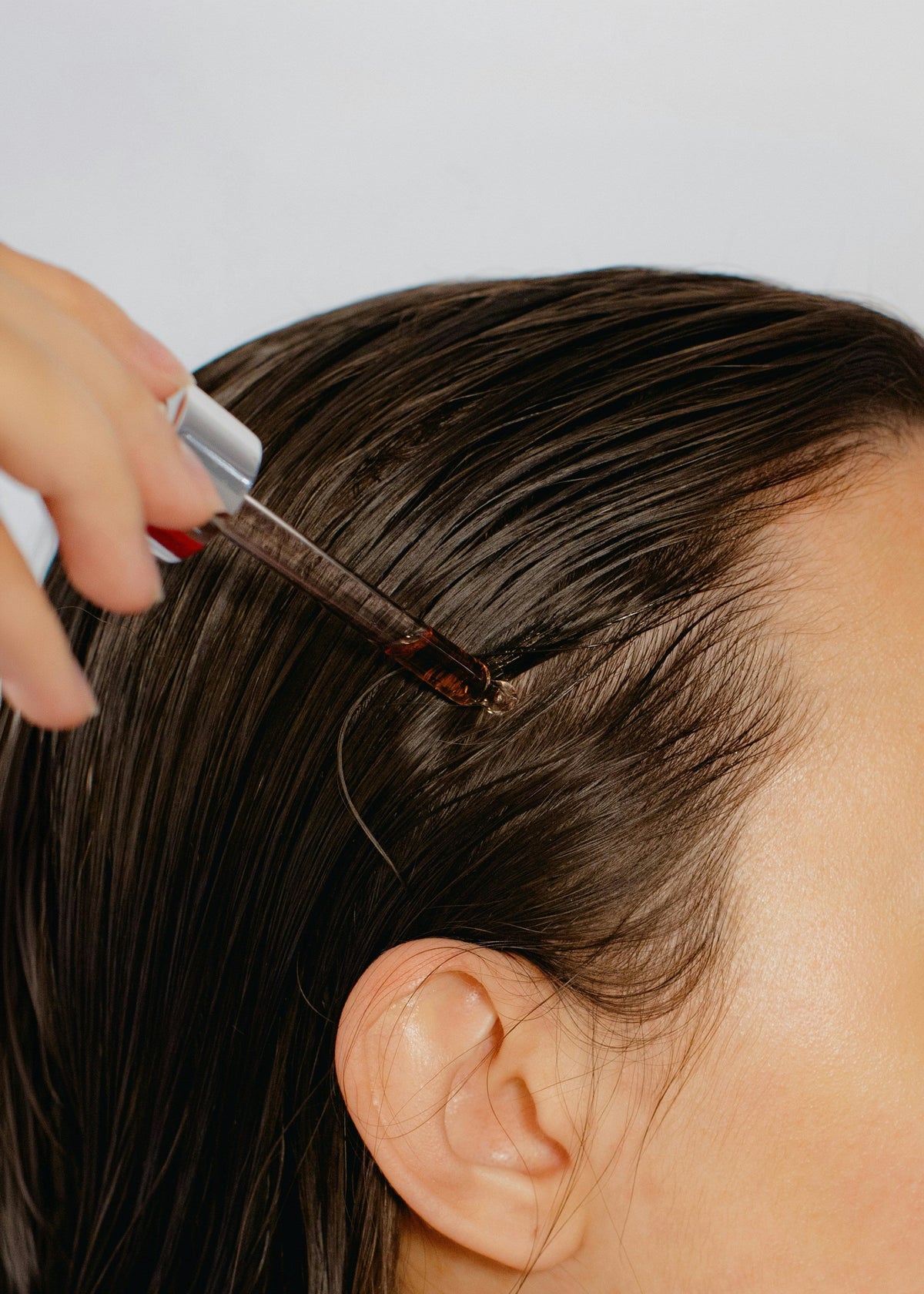
The Density + Repair Hair Growth Scalp Serum helps soothe and support your scalp's barrier with niacinamide and breaks down build-up in follicles with gentle salicylic acid. Before you wash, Triple Density Complex Pre-Wash Hair Oil brings ceramides to support your scalp barrier, plus jojoba and black seed oil to condition your lengths. Our consumer study showed 91% of participants reported glossier hair with less frizz.
Neither is a frizz cure, but both help you grow healthier hair from the rhute up.
Short hairs: new growth or breakage
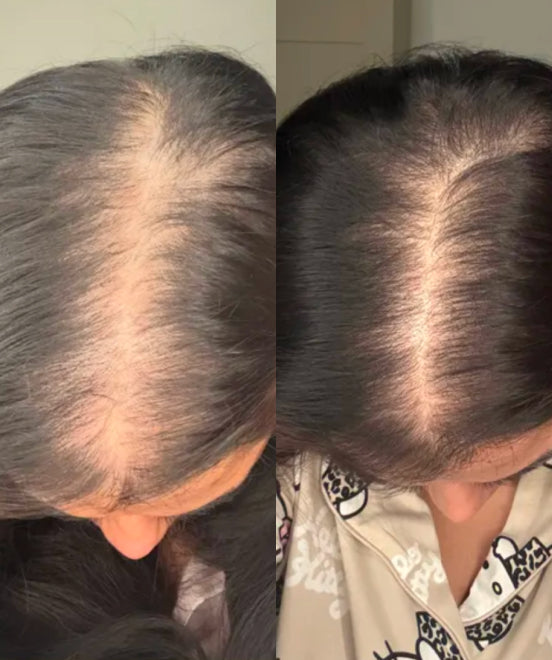
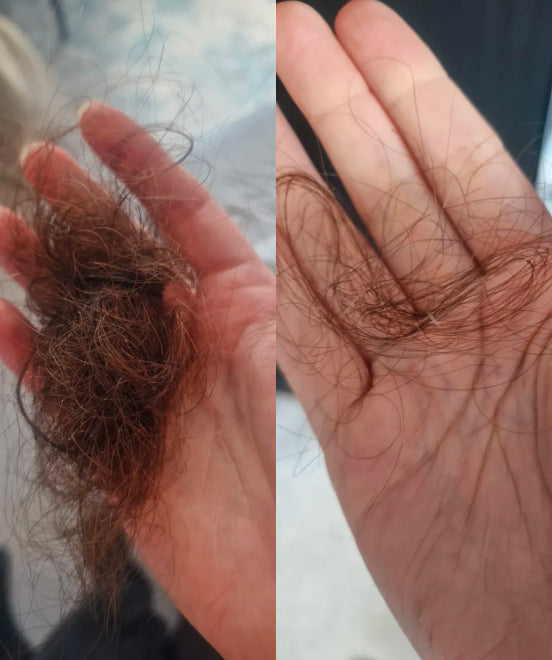
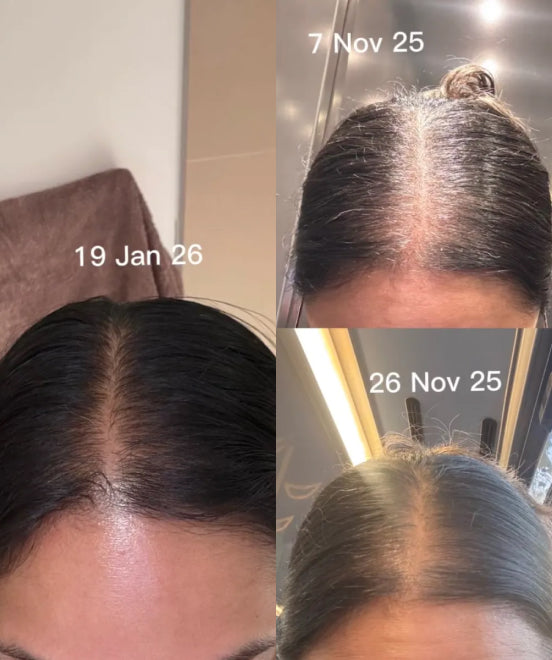
A fuzzy halo along your parting or hairline is often lots of short hairs at the same length. The good-news version is regrowth after postpartum shedding or a stressful spell that triggered telogen effluvium. Congrats on the baby (hairs). The less fun version is snapped hairs, and our hair breakage guide shows you how to tell the two apart.
So what helps?
Once you know your frizz type, the fix gets a lot simpler.
-
Humidity: lighter leave-ins, and less glycerin on damp days.
-
Static: condition every wash and cut down on friction, because rubbing is what builds up the charge. Swap a cotton towel for a microfibre one, try a silk or satin pillowcase, use gentler brushes than plastic ones, and make sure your hair is fully dry before you head out.
-
Worn cuticle: less heat, gentler handling, and a bond repair mist like Bioadaptive Bond Repair on damp lengths. Our guides to using hair oil and silicones cover the smoothing options.
-
Curl pattern: work with clumping rather than against it, and keep moisture topped up. Curly and coily hair is often high porosity, so it soaks up water fast and loses it just as quickly, and that dryness can show up as frizz. A leave-in on damp lengths, sealed with a little oil, helps hold it in.
-
Scalp: a consistent scalp rhutine, with our scalp serums and hair and scalp oils.
For step-by-step routines, read the guide on how to fix frizzy hair. Get growing.
FAQs
Does dry hair cause frizz?
Often, but dry and frizzy aren't the same thing. Dry hair feels rough and catches easily, which makes frizz more likely, yet well-hydrated hair can still frizz on a humid day. If your hair feels soft but frizzes anyway, look at the weather and your curl pattern before reaching for more moisture.
Can hard water cause frizzy hair?
It can make it more likely. Minerals in hard water react with shampoo and leave a residue on your strands, and rougher strands catch and frizz more easily. Whether hard water actually weakens hair is still debated, and we cover the evidence in our damaged hair FAQs.
What vitamin deficiency causes frizzy hair?
No single vitamin has been shown to cause frizz. Deficiencies are more clearly linked to shedding, and research suggests supplements help most when you're actually deficient (Guo & Katta, 2017). Our guides to iron deficiency and vitamins for hair growth are a good place to start.
Why is my hair frizzy after washing?
Usually it's the drying rather than the washing. Rubbing with a rough towel lifts your cuticle, and hair left half-dry keeps swelling and shifting as it dries. Very hot water and leftover product can leave strands rougher too. A quick win is to blot with a microfibre towel or an old T-shirt, then let your hair dry fully before you go out.
Why is only the top layer of my hair frizzy?
Your top layer takes the most sun, wind and friction from hats, hands and pillows. It's also where short new hairs and breakage tend to sit, around your parting and crown. If the hair underneath is smooth, the issue is usually wear or new growth on the outside rather than your hair as a whole.
Is frizzy hair a sign of hair loss?
Usually not. Frizz is about how your strands behave, while hair loss is about how many you have. The exceptions are a halo of broken hairs, or regrowth after a shed. If you're also noticing a wider parting or a thinner ponytail, our guide to spotting early signs of thinning can help.